

Former pro gamer (NRG, Andbox, COL, Envy) | Transitioning into psychology to support gamers’ mindset & well-being
Toronto, Ontario
Joined July 2015
- Tweets5.4K
- Following1.2K
- Followers25.6K
- Likes7.5K



Hey guys. I recently graduated with my psychology degree, and now figuring out the next step.
I’m interested in coaching CS2/VALORANT and combining my competitive experience with my Psychology degree to work in player development, performance, communication, and mental skills.
I’m also exploring graduate-level programs where I could continue developing my psychology/behavioural knowledge while staying involved in esports.
If you’re a coach, esports organization, or university/college program interested in chatting about potential coaching, player-development, or graduate-study opportunities, I’d love to connect.


I play cs
"wow it's android, I used to watch you. so cool!"
I play val
"dude you sound so old gtfo off the game you're washed just quit.. no wonder you're an ex pro *laughs historically*"
So important and overlooked. I never figured out my digestive issues as I was told I have IBS, so I was convinced I couldn't do anything about it (I fixed it years after my career ended).
Changing your diet is especially difficult when you're struggling with anxiety / depression, so the cycle feeds into itself.
Need to put our energy into the right things. While I was reading sport psych books over and over wondering how to fix my mood and negative thinking - I should've been fixing my gut health before anything. Big mistake.
Great post, Edward!

The biggest performance optimization miss in esports isn’t recovery, hydration, or macronutrients.
It’s overlooking gut health.
Many organizations unknowingly provide consumables that work against cognitive performance, emotional regulation, stress resilience, and recovery by disrupting the gut–brain axis. No blame to them per se, it’s a reflection of how little this science is taught / known by the community.
I rarely begin by “treating the mind.” I begin by supporting the biology that shapes the mind. Mental health is both psychological and physiological, making gut health one of the most overlooked bottom-up interventions in (esports) performance.
If this sounds controversial, spend time with the literature on the gut microbiome, neuroimmunology, psychobiotics, and HPA-axis regulation. The evidence has grown substantially over the past two decades and has already influenced sports nutrition and dietetics in traditional athletics.
The gut is called “the second brain” because ~500 million neurons in the intestinal lining signal the brain.
If you want to change your thoughts, improve your gut health. ✌️💚
It's hard to not take things personally when others are sabotaging your game, and this isn't to justify any behaviours - it's to see the human in others so YOU can play more consistently
Let's decode some behaviours so you're able to focus on your game 🧵
9. Insta-requeue on tilt
Looks like: loses a rough one, instantly queues again, playing angry.
The message: “I need to fix this feeling NOW.” Trying to outrun a bad feeling instead of settling it.
The tilt rides straight into the next game. They bring previous emotions your current game.
The secret isn’t being nicer.
It’s seeing that behind every “toxic” teammate is a person in pain, badly trying to meet a need to matter, to feel in control, to not feel worthless.
Decode the message. Protect your own mental. Mute if you need to.
You can’t be baited by a message you understand.
I hope some of it helped. Take care of your mental health.
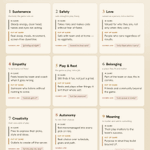
Working with players, I see how fast we blame ourselves or others for intense emotions. That's the cycle of dehumanization, and it makes us forget the simplest thing: you're a human with needs. Here are 9 of the most fundamental ones.

"All blame is a tragic expression of an unmet need."
-Marshall Rosenberg
The way Marshall reconnects us with the language of life is quite beautiful; I would recommend watching his work as it is truly life-changing.
Just wanted to share the love👌
youtube.com/watch?v=nWb2B2uP…
1/ wrote my capstone on toxic competitive gaming environments and the psychology of why some may struggle more with emotional experiences than others. quick thread 🧵
7/ the type of toxicity matters. griefing and trolling were tied to more anxiety + depression than flaming — even though flaming is most common. getting sabotaged by your own teammate are more psychologically taxing than getting yelled at.