

I don't write about what I haven't tested on myself. Testosterone | DHT | Prolactin | Cortisol. Real data. https://xitter.cf/t.co/heObjtnKMW
Joined March 2026
- Tweets840
- Following1
- Followers172
- Likes4






Can beetroot juice help with ED? Yeah, it actually can—but not for the reasons you’re seeing all over the internet.
First off, let’s kill the myth: beetroot isn't some magic aphrodisiac. It’s not going to suddenly flip a switch on your libido. It does something way less "sexy," but honestly a lot more useful: it basically clears the pipes.
The science is simple. Beets are packed with nitrates, which your body turns into nitric oxide. Think of that as a green light for your blood vessels to relax and open up, which lets blood flow a whole lot easier.
At the end of the day, an erection is really just a matter of blood vessels relaxing and blood pumping where it’s supposed to. It’s the exact same pathway that stuff like Viagra uses, just approached from a different angle. So yeah, keeping your circulation in check definitely helps your performance, and beets are a solid way to support that.
But let’s be real about the evidence. Most of the hard science on beets is about lowering blood pressure or helping athletes run longer. When it comes to actual clinical trials proving "beetroot cures ED," the data is pretty thin. The biology makes sense, but anyone selling it as a "miracle pill" is overselling it. It’s a tool for better plumbing, not a magic fix.
Here’s the part most people skip: libido is all in your head, while an erection is all in your blood vessels. They’re two totally different things. Beets handle the hardware side of the equation. If your problem is a lack of desire, juice isn't going to change that.
That said, if your head is in the game but your body just isn’t keeping up, nitrates are probably the cheapest, most effective way to help out your gear.
Beets, beet greens, or juice—it’s not flashy, maybe it’s even a little boring, but it does exactly the job it’s supposed to do

1
91
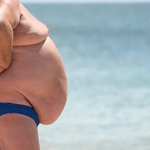
Wanna know where your testosterone actually sits? Forget the blood test referral for a second and grab a tape measure. Seriously—checking your waistline usually tells you more than a trip to the lab ever will.
Here’s the deal: that visceral fat—the stuff sitting around your gut—isn't just a harmless "spare tire." It’s basically an active hormonal factory. Its main job? Pumping out an enzyme called aromatase, which does one thing: it steals your testosterone and flips it into estrogen.
The bigger the gut, the more efficient that factory runs. The faster your T gets siphoned off into female hormones.
And that’s just the start. Throw in insulin resistance, which messes with your SHBG and tanks your free testosterone. Add chronic inflammation, which puts a damper on your entire system. Toss in some clogged blood vessels, and yeah, you can kiss a solid erection goodbye.
Metabolic syndrome and a low sex drive aren't separate issues; they’re two sides of the same coin.
The good news? When you drop that gut, you’re hitting three birds with one stone: you’re boosting free testosterone, slashing estradiol, and getting your blood flow back on track.
No supplements needed. No pills.
Before you start trying to "optimize" your hormones with a shelf full of expensive powders, just do yourself a favor and measure your waist
Citrulline malate is basically just a marketing gimmick. If you actually want results, stop messing around and just buy pure L-citrulline.
Every supplement shop you walk into is stuffed with "citrulline malate." It sounds high-tech and "advanced," but that’s the whole point—it’s designed to look like a premium product when it’s really just a way to cut costs.
Here’s the deal: citrulline malate is just L-citrulline mixed with malic acid, usually in a 2:1 ratio. So, if your tub says "8g," you're really only getting about 5.3g of actual citrulline. The rest is just filler. You’re paying for a full scoop, but you’re getting shortchanged on the only ingredient that actually does anything.
Brands will try to sell you on the idea that malic acid helps with energy or fighting fatigue, but honestly? There’s basically no real evidence that the malate part does anything for you. The pumps and the performance boost you're looking for come 100% from the citrulline. The malic acid is just along for the ride.
Why even bother with citrulline? It’s the best way to boost nitric oxide. Think of it like a shortcut: citrulline turns into arginine, which then turns into NO. Taking actual arginine is a waste of time because your gut and liver kill it before it reaches your bloodstream. Citrulline bypasses all that. More nitric oxide means better blood flow—which is why it’s the gold standard for gym pumps, vascular health, and sexual function. It’s all the same biological process.
Bottom line: stop paying the "malate tax." Just buy pure L-citrulline and aim for 3–6g a day. Stay consistent with it, though—this isn’t some magic, one-and-done pre-workout boost. The benefits build up over time, so taking it daily is way more effective than just chugging it right before you lift.
Keep it simple. The only thing doing the work is the citrulline, so stop overpaying for the extra junk

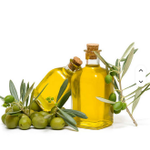
Does olive oil actually boost testosterone? You’ve probably seen people obsessing over that "17% increase" stat, but almost nobody actually looks at the fine print. Once you do, the whole thing looks a lot less like a miracle.
Here’s the deal with that study on 60 guys in Morocco: they spent two weeks living on butter, then swapped to extra virgin olive oil or argan oil for three weeks. Sure, their LH levels jumped by 42% and T by 17%, but here’s what the influencers conveniently skip over:
1. It’s all relative. They compared the oil to a butter-heavy diet, not a normal, neutral baseline. Most of those gains probably just came from ditching the saturated fats, not because olive oil is some magic potion.
2. Argan oil had the exact same effect. There was no difference between the two. This isn't about "olive oil magic"—it’s just how your body handles those healthy fats and polyphenols.
3. It’s one small, short-term study. It’s a decent piece of data, but definitely not a medical fact. Don't go expecting a transformation just by adding a splash of oil to your salad.
The science behind it is actually pretty cool, though. Since LH moved, it suggests the change is happening in the pituitary gland, not just the testes. It looks like the fats and polyphenols help with oxidative stress and protein expression.
The bottom line? Swapping out butter or crappy seed oils for decent, fresh, polyphenol-rich EVOO is a solid move for your health anyway. It’s not a magic pill, but it’s a much better fuel source for your body.
One quick heads-up: quality is everything. Polyphenols are super fragile—heat, light, and age kill them off fast. If you’ve got a "healthy" bottle sitting in clear glass on your counter for six months, you’re not getting the stuff they used in the study. Keep your oil in a dark, cool spot and buy it fresh.
Source: Derouiche et al., Natural Product Communications, 2013.

1
83
Having trouble getting it up? Don’t freak out and assume your testosterone has hit the floor. There’s a lot more moving parts here than just your hormone levels.
Most guys get this wrong—an erection is really just a plumbing issue. It’s a basic chain reaction: nitric oxide triggers cGMP, which relaxes your muscles and lets blood flood the chambers. It’s all about the health of your blood vessel linings, not just your T-count. That’s exactly why meds like Viagra target enzymes rather than messing with your hormones.
So, what’s the deal with testosterone then? Think of it less like an on/off switch and more like the lead mechanic. It keeps the engine running, helps with nitric oxide production, and protects your tissue. But don’t get it twisted—there’s a big difference between lab-grown animal studies and how things actually work in your body.
Let’s clear up two common myths:
1. "My wood is soft, so my T must be low"—not true. You could have perfect blood work and still have issues because your arteries are clogged up from a shitty diet, sitting around too much, or smoking.
2. "TRT is the magic fix"—sure, it might boost your libido, but unless you were genuinely deficient, it’s not going to do much for your mechanics.
Here’s the wake-up call: erectile dysfunction is usually your body’s way of sounding the alarm. Because the arteries down there are way smaller than the ones in your heart, they’re the first to show signs of trouble. Stop viewing your erection as just a "sex thing" and start seeing it as a barometer for your heart health.
If you want better performance, stop obsessing over one hormone. Focus on your vascular health. Testosterone lays the foundation, but your blood flow is what actually keeps the lights on
1
2
131
Your brain doesn't need another hit of stimulation. It needs a break.
Constant input keeps your dopamine levels oversaturated—your receptors start to tune out, your baseline shifts, and soon enough, nothing feels satisfying without a bigger fix. Meanwhile, that non-stop buzz keeps your cortisol spiked, which effectively throttles your HPG axis and tanks your testosterone.
Boredom is the reset button for both. It’s not about "recharging" in some mystical way; it’s about finally taking your foot off the gas.
Doing nothing isn't laziness. It’s a biological necessity for recovery that no supplement on the market can replace

1
23
People treat testosterone like just another stat to jack up. Like some supplement, a quick shot, or a marketing trend.
But here’s the reality: T-levels aren't the goal. They’re just a readout.
Your body only produces what your environment lets it. Sleep, body fat, how hard you train, how much stress you’re under, your nutrition—that’s what drives the numbers. If you’re a healthy guy in your 30s and your levels are tanking, it’s rarely a "medical issue" with your body.
It’s just the bill for how you’ve been living.
You can try to cheat it with external fixes, or you can actually address the root cause. One path turns you into a lifelong patient. The other just makes you a healthy man. Take your pick

1
20
Think stress is "stealing" your testosterone? Think again. That whole "pregnenolone steal" theory you see everywhere? Total myth.
The internet loves to claim your body reroutes pregnenolone to make cortisol instead of androgens. But that’s not how it works. Cells make their own pregnenolone right where they need it, straight from cholesterol. There isn't some central supply your body is "stealing" from.
So, if it’s not theft, why does stress kill your T-levels? It’s sabotage from the top down.
When you're constantly stressed, your body pumps out CRH, which basically kills the GnRH pulses in your brain. No GnRH means your pituitary gland stops sending the signal for LH, and your testes get the message to just clock out. You aren't running out of raw materials; your brain is just pulling the plug on the signal.
Then there’s sleep. Most of your testosterone gets built while you’re out cold. A 2011 study in *JAMA* proved that just one week of sleeping under five hours can tank your T-levels by 10–15% in healthy guys.
And that’s a nightmare for your DHT. DHT is the fuel for your drive, confidence, and focus, and it’s made directly from testosterone. When stress and sleep deprivation crush your T at the source, your 5α-reductase enzyme has nothing to work with. Less T literally means less DHT.
You can throw all the tongkat, zinc, and boron you want at the problem, but if you’re only getting five hours of sleep and living in fight-or-flight mode, you’re trying to build a house on a foundation you’re actively blowing up.
Stress doesn't steal your hormones. It just tells your brain to shut down the factory
1
49
Back in the day, your dad would wake up and grab the paper. That was his morning.
You wake up and immediately reach for your phone. You haven’t even said a word, you haven’t had your coffee, and your brain is barely firing. But you’re already scrolling. It’s not even a choice anymore—it’s just muscle memory. You’ve been doing it for years.
The difference is that your dad had a newspaper that ended after a few pages. You have the internet, which is a bottomless pit. And man, you’re paying a price for it. It doesn’t show up in a standard blood test, but it’s definitely messing with your system.
Every notification, every reel, every headline is just a cheap dopamine hit. It’s fast, it’s easy, and it’s free. And that’s exactly why it’s killing your focus.
Think about it: we evolved to hunt, to take risks, and to work hard for a reward. We didn’t evolve to process thirty-five cat videos before breakfast. When you flood your brain with that much noise, your dopamine receptors get fried. You stop feeling satisfied by the things that actually matter.
And this hits your testosterone hard. To keep that up, you need drive, ambition, and low stress. But all you’re getting is a nervous system that’s constantly redlining. You’re exhausted before your feet even hit the floor.
It’s all connected. Constant overstimulation spikes your prolactin, which tanks the signals your body needs to actually produce testosterone. You don’t need a doctor to tell you something is off—you can feel it.
Think back to the last time you went a few days without checking your phone first thing. Remember how you slept? How much energy you actually had by mid-morning?
You don’t need another supplement. You just need to stop drowning your brain in digital noise the second you open your eyes. That first hour is meant for you to get moving, not for you to consume junk.
Your dad understood this instinctively. Now you know it too. So, stop doom-scrolling and actually do something about it
We were built to wake up with the sun, not with a screen, a nightlight, or blacked-out windows.
For most of human history, that was just how it worked. Sunrise was the trigger that told your entire endocrine system to get moving—cortisol and serotonin kick in, and your body sets the timer for melatonin later that night. It was one simple signal, and everything stayed in sync.
Today, we’ve lost that signal.
You wake up in the dark, check your phone, and blast your retinas with blue light. You commute in a closed car, sit under office fluorescents all day, and head home after dark. Then you wonder why you’re constantly fried, irritable, and why your testosterone levels are in the basement.
Sunlight and testosterone aren’t some abstract concept.
Your skin has UVB receptors for a reason. When they catch the sun, they don’t just make Vitamin D3; they trigger nitric oxide production and get your HPG axis firing properly. Studies show guys have way more testosterone in the summer—not because they’re hitting the gym harder, but because they’re actually outside.
Think of Vitamin D3 like a steroid hormone. It’s got receptors right there in the Leydig cells, and it’s a non-negotiable part of making testosterone. If you’re living in a place like Poland where you’re deficient for eight months of the year, you’re basically running on an empty tank.
There’s another piece of the puzzle people don’t talk about enough.
Morning light—even on a cloudy winter day—hits your suprachiasmatic nucleus. That’s your body’s master clock. It syncs up your cortisol, melatonin, and LH (luteinizing hormone), which is the specific signal telling your balls to produce testosterone. If you don't get that morning light, the clock breaks. Your LH pulses get erratic, and your T levels tank.
So, how do you fix it?
It’s simple, but you actually have to do it: get outside within twenty minutes of waking up. And no, looking through a window doesn't count. Outside, even on a gloomy day, you're getting 10,000 lux. Through a window, you're lucky to get 500. Your internal clock needs that contrast to function.
Try to get some sun on your torso and legs between 10:00 a.m. and 2:00 p.m. when the UV index is actually working for you. If you’re in a spot where the sun disappears for half the year, supplement with D3 and K2.
You don't need a luxury vacation to the Maldives. Just find ways to be outside—gardening, eating lunch on a bench, or just walking.
Your grandfather probably couldn't tell you what a Vitamin D3 receptor was, but he spent his mornings outside. And he had the testosterone you’re currently trying to buy in a bottle

81
Copper is easily the most underrated mineral out there.
Everyone’s obsessed with zinc, magnesium, D3, or Omega-3s. But copper? Nobody mentions it.
And honestly, that’s a huge oversight—especially if you actually give a damn about your hormones.
Think of copper and zinc like a seesaw: when one goes up, the other drops. Most guys who mindlessly pop zinc supplements are accidentally driving themselves into a copper deficiency without even realizing it.
That’s a problem because low copper tanks your dopamine, messes with your thyroid, and—the big one—throws a wrench into your steroid hormone production.
Copper is a key player for the cytochrome P450 enzyme, which is the exact pathway your Leydig cells use to churn out testosterone. If your copper is low, that whole factory slows to a crawl. On top of that, you need copper to produce ceruloplasmin, the protein that hauls iron around and keeps oxidative stress in check. Since oxidative stress is basically a silent killer for your testosterone, you really don't want to be lacking there.
So, where do you get it?
* Beef liver: The king, no contest. 100g gives you 10–14mg. Since you only need about 1–1.5mg a day, one meal of liver a week has you totally covered.
* Oysters: They’re the runner-up. Plus, they’ve got plenty of zinc, so they keep things balanced naturally.
* Cashews and almonds: Solid daily snacks; 100g gets you around 2mg.
* Dark chocolate (85%+): Finally, a "treat" that actually does something for your hormones. 100g gives you about 3.5mg.
* Sesame and sunflower seeds: Super easy to toss into whatever you’re already eating.
What’s the target?
Official guidelines suggest 0.9mg a day, but if you’re active, take zinc, or deal with a lot of stress, aim for 1.5–2mg.
A quick heads-up: Don’t just go grab a copper supplement. Too much copper is toxic and can cause a whole new list of issues. Get some blood work done first—check your ceruloplasmin and serum copper levels to see where you actually stand.
Sticking to real food is way safer and easier anyway. Eat some liver once a week and you're golden.
Simple, cheap, and totally ignored. Fix your levels
1
25
Your testicles are running a 24/7 operation, but let's be honest—most guys spend their time actively working against them.
Forget the marketing hype about "testosterone boosters." Real T comes from the Leydig cells, which get their orders from your brain. The signal chain is pretty straightforward:
Hypothalamus → GnRH → Pituitary gland → LH → Testicles → Testosterone.
Simple, right? Too bad we spend our days sabotaging the whole thing.
What’s actually killing your levels:
* The Heat: There’s a reason your balls hang outside your body. They need to be a few degrees cooler than the rest of you. If you’re constantly using a laptop on your lap, wearing tight briefs, or living in the sauna without cooling off, you’re basically poaching your Leydig cells.
* Stress (Cortisol): When you’re constantly stressed, your body shifts into survival mode and shuts down "non-essential" stuff like reproduction. Cortisol effectively blocks that signal from your hypothalamus, killing your LH and tanking your T.
* Low Zinc: Your cells need zinc to actually build the stuff. If you’re deficient, the whole hormonal engine starts to stall.
* Alcohol: This isn't just "bad for health." It’s straight-up toxic to your testicles. Studies have proven it ruins the tissue down there.
What actually helps:
* Keep things cool: Seriously, throw some cold water on them, especially after a heavy workout.
* The basics: Get enough zinc and Vitamin D. They’re the raw materials your body needs to get the job done.
* Chill out: Fix your sleep and stop overtraining. If you're always fried, your hormones are going to be fried, too.
* Eat the right stuff: You need saturated fats and cholesterol. They’re literally the building blocks for steroid hormones.
Bottom line: Your testosterone production is entirely dependent on the environment you give your body. Stop cooking it and start fueling it
1
17
For years, I honestly thought I was just lazy.
I figured I lacked drive, that everyone else had some secret formula for getting things done while I was just failing.
Turns out, I was wrong.
I’m not lazy—my brain has just been hacked.
Every like, comment, and notification is a little shot of dopamine. It happens hundreds of times a day, and your brain picks up on it instantly. It starts treating those hits as the new normal.
Then, you try to do actual, boring stuff. Paying bills, cleaning, calling a friend, or mowing the lawn.
Silence. No ping, no reward.
Your brain basically goes: "Why bother? This isn't worth the energy."
And you’re right to feel stuck. Your dopamine system has basically stopped seeing everyday life as worth the effort.
Procrastination has hit an all-time high, but not because we’ve all suddenly become weak. It’s because real life is now competing against a device specifically engineered by the best behavioral scientists on the planet to keep you glued to the screen.
This isn't an accident. It’s a business model.
You’re not the customer—you’re the product. Your attention is being sold to advertisers while you tell yourself you’re just "killing a few minutes" scrolling.
The answer isn’t just to try harder or "get your act together."
It’s realizing that your brain is trapped in a rigged game you never signed up for. And the only way out is to consciously decide to stop playing by their rules
Ever wonder why your legs feel wrecked two days after a heavy squat session, but you don't actually feel 100% for almost a week?
Your muscles usually bounce back in 48–72 hours. Thanks to good blood flow and the body’s natural repair mechanisms, they recover pretty reliably.
The central nervous system (CNS), though? That’s a whole different game. Your motor neurons and the brain’s motor cortex can take anywhere from 4 to 7 days to really reset after a brutal session. To make it worse, the CNS doesn’t really give you a "pain" warning. You might feel totally fine, but your nervous system is actually fried.
That’s exactly why so many people get stuck on a plateau. They keep pushing hard, but their system never actually recovers.
So, how do you get your nervous system back in the game?
* Magnesium Diglycinate (400mg at night): It blocks certain receptors to calm down that post-workout over-excitability.
* Creatine: It’s not just for muscles; it helps buffer ATP for your motor neurons too.
* Ashwagandha (KSM-66): Lowers cortisol, which is basically the enemy of recovery.
* Omega-3 (2–3g EPA/DHA): You need that DHA to help rebuild myelin.
* Phosphatidylserine (300mg): One of the best ways to “reset” motor neurons and keep your cortisol levels from spiking after training.
Also, don't skip Zone 2 cardio the day after a heavy session. Some light movement keeps the blood flowing to the CNS without burning you out. And obviously, sleep is everything—your brain’s "cleaning system" only kicks in during deep sleep. If you aren't hitting that N3 stage, you aren't recovering.
If you want an objective way to track this, start checking your HRV in the morning. Your muscles might tell you they're ready to go, but your HRV will tell you if your nervous system is actually keeping up.
Bottom line: If you’re training heavy all the time without looking after your CNS, you’re just hitting a wall, not progress
Forget the overpriced pills. The supplement industry is making a killing selling you stuff you don't need when the real fuel is already sitting in your fridge.
Here’s the deal:
Eggs. You need cholesterol to produce testosterone. Period. Without it, you're not going anywhere. Think of every egg as a natural steroid factory.
Beef. This is the good stuff: zinc, heme iron, creatine, and the saturated fats that actually drive hormone production. People have been trashing red meat for decades, but look who’s been pushing processed vegetable oils the whole time. Don’t buy the hype.
Liver. It’s basically nature’s multivitamin. It’s loaded with real vitamin A (retinol), which is crucial for how your androgen receptors work. Throw in some B12, copper, and iron, and you’re set. You don’t need much—once a week is plenty.
Butter. It’s great for your gut health and packed with vitamins A, D, and K2. Just make sure you’re grabbing the stuff from grass-fed cows—it’s got more of the healthy fats you actually want.
Fermented foods. Sauerkraut, kimchi, beet kvass—whatever you like. A healthy gut stops your body from reabsorbing estrogen. Your liver is working overtime to clean you out; don't let your gut mess that up.
These foods aren't "sexy." They don't have fancy marketing teams or viral hashtags. Nobody is making millions off of them, which is exactly why they don’t show up on your feed.
1849. Arnold Berthold tries something radical: he transplants testicles into castrated roosters. To everyone’s shock, the birds’ aggression, libido, and physical stamina come right back. At the time, nobody could explain it—they just called it a "mysterious force in the blood."
1935. Butenandt and Ruzicka successfully synthesize testosterone. It’s a massive breakthrough that lands them a Nobel Prize.
1940. The first human injections begin, and the results are, frankly, dramatic.
In the span of a century, our understanding of hormones has evolved faster than almost any other branch of medicine. Yet, look at where we are today: the average doctor is still glued to basic "lab reference ranges," often missing the bigger picture. We’re living in the golden age of endocrinology, but for some reason, that knowledge still hasn’t really hit the mainstream.
Testosterone turns into estradiol through aromatase.
Think of it like this: the more body fat you’re carrying, the more aromatase you’ve got floating around, which means way more conversion.
Stop stressing about blocking estrogen directly—focus on what’s actually pumping it out. Your fat tissue is basically an active endocrine organ, so start treating it like one.

1
18
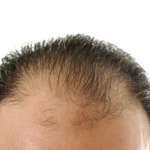
DHT doesn't make everyone go bald. It all comes down to whether your hair follicles are genetically programmed to be sensitive to it.
Here’s the deal: an enzyme called 5α-reductase turns your testosterone into DHT. The follicles on the crown of your head have way more androgen receptors than the ones on the sides or the back—that’s exactly why thinning usually kicks off up top instead of around the base of your scalp.
Basically, it’s not just about your hormone levels. It’s your genetics calling the shots on whether DHT is actually going to mess with your hair.

For thirty years, we’ve been fed the same tired line: stay away from saturated fat. Butter is the devil, eggs will clog your arteries, and red meat is basically a death sentence.
In the meantime, your hormones have been taking a beating.
A 2024 study in the *European Journal of Clinical Nutrition*—which tracked over 2,500 middle-aged guys—finally backed up what some of us have suspected all along. The findings are pretty tough to ignore:
More saturated fat (SFA) actually tracked with higher levels of both total and free testosterone. On the flip side, higher intake of polyunsaturated fats (PUFA)—those "heart-healthy" vegetable oils—was linked to lower levels.
Yeah, you read that right. The stuff we’ve been told to avoid for decades is actually helping your T-levels, while the trendy seed oils are doing the exact opposite.
Now, to keep it 100, there’s a catch: the study also saw a rise in SHBG when SFA intake went up. Since SHBG is a protein that locks up testosterone and keeps it from being used by your cells, that’s not ideal.
But here’s the kicker: total and free testosterone still went up overall. That’s a win. Of course, it’s not as simple as "chug butter and get jacked," but the logic holds up.
Here’s why eating fat actually makes sense:
Testosterone is a steroid hormone, and it’s built on a foundation of cholesterol. Your body needs that cholesterol to fuel the Leydig cells where testosterone is made. When you cut fat out of your diet, you’re basically cutting off the fuel supply. Study after study shows that going low-fat can tank your T-levels by 10-15%.
Meanwhile, those PUFA-heavy oils—think soybean, corn, or sunflower—can wreck your cell membranes and cause inflammation right where you really don’t want it.
So, how do you handle this in the real world?
Focus on quality. We’re talking grass-fed butter, eggs, solid cuts of beef or lamb, extra virgin olive oil, and fatty fish.
This isn't some "unhealthy" crash diet. It’s how we’ve been eating for millions of years—long before food companies decided that margarine and processed seed oils were the gold standard.
Stop fearing fat. Your hormones don't need you to be scared of it; they just need the right fuel to do their job.

1
55
Zinc, magnesium, Vitamin D, boron—you’ve heard it all a million times. It’s the same old list everyone talks about when it comes to male hormones.
But there’s one secret weapon basically nobody mentions: Vitamin K2.
Yeah, I know, it’s usually just "the bone and heart health vitamin." But it turns out it’s actually hanging out in the testes, and it’s doing some serious work there.
What the research says
A study in *Lipids in Health and Disease* looked at rats fed a diet loaded with MK-4 (that’s a specific type of K2) for five weeks. Their testosterone levels skyrocketed—both in their blood and right in the testicular tissue.
The crazy part? This happened without the pituitary gland getting involved. Usually, your body needs a signal from the brain (LH) to tell the testes to "get to work." Here, that signal didn't move at all, yet testosterone production jumped anyway.
That tells us K2 is working directly inside the Leydig cells, right at the source, skipping the middleman entirely.
How it works
Think of MK-4 as a tune-up for your testes' mitochondria.
Since mitochondria are the power plants for hormone production, they’re responsible for turning cholesterol into the stuff that eventually becomes testosterone. If your mitochondria are running efficiently, you’re cranking out more hormones. On top of that, K2 acts like a buffer against oxidative stress—which is basically the number one thing that kills your testosterone levels as you get older. Taking that stress off your system is a massive win.
Where to find it
Egg yolks, butter from grass-fed cows, gouda, brie, or liver. If you’re feeling adventurous, there’s always natto.
Stick to MK-4 if you’re looking for that hormonal edge. You’ll see a lot of MK-7 in supplements because it stays in your system longer, but all the research on testosterone is pointing directly at MK-4.
Is it a magic bullet?
Probably not, and yeah, we need more human trials to be 100% sure. But the science makes total sense, it’s all natural, and there’s really no downside to getting more of it.
Before you go wasting cash on some hyped-up "testosterone booster," maybe just check your diet first. You might just be missing out on K2.
2
77