

Prof. @NavalWarCollege/@ChinaMaritime • Visiting Scholar @HarvardAsia • Research Associate @Harvard/@FairbankCenter • Associate @CASI_Research • Member @CFR_org
Cambridge, MA
Joined May 2009
- Tweets98.6K
- Following55.8K
- Followers50.7K
- Likes57.5K




Pinned Tweet
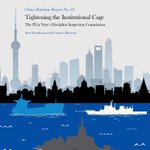
Yet again—this time thanks to pioneering research by Rear Admiral Philip Yu, @USNavy (Ret.) & Benjamin Rosen—the @NavalWarCollege/@ChinaMaritime Studies Institute (CMSI) offers insights available nowhere else in the #OpenSource world!
digital-commons.usnwc.edu/cm…
This penetrating deep dive surfaces pressing questions:
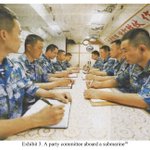
⚓ What is the cost of #China #Navy reliance on Dual Command Structure (Commanding Officer-Political Commissar) decision-making & Party Committee Meetings?
⚓ Particularly during time-sensitive or wartime submarine operations?
⚓ With all the communications/bandwidth challenges that operating submerged (& *hopefully* undetected) entails?


New! @NavalWarCollege/@ChinaMaritime Report #59—“Be Focused, Be Humble, Be Happy: Career Progression, Organization & Training of PLAN Submariners”
digital-commons.usnwc.edu/cm…
From CMSI Director @ChrisHSharman, @USNavy (Ret.)—
#China #Navy Watchers:
What are the career tracks aboard Chinese Navy submarines? How do #submarine crews train? And what are the dynamics between a sub’s Commanding Officer & the Political Commissar?
CMSI’s latest CMR tackles these ?s & more.
Authored by Rear Admiral (Ret.) Phil Yu & Benjamin Rosen, this report dives deep (pun intended) into the human factors that shape China’s sub force, an aspect of the PLAN that receives far less attention than its platforms & capabilities.
China’s diverse sub fleet & increasingly ambitious ops demand a hi degree of tech expertise & professional competence. Yet while sub hulls, weapons & capabilities frequently dominate analysis, far less is known about the crews who operate these platforms & the personnel systems that support them.
This CMR breaks new ground by examining the career progression, org structure & training of PLAN submariners. It explores how the sub force develops its officers & NCOs, how different career tracks support increasingly complex ops & how the PLAN is adapting its workforce to meet evolving technological & op demands.
The report also examines the role of the Party Committee & the relationship between the Commanding Officer & Political Commissar, including efforts to improve political officers’ op expertise. It maps career benchmarks for sub officers, assesses promotion opportunities for equipment & special tech officers & highlights the increasingly important role of NCOs in the sub force.
For those seeking to understand not just what China’s subs can do, but how the PLAN develops, organizes & leads the people who operate them, CMR No. 59 is essential reading.
Main Findings
•Led by the political commissar w/ the commanding officer serving as deputy, party committees are responsible for major decision-making, maintaining party control, training & general leadership aboard PLAN subs. While Chinese sources extoll this collective leadership model, it is unclear how this command structure influences decision-making efficacy in practice.
•PLAN political officers play a critical role in the leadership & decision making on PLAN subs, but reportedly lack understanding of sub ops. Despite attempts to improve the operational competency of political officers, this likely remains a problem for the PLAN sub force.
•The diverse PLAN submarine fleet & its increasingly ambitious operations require a hi degree of technical competency w/in the submarine force. Recent reforms to the career structure of tech officers can be seen as efforts to retain increasingly needed technical expertise in the PLA, in part to meet this requirement.
•According to PLA media reporting, the PLAN has made progress in expanding educational & career opportunities for NCOs, while enhancing their professionalization & tech competence w/ updated policies aimed at recruiting more college educated NCOs.
•PLAN subs’ apparent lack of a dedicated “supply department” may pose challenges to the sub force’s ability to become a true “far seas protection” force. The PLAN is attempting to address this via tech investments at Shore Service Departments.
•The US sub force uses lessons learned from incidents & accidents not only to enhance ops but also as a training tool. In contrast, the PLA treats accidents & near misses primarily as opportunities to promote the importance of political commissars in military decision-making, while prioritizing party loyalty & propaganda value over genuine learning. While public discussions in Chinese media about sub accidents & incidents are scarce, those that do exist reveal a clear focus on using such events for political messaging.
•The PLAN sub force has invested in simulators & training systems to enable its crews to exercise op……


Andrew Erickson 艾立信 retweeted

From the U.S. Naval War College, China Maritime Studies Institute, available now is China Maritime Report #59: Be Focused, Be Humble, Be Happy: Career Progression, Organization, and Training of PLAN Submariners
Full report: tinyurl.com/4d9csenx

Andrew Erickson 艾立信 retweeted

My post: Is Jing Quan a loose cannon?🤔
China Embassy: The ignorant are fearless!😵💫
Question: Are they referring to Jing Quan? Is he fearless? 😂


Andrew Erickson 艾立信 retweeted

Taiwan says five Chinese coast guard vessels shadowed Japanese ships near Penghu as they sought shelter from Typhoon Champi, accusing Beijing of exploiting storms to assert jurisdiction over the Taiwan Strait.
Andrew Erickson 艾立信 retweeted
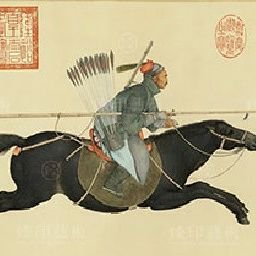
There are fewer than five active Confucius Institutes remaining on U.S. college campuses, so good time to close the barn door.
Andrew Erickson 艾立信 retweeted

Well stated @PLMattis. PRC would gladly sacrifice Confucius Institutes if its other United Front operations go untouched. @ChinaBriefJT Jamestown Foundation does excellent work on this subject. USG should pay attention if it needs UFWD 'targets' to go after. @SecWar
Andrew Erickson 艾立信 retweeted

The Confucius Institutes are part of a political apparatus the CCP uses to "break and shatter the enemy." Keeping the pressure on the united front system's efforts to evade U.S. countermeasures is an unequivocal good. But why leave it there? Many other similar organizations exist, but we (and our allies & partners) largely ignore them.

Andrew Erickson 艾立信 retweeted
Naval War College Review, Volume 79, Number 4, Autumn 2026
The keys to our past help illuminate the future of the maritime domain in this issue.
Full publication: tinyurl.com/2vs54znc


Andrew Erickson 艾立信 retweeted
U.S. Naval War College Alum, Astronaut Returns to Earth from International Space Station
Full article: tinyurl.com/55cfx2rs


Andrew Erickson 艾立信 retweeted
Happy birthday to the U.S. Navy! From all the staff and students at the U.S. Naval War College.

Andrew Erickson 艾立信 retweeted

The War Department has designated Confucius Institutes as a threat to our national security.
Andrew Erickson 艾立信 retweeted

A major 🇨🇳#PRC maritime militia rotation has begun in the #SouthChinaSea, with 24 of the large Qiong Sansha Yu ships leaving 3 ports on Hainan Island headed SW toward the Spratly Islands & Scarborough Shoal.
Meanwhile, 8 militia ships have left Scarborough toward Hainan. It is likely that we'll see similar departures begin from the Spratlys once the ships headed that way get closer.

Andrew Erickson 艾立信 retweeted

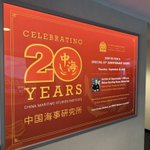
Contributing author Nia Kaul reports that the U.S. Naval War College’s China Maritime Studies Institute celebrates two decades of informing U.S. understanding of China’s growing maritime power.
Read here:
southchinaseanewswire.com/u-…
Big Splash! @NavalWarCollege/@ChinaMaritime Translation #37: “The Technical Evolution & Future Development of Chinese Navy’s 3rd-Generation Conventional Submarine”
digital-commons.usnwc.edu/cm…
Don’t let the title of this incredibly detailed article fool you!
This lengthy analysis *also* offers deep-dive insights into why #China is now focusing on #nuclear #submarine development by producing both larger SSNs/SSGNs/SSBNs + small/micro-reactor “SSPns” [e.g., Type 041]—the latter optimized for shallow Near Seas operations—as part of Xi’s directive to build a “world-class Navy” second not even to America’s.
As I explain in my Statement for the Record for the @USCC_GOV Hearing “Part of Your World: U.S.-China Competition Under the Sea,” Beijing is greatly emphasizing undersea warfare: uscc.gov/sites/default/files…
My 83-page Korea Institute for Maritime Strategy Policy Report—“China’s Nuclear Submarine Development Quest: Strategy, Saga, Significance”—traces PRC nuke sub prioritization & progress up through ongoing 3rd-gen advances & Type 041 development: en.kims.or.kr/publication/ki…
CMSI’s new translation by @RealNickHendo concludes with a worrying portent: “As China’s defense‑industrial research & manufacturing capabilities continue to advance, China may become the only country capable of developing entirely new‑concept submarines. In the future, the underwater operational posture & force balance in China’s near seas & the broader Western Pacific, both in quantity & quality, will shift dramatically, signaling that the Chinese Navy’s underwater combat capability is entering a completely new era of development.”
China recognizes nuclear power as the submarine gold standard, it’s optimizing for its own situation & objectives, & it’s now apparently getting good enough technologically to leverage its unrivaled production scale & scope. Such powerful alignment of national goals & strengths is where the tides of history may turn…


Andrew Erickson 艾立信 retweeted

Oct 19: 🇺🇸 Department of State imposed sanctions on 5 🇨🇳 entities: Shanghai Zhisuan Technology Co (至算), founded by Ding Linwei (丁林葳), a former Google software engineer convicted this year of stealing Google AI trade secrets; Qiji Chuangtan Beijing Investment Management Co Ltd (MiraclePlus / 奇绩创坛), the start-up incubator and venture capital firm of ex-Microsoft AI scientist Lu Qi (陆奇; lower pic) and the successor to a Chinese program run by Silicon Valley’s Y Combinator; two VC funds managed by MiraclePlus — Beijing Qiji Chuangtan Phase I Venture Capital Centre Limited Partnership (Phase I) and Beijing Qiji Chuangtan Phase II Venture Capital Centre Limited Partnership (Phase II); and Beijing Qiji Chuangtan Zhiyuan Enterprise Management Centre Limited Partnership (Zhiyuan Enterprise), a corporate management entity wholly owned by the Phase I fund.
🇺🇸 Treasury Department’s Office of Foreign Assets Control also added the same 5 entities to its Non-SDN Menu-Based Sanctions List.
MiraclePlus provided seed financing to Zhisuan in exchange for a 7% stake and gave Zhisuan a platform to showcase itself and attract follow-on investments.
Established in 2023, Zhisuan develops a software platform designed to help train AI models. Ding applied on behalf of Zhisuan to MiraclePlus’s startup incubation program, touting his knowledge of Google’s technology. The company claimed to have experience with Google’s TPU Superpod, which clusters up to 9,600 chips into a single logical network, and explicitly said it could replicate Google’s AI infrastructure technology.
Lu, a former Microsoft executive, was recruited in 2017 by Baidu to oversee the Chinese search leader’s AI efforts, only to quit a year later citing personal reasons. In 2018, Lu — recruited by then-Y Combinator president Sam Altman — joined the US firm to help create YC China. When Y Combinator abandoned the expansion a year later, Lu and his team continued operations under the MiraclePlus brand. It’s since backed some of China’s most promising startups, including AI inference platform SiliconFlow and robotics maker AgiBot, both of which are considering Hong Kong listings.
Ding was convicted of seven counts of trade secret theft in Jan. A federal judge subsequently acquitted him on seven additional counts of economic espionage, finding insufficient evidence that he knew or intended at the time of the thefts that his conduct would benefit the Chinese government. The theft convictions remain in place.
Ding stole confidential code related to Google’s AI supercomputing infrastructure, including technical details of tensor processing units (TPUs), GPU systems and networking components used to train and deploy large-scale AI models.
Google’s software can significantly improve the utilization efficiency of large computing clusters. A superseding indictment in Feb 2025 said Ding applied to a talent program in Shanghai. His application material stated that his product “will help China to have computing power infrastructure capabilities that are on par with the international level”
On Sep 1, Ding was sentenced to 12 months minus one day in prison and ordered to pay about US$198,000 in restitution
The five entities will face a series of financial and commercial measures, including asset freezes, a ban on transactions with US individuals and entities, and restrictions on financial services and foreign-exchange licenses.
scmp.com/news/china/diplomac…
bloomberg.com/news/articles/…
ofac.treasury.gov/recent-act…
state.gov/releases/office-of…
courthousenews.com/wp-conten…
shareholding structure chart of Ding Linwei’s companies 👉🏻 thewirechina.com/2024/03/17/…


Sep 1: former Google software engineer 🇨🇳 Linwei Ding (丁林葳), who stole proprietary information on Google’s artificial intelligence technology, was sentenced to 12 months minus one day in prison with two years of supervised release. Ding was also ordered to pay more than $198,000 in restitution to Google and a $2,500 fine.
Ding’s request to stay sentencing pending appeal was denied. He will have to surrender within 90 days.
Grant Fondo of Goodwin Procter, an attorney for Ding, requested a sentence of three months’ home confinement. Fondo told the judge Ding had no criminal record and was not at risk of committing the same crime again.
In contrast, the government sought a sentence of 70 months in prison, asking the judge to consider the complexity of Ding’s crimes, his attempts to conceal his actions and the need to deter others from similar crimes.
“Consider the message it would send to would-be Mr. Dings in Silicon Valley and the companies in Silicon Valley. Insider trade secret theft is a calculated crime not done in the heat of passion.”
The probation office recommended a sentence up to six months.
“This was a systematic, brazen effort to steal Google’s property and to benefit himself with it. He knew very well what he was doing and he hurt people along the way. He hurt Google along the way; he hurt his intern, his family and numerous times he tried to avoid detection. I have a very hard time imagining him not going to jail for this crime he committed. The idea of a non-custodial sentence is very hard to swallow for me.”
Ding addressed the court before his sentence was handed down, thanking the court for respect and decency and apologizing to his family.
Ding was accused of stealing trade secrets from Google, which hired him in 2019 as a software engineer to help develop its supercomputing data centers. Ding transferred and downloaded 1,255 internal Google documents, comprising an estimated 14,000 pages, between the spring of 2022 and 2023.
A San Francisco jury found Ding guilty of all 14 counts of theft of trade secrets and economic espionage following a two-week trial in January. Ding contested the charges against him, filing motions for a new trial, mistrial and acquittal.
In June, the judge concluded a rational juror could have found beyond a reasonable doubt Ding intended to take the trade secret information for the benefit of himself and the company he was forming in China.
However, in a separate order released last month, the judge tossed Ding’s economic espionage conviction, concluding there was insufficient evidence Ding intended to benefit the Chinese government when he uploaded the trade secret documents.
Fondo indicated Ding would be appealing the sentence; the judge noted that could open the door for the appeals court to reverse the acquittal of the economic espionage charges, which would require him to resentence Ding.
courthousenews.com/ex-google…

Andrew Erickson 艾立信 retweeted
“It’s absurd that 🇺🇸 iPhones are banned from 🇰🇷 military facilities due to security risks, yet no measures are taken against 🇨🇳 Chinese vehicles.”
Nearly 200 Chinese electric vehicles equipped with cameras and communication devices have been freely entering and exiting South Korean military facilities, it was revealed on Oct 15. These vehicles have accessed not only the Ministry of National Defense and Joint Chiefs of Staff compounds but also Air Force bases housing the latest stealth fighter F-35s and domestically developed supersonic fighter KF-21s, as well as the Navy Submarine Command, where secrecy is critical.
At least 190 Chinese-made “connected cars” capable of internet access, such as BYD vehicles, are currently registered for entry to the Ministry of National Defense and Army, Navy, and Air Force facilities. Notably, BYD vehicles were registered to enter high-security areas including the Busan Naval Operations Command, where US aircraft carriers dock, the Jinhae Submarine Command in South Gyeongsang Province — a hub for submarine security — and the Cheongju 17th Fighter Wing in North Chungcheong Province, which deploys F-35s, as well as the Yecheon 16th Fighter Wing in North Gyeongsang Province, where the first KF-21 was delivered last month.
Connected cars are equipped with over 10 cameras, high-precision GPS coordinates, radar, and microphones, capable of transmitting collected data via the internet. The US and EU have expressed concerns that information gathered by these Chinese vehicles could be sent in real time to Chinese authorities.
While the Army did not specify exact units, it was reported that Chinese connected cars are registered at the Army Headquarters in Gyeryongdae, South Chungcheong Province, the Ground Operations Command in Yongin, Gyeonggi Province, and the Special Warfare Command.
🇰🇷 Ministry of National Defense has not implemented any security measures, such as entry bans for connected cars, or requested security cooperation from manufacturers. In April, the ministry concluded in a meeting that “collecting video information at military-related facilities poses security vulnerabilities,” and in Sep, it only stated plans to prepare security measures.
“When asked which ministry is responsible for Chinese connected vehicles, the Office of National Security, Ministry of Land, Infrastructure and Transport, and Ministry of Trade, Industry and Resources shifted blame, leaving no ‘control tower.’ Our government’s awareness and response are severely inadequate, given the risk of real-time leaks of military facility information to China.”
chosun.com/english/national-…

Andrew Erickson 艾立信 retweeted

#Kharg Island continues to remain choked. As discerned on 18 Oct 26:07:19:09 UTC. No Oil tanker loading crude. All piers vacant. Most ships at ⚓️.📷#Sentinel2 🛰️@Moochikal @MontyKhanna2308 @AndrewSErickson @MT_Anderson @GordianKnotRay @NavyNews1109 @anshu217 @supbrow @azistaspace


Hot off the NWC Press! In the new Autumn 2026 issue of Naval War College Review, I’m honored to publish a “Special Feature—Twenty Years of the China Maritime Studies Institute”
digital-commons.usnwc.edu/nw…
In the words of Professor Sam J. Tangredi / @tangredi_j, Editor-in-Chief, @NavalWarCollege Press:
“we present a retrospective essay from Professor Andrew Erickson on the twentieth anniversary of the official launch of the College’s @ChinaMaritime Studies Institute (#CMSI). Very quickly, CMSI established itself as an indispensable center of gravity for thought on #China’s broader #maritime ambitions and activities and their implications, as well as a vital repository of translations of Chinese sources to illuminate and enable research in the broader community of interest. CMSI’s conferences and publications, outreach, and expertise have helped steer national conversation and help ensure that Navy leadership and the broader government are equipped with the knowledge they need in this vital arena, a mission CMSI and the community of researchers it supports look forward to pursuing for many years to come.”
digital-commons.usnwc.edu/nw…
Access the full issue here: digital-commons.usnwc.edu/nw…


