

categorizing anthro art from all parts of history ancient or otherwise. run by @khymera2000
Joined December 2018
- Tweets2.3K
- Following1.3K
- Followers7.3K
- Likes1.9K



Pinned Tweet
hey! im going to be posting on bluesky
bsky.app/profile/ancientfurr…
and mastodon
mastodon.social/@ancientfurr…
and tumblr
ancientfurries.com (look at me i got a fancy url)
from now on
fyi its all automated from tumblr so some will be repeats of old posts or reposts of reblogs but also new posts as well aswell
1
914
Hey everyone! Im going to be moving to tumblr and starting up this project again! ancient-furries.tumblr.com/

ancient furries retweeted

EMERGENCY COMMISSIONS PLEASE SHARE
Hey im a trans fem artist and I just got fired from my job & could really use some help
My rates start at $20 for a sketch
+$10 flat color
+$10 shading
+$20 cleaner/more complex line work
+$20 backgrounds
+$5-20 if its more complex in general


ancient furries retweeted

The Alexamenos graffito is an intriguing piece of ancient Roman graffiti, discovered in Rome on the Palatine Hill, etched into a wall of the Domus Gelotiana, a building that was once part of the imperial palace complex. This graffito is particularly significant as it is one of the earliest known depictions of the crucifixion of Jesus, albeit in a mocking and derogatory manner.
Dated to around the 2nd century AD, the graffiti shows a figure with the body of a man and the head of a donkey, crucified on a cross. Next to this figure is another man with his hand raised, possibly in a gesture of worship or greeting. Accompanying the image is a crude inscription written in Greek, which translates to "Alexamenos worships his god."
The significance of the Alexamenos graffito lies in its reflection of the way early Christians were viewed by some segments of Roman society. The donkey-headed figure is believed to mock the Christian belief in Jesus Christ, with the graffito possibly being created to ridicule a Christian named Alexamenos, who might have been a member of the household or a slave.
This piece of graffiti highlights the tension and scorn early Christians often faced in a predominantly pagan society. The ridicule of Christian beliefs, as shown in the Alexamenos graffito, is consistent with other historical accounts that indicate Christians were sometimes accused of being foolish or even practicing bizarre forms of worship.
Today, the Alexamenos graffito serves as a valuable artifact for understanding the early perceptions of Christianity in ancient Rome, offering a rare glimpse into the lives and struggles of early Christians living under the Roman Empire.


The Mouse Story
Muromachi to Momoyama period (16th century)
Japan
artsandculture.google.com/as…


ancient furries retweeted
At the start of this account, I was posting "etchings" of anthro art from the 15th–19th century. But I've been asked a few times to do ancient and prehistoric pieces.
How many would be interested in seeing a wider range of historical furry artifacts?


ancient furries retweeted
i am still trying to discover the origin of this shirt. please if you know anything or know anyone who might know that would be cool
You’re unable to view this Post because this account owner limits who can view their Posts. Learn more


ancient furries retweeted
Lion (England) singing to a disinterested Eagle (United States) 🦁🦅
At least Mr. Lion is enjoying himself


ancient furries retweeted

Reminder that Mark Merlino and his partner did a podcast talking about their history as furries and the history of cons! twooldfurryfans.com/category… listening to this in 2020 changed my life its amazing i really recommend it if you feel a deep connection to being a queer furry
ancient furries retweeted

Posting some of Mark Merlino's posters for the earliest furry parties from the late 80s.


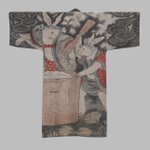
FIREMAN'S COAT
19TH CENTURY
JAPANESE
This thickly quilted coat was worn by firefighters in 19th-century Japan. It was soaked in water before it was put on to help protect the fireman. (1/2)

Like other firefighter coats of this period, the exterior has a brigade identification and the inside bears elaborate designs of rabbits pounding mochi (rice cake), alluding to the folklore of the rabbit in the moon. (2/2)
art.seattleartmuseum.org/obj…