



321Andrew retweeted

GROK 4.7 TURNED RAW SATELLITE IMAGERY INTO A LIVE 3D WORLD MODEL, THEN FOUND WHAT THE MAP MISSED
someone gave it years of fragmented satellite passes, elevation data and one coordinate
no single frame contained the whole place
Grok aligned the terrain, shadows, rooflines and movement across time, then started rebuilding the site piece by piece
old structures → recovered
later expansions → matched
vehicle paths → reconstructed
missing terrain → rebuilt
blind spots → filled from surrounding data
then it found the weird part
one structure kept changing between satellite passes, but the public map still showed empty ground
this is why Grok 4.7 feels completely insane
most AI sees an image and describes it
Grok was effectively turning thousands of incomplete observations into one continuous model of the physical world
the satellite saw snapshots
Grok reconstructed what happened between them
maps used to show us where things are
world models might start showing machines what the world remembers
321Andrew retweeted

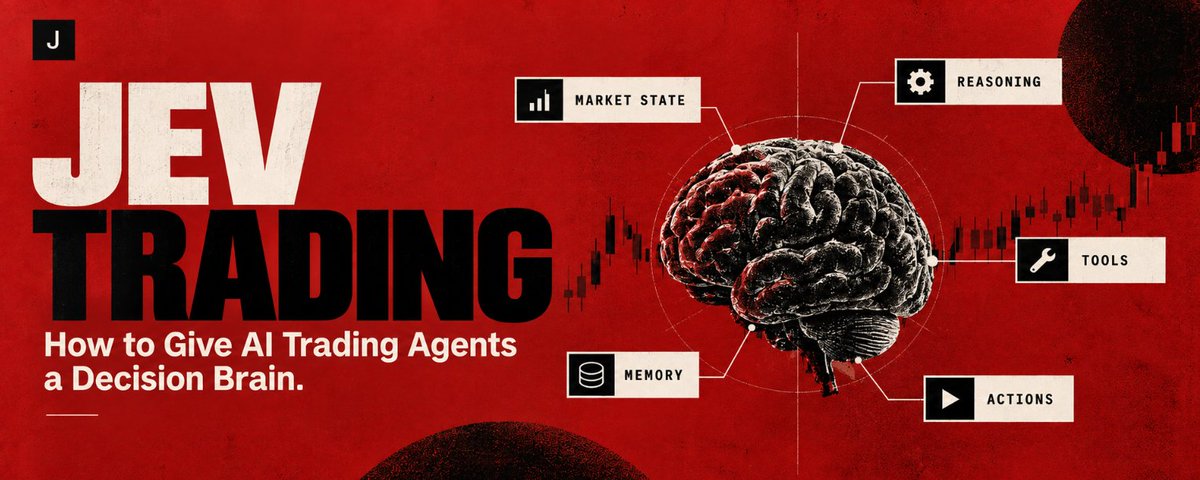
JEV IS ABSOLUTELY INSANE, AI TRADING JUST GOT A 300MS BRAIN
most trading agents are already late by the time they finish thinking
Jev cuts straight through that
market state → Jev decision → confidence gate → risk check → order
no essay. no JSON cleanup. no model spending 10 seconds explaining why momentum looks strong
the interesting part is what you can ask every block
liquidity disappearing → detect it
flow turning toxic → pull quotes
venue falling behind → flag the gap
confidence too low → do nothing
decision arrives late → kill the trade
that last one is the whole point
a correct trading decision 2 seconds late is still wrong
Jev can sit inside the live loop, make the fuzzy judgment in milliseconds, then hand control straight back to deterministic code for sizing, pricing and risk
AI trading agents did not need another model that thinks longer
they needed a nervous system that reacts faster
full Jev Trading architecture in the article below ↓

321Andrew retweeted

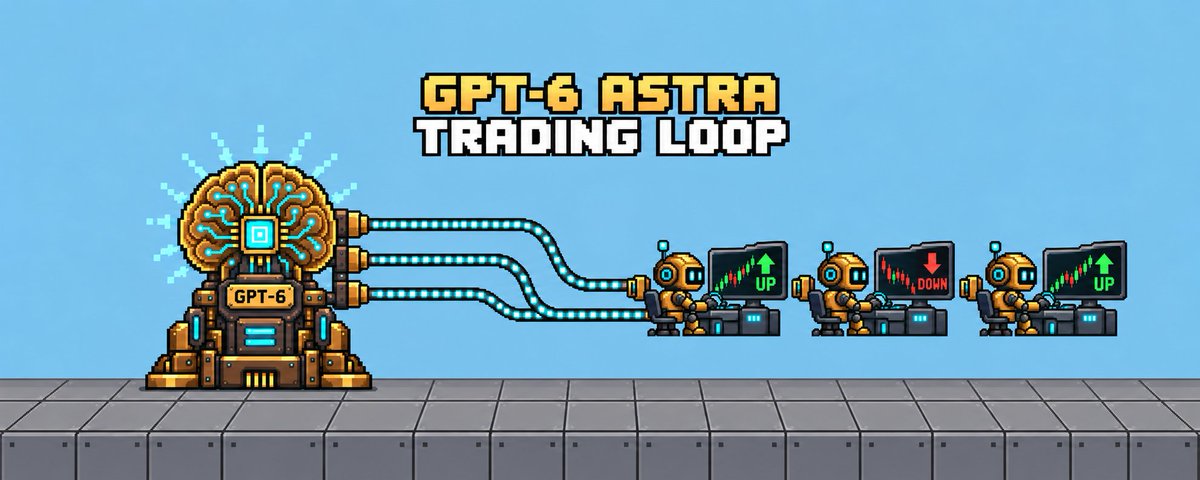
GPT-6 ASTRA TURNED MY $52 INTO $4,800 OVERNIGHT.
I didn't hand an AI my wallet and tell it to gamble.
I built a trading loop where Astra was the brain and a group of agents were the hands.
While I slept, the system kept repeating the same cycle:
→ collect live BTC price, volatility and order-book data
→ estimate fair value for 5-minute Up/Down markets
→ compare that value with the price that could actually be filled
→ subtract fees, slippage and model uncertainty
→ size the position and pass a structured signal to the execution agents
→ monitor the Up/Down inventory after every fill
→ rebalance, adjust and start again
Astra never touched the wallet or signed a transaction. It only returned the market, side, size, entry range and the condition that would invalidate the trade.
The agents did the dangerous part.
They held the API keys, enforced the limits and rejected any trade whose edge disappeared during execution.
At one point, Up was available at 44¢ while Astra estimated fair value near 53¢. That looked like a 9¢ edge—until the agents walked the order book. After depth, fees, slippage and uncertainty, only a small executable edge remained.
That distinction is the whole system.
The model thinks. The agents trade. The risk layer says no most of the time.
By morning, the account had moved from $52 to $4,800.
It wasn't one magical prediction. It was a loop making and correcting hundreds of small decisions while I was offline:
DATA → FAIR VALUE → EDGE → ORDER → INVENTORY → ADJUST → REPEAT
Important: this was one extremely high-variance run, not a promise of repeatable returns. Astra can be wrong, agents can fill badly, and a broken risk layer can erase the account. Any result like this should be verified from the actual trading history—not trusted from a screenshot.
I broke down the full architecture and the code behind the loop in the article below.

321Andrew retweeted
OPENAI JUST THREW 10,000 AI AGENTS AT A $1 MILLION PROBLEM HUMANS COULDN’T CRACK FOR 90 YEARS, 88 HOURS LATER THEY HAD A PROOF
The part that should make every research lab nervous is not the answer.
It is the method.
OpenAI split Navier–Stokes across an army of agents, let thousands of mathematical approaches live and die in parallel, then kept feeding the useful pieces back into the swarm until one branch survived.
> ~10,000 agents at once
> 2.7M messages exchanged
> ~130B output tokens burned
> 88 hours to produce the result
> another 17 hours for GPT-6 Astra to formalize it in Lean
Think about what just changed.
For 90 years, progress depended on a tiny number of humans finding the right idea.
Now you can attack the search space itself.
Spawn thousands of researchers. Let 9,900 be wrong. Preserve whatever the other 100 discover. Repeat until something cracks.
The proof still has to survive independent scrutiny.
But the terrifying part is already obvious.
OpenAI did not build one AI mathematician.
It built a research army you can scale with compute.


321Andrew retweeted
I JUST DROPPED BANGER ON GITHUB, THE FREE ROBINHOOD CHAIN MEMECOIN SNIPER I’VE BEEN BUILDING IN PUBLIC
It hunts fresh PONS V2 launches + new Uniswap V3 pools, checks whether the entry is actually executable, deploys ETH automatically, follows PONS migrations and keeps the position alive even after a restart.
> fresh launch detection
> liquidity + fee checks
> price impact filtering
> automatic execution
> PONS → V4 migration tracking
> persistent positions
> PNL + gas accounting
> spending + open-trade limits
Yesterday I left BANGER running while I was at work.
It made me $8,742 before I got home.
And I’m already working on the part I wanted from day one: dev watchlists + Twitter-triggered sniping.
Imagine a dev you’ve been tracking launches again, or a specific account suddenly pushes a new ticker, and BANGER is already sitting there waiting for the pool.
I spent days posting the terminal.
Now the actual code is live.
BANGER is free on GitHub.
repo in the first reply


I BUILT BANGER, THE FIRST ROBINHOOD MEMECOIN SNIPER I’VE SEEN, AND YOU CAN USE IT FOR FREE
Most snipers only care about being first.
BANGER tries to figure out whether the coin deserves the shot before it spends a single ETH.
> detects fresh Robinhood launches
> maps the dev wallet + previous launches
> tracks Twitter for narrative acceleration
> checks liquidity + sell-side risk
> scores every target before entry
> rejects weak setups automatically
> executes when the target passes
> keeps monitoring after the buy for the exit
Yesterday I left BANGER running while I went to work.
It made me $8,742 before I got home.
That’s the whole reason I built it. I don’t want a bot that wakes me up with another “potential 10x” alert and waits for me to do the hard part.
I want the full loop running without me:
discover → investigate → score → lock → execute → monitor → exit
Being first into garbage just means getting rugged faster.
BANGER’s job is to find the target, decide if it deserves the bullet, then fire.
I’m opening it up so other people can run it too.
321Andrew retweeted
MEET GROKIUS MAXIMUS, AN AUTONOMOUS MEMECOIN TRADER RUNNING AT A 90% WIN RATE
I built him because I got tired of being the weakest part of my own trading system.
> scans the trenches
> lets multiple agents argue over every setup
> rejects most of what reaches him
> puts real money behind the few trades that survive
Once he’s in, the job isn’t finished. He keeps testing the original thesis against what the market does next and cuts the position the moment the trade stops making sense.
No hesitation. No revenge trades. No “maybe it comes back.”
The first version was supposed to help me trade.
Grokius Maximus is starting to make me wonder why I’m still involved.

OpenAI wants you to rent intelligence forever. Kimi K3 wants you to own it.
Moonshot just released what it calls the largest open-weight model ever built, and it is already sitting near the top of the agent benchmarks while remaining downloadable, customizable and deployable on your own infrastructure.
That changes the business model more than the benchmark. With closed labs, every useful workflow becomes another monthly subscription. With Kimi, a company can fine-tune the model around its own data and stop sending every task through someone else’s API.
Demand got so ridiculous that Moonshot reportedly had to pause new signups only days after launch. People were not lining up for another chatbot with a different logo. They were lining up for frontier-level AI they could actually control.
Kimi K3 does not need to beat every OpenAI or Anthropic model today. It only needs to become good enough that renting five separate AI tools starts looking stupid.
The real AI war is no longer just about who has the smartest model. It is about whether intelligence remains a subscription or becomes something you can own.


Claude just got humiliated by a tiger rug.
The same prompt asked Kimi K3 and Claude Fable 5 to turn an embroidered tiger into a living animal. Kimi keeps the rug, the stage and the transformation coherent while the tiger slowly claws its way out of the fabric.
Claude gets a decent tiger, but the moment the prompt becomes more structured, the scene starts collapsing into blur, random motion and missing details.
This is obviously one cherry-picked comparison, not a scientific benchmark. But it exposes something more important than raw image quality: control. A powerful model is useless if every extra instruction makes the result less predictable.
Kimi K3 did not just generate a prettier tiger here. It understood the sequence, preserved the visual logic and made the transformation feel intentional.
The next AI race will not be about which model can generate the most impressive frame. It will be about which one can actually follow the director.
China may have just made the entire US AI spending war look completely insane.
Kimi K3 was built under chip restrictions, on slower hardware, yet the video argues it already trails only a handful of the most capable American models.
The uncomfortable part is not just the benchmark score. Kimi is open-weight, which means companies can download it, run it on their own servers and fine-tune it instead of renting intelligence from OpenAI or Anthropic forever.
Meanwhile, Wall Street has priced the US AI race around one belief: the best models require hundreds of billions in chips, data centers and electricity.
Kimi’s existence suggests that belief may be wrong. Maybe frontier AI does not require the largest budget on Earth. Maybe it just requires a team that wastes less of it.
The US still has the strongest models. But China is now close enough that “they cannot catch up without our chips” is starting to sound less like strategy and more like denial.
Everyone is buying better AI models while ignoring the thing Andrej Karpathy’s “LLM as an operating system” idea makes painfully obvious:
the model is replaceable. The context is not.
Your offers, client research, ad angles, writing style, failed experiments and every decision you already made should live in one structured vault that any model can navigate.
Build it in Obsidian with five core notes: the offer, the client, the voice, the playbooks and the rulings. Not 4,000 random notes called “second brain final FINAL.”
Then give every AI worker only the context it needs. The writer reads the voice. The outreach agent reads the client. The strategist reads the offer. Nobody burns half the context window rereading your entire company.
Every correction becomes one line in the rulings note. Every worker checks it before starting. You fix the mistake once instead of explaining the same preference to twelve different chats forever.
Claude, GPT and whatever model launches next month are interchangeable workers. The vault is the part that compounds.
The model is rented intelligence. The knowledge base is the business.
Claude’s biggest problem might not be OpenAI.
It’s a Chinese model casually generating black-hole simulators, wuxia open worlds, destructible 3D maps and playable combat games from prompts.
This Kimi K3 showcase runs through eight projects that would have been separate weekend builds not long ago. One model handles shaders, physics, movement, environments and gameplay without switching between five different AI tools.
The results are obviously not finished products. But that is no longer the important benchmark. The model already gets far enough that you can test the idea instead of spending days building the first ugly prototype.
Kimi K3 is not trying to become a slightly better chatbot.
It is trying to turn the entire software stack into one prompt box.
Kimi K3 just turned one prompt into a playable Spider-Man-style game inside a browser.
Not a static demo. You can swing between cyberpunk buildings, move through the city and actually interact with the world like a rough game prototype.
A few months ago, AI coding demos meant generating a landing page with gradients. Now the same interface is producing 3D physics, environments, character movement and gameplay loops without opening Unity.
The game is obviously not finished, but that misses the point. Kimi removed the part where you spend days building the first ugly prototype just to see whether the idea works.
AI models are no longer helping people write games. They are starting to generate the first playable version before the developer has even created the project folder.
Kimi K3 just turned a prompt into a playable cyberpunk game running inside a browser.
Not another landing page with three glowing cards. An actual 3D city with a title screen, explorable streets, vehicles, characters and enough gameplay to make the usual “AI can only build prototypes” argument look slightly uncomfortable.
The impressive part is not that every mechanic is polished. It clearly is not replacing a real game studio from one prompt, despite what the thumbnails will claim by tomorrow morning.
The impressive part is how much of the starting work disappeared. No manually building the environment, wiring the first interactions or spending three days creating something barely playable before the real development begins.
Kimi can now take a vague idea and push it far enough that you are testing the world instead of staring at an empty project folder. That is a very different kind of coding assistant.
We spent years paying separate subscriptions for code, research, design and agents. Kimi K3 seems determined to turn all of them into one box that occasionally decides to build Cyberpunk in your browser.
Claude can apparently do everything now.
Someone gave it one flat image of a tiny floating island. Claude connected to Blender through MCP and rebuilt the scene as an actual 3D model.
Not a generated screenshot. Not a fake video. Claude is controlling Blender, creating the geometry and assembling the scene inside the software.
A year ago it was writing emails. Now it builds apps, runs workflows, handles support, creates websites and apparently does 3D production when it gets bored.
At this point, the question is no longer what Claude can do. It is what software we have not connected it to yet.


A $3/month AI workflow is now doing the work of a $1,200/month support agent.
It handles 200+ tickets around the clock and, according to the creator, resolves roughly 70% correctly on the first attempt.
That means around 140 customer problems disappear before a human even opens the inbox. The remaining 30% still need judgment, refunds and the usual customer-service archaeology.
So no, AI did not completely replace support. It replaced most of the queue, which is considerably more useful than another chatbot pretending to understand an angry customer.
The expensive product is not the model. It is the workflow that knows what to answer, what to check and when to quietly hand the mess back to a human.

Claude built this landing page in under an hour.
She says it generated 300 signups and helped make more than $40,000.
No agency. No designer. No month-long funnel project. She gave Claude the offer, audience and product details, then told it to make the page convert.
The page itself is almost boring: clear promise, obvious audience and one action to take. Apparently that still works better than adding twelve gradients and calling it “premium UX.”
Claude didn’t create the business. It compressed the expensive execution layer from weeks into one afternoon.
Five markdown files just replaced the part of a branding team that costs $10,000 and takes six weeks.
Normally you hire a strategist, copywriter and designer, spend thousands, then receive a brand guide nobody opens after Tuesday.
This workflow gives Claude Code your voice, visual rules, positioning, audience and content system once. Every page, email and post is generated from the same operating system instead of another random prompt.
Claude still cannot invent good taste from nothing. But once the taste is documented, it can reproduce it across an entire business without forgetting the brand every new chat.
The next expensive AI product is not another app. It is five boring files that make Claude work like the team you could not afford.
A guy vibe-coded an app in one weekend and says it reached $200,000 in revenue five days later.
Then he spent the next 80 seconds explaining why you probably won’t do the same.
He had already built 14 apps. AI made the product faster, but it did not find customers, convince them to pay or magically turn one social media post into distribution.
That is the part most “build a $100K SaaS this weekend” videos quietly delete. Coding became cheap. Getting attention and selling something people want remained annoyingly human.
You can build the app in two days. Building the person capable of turning it into a business may still take five years.
A guy claims his AI agents made $16,000 in 60 days while he did almost nothing.
Not with some revolutionary startup. They were running three Etsy stores.
Claude Opus acts as the manager. It delegates the cheap work to smaller agents that research products, create designs, write listings and publish everything without waiting for a human to approve every step.
The interesting part is not the Etsy money. It is that he did not build one AI product. He built a workflow that repeatedly finds products, creates them and puts them in front of buyers.
Most people are still asking Claude to generate one logo or write one description. This system gives Claude workers, a manager and a business to operate.
The creator’s revenue claim is not independently verified, and “almost nothing” probably contains a generous definition of nothing. But the direction is obvious: the next $10,000 AI product may just be a workflow that keeps doing profitable work after the prompt is finished.