
Research Scientist at Meta Superintelligence Labs
London, UK
Joined July 2014
- Tweets103
- Following392
- Followers336
- Likes1.1K


Abhinav Moudgil retweeted

Today we're also opening the weights for Muse Glimmer, a great 30B parameter dense model that can run locally. Soon we'll also release the weights for Muse Spark 1.2, our latest foundation model. Meta is a strong supporter of open source and I'm proud of these releases. Congrats to @alexandr_wang and the MSL team for all your great work on these models.
Big kudos to @iclr_conf for organizing #ICLR2026 so well, one of my best conference experiences. Rio is incredible!


If you’re curious, check out the paper here: arxiv.org/abs/2604.14191

Abhinav Moudgil retweeted

PyLO is accepted to MLSys 2026! 🎉🚀
A PyTorch-native library bringing SOTA learned optimizers to the codebases most of us actually use — with fast CUDA kernels and real speedups on large-scale training. Drop-in ready, no more JAX-only barriers.
Library: github.com/Belilovsky-Lab/py…


Have you ever trained a neural network using a learned optimizer instead of AdamW? Doubt it: you're probably coding in Pytorch! Excited to introduce PyLO: Towards Accessible Learned Optimizers in Pytorch! . Accepted at @icmlconf ICML 2025 CODEML workshop 🧵1/N
Heading to Rio 🇧🇷 to present our Celo line of work at #ICLR2026!
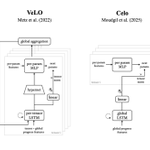
Get in touch if you are curious about new avenues in neural network training or how we scaled learned optimizers from CIFAR-10 to GPT-3 🚀
Details ⬇️
2. Celo2: Towards Learned Optimization Free Lunch
🗓️ Sat, Apr 25, 2026 • 10:30 AM – 1:00 PM
📍 Pavilion 3 P3-423

Abhinav Moudgil retweeted

NEW paper from Apple.
Interesting idea: "Attention to Mamba".
The paper introduces a two-stage recipe for cross-architecture distillation from Transformers into Mamba.
Naive distillation collapses teacher performance. Their trick: first distill the transformer into a linearized-attention student using a kernel adaptation, then transfer that student into a pure Mamba with no attention blocks.
On a 1B model trained on 10B tokens, the Mamba student hits 14.11 perplexity against a 13.86 Pythia-1B teacher, nearly matching quality at linear-time inference cost.
If you can reliably convert trained transformers into state-space models without retraining from scratch, the entire open-weights ecosystem becomes cheaper to serve at long context. This is the kind of quiet infrastructure work that decides which architectures actually get deployed in agent stacks.
Paper: arxiv.org/abs/2604.14191
Learn to build effective AI agents in our academy: academy.dair.ai/

Check out the fresh arXiv preprint of work from my Apple internship!

Attention → Mamba cross-architecture distillation is real
Transformer doesn't need to stay just a transformer – Apple showed how you can transfer it into a State Space Model (SSM)
▪️ It happens through a linearized-attention intermediate:
1. Distill the Transformer into a linearized attention model using a kernel trick:
→ Approximate the softmax exponential similarity in attention as a dot product of transformed features. This turns quadratic attention into linear attention.
2. Distill that model into Mamba SSM with proper initialization.
This method helps in 2 aspects:
- It avoids hybrid architectures
- And allows Mamba to reach perplexity 14.11 vs 13.86 for the original Transformer.
So the lesson here is not to start Mamba from random weights, but start it from a sequence mixer already aligned with the teacher Transformer.

So glad to see this release! Just look at that huge leap in CharXiv figure understanding 🤯
Our tiny team in London worked insanely hard to contribute in this area and even the initial results blew our minds completely. No surprise it's SOTA in this category :)


Introducing Celo2: Towards Learned Optimization Free Lunch
We show that learned optimizers can generalize to practical tasks like GPT-3 1.3B pretraining and several out-of-distribution vision/RL tasks from limited meta-training (~4.5 GPU hours)!
🧵

Work done with @BorisAKnyazev and @ebelilov. If you are interested in this line of research or related topics, our lab is hiring:
xitter.cf/ebelilov/status/202639…

I have open positions including Postdocs, PhD, master's students, and PhD interns. For more information eugenium.github.io/Projects/…
Finally, I'd like to acknowledge the Google TPU research cloud program that made this research possible and sincerely thank @mrtnm @kvfrans @_chris_lu_ for their open-source contributions by releasing clean jax codebases with TPU/FSDP support.