





Shoutout to the linemen @austinenergy who restored our power within a few hours and did so with a smile.
Stay safe and thanks for all you do!🫡
Andrew Michael retweeted
Is this because of something I said on @60Minutes?

Governor Greg Abbott has directed the Texas Commission on Environmental Quality to halt all permits sought by data centers until an audit of risks to the grid is complete bloomberg.com/news/articles/…

Andrew Michael retweeted

Why doesn’t the larger CEO simply eat the smaller CEO?

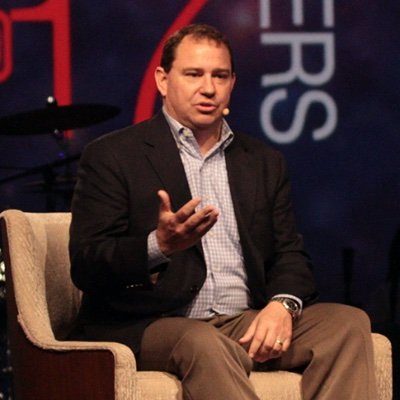
Live: @DarioAmodei x @Benioff
The @AnthropicAI co-founder & CEO joins us at @Dreamforce for a conversation worth hearing ☁️
Andrew Michael retweeted

This photo essay showing what it takes to build a transformer is wild.
Transformers are the foundation of our electric grid, the clean energy transition, and the AI boom. But they are currently backlogged as long as 5 years.
These photos help you understand why. The largest transformers are massive. And they’re basically hand-crafted by skilled workers that train for years.
nytimes.com/interactive/2026…

Andrew Michael retweeted

BTM and off-grid are not anti-grid. They’re exactly what the grid needs.
High-renewables grids require a source of well-funded, dispatchable reserve capacity. Solar and wind are intermittent, and batteries handle average daily fluctuations well, but not extreme events. Something that has puzzled the grid policy community for ages is: who will pay for, build, and maintain that low-utilization capacity? Until recently, we had no idea.
Today, we’re building gigawatts of “behind-the-meter” power for data centers. These are engines and turbines that typically wouldn’t be used for baseload operations. On the grid, big reciprocating engines and smaller aeroderivative gas turbines are used for peaking, essentially backup power, and renewables balancing. It’s only off-grid that they’re used for “prime power.”
While these engines and turbines are running baseload today to serve their data center customers, the vast majority of these systems will connect to the grid over time. Their customers want the grid, and their own financing works better when there is a grid connection. There’s no reason to avoid the grid once it gets its act together and actually offers to connect.
When they do connect, these BTM DCs will bring gigawatts of flexible backup power to the grid. And unlike the CCGTs many utilities are begging to build at astronomical costs, they won’t run all the time, polluting 24/7 and locking in long-term emissions. They’ll run only when they’re really needed because they’re low-capex, high-opex systems.
That’s exactly how the grid is designed to work, and a perfect complement to high solar/wind/battery systems.
The dispatchable reserve capacity we direly need to scale solar, wind, and batteries to high penetrations will have been paid for by high-margin compute. Not by ratepayers or taxpayers.
And if AI is a bust (imagine it’s a huge bubble and it all deflates) then those costs will be borne entirely by the BTM and AI companies. Compare that with a scenario where we massively upgrade the grid immediately to serve AI, and then all that demand goes poof. That would be a disaster for ratepayers who are all ready exasperated with high prices.
If you’ve been told BTM and off-grid power are anti-grid, ask what the alternative is and if its ever been shown to have momentum. So far, this is the most promising path to actually building gigawatts of dispatchable grid capacity without putting the cost, and the downside risk, on ratepayers.


Excited for the future of BPA

Having been called back to public service after almost a decade in private life & on the eve of America's 250th, I am deeply honored.
Will have more to say about this, but for now, thank you to my family (especially my wife Laura -- it is our anniversary today!), my friends, and my colleagues for their support in this endeavor.
I am humbled by the trust that's being put in me by the federal government as well as regional stakeholders of @bonnevillepower to lead an institution whose history is synonymous with the development of the Pacific Northwest and which has been an important source of America's strength.
It is bittersweet to be leaving what I am up to today at @basepowerco, but I look forward to this challenge.
Please send your prayers my way as I take the oath of office next Monday in Portland.

Andrew Michael retweeted

Holy moly what a shirt! #ATX

Basier, a contemporary Neo-Grotesque font by atipo®. Download regular weight for free!! atipofoundry.com/fonts/basie… via @atipostudio

Andrew Michael retweeted

Look at all the 🇺🇸 trade that's now happening without the Jones Act in effect.
And the Jones Act fleet is still fully booked. This is all extra shipping, from Americans to Americans, that's happening just because government got out of the way.

Andrew Michael retweeted

#EnergyTwitter's own @TKavulla expected to be appointed as the next administrator of the Bonneville Power Administration, the federal power agency responsible for much of the Northwest's grid! newsdata.com/clearing_up/cle… A commendable choice! Bravo Travis.

👇this is how all players in the industry should be working together. Not a zero sum game with energy demand in the TW scale over the next decade.
👏

as a peer to fervo, today feels like a good day to give them their flowers for their opening act.
they started when nobody cared about geothermal or baseload power startups, trying to commercialize EGS; a technology with a 40+ year graveyard of failures. anyone who does this for a living knows how brutal that path was. they had to survive so many firsts and so much painful company building.
now for the second act: they're sitting on 2B+ in cash now. and unlike fusion or fission, that capital is going to turn into real MWh on the grid. no celebrating technical milestones that nobody understands, no "power is just a few years away" promises. no, those billions will generate new power. because at the end of the day, geothermal is just drilling, hot rocks, and thermal power plants. we know how to drill. we're getting better at finding the hot rocks. and we damn sure know how to build and operate the plants.
it's a pretty cool moment. the future is bright.

Andrew Michael retweeted

Actually insane how bad a festival can fall off in 10 years. Wtf happened to yalls booking that shit is ass


2026 LINEUP 😎 Celebrating 25 years of ACL Fest & counting!
3-Day Tickets for Weekend One and Weekend Two go on sale TODAY at 12pm CT. aclfest.com

Andrew Michael retweeted

🧵 #ModelMonday
We published a new paper on carbon-free electricity procurement. The most important findings are about how much your assumptions change the answer.
A thread on what models reveal (and hide) about CFE. 👇

Andrew Michael retweeted

I am assuming these "conversations" had a decibel level >70...
Pretty unusual to see a utility, having laid before regulators a few thousand pages of a rate-case filing, say "actually, on second thought..."

Certainly we see some utilities beginning to make big asks of their state regulators in this regard; PECO --with a headline of a 12.5% , $20/mo. rate hike filed this week -- is asking for a 10.95% Return on Equity!
whyy.org/articles/peco-bill-…

Andrew Michael retweeted

#DLR can increase the capacity of existing lines. Where it has worked, it has done so because there is no dispatch governance to move power with sophisticated software that runs linear decomposition to define nodal constraints, set shadow prices, and run a proper market to relax constraints. Brazil, India, these are all places where DLR makes sense. In the U.S., there are indeed grids that do not have sophisticated #SCED solves that will benefit from DLR instead.
In Texas, where I do a lot of work on Tx congestion issues, DLR is not the cheapest solution. Loads in SCED is cheaper, and will work faster while serving #AI load growth.
1. ERCOT has an existing connect-and-manage gen farmework that already manages transmission constraints to prevent line overloads (N-1, N-1-1,G-1).
2. Under NPRR1188, loads transition from a zonal construct to Nodal Settlement. SCED will use their Locational Nodal Shift Factors to set shadow prices and dispatch them down to their Low Power Consumption (LPC) to resolve T-and-G constraints dynamically.
3. Now, we are writing the rules for loads to get power faster, if they volunteer for no. 2. Called "provisional controllable loads", they rely on digital comms with SCED software, making it a faster, software-driven unlock for line congestion.
4. Provisional CLRs empower loads to retain "firm" status for part of their operations while managing flexibility for the rest, essentially turning the load itself into a reliability resource solving for T and G problems, dynamically, with algos.
This quoted post is unavailable.
Andrew Michael retweeted

"These attacks included one of the pumping stations on the East-West Pipeline, leading to a loss of approximately 700,000 barrels per day in throughput"


Andrew Michael retweeted
Great write-up this week @WSJ about "Who Pays for the Grid?". @ERCOT_ISO was spotted as a real source of escalating rates & to my mind the solution in that region is not mysterious:
1. Give residential customers the same opportunity as C&I to respond to demand based prices. This has been the primary source of cost-shifting between industrial--> resi customers, but now customers with batteries, smart thermostats, time-of-use rates, and other methods can be an equal participant in this demand-based rate design
2. Insist on a system of upfront payments from large loads when transmission expansion is predicated on demand growth concentrated in those customer segments. This could manifest either as a straightforward fixed-per-MW payment, or some kind of open season for interconnection rights
3. broaden the base of "4CP" (the status quo, where the entire ERCOT transmission revenue requirement is collected on the basis of demand-based usage in 4, 15-minute summer intervals!) to a broader base, like 6 or 12-CP.
Those items, in that order, are the most important for @PUCTX @ERCOT_ISO to achieve. Some may disagree with that ordering, but everyone should agree that getting everyone a chance to respond to the price signals associated with the basic methodology of how grid costs are incurred + making all customers who are causing costs (esp new costs!) to be incurred are the imperatives in ratemaking here.

