

Assistant Professor at Vanderbilt Univ. Medical Center. Arrhythmia genetics, ion channels, high-throughput methods. https://xitter.cf/t.co/SME2KRmfPt.
Nashville, TN
Joined June 2010
- Tweets660
- Following612
- Followers465
- Likes1.2K






Andrew Glazer retweeted

This is the real Turing test if you think about it

Two days ago, GPT-6 Astra broke a yet unsolved German Army Enigma message from 1941. Amazingly Astra was able to autonomously:
- Search historical archives
- Compare uncertain letters
- Find contextual clues
- Build an Enigma simulator
- Write cryptanalysis code
- Run parallel experiments
- Test competing keys
- Recover the plaintext
- Cross-check the results
1/n

Andrew Glazer retweeted

I am proud to share our paper using two complementary approaches to resolve variants of uncertain significance (VUS) in the gene TSC2. VUS are a barrier to achieving a precise genetic diagnosis for tuberous sclerosis complex and some cancers. 1/14 nature.com/articles/s41467-0…

Andrew Glazer retweeted

Common African ancestry-enriched variants of uncertain significance associated with increased cardiomyopathy and arrhythmia risk, particularly in individuals with CV risk factors or HF. ahajrnls.org/4gcmFXC

Andrew Glazer retweeted

Today, we share a breakthrough on the planar unit distance problem, a famous open question first posed by Paul Erdős in 1946.
For nearly 80 years, mathematicians believed the best possible solutions looked roughly like square grids.
An OpenAI model has now disproved that belief, discovering an entirely new family of constructions that performs better.
This marks the first time AI has autonomously solved a prominent open problem central to a field of mathematics.
Andrew Glazer retweeted

June 2024: The latest general-purpose LLMs could not count the r's in strawberry.
July 2025: The latest general-purpose LLMs get gold in the International Math Olympiad.
May 2026: The latest general-purpose LLM solve one of the "best-known questions in combinatorial geometry"


Andrew Glazer retweeted

Ventricular conduction is a marker for arrhythmic risk in SCN5A-E1784K overlap sodium channel disease academic.oup.com/europace/ar…
Vanderbilt's division of Genetic Medicine has an open faculty position: apply.interfolio.com/177945
A nice editorial about our recent SCN5A automated patch clamp paper. @ChaiAnn_Ng @VandenbergJamie academic.oup.com/eurheartj/a…

Andrew Glazer retweeted
Biobank data shows SCN5A variant carriers have longer baseline QTc and greater sensitivity to QT-prolonging drugs. Findings support ancestry-informed pharmacogenetic risk stratification ahajrnls.org/3Yryv6e

Excited to share our preprint: Mapping the Functional Landscape of KCNQ1 to Define Ion Channel Mechanisms and Arrhythmia Risk! We performed ~50,000 experimental measurements of KCNQ1 variants.


Andrew Glazer retweeted
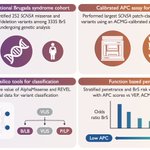
📝 Excited to share our latest work, now out at European Heart Journal! We studied 252 SCN5A variants previously found in patients with Brugada Syndrome, an inherited arrhythmia disorder linked to sudden cardiac death. [1/4]


Andrew Glazer retweeted

New preprint! We measured temperature- and pH-induced aggregation for over 18,000 natural and de novo designed protein domains!


Andrew Glazer retweeted

Automated patch clamp data improve variant classification and penetrance stratification for SCN5A–Brugada syndrome. Read more in #EHJ
@escardio @ESC_Journals #Brugadasyndrome
academic.oup.com/eurheartj/a…

📝 Excited to share our latest work, now out at European Heart Journal! We studied 252 SCN5A variants previously found in patients with Brugada Syndrome, an inherited arrhythmia disorder linked to sudden cardiac death. [1/4]
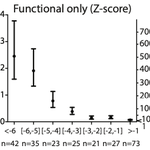
Variants with severe loss-of-function had ~25% penetrance & 501x increased odds of BrS. Normal-function variants had lower risk. This work stratifies SCN5A variants into low-risk vs high-risk categories, aiding diagnosis & management for patients & families. [3/4]

This was a collaborative project led by @mjoneill95 and @joanne_gjm and co-supervised by me, @VandenbergJamie, and @ChaiAnn_Ng. Link: academic.oup.com/eurheartj/a… [4/4]


