

Official Twitter Handle of Ahmadiyya Muslim Community: Muslims who believe in the Messiah, Hazrat Mirza Ghulam Ahmad of Qadian. Love for All, Hatred for None
Worldwide
Joined July 2009
- Tweets12.7K
- Following31
- Followers73.4K
- Likes531




Friday Sermon:
The Holy Prophet’s (sa) Life of Moderation and Simplicity
Delivered by His Holiness Hazrat Mirza Masroor Ahmad (aba) on 16 October 2026
alislam.org/friday-sermon/20…

New Book:
Mubarakah's Tale—in Mubarakah's Words
(May Allah be pleased with her)
This remarkable book offers a deeply personal and heartwarming glimpse into the blessed household of the Promised Messiah, peace be upon him, as seen through the eyes of his beloved daughter, Hazrat Nawwab Mubarakah Begum. With touching simplicity and vivid detail, she recounts cherished memories from her childhood-moments that beautifully capture the spiritual atmosphere and
noble character that surrounded her family.
new.alislam.org/library/book…

Friday Sermon:
Promised Messiah's (as) Exemplary Trust in Allah
Delivered by His Holiness Hazrat Mirza Masroor Ahmad (aba) on 2 October 2026
alislam.org/friday-sermon/20…

New Book:
Hazrat Usman Ghani (May Allah be pleased with him)
This book commemorates the life of Hazrat Usman (ra): his generous services for Islam, his work to preserve and protect the text of the Holy Quran, and his ultimate martyrdom.
new.alislam.org/library/book…

Majlis Khuddamul Ahmadiyya UK Ijtema 2026
Concluding Address by Hazrat Mirza Masroor Ahmad , Khalifatul Masih V (aba)
alislam.org/video/majlis-khu…

Friday Sermon:
Following His Master (sa): The Promised Messiah (as) on finding Allah's Grace Through Trust, Devotion, and Submission
Delivered by His Holiness Hazrat Mirza Masroor Ahmad (aba) on 25 September 2026
alislam.org/friday-sermon/20…

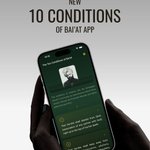
Looking for an easier way to revisit the Ten Conditions of Bai’at?
The 10 Conditions of Bai’at app brings them together in one place.
Explore the Ten Conditions of Bai’at with introductory information and additional references to support further reading and reflection.
The app is designed to make it simple to return to the conditions, read through them at your own pace and access related material when you want to explore further.
📱 Download the 10 Conditions of Bai’at app at alislam.org/apps
#TenConditionsOfBaiat #Baiat #Ahmadiyya #AlIslam #IslamicApp


Majlis Ansarullah UK Ijtema 2026
Concluding Address by Hazrat Mirza Masroor Ahmad , Khalifatul Masih V (aba)
alislam.org/video/ansarullah…

Lajna & Nasirat UK Ijtema 2026
Concluding Address by Hazrat Mirza Masroor Ahmad , Khalifatul Masih V (aba)
alislam.org/video/lajna-nasi…

Friday Sermon
The Holy Prophet's (sa) Unwavering Trust in Allah
Delivered by His Holiness Hazrat Mirza Masroor Ahmad (aba) on 18 September 2026
alislam.org/friday-sermon/20…

The Will:
This app contains the book Al-Wassiyat by The Promised Messiah (as), in both English and Urdu with additional interactive content.
Android: play.google.com/store/apps/d…
For Apple Devices: apps.apple.com/us/app/the-wi…
Friday Sermon
‘The Holy Prophet’s (sa) Example in Unwavering Trust in God’
Delivered by His Holiness Hazrat Mirza Masroor Ahmad (aba) on 11 September 2026
alislam.org/friday-sermon/20…

#JalsaGermany 2026 – Hazrat Mirza Masroor Ahmad Khalifatul Masih V (aba)’s Address to Ladies alislam.org/video/jalsa-sala…

Friday Sermon
In His Own Words: The Promised Messiah's (as) Gratitude to the Companions in the Cause
Delivered by His Holiness Hazrat Mirza Masroor Ahmad (aba) on 28 August 2026
alislam.org/friday-sermon/20…

Global Disorder & The Urgent Need for Muslim Unity
new.alislam.org/library/book…

Ahmadiyya Muslims retweeted

Can the preservation or historical display of a bodily relic lead to shirk? Hair, for example, once formed part of the body, whereas a garment or book only belonged to its owner. Does this closer physical connection make its preservation more liable to shirk?
Relics can undoubtedly be misused, as can images, graves and places associated with holy persons. But did the Promised Messiah (as) prohibit the preservation and viewing of bodily relics? Did he regard their bodily origin as a separate danger?
A believer who legitimately seeks blessing through an object holds that Allah has placed a particular good in something He created and seeks that good from Him. He does not attribute independent power to the object.
Whether respect or tabarruk is being turned into worship depends upon the use made of the object. Hair, cloth and paper do not acquire such a tendency merely by existing.
The possibility of later misuse does not make every present use impermissible. To say that a practice leads to shirk requires some reason to expect that people will invoke the object, seek powers from it, turn it into an object of devotion or gather around it in a manner resembling worship.
The Promised Messiah (as) permitted the photograph for a missionary purpose and condemned its use in a form associated with religious veneration. The physical image was the same in each case. His answer turns upon the manner and purpose of the photograph’s use.
The kurta of Hazrat Mian Abdullah Sanori (ra) is more directly relevant because it was itself a relic. The Promised Messiah (as) answered the general question by permitting the preservation of a garment or another relic of a holy person, since the Companions had preserved relics of the Messenger (sa) of Allah.
The same report which records the burial undertaking given by Hazrat Mian Abdullah Sanori (ra) also records that the Promised Messiah (as) subsequently permitted others to take portions of the kurta without imposing that undertaking upon them. Such an account cannot support a universal rule requiring every relic to be buried.
Hair provides an especially instructive example of a bodily relic. The Messenger (sa) of Allah had his head shaved, gave his hair to Abu Talha (ra) and instructed him: “Distribute it among the people.”
The Messenger’s (sa) family and Companions preserved his hair, cloak, perspiration and drinking vessels. They also sought blessing through his ablution water and saliva without attributing independent power to any of these relics.
Nothing in these Prophetic reports supports a prohibition peculiar to bodily relics.
The Jamaat subsequently began to collect and preserve the relics of the Promised Messiah (as). The committee sought authenticated relics of established provenance for preservation and display in a historical museum.
A bodily relic may be displayed for historical viewing without touching, supplication or any other devotional conduct. Such a display does not reproduce the practice against which the Promised Messiah (as) warned.
The warning of the Promised Messiah (as) against shirk must be observed. It must not be enlarged into a prohibition of what he expressly allowed.

He is Allah, the Creator, the Maker, the Fashioner. His are the most beautiful names. All that is in the heavens and the earth glorifies Him, and He is the Mighty, the Wise.
– Holy #Quran (59:25)
alislam.org/allah/

Friday Sermon
#JalsaUK 2026: Highlights, Insights, and Reflections
Delivered by His Holiness Hazrat Mirza Masroor Ahmad (aba) on 31 July 2026
alislam.org/friday-sermon/20…

Friday Sermon
#JalsaUK 2026: Hospitality and Our Responsibilities
Delivered by His Holiness Hazrat Mirza Masroor Ahmad (aba) on 24 July 2026
khut.ba/24jul2026
