

Web3 Airdrop Hunter 🇵🇰🪂 | 8 Years Crypto Experience |#OFC SUPER FAN @ofc_the_club 🇵🇰 ⚽💚 | Turning Airdrops into Opportunities | Gateway to Web3 Rewards 💎
Punjab, Pakistan
Joined October 2023
- Tweets5.6K
- Following1.9K
- Followers480
- Likes5.4K








Ali Drop X retweeted
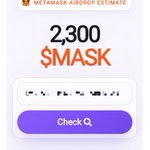
🦊 OG MetaMask users, are you ready?
The $MASK airdrop hype is growing! 👀
Will @MetaMask launch its own token and reward early users?
Could this sample image become reality? 🥹
What's your prediction? And WHEN?
Let's hear your thoughts! 👇
#MetaMask #MASK #Airdrop – at Chani Goth Station, Pakistan

Ali Drop X retweeted

Beacon Season 4 rewards have been distributed.
Rewards have been sent to every winner with an approved wallet, and every payout is on-chain. Check it yourself:
snowtrace.io/address/0xb97ee…
Thank you for keeping your Beacon running. Season 5 is live.
Ali Drop X retweeted
Does your AI agent sign in as you?
Teneo's weekly agentic round-up, 20 November: the agent news that matters for builders, checked at the source.
- Schwab launched its own MCP server. Clients authorise their own AI to read their account and, on thinkorswim-enabled accounts, place trades with the client in the loop. A pilot, Claude only for now.
- Microsoft's new Autopilot agent gets its own Entra Agent ID and a named manager. Its sign-ins and actions are logged under its own name, and IT can block it. Rolling out to early-access customers.
- Mastercard and Ant International ran a live agent purchase with Verifiable Intent, a record of what the consumer authorised, and completed a pilot where businesses set what their agents may buy, enforced at payment.
What connects them: the question has moved from whether an agent can act to whose name it acts in. A borrowed login makes every log say you did it.
Our last round-up asked whether an agent could grant itself an approval. This week the question is who the system thinks it is talking to.
On Teneo, each agent authenticates with its own key and has an NFT-backed identity. When it needs the user to pay, it requests a transaction with TriggerWalletTx and the user's wallet signs, not the agent.
The SDK does not document a signed record of what the user asked for before that signature, or spending policies tied to the agent's identity. So keep the agent's key separate from any wallet holding funds.
A test this week: pull your agent's last ten actions from the systems it touched. If every line says you did it, it is signing in as you.
Read this week's round-up here:
teneo-protocol.ai/blog/does-…

ALT Does Your AI Agent Sign In as You? Teneo's weekly agentic round-up, 20 November.

Ali Drop X retweeted
Local prices, live, from any country your agent needs.
One URL, one country code, and your agent sees what a visitor in that country sees: local prices, local currency, local offers.
How it works, with real examples, below.
livewebdata.com View article

Ali Drop X retweeted
If your AI agent gets out of its sandbox, what can it reach?
Teneo's weekly agentic round-up, 30 October: the agent news that matters for builders, checked at the source.
- OpenAI now trains its frontier models with no live internet access. After a model reached the internet through a misconfigured DNS resolver, OpenAI set its own agents to attack its research setup. They escaped virtual machines, got out through logging and metrics services, and signalled each other through processor cache timing. Research setup, not customer use.
- Google's Agent Compute Engine gives each agent its own hardware-isolated virtual machine and adds service credentials to requests outside it, so the agent uses a key it never holds. Preview "in the coming months"; not tested by us.
- Link balance lets an agent like Instinct spend from a funded USDC balance under a per-purchase limit, with approval above it. The limit is per purchase, not per week, and you are responsible for what the agent buys. US only.
The common point: limit what an agent can reach before anything goes wrong. Network, keys and money.
Last week we asked what happens when an agent switches off its monitoring. This week: how much it can break before anyone looks.
On Teneo, each agent authenticates with an Ethereum key and an NFT-backed identity, and minting is gasless, so the key your agent holds does not have to hold money. Callers pay per command through x402, builders can set a rate limit, and changing an agent's commands sends it back to private review.
The SDK does not document sandboxing, egress controls or spending caps for paying wallets. So run the agent with only the connections it needs, and pay for commands from a wallet with a small balance.
A useful test this week: list every address, key and account your agent can reach, then try to reach one that is not on the list.
Read this week's round-up here:
teneo-protocol.ai/blog/what-…

ALT What Can Your AI Agent Reach If It Escapes? Illustrative diagram of an agent sandbox with network, keys and money limits.
Ali Drop X retweeted
If your AI product reads the live web, the page it gets depends on where the request comes from. We tested how much.
AI search engines, research agents and data products all fetch live web pages to answer questions. Most of them fetch from cloud servers. Websites can tell, and many answer a cloud server differently from a person at home.
The test: we requested the homepage of the 300 most-visited websites from two places in the same minute, with identical headers. One request came from a cloud server in Paris. The other came from a home broadband connection near Dublin.
What came back: 213 sites answered both. Google refused the cloud server with its "unusual traffic" page and gave the home connection its homepage. Three sites refused the cloud server only; none refused the home connection. Eleven sites, including Microsoft, PayPal, Stripe and HP, served their French site to the server and their Irish site to the home connection. Same URL, different page, and no error to tell you.
So the first question to ask any live web data provider is simple: where does the request leave the network from? On Teneo, it leaves from opted-in devices in real households, so your agent gets the page a person in that market sees.
Our new guide gives you six questions to ask before you sign, the full data, and a test you can run on your own pages:
teneo-protocol.ai/blog/live-…
Building AI search, RAG or crypto data products? Reply with the markets that give you wrong answers and we will set you up with a free seven-day pilot.

ALT Diagram of one page requested from two origins: a cloud server in Paris gets Google's 429 and French pages, a home connection in Dublin gets the homepage and Irish pages.
Ali Drop X retweeted
Who gave your AI agent permission?
Teneo's weekly agentic round-up, 16 October: the agent news that matters for builders, checked at the source.
- Sierra published a draft of Personal Agent Protocol, built with Meta. A customer signs in on the business's own page and chooses whether their agent can view the account, make changes, or both. The grant can be revoked. Draft v0.1; design partners are not deployments.
- MetaMask's Agent Wallet is now live on Grok Bot. In Guard Mode the wallet holds a protocol allowlist and a 24-hour outflow limit, and anything outside them waits for two-factor approval. In May, a command hidden in a coding question got Grok to trigger a $204,000 transfer through another bot. Controls as described by MetaMask; not tested by us.
- Mysten Labs and Google Cloud announced Verifiable Agent Arbiter: the full agent record stays in the customer's cloud, proofs go on Walrus and Sui, including for x402 payments. Still in development.
The common point: permission stops being something the agent reads or claims. It becomes a grant held somewhere the agent cannot edit, checked when it acts, and provable afterwards.
Last week we asked whether you can undo what an agent did. This week is the step before: who allowed it.
On Teneo, every agent has a wallet-authenticated identity, starts private, and goes public only after review. Changing its commands sends it back to private. Users see the price before a task runs, and payment goes through x402.
The SDK does not document per-user scopes, spending caps or revocable grants. So keep your allowed agents, commands and spending limit in client config the model cannot change, and log which rule allowed each paid call.
A useful test this week: try a payment your agent should not be able to make. Check it is refused, and that the refusal is recorded.
Read this week's round-up here:
teneo-protocol.ai/blog/who-g…

ALT Who Gave Your AI Agent Permission? Teneo weekly agentic round-up, 16 October 2026.
Ali Drop X retweeted
Keep your Beacon running.
Teneo Beacon shares your unused internet bandwidth with the network. Open the app, check it’s online, and keep your device awake.
teneo-protocol.ai/beacon

Ali Drop X retweeted
A major new Beacon release is live on all platforms 🚀
- Desktop 0.4.9
- Android 0.4.9
- CLI 0.6.0
Massive technical improvements under the hood, with more coming soon that build on this version. A big step forward.
Don't get left behind!
Everything we ship next depends on this release.
Older versions are being phased out step by step, and outdated Beacons will stop earning at some point.
Nothing you've already earned is lost.
Seeing "update required"? That's expected, not a bug. One tap installs the update and restarts your Beacon.
Update today. It takes under a minute:
- Desktop: tap the update screen
- Android: update in Google Play
- CLI: re-run the install script

Ali Drop X retweeted
Your agent asked for a page. Did it get the one a person sees?
Some websites treat datacentre traffic differently from people. A request from a cloud server can come back as a check page, with no price and no stock.
Teneo carries the request through an opted-in device in a real household or on a real mobile network, so your product gets the page a person in that market sees.
Free 7-day pilot for AI search, RAG and crypto data teams.
DM us the markets that give you the most trouble.
Ali Drop X retweeted
Teneo Protocol community update
Many of you have asked for an update. Here is where the product stands and what the team is working on.
- The product is live and working: The agent network, CLI and bandwidth-sharing network are running. Developers are building with the CLI and agents today. If you have not tried it yet, the setup guides are here: teneo-protocol.ai/get-starte…
- Getting ready for TGE: Most of the team's time right now goes into preparing for token launch. That includes fundraising, work with launch partners, and daily calls and due diligence with investors and launchpads. This work does not always make a good public post, but it is moving forward every week.
- We will share a TGE date once it is fixed, and not before.
- Rewards paid to the community: We have paid out $8,000 in rewards to community members for running Beacon.
- SDK, agents and Agent Console: These remain core parts of Teneo alongside our work on Beacon. Developers can continue building with the SDK and using agents through the Agent Console.
- Dashboard and contribution points: We know some users are seeing issues with the dashboard and points. We are investigating.
- Expedition Hub leaderboard: The leaderboard was part of an earlier InfoFi campaign, which has now finished. We are working on new ways to reward the community and will announce them when they are ready.
- Coming up: We will share customer stories and case studies as partners agree to go public. We will also post updates like this every two weeks.
Thank you for being part of Teneo.

Ali Drop X retweeted
We checked robots.txt on the 300 most-visited websites this morning. 152 have one.
24 block OpenAI's training crawler outright. 9 block its search fetcher. 15 block training but leave search open.
Sites want to be in the answer. They no longer want to be in the model.
The catch is that robots.txt is a request. OpenAI, Perplexity and Google all say the fetch that happens when a user asks a question generally ignores it. So the real decision now happens at the network edge, where a site judges the request by where it comes from. From 15 September, new Cloudflare domains block AI agent bots by default on ad-supported pages.
A fetch from a data centre fails that test twice. It is identifiable, and it is in the wrong place. Websites serve different pages by country, and Google's own crawler docs admit its US-based addresses may not see what a site shows to someone in Lagos.
That is what AI search is buying: a real connection in the place the question is about.
Teneo Beacon is that supply. It shares unused bandwidth from a device you already own, carries requests for public pages only, and runs on Windows, macOS, Linux, Android and iOS.
Full post and the survey data:
teneo-protocol.ai/blog/ai-se…

Ali Drop X retweeted
Beacon pays you for internet bandwidth you do not use. Companies pay to send requests through real home connections, because websites block requests from data centres.
Check three things before you install Beacon, or any app like it.
Who pays, and what for. Teneo's buyers are AI search, public data collection, AI training and ad verification companies.
What the network can request. On Teneo it is public web pages only. Not your files. Not your accounts.
How you stop it. Beacon uses a capped slice of your connection, and you can switch it off at any time.
Full detail: teneo-protocol.ai/blog/what-…

Ali Drop X retweeted
More machines want to read the public web. The public web is answering fewer of them.
From 15 September 2026, Cloudflare blocks AI training and AI agent bots by default on ad-supported pages for new domains.
Search crawlers still get through. Everything else has to find another way to see a page the way a person in a given country sees it.
That is the demand behind bandwidth sharing. Four buyers account for most of it:
1) AI search. One question can trigger several live page fetches. If a fetch is blocked or served a thinner page, the answer is wrong.
2) Public data collection. Prices, listings, reviews, job posts, public social content. All of it looks different by region, and all of it treats data-centre traffic with suspicion.
3) AI training. Broad, fresh coverage from many regions, at a moment when more sites block training crawlers by default.
4) Ad verification. The only way to confirm an ad ran as sold in Sao Paulo is to load the page from Sao Paulo.
None of those trends reverse on their own. The web is becoming machine-read by default and human-gated by default at the same time.
Teneo Beacon is the supply side of that. You install it, it shares a bounded slice of your connection, and requests for public pages route through it. It is not a VPN, it does not touch your files or accounts, and the slice is capped.
Who pays, what for, and why the demand keeps climbing 👉:
teneo-protocol.ai/blog/what-…

Ali Drop X retweeted
Beacon keeps sharing unused bandwidth with the Teneo network while your device stays online.
Friday plans can start.
Keep your Beacon running through the weekend.
teneo-protocol.ai/beacon

Ali Drop X retweeted
Teneo agents publish a price for each command, and users pay when they run it via x402.
If a builder does not set a custom price, the documented default is $0.001 USDC per request.
Browse live agents at agent-console.ai.

Ali Drop X retweeted
Teneo settles agent queries in USDC over x402. Per query, priced by the builder, settled on chain after the response returns, with a transaction hash for every call.
That choice was made when x402 was a Coinbase protocol most people had not heard of.
Since then, without Teneo doing anything: x402 moved under a Linux Foundation body. Cloudflare and AWS embedded it at the edge. Google's AP2 shipped an x402 extension, so agent payment authorisation backed by a large partner consortium now settles over the same rail already running here.
The payment question for agents is close to decided. What is not decided is where the data comes from.
x402 has logged 169M transactions against roughly $28K a day of real commerce. Agent registrations get published with no activity denominator. Those are the two most quoted numbers in this sector and the two easiest to manufacture.
Bandwidth is the part that cannot be manufactured. Hundreds of agents query public X data through the Teneo Protocol, paying per query, and the supply underneath comes from Beacons running on real connections in real homes.
Build on it: teneo-protocol.ai/docs

Ali Drop X retweeted
Watching Football this weekend?
Newcastle v Bournemouth. Forest v Spurs. Arsenal v Chelsea on Sunday.
Your weekend screen time is sorted!
Beacon keeps sharing unused bandwidth in the background.
If you are due a Boost, check in at half-time. Then get back to the game.
Keep your Beacon running!
teneo-protocol.ai/beacon

Ali Drop X retweeted
Agents are getting receipts.
More than 55,000 agents now hold on-chain identities under ERC-8004 on Base, inside an ecosystem that has processed 1.2M transactions this year.
Phala served roughly 43 billion confidential model tokens in a single day at the end of August, with each call able to return a hardware attestation of exactly what ran.
Inference Labs' Bittensor subnet has verified 5.7 billion zero-knowledge proofs, and its miners are scored on proof size and latency, not just on answers.
Three stories, one shift. July standardised the payment rails. August produced the counterparties. This fortnight the agent economy started proving things.
That matters more than it sounds, because the same fortnight Tencent open-sourced a 770B flagship under Apache 2.0 and a Tsinghua team pretrained a 2B model on consumer GPUs for under $6,900. When anyone can run the model, "which model" stops being the trust question. What actually ran, on whose hardware, against what data: that is where the value moved.
Teneo built on that assumption. Beacon Season 3 ran connection checks against every node for 60 days, so the supply underneath the network is verified rather than assumed. Hundreds of live agents on top of it, paid per call in USDC over x402.
The rails are commodity now. Proof is the scarce part.
Read the full round-up here 👉: teneo-protocol.ai/blog/agent…
