

όμαιμον, ομότροπον, ομόγλωσσον, ομόθρησκον
Joined May 2022
- Tweets512
- Following405
- Followers155
- Likes370




Pinned Tweet
A mass meeting of Turkish Cypriotes held at Limassol to petition the English Government to enter into negotiations with a view to bring about the union of Cyprus with Greece.
British Magazine "The Graphic", May 25 1895
Let that sink in...
lekythos.library.ucy.ac.cy/b…

Ever wonder where Turkish propaganda on Cyprus started? @ygcypriots traces it back to the start and on the way they discover that a Britsh MP, who was also an advisor of Denktas, helped to give the lies fake credibility!!! younggreekcypriotss.substack…
4
40


Winston Churchil visting Cyprus as Minister of Colonies in 1907. He was greeted with Greek flags and chants for Union with Greece!

2
110
General Grivas assures Turkish Cypriots after the neutralisation of their armed enclave in Kophinou in November 1967 that they have nothing to fear if they remain law-abiding.
Associated Press archive.

24
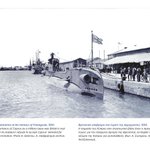
Cypriots pondering the UK submarine stationed at the Famagusta port.
Imagine their impression on such a spaceship looking war machine on 1950.

1
23
Weapons surrendered by Turkish Cypriot terrorists during the Turkish rebelion. Proof they where armed to the teeth by Turkey to destory their own home state.


aldebranianos retweeted

"Wash your sins, not only your face."
It was inscribed on a holy water font outside the entrance of Hagia Sophia in Constantinople.
It's not a simple phrase. It is a perfect Greek palindrome (καρκινική φράση) that reads exactly the same forwards and backwards.
Written in capitals as ΝΙΨΟΝΑΝΟΜΗΜΑΤΑΜΗΜΟΝΑΝΟΨΙΝ, it becomes a mirror ambigram: a linguistic and visual masterpiece of the Greek mind.
Attributed to Saint Gregory of Nazianzus, the great Cappadocian Father and Theologian of the 4th century, it was first inscribed on a holy water font outside the Hagia Sophia in Constantinople.
The message is pure Greek wisdom; outer purity is worthless without inner purity. It proves that the Greek Philosophy passed the flame of wisdom to Greek Orthodoxy. This phrase reminds us the maxim of Pittacus of Mytilene, one of the Seven Sages:
"Μὴ τὴν ὄψιν καλλωπίζου, ἀλλ’ ἐν τοῖς ἐπιτηδεύμασιν ἴσθι καλός", which means:
"Do not adorn your face, but be noble in your deeds and character."
This is the essence of Greek paideia and of Orthodox Christianity as it took shape in the Eastern Roman Empire. The soul before appearance, virtue before vanity, substance before surface.
The inscription survives today in Greek monasteries and churches, from Malevi in Arcadia and Preveli in Crete to the Panagia Ekatontapiliani on Paros, Vlatadon in Thessaloniki, St Martin's Church and other fonts of several churches in Paris, Britain and beyond.
It's a living proof of the unbroken continuity of the Hellenic spirit from antiquity, through Byzantium, to the present day.
Barbarians conquered the body of Hagia Sophia, but they never conquered the mind that produced such phrases.
If you want to support me in the effort I’m making, please consider becoming a subscriber to my X account for only $2. I write about the ancient, medieval, and modern history of Greece and what Christians went through because of Islam. Always with primary sources and historical facts. Thanks for reading me and for all the support.
- Homer Pavlos


aldebranianos retweeted

The #eoka hero #steliostritaios
He was born in the village of Kato Pyrgos Tillyria, Nicosia province, in 1930.
He died on June 17, 1958 in London, where he was transferred for treatment after being tortured by the English.
His page =>
eokaheroes.com/en/heroes/ste…

Glafkos Clerides recalls the courage of EOKA heroes facing the gallows with faith, dignity, and devotion to a Hellenic Cyprus. They refused to beg the colonial governor for mercy and walked proudly to their fate.
aldebranianos retweeted
The Greeks suffered so much that in some cases when they finally fell upon the Turks with rage, they would shoot with their rifles, and without waiting to reload the rifles (because it takes time), they would smash the Turks’ heads with their pistols.
There are eyewitness, historical accounts, describing how they beat the Turkish occupier with such hatred for what he had done to the Greeks all these centuries, that the iron of the weapons literally melted on the Turks’ heads from the force of the blows.
In Anogeia, Crete, out of the 800 dead Turks, two-thirds had their skulls completely crushed from the blows.
The Muslims carried chains with them to tie up Greek Christian women so they could take them away. The Ottoman Turks slaughtered 42.000 women, men & children Greeks in Chios. Additionally, 52.000 were sold as slaves. In Samothrace 10.000 men & boys were slaughtered. Women & children were sold in the muslim slave trade of Smyrna and Constantinople. These happened 200 years ago.
They never expected that the Greeks would rise up with such fury that they would become unstoppable and would be discussed by all the great powers of the world.
This is not old history.
> Cyprus invasion was 52 years ago.
> Constantinople pogroms against Greek Christians was 71 years ago.
> Greek, Armenian, Assyrian Genocide was 104 years ago.
> 1821 events were 205 years ago.
> From the fall of Constantinople in 1453, passed 573 years.
This is our recent history.
The Turkish and Islamic imperialism never stopped.
We will never forget and we will never be friends with the Turks.


On March 30, 1822, when the massacre in Chios began, the Muslim Turks had clear orders. The Sultan had commanded that all Greek Christians be slaughtered, except for boys aged 3-12 and women from 12 to 40. These would be captured and destined for the slave markets.
Young girls were raped publicly in the streets, and newlyweds in front of their husbands, who were then slaughtered. Others were raped in front of their parents, after which the men's genitals were cut off. Women over 40 were set on fire and left to burn alive. Pregnant women had their bellies ripped open and their fetuses pulled out, while small children were thrown forcefully against rocks. The frenzy of the Muslims was unprecedented.
Many Turkish soldiers cut off the heads of Greek Christians and then licked their swords. With this act, they believed they would earn a place in paradise. Others were hanged from the island's trees for deterrence. Severed human limbs and corpses were scattered on the streets, while the sea had turned red from the blood. The smoke from the burning houses had covered all of Chios, while the flames made the night look like day.Several women from Chios preferred death over dishonor and slavery.
They committed suicide by jumping off cliffs. Some were killed while defending their children, siblings, and husbands. Even among those who were captured, some died on hunger strike.Destitute women and children from the island were crammed into ships and transported to the markets of Smyrna and Constantinople, where they were sold as slaves at humiliating prices.
By May 1, 1822, over 41.000 slave ownership documents, known as "teskerés", had been issued in Chios. According to the French-language newspaper of Smyrna, Spectateur Oriental, by May 10, duties had been paid at the Smyrna customs for 40,000 slaves. The priest Welsh from the English embassy in Constantinople recorded what he saw in those days at the city's slave market:
"The Turks treated the women from Chios with utmost contempt. They examined them, groped them like butchers do lambs, and bought them for 100 grosia to 3 pounds per head. About 500 women from Chios were sold in the fish market."
The tragic events of Chios shocked Europe and America. For many weeks, the European press reported daily information and descriptions about the fate of the inhabitants, the massacres, the plunder, and the sale of women and children in the slave markets.
Korais writes in a letter to Varvakis: "Imagine that you see Christ on the Cross, drenched in His blood, and calling out to you these paternal words: My son Varvakis, many thousands of captives baptized in my name are in danger at this hour of renouncing me and embracing the abominable religion of Mohammed. Behold the time, baptized in my name, beloved son, to save your baptized brothers from the Turkish defilement."
The horrific images of the crimes of the Muslims against the Greek Christians were never erased from the collective memory of Europeans. Great European artists were so shocked by the descriptions that they created important works inspired by Chios.
The famous painting by Delacroix is exhibited to this day in a prominent position at the Louvre. Victor Hugo's poem titled "The Greek Child" is a moving record. But the most famous sculpture of 19th-century America also stands out, named: the "Greek Slave." The sculptor Hiram Powers began carving it about twenty years after the tragic events. The statue depicts a young woman, nude, bound with chains. In one hand, she holds a small cross on a chain.
Powers himself describes the subject of his work as follows:
"The Slave has been abducted by the Turks from one of the Greek Islands during the Greek Revolution, the history of which is known to all. Her father and mother, and perhaps all her relatives, have been exterminated by her enemies, and she alone was kept alive, as a treasure that could not be thrown away. Now she is among barbarian strangers, under the pressure of the full recollection of the catastrophic events that led her to this state. She stands exposed to the gaze of people she abhors, and awaits her fate with intense anxiety, which is mitigated by her trust in the goodness of God. Gather all these sufferings together, and add to them the strength and resignation of a Christian, and there is no room left for shame."
(You can search for the sculpture to see it; I'm not uploading it because X might take down the post for sensitive content.)
As a Greek, I will use my weapon, the knowledge of my history, to warn as many as I can about the violent and barbaric invasion of Islam and the war we are experiencing today.
I will do whatever I can to warn you.
- Homer Pavlos


aldebranianos retweeted
Years of EU silence over Turkish violations of European airspace in the Aegean have emboldened revisionist powers to believe that challenging EU sovereignty comes without consequences.
🇪🇺 Selective Defence=Collective Weakness


