
To believe in something is to disbelieve in something
Joined June 2024
- Tweets149
- Following568
- Followers23
- Likes144



Pinned Tweet
Introducing TTRV: Test-Time Reinforcement Learning for Vision-Language Models 🧠📸
Most RL methods need labeled data — but humans learn directly from experience.
We bring that ability to VLMs.
🚀 TTRV adapts models on-the-fly at inference, with no labels.


Akshit Singh retweeted


OpenAI claims the matrix multiplication exponent is exactly 2.25
The textbook method for multiplying two n × n matrices takes roughly n³ arithmetic operations. In October, OpenAI reported a way to bring the exponent down to 2.25. That left open whether someone could find an even faster algorithm
Today’s paper claims to rule out every exponent below 2.25
Read here: alphaxiv.org/abs/2611.matrix…

Akshit Singh retweeted

I'm speechless. matrix multiplication constant, integer multiplication and Fourier transforms complexity pinned down, strongly polynomial time deterministic algorithm for linear programming, ...


Akshit Singh retweeted

The Lean FRO and Mathlib Initiative have released a joint statement on the Lean verification of the Riemann Hypothesis.
On November 20, Levent Alpöge released a proof of the Riemann Hypothesis as a Lean library of 17 million lines of code. Over the past day, the Lean and Mathlib communities worked together to verify it. The statement certifies the proof as correct and describes how it meets all necessary verification criteria.
Congratulations to Levent on this achievement, and thank you to everyone in the community who contributed to the verification.
Full statement: leanprover-community.github.…

Akshit Singh retweeted

Excited to release our NeurIPS 2026 paper, “Do Diffusion Models Learn to Generalize Basic Visual Skills?”
We asked if diffusion models can generalize skills beyond what they were trained on, or do they mostly interpolate between examples in their training data?
This is hard to test on today's text-to-image models, because we don't know what is in their training data. We trained small diffusion models from scratch on synthetic images where we control every value the model sees.
We found that they interpolate well but rarely extrapolate.

Akshit Singh retweeted

We’ve seen a whole wave of [X]Mimic papers lately, and I might be biased, but this one is easily my favorite 🧡
Introducing ImpedanceMimic: Learned Impedance as Action Space for Force-Accurate Motion Imitation w/ @matthiasjammot
Fixed PD gains can track a motion yet miss its contact forces. ImpedanceMimic learns per-joint stiffness and damping as 129 people walk, run, jump... 🚶🏻♀️🏃🏻♀️
TLDR:
🏆 Beats other action spaces (fixed-PD, torque, muscle) and SOTA (PHC, SimPoE) on motion and force accuracy together
🤖 Transfers without retraining to 22 unseen people and a simulated Unitree G1
🔍 Interpretable gains: stiffness scales with load, damping anticipates unloading
📝 Paper: arxiv.org/abs/2611.19153Proj…
🌐 Project page: impedancemimic.github.io/Imp…
With gracious support from the Kempner Institute at Harvard University. @KempnerInst @hseas


Akshit Singh retweeted

Might be time to recommend this paper to folks.


I scraped all 38,101 ICLR 2027 submissions and counted the names before the colon.
LLM has a naming crisis.
🏆 The leaderboard:
TRACE: 47 papers
PRISM: 42
PACE: 22
SCOPE: 21
SAGE: 17
MOSAIC: 16
COMPASS: 14
750 names are used by 2+ papers. That's 2,209 papers sharing a name.
Best parts:
• Two papers called TRACE both fix VLM hallucination. Same name, same problem, different authors.
• Four papers called PRISM do time series. Good luck, reviewers.
• "PACE: Discovering Options via Self-Distillation." None of P, A, C, E appear in the title. They picked the name first.
• 47 TRACEs cover quantum computing, materials discovery, seizure localization, carbon emissions, traffic control, and circuit design. TRACE is everywhere.
• The formula: 5 letters, looks like a real word, sounds cool. CAST. PACT. CRAFT. GRAFT. FORGE.
Tip for ICLR 2028: search OpenReview before you name your method 😂
Follow for more data-backed ML nonsense.
Akshit Singh retweeted
Heading to Austin for my FIRST #CoRL! 🙂 Excited to meet fellow robotics researchers, DM me if you'd like to chat! We're organizing a workshop on Memory for Robot Foundation Models. All accepted papers and the workshop program are now online 👉 corl2026-memory.github.io #CoRL2026


Akshit Singh retweeted

I redid the startup founder signals that lead to top tier VCs investing in the seed / A, after incorporating some feedback.
This added ex-frontier lab and cyber security near the top, IIT as a positive, and educated in China as a negative.
The main changes were;
- extended founding year to 2019-2026, ~2x'd the number of startups
- unified and added some signals
Here are the new signals:


Which startups are most likely to get an investment from top tier VCs?
I looked at ~60 attributes across 5000 startups and these were the 15 strongest.
#1 is being from a top tier fund. MBA is a negative signal
Full list of signals below:


Akshit Singh retweeted

I wrote a blog post detailing the writing approach I took while working on my recent paper: sophielwang.com/blog/paper-w…
I describe the behind the scenes for how this paper came to be, why and how I storyboarded figures before running experiments, and some figure design tips! :)


Can “chicken” make a base model reason? 🐔
Yes!
Why? With the right first tokens, base models can match RL in reasoning. We trace this to learned training data associations and use a simple data edit to make “chicken” elicit reasoning too.
blog: sophielwang.com/cues
Akshit Singh retweeted

Fun fact about (some) AI researchers / academics: the more senior you get, the more convinced you become that every new AI idea is something you already invented 20 years ago. Or, even better: wait until something actually works and then try convincing everyone that this is exactly what you’ve been saying all along.
I was at a conference where a speaker was presenting their research. One academic stood up and said: what you’re doing is actually something I did a few years ago. The speaker was very polite and said thank you for pointing this out.
Then a second researcher stood up and said, well I already did it this 10 years ago, you should cite my work. Then a third person said, I already did all of this about 20 years ago.
It was the funniest thing ever.
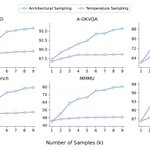
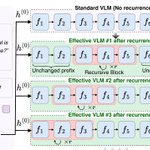
New paper: Architectural Sampling 🧵
Test-time scaling samples many answers from a frozen model. But with temperature, every answer runs the exact same computation.
What if diversity came from how the model computes, not just the final token draw?
1
1
66
It also helps models learn from themselves.
Swapping temperature rollouts for architectural ones in label-free test-time RL (TTRV) improves accuracy on every benchmark we tried, e.g. +15.3 on A-OKVQA with Qwen3.5-VL-2B.
1
22
Huge thanks to my amazing co-authors: @shyam__marjit @WeiLinCV @leokarlin @jmie_mirza
📄 Paper: arxiv.org/abs/2610.01687
🌐 Project: akshit21112002.github.io/Arc…
💻 Code: github.com/Akshit21112002/Ar…
Working on test-time scaling or VLMs? Would love to chat