

I read. I remember. I write. Poetry music, memory, culture. Whatever makes me stop and think. Forever curious. Inner life. Opinions are my own.
Bharat
Joined April 2013
- Tweets47.3K
- Following3K
- Followers3.7K
- Likes31.6K







Pinned Tweet
Amritsar Diaries:
Five Stones and Ram Lila
It was an autumn evening, Navratri time, when the nip in the air had just set in.
Shubh didi and I sat on the ledge of their kotha, legs swinging, savouring aam papad, a delicacy in those days.
Shubh didi was the youngest of the four sisters. Beautiful in a quiet, petite way.
"Kutt khayengi, if Maasi ji finds out," she cautioned me sternly, smacking her lips. A beating from my mom, she meant.
I nodded, licking my sticky fingers.
"Kudi digg payegi," shouted Chhai ji from the street. The girl will fall.
We moved to the manji (cot) on the rooftop and lay looking at the sky.
Shubh didi, in her sky-blue suit, had definite career dreams.
"Main nahin banana film actress. Main te director banangi. Sadhna nu nachawangi. Dekhin, ki kardi aan main." Dreams of directing Sadhna brewed in her mind.
It was an auspicious time for a grand opening. So Shubh didi planned a Ramlila.
She looked at me. "Tu meri sohni behn, tu Sita."
Baby would be Surpanakha. Brahma, her rotund, lacklustre younger brother, would be Ram.
My brother was cast as Laxman. The rest we would see. They didn't matter.
Casting rishtedaari de hisaab naal kardi hai. (Casting depends on personal relations.)
Baby was my best friend, through all the kattis and battis. At five stones she beat me fair and square.
Dark, sharp-eyed, vivacious, nimble. I was always dumbstruck by her quick wit. She was the girl Tom Sawyer of our galli.
The day of the Ramlila was my lucky day. I beat her.
She glared menacingly. "Tainu main dassangi." (Just you wait.) And left, the threat hanging behind her.
The leads were very unhappy with their costumes. Brahma fiddled with his golden crown. I hated being sent to the forest in a torn saree shaped out of a much-worn dupatta.
Surpanakha (Baby) was all gloss. Maximum makeup and painted nails.
The stage was set in Nikki didi's drawing room. The furniture was pushed back against the wall.
The centre table was the throne where Ram and Sita sat.
Brahma fidgeted with his crown. Sita's pink dupatta-saree looked equally sad and crumpled.
Chhai ji, Papa ji, Prem didi, Nikki didi and the galli kids were our audience. They watched with a reverence I could never tell was feigned or felt. Devotion led to many prostrations. That was the only consolation.
After a while, it was time for Surpanakha to make her royal entry. I was seething with jealousy at the painted lips and glittery nails.
Instead of wooing and cooing before Ram and Laxman, she came straight for me. She pinched me, pulled my hair, threw me on the ground.
"Tu mainu harayia, hun maja le le." (You beat me at the game, now take this.)
I scratched her right back.
More than anything else, Sita's dignity was at stake. I started shouting at Brahma.
"Kaisa Ram hai? Bachane bhi nahin aaya! I am not your Sita."
I walked down in a huff. Papa ji came after me, sat me on his lap, gave me mithai.
"Anu Kumari Sita hi hai."
"Tussi kaho Baby chudail hai." (You have to say Baby is wicked.)
I needed a salve for my wounded pride. He said it. It consoled me.
Shubh didi's entire Ramlila architecture had come a cropper.
She was not the filmmaker anymore.
Even her little Sadhna (me), bribed with aam papad, refused to be her muse.
That evening Baby and I were seen playing five stones again, laughing, talking, and her beating me fair and square again.
🤖 Made with AI

Thought Of Today✨
I love weaving stories in my head. What if Gabbar woke up one morning to find the mug that he clenched so hard gone! He would have the freedom to live with two open palms—all the greed to possess gone.
Another question raises its head. What if Thakur woke up to find his hands back? He would lose the desire to settle scores.
Both greed and grudge make life complicated.
There was this student wanting to learn the art of enso- painting a circle in a single brushstroke. Trying to get it right after three months-frustrated, he asked the master why the circle would not come. The master asked who was painting it.
“I am,” said the disciple.
“Then it is crowded in here,” said the master.
The master sat down and drew a circle. The student said, “It is not perfect.”
“No,” said the master, “it is finished.”
The next day, the student did not tear up his work. He accepted what was. Only the “I” was eliminated.
Give it up, accept life, let the contemplation fill the space that pride, greed and I carry. Meditation will happen naturally..

Anuradha🇮🇳 retweeted

THIS IS A ~26-SECOND CLIP FROM AN INTERVIEW ON THE RUBIN REPORT WITH POLISH MEP DOMINIK TARCZYŃSKI.
In the clip, Tarczyński (in a dark suit, gesturing emphatically) delivers a blunt warning about #Poland’s border policy. He states that if people try to illegally cross the Polish border (particularly from Belarus) and harm Polish soldiers, they will be shot dead. He references a case in which a Polish soldier was killed with a spear/through a fence by migrants, after which Polish law was quickly changed to allow the use of live ammunition in such situations.
Key points from the interview segment:
• “Do not come to the Polish border or you will be dead. Shot dead.”
• “If you are trying to cross a border and harm any of our soldiers, you will be dead.”
• He frames this as a serious, long-standing position tied to protecting national security, not a joke, and contrasts Poland’s approach with other European countries.
The clip ends with host Dave Rubin smiling. The X post by @mekarora captions it “Try rioting in Poland! See what happens! #BeLikePoland 🇵🇱,” while Tarczyński’s own related post frames a similar message as a warning to “jihadists.” The footage is from the longer September 2026 Rubin Report interview in which Tarczyński discusses Poland’s rejection of mass illegal migration, its border wall, and security measures. EuropeRiots #EuropeUnrest #CivilUnrest #PublicSafety #LawAndOrder #StopViolence #PeaceAndStability @EU_Commission @Europol @Reuters @BBCWorld @euronews @ajaykraina @sowmiyasidharth @sanjoychakra @VishalU15 @ravikarkara

How heartfelt! It strikes a chord with me.
At twenty, I found myself at New Delhi Railway Station. Don’t ask why. Some elder thought I was perfectly capable of finding my way.
I had to go to Karol Bagh. No address, no nothing. I was actually scared. I’d always led a sheltered, pampered life, and now life had thrown a real gauntlet at me.
In all foolishness, I decided to spend the night in the waiting room. One look at the occupants sizing me up was deterrent enough.
I gathered courage to take a rickshaw. I had no address, which made matters worse.
Many autowalas surrounded me as I stepped out. Perplexed, I got into one, and he decided to take me elsewhere.
I got lucky- God came to my rescue. His auto broke down. I quickly got out and waited, petrified, on the road at nine in the night.
A car stopped and an elderly gentleman asked, “Puttar kithhe jaana tusin?” I must have looked forlorn.
I told him. He made me sit in the car. By then a crowd had gathered. They found the driver was drunk and going the wrong way. That family got the police to take him away.
By then I was crying and trembling. They deposited me home. Mom learned of it and was livid at the irresponsibility of the relative who left me alone at the station.
The next day my brother came to get me. I went home to my familiar territory-Amritsar, where I belonged.
You were smarter, Pari. I was too naive. Sometimes God extends His hand to bless us.

Along the Way | Someone I Knew
One evening, years ago, an office meeting ran much later than expected.
I hated travelling alone after dark even then.
By the time I came downstairs, the office crowd had thinned out.
The familiar daytime road had become a different road.
The city was still lit. Cars streamed past as if everyone knew exactly how to get home.
I suddenly realised I didn’t.
Fewer people. Even fewer buses.
Shops pulling their shutters down.
And every auto that slowed near me suddenly seemed suspicious.
Every “Kahan jaana hai?” sounded a little sinister.
Those were not app-cab days.
No driver photograph, 'live location' or 'share trip'.
Just you, an unknown man, and an auto disappearing into the night🛺....
There had also been a few disturbing incidents involving women around that time.
Which, naturally, my brain had chosen that precise moment to replay in intricate detail.
Dad was out of station.
I didn’t want Mum worrying, so when she called, I lied.
“Don’t worry, Ma. I’m with a friend. She’s dropping me.”
Then I hung up…
…and immediately realised I had just reassured the one person who might otherwise have helped in finding me another way home.
For a few minutes, I simply stood there listening to my own heartbeat.
One auto stopped.
I looked at the driver.
Let it go.
Another came.
Let that go too.
The road kept getting lonelier.
And I could feel panic beginning to build.
That was when I called my cousin Guddi.
Guddi is normally capable of finding comedy in somebody else’s emergency.
That evening she didn’t laugh.
She listened intently.
Then said something I have never forgotten.
“If you absolutely have to take an auto, look for one being driven by an elderly Sikh gentleman.”
I looked up from the phone.
A few autos passed.
Then, almost absurdly, one came around the corner.
One Sardarji at the wheel.
White beard. Faded turban. An old sweater neatly buttoned right up to his neck.
I raised my hand almost without thinking.
He stopped.
“Kithe jaana hai, beta?”
That one 'beta' did something.
Some of the fear just… loosened.
I got in.
For the first few minutes, I watched every turn.
He must have noticed.
“Pehli vaari enni late hoye, beta?”
First time out this late?
I nodded.
He didn’t ask anything else.
Instead, he spent the journey giving me the sort of instructions fathers give daughters.
Don’t wait alone on an empty road.
Stand near families.
If you’re frightened, go into a shop.
Or a Gurdwara.
Then he mildly complained about young people working too late these days.
I smiled.
By then, I had stopped watching the turns.
When we reached home, I paid him.
He returned the change carefully, raised one hand and said,
“Rab rakha, beta.”
And waited.
Only when our gate opened did his auto move away.
I stood there for a few seconds, watching that little red tail-light disappear.
Earlier, I had lied to Mum.
I had told her someone I knew was dropping me home.
By the time I reached the door…
it didn’t feel entirely like a lie.

पढ़ ली हैं मैंने आँखें तुम्हारी, हर्फ़-हर्फ़ बिन कहे,
जो ज़ुबाँ से कह दिया जाए, वो इश्क़ नहीं, इत्तला है।


सुनो...
कुछ बातें लफ़्ज़ों में नहीं....
आँखों में पढ़ लेना तुम…
हर ख़्वाहिश अगर कह दूँ ज़ुबाँ से...
तो इश्क़ कैसा?
#खनक_शब्दों_की
Shubh Dussehra! 🌼
Vijayadashami marks the end of Durga Puja, the ritual honouring the Divine in the form of Goddess Durga. On this day, we celebrate Goddess Durga’s slaying of Mahishasura and the restoration of Dharma-the moral order.
In the Ramayana too, Dharma was restored on prithvi through Rama’s victory over Ravana. The festival celebrates the victory of good over evil.
In the Mahabharata, Arjuna defeated the Kuru army. Arjuna is also called Vijaya- the ever-victorious. Vijayadashami is also associated with this victory.


Reflections:
Home Speaks
I came home to the familiar barks of Laddu and Kishmish. I come back to the flowering gulmohar tree.
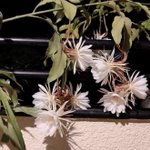
The tree reminds me that we have to catch the brahm kamal blossom in the night. One thing leads to another.
Home speaks. It carries our entire life: the sound of our footsteps, our conversations, the aroma of cooking. Its silence puts us to sleep; its birdsong lifts us.
The aroma of coffee greets me. How does it know I need a pep-up? My nose smells fresh bread being baked in the kitchen.
My house and I overlap. Gibran called the house our larger body. My helps tell me they can hear my voice even when I am not there.
Now the lock too has a voice. It beeps whenever someone comes in, and a voice says, "Door open." The refrigerator's peep is the biggest giveaway if someone is sneaking in for a snack.
A miniature autobiography, written in sound.
The stage on which the drama of our life unfolds. Intimate conversations happen here. Hard truths are faced, convictions fought for.
A universe within the universe.
Even a glass mug has its dialogue: मोगैंबो खुश हुआ! And the coaster beneath it adds, HAMESHA! Quite a theatre!
I like the old creaks. With time the house changes too, but the relaxation, the peace and comfort take me back to my mother's lap.
My home is my alter ego.

Thought of the day✨
The other day, while walking in the jungle, I was negotiating a steep, stony slope. I have always prided myself on being sure-footed. That day, however, I tripped and stubbed my toe badly.
That was the moment I realized I am just as fallible as anybody else. The pot I balance on my head is just as liable to break as the pot other people carry.
The pot of life, full of water. We try to balance it every day. Some spill a little and we laugh at them, priding ourselves on how easily we navigate through life.
Nonduality is a word bandied about very often.
Self-compassion is the first step towards knowing it. When you realize your own limitations as a human being, you stop judging others. You become fluid enough to take the shape of their vessel and see that you are just as fallible, just as vulnerable.
I am reminded of a Buddha story. One of his disciples was particularly hard on himself. An ascetic, he walked barefoot for miles on end behind the Buddha.
After a few days his feet began to crack. Cracked heels, broken nails. That was still bearable. Until one day his feet started to bleed and he could not walk any more.
So the Buddha sat him down gently. He asked for a stringed musical instrument. He asked, "If the strings are tied too tight, can you play them?"
"No, master."
"If they are too loose, can you play them?"
"No, master."
There is no music when the string is too tight or too loose. We have to string the veena of our life just right.
And for that, recognizing our own limitations is the first step. Your vulnerability and the other's vulnerability are the same.
That is why they say non-duality becomes easier to recognize once you experience self-compassion. Rest follows.

For Amritsar diaries, visit Instagram to watch them with illustrations. instagram.com/p/DesBd4PjFuW/…
"मैं और मेरी माँ, बिंदी। वो माथे की बिंदी, वो ममता की रोशनी, सब आज भी मेरे साथ है। 🙏"

छूट गया
माँ की ममता से सजा वो हर एक निवाला,
वो माथे पर हाथ फेरना,
वो दुलारने का अंदाज़ निराला,
तुम तो चली गई माँ...
पर तुम्हारी यादें आज भी साथ हैं,
तुम्हारे आँचल-सा सुकून अब कहाँ,
बस आँखों में बरसात है... 🥹
#खनक_शब्दों_की
Hello everyone!
Ramlila time took me down memory lane again.
Amritsar Diaries is live.
Whenever you have the time…
Anuradha🇮🇳 retweeted

During the emergency we organised a reception for Shanti Bhushan in the Congress grounds in Teynampet in Chennai. We all celebrated him for fighting for Rajnarayan and Indira
See how he became utterly corrupt later
The father and son Bhushan duo grabbed with BJP govt support 4.7 acres of Tea garden to set up a high class education business but that attempt failed as Govt resumed possession
Two points.
They shamelessly got land from their ideological enemy BJP
Had they retained it, the land would be worth Rs 35 cr today
But they were more lucky with Mayavati largesse than with BJP largesse
See here
They for 20000 sq meter land allotted by Mayavati in Noida for defending her in Noida land scam
They paid for that land Rs 3cr. Today's it is worth believe it
Rs 1300-1400 cr
They also evaded stamp duty of Rs 1.35 cr while buying land in Allahabad Civil lines. The court directed them to pay it
Prashant Bhushan who has got this illgotten wealth is the man fighting for democracy and against Corruption
What a shame? How shameless he is ?
Read on for more details
The public and legal controversies surrounding Shanti Bhushan and Prashant Bhushan involve specific land transactions and legal actions that became subjects of intense political and legal scrutiny, particularly during their involvement with the anti-corruption movement (India Against Corruption).
1. Land and Property Controversies
• The Palampur Tea Garden Land Case (Himachal Pradesh):
In 2010, the Kumud Bhushan Education Society (a trust run by the Bhushan family) was granted permission by the then-BJP government to purchase 4.66 hectares of tea garden land in Palampur for setting up an educational institution.
Political opponents later alleged that the land was acquired at highly discounted prices. Under Section 118 of the Himachal Pradesh Tenancy and Land Reforms Act, land-use for tea gardens cannot easily be modified.
In September 2014, following a probe initiated under the Congress state administration, the local administration ordered the vesting of the land and its buildings back to the state government, citing a failure to utilize the land for its designated educational purpose within the stipulated timeframe.
Noida Farmhouse Allotments (Uttar Pradesh):
In 2011, it emerged that Shanti Bhushan and his other son, Jayant Bhushan, were allotted two 10,000-square-meter plots of land in Noida by the Mayawati-led Uttar Pradesh government under a discretionary farmhouse development scheme in 2009. Critics flagged a potential conflict of interest, noting that Jayant Bhushan had been appearing as a lawyer against the Mayawati government in a high-profile local park case. The Bhushans maintained that the application followed standard regulations and denied any wrongdoing.
Indian Express reported on 14.12.2011 that the CAG audit found rules were flouted for allotment of 20000 sq meter land to Bhushans and excheque lost Rs 145.8 cr
They paid a subsidised price of Rs 3 cr for the land.
In Today's value AI says the loss to the exchequer represents atleast Rs 1300-1400.cr
• Allahabad Property Stamp Duty Case:
In 2011, civil authorities in Allahabad ruled that Shanti Bhushan had evaded ₹1.35 crore in stamp duty during his purchase of a historical property in Civil Lines, Allahabad.
The Assistant Stamp Commissioner ordered him to pay the outstanding duty along with a monetary penalty. Shanti Bhushan contested the ruling, labeling it a legally flawed order driven by political pressure.

प्रशांत भूषण के बाप थे शांति भूषण। शांति भूषण एक नामी वकील थे और उन्होंने आपात काल के पहले इंदिरा गाँधी के खिलाफ राजनारायण का केस लड़ा था और इंदिरा गाँधी केस हार गयी थी।
उनको उसका ईनाम तब मिला जब केंद्र में मोरार जी देसाई की सरकार बनी और इन्हे लाॅ मिनिस्टर बनाया गया।
२०१२ में जब अन्ना आंदोलन हुआ तो बाप- बेटे उसमे सक्रिय रूप से शामिल हुए और और बाद में आम आदमी पार्टी के फाउंडर मेंबर भी बने।
तब शांति भूषण ने आम आदमी पार्टी को एक करोड़ रुपये का चन्दा दिया था।
बाद में कई मुद्दों को लेकर केजरीवाल से इन बाप- बेटे का मतभेद हुआ, खासकर कश्मीर में रेफरेंडम के अधिकार के बयान पर आम आदमी पार्टी ने इनसे दूरी बनानी शुरू कर दिया। रेफरेंडम वाले बयान के बाद ये अपने दफ्तर में ही लात खाया था।
उसके बाद कुछ मुद्दों पर मतभेद इतना बढ़ा कि एक मीटिंग के दौरान ही केजरीवाल और उसके समर्थकों ने प्रशांत भूषण, उसके बाप शांति भूषण और योगेंद्र यादव को जमकर माँ- बहन की गालियाँ दी और इन्हें पार्टी से बेईज्जत करके बाहर निकाल दिया। कुछ लोग तो यह भी दावा करते हैं कि इसके बुजुर्ग बाप को कूटा भी गया था।
तो जो बंदा एक करोड़ देने के बाद भी अपने ९० साल के बुजुर्ग बाप को लात खिलवा कर, माँ- बहन की गालियाँ सुनवा कर, खुद लात खाकर और गाली सुनकर केजरीवाल जैसे खजुहे का एक बाल भी नहीं उखाड़ पाया, वह नरेंद्र मोदी की सत्ता उखाड़ने चला है।
मरने के पहले यह कई बार लात खायेगा, क्योंकि यह आदतन लतखोर है। जल्द ही कोई इसको रिचार्ज करो रे।
साभार

Reflections:
Simple to learn, timeless to master," I read as I bent down to capture it on my phone. Quite a tagline. The rules fit in a hand span, and we spend a lifetime mastering them.
Huli Kuri Ata (yellow, triangle board) is a two player "tiger and goats" game from Karnataka. One player plays the tigers going after the goats, and the other tries to trap the tigers. You have to play it over and over again, learning to surrender to the to the tiger getting your goats before you know how to entrap it. Surrendering to the ego is the first step. Conquering it comes later.
The rules are always easy . It takes a lifetime to play the game of life to master it. The game of life has many curtain raisers and mic drops. The Gita's answer to this restless mind is practice, not insight.
Amrit Vish (red, star-shaped board) on the top has both nectar and poison. Every move has its pluses and minuses.
Dash Guti (blue, hourglass board) at the bottom involves jumping over your opponent's pieces to kill them.
These games were played seated on floors and courtyard stones by people who never knew how to write a strategy, and the board still taught them how to do life.
Zindagi har kadam ikk nayi jung hai…

“He who fears he shall suffer, already suffers what he fears.”
- Michel de Montaigne
An old tale that illustrates this fear, often told as a Sufi tale.
Once, an Emir’s caravan met Plague on the road to Baghdad.
“Where are you going?” asked the Emir.
“I am going to devour five thousand people,” said the Plague.
Months later the two met again on the same road.
“You lied to me,” said the Emir. “You killed fifty thousand people.”
“I never did,” answered the Plague. “As promised, I took five thousand. Fear killed the other forty-five thousand.”
Patanjali said:
हेयं दुःखमनागतम्॥
“Suffering that has not yet come is to be avoided.”
Tomorrow’s pain should not be lived in today.
Mirza Ghalib said it so beautifully:
मौत का एक दिन मुअय्यन है
नींद क्यूँ रात भर नहीं आती
मिर्ज़ा ग़ालिब

Anuradha🇮🇳 retweeted

Imagine a beautiful tree filled with sweet fruits.
On that tree sit two birds.
Both live on the same tree, yet they behave very differently.
The first bird constantly eats the fruits. When a fruit tastes sweet, it becomes happy. When a fruit tastes bitter, it becomes sad. It keeps jumping from branch to branch, searching for something better.
Its happiness depends entirely on what it tastes.
The second bird does not eat any fruit. It simply sits quietly on a higher branch, watching the first bird without fear, excitement, or disappointment.
It remains peaceful.
The first bird is so occupied with eating that it barely notices the second bird.
But one day, after experiencing countless sweet and bitter fruits, it looks up.
It sees the other bird sitting in perfect stillness.
Something changes.
The first bird begins to move closer to it. As it draws nearer, its agitation fades. It discovered a peace it had never found in any fruit. 🌺
The first bird : represents the individual caught up in life's experiences, desires, pleasures, pain, and consequences of actions.
The second bird : represents the witnessing Self, untouched by the changing experiences of the world.
Anuradha🇮🇳 retweeted

अनिवर्ती निवृत्तात्मा संक्षेप्ता क्षेमकृत्-शिवः ।
श्रीवत्सवक्षाः श्रीवासः श्रीपतिः श्रीमतां वरः ।। 64 ।।
ॐ नमो भगवते वासुदेवाय ❤️ ❤️ ❤️ ❤️
#Uttarakhand #Badrinath

शुभांगः शांतिदः स्रष्टा कुमुदः कुवलेशयः ।
गोहितो गोपतिर्गोप्ता वृषभाक्षो वृषप्रियः ।। 63 ।।
ॐ नमो भगवते वासुदेवाय ❤️❤️❤️❤️
#Uttarakhand #Badrinath
Reflections: The Headless way
Douglas Harding (1909–2007) was an English architect turned philosopher, best known for On Having No Head.
In 1943, walking in the Himalayas, he looked honestly from where he stood and couldn't find his head.
Others saw a face. From his eyes he could only see open space, filled with mountains and sky.
He called it the Headless way.
The easiest experiment is to point at things around. Now turn the finger back toward your own face. What is it pointing at? Can you see it?
As I looked at these masks, I am reminded of
यच्चक्षुषा न पश्यति येन चक्षूंषि पश्यति । तदेव ब्रह्म त्वं विद्धि…
And if headless, why not bodyless?
Look again. The chest is a blur, the legs far off. The body is something others see. From here, it's a rumour.
I found these masks in a little shop. All face, no one behind. No head, no body, yet those wide eyes looked at me as if someone's home.
We are the reverse. No face from inside. Only the space it hangs on.
We wear an actor's mask.
A card was pinned among them: stories that remind us how we are, who we are, and what we choose to be.
Krishna hangs there too. Cowherd, charioteer, lover. Never once mistaking a face for himself.
