






Pinned Tweet
Starting to build in public.
I found that existing sleep devices only measure sleep, even at such a high price point. I’m working on a consumer sleep device that doesn’t just track sleep, but actively influences and fixes it.
The device I’m building uses non-contact sensing, ai, light and sound to manipulate your sleep.
I’ll share what I learn, what breaks, and what actually works.


This is so cool
EdgeSim lets AI agents test your hardware in a simulated environment before touching the real thing.
Basically, let AI break your digital prototypes instead of your expensive physical ones.

We're releasing edgesim!
Later this week we're opening it to beta testers: Test Engineers and Researchers can now have agents control digital twins of their benches and DUTs before letting agents run on their real benches!
galoislabs.ai/blog/edgesim-o…
KiCad being open source is the biggest game changer.
You need a custom automation?
Tell codex to make it for you instead of waiting on patches or plugins
@OpenAIDevs @kicad_pcb

KiCad 10 just dropped.
If you still call it a "hobbyist" tool, you're not paying attention.
I used Altium Designer at EPFL and in previous industry roles. It’s an absolute luxury.
But for the last year running PALROC Engineering, I’ve used KiCad exclusively.
And honestly? I couldn’t be happier.
With the new V10 release, the feature gap hasn’t just shrunk—for 95% of standard commercial IoT and hardware projects, it’s virtually gone.
Here’s why I run my B2B hardware engineering firm entirely on open source:
💰 €10k/year saved – No expensive licenses. That money goes into better lab gear, more prototypes, and growing the business.
⚙️ Commercial readiness – Day by day, version by version, KiCad handles complex routing, large BOMs, and DFM constraints flawlessly.
🤖 The open‑source superpower: AI + Python – Need a custom automation? I don't wait for a corporate patch. I open #Claude, write a Python script, and build the feature myself in 20 minutes. Try that with proprietary software.
🚀 Enterprise‑grade CI/CD – You don't just get a layout tool; you get a community building world‑class workflows. Huge shoutout to Vincent Nguyen for the KDT_Hierarchical_KiBot template. Automated fabrication docs, synced changelogs, and a full CI/CD pipeline inside KiCad? That’s a superpower for scaling teams.
Altium is incredible for massive enterprise teams.
But for agile hardware startups and modern engineering firms? KiCad is the present and the future.
🔽 Altium loyalists – with KiCad 10 out now, what’s the ONE feature keeping you from switching? Let’s debate below.
#HardwareEngineering #KiCad #KiCad10 #Altium #PCBDesign #OpenSourceHardware


Guide to SF tech week: Free food, events mapped, and general SF layout:
Free food: im-hungry-tech-week.vercel.a…
(courtesy of xitter.cf/aamir_hudda?s=20)
Interactive map: sflife.app/
(courtesy of xitter.cf/MicOgundare?s=20)
For those saying it doesn't take months to make a board like this, they haven't worked in corporate environments (startups also take a lot of time).
It takes a 1-2 months for R&D
1. designing architecture
2. component selection
3. drawing up the schematic
4. pcb layout
5. final BOM
6. testing
You also have a couple revisions because the board never comes out perfect and without issues for the first iteration. It takes 2-3 weeks for boards to ship.
This adds up to 3-4 months to finalize a board.

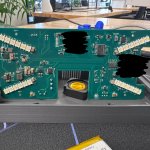
Built this PCB in 3 weeks using Ai.
It worked on the first revision.
Normally a board like this would take months to make and several revisions.
Flux and these other ai pcb tools aren't there yet. But if you use Ai right and have basic pcb design knowledge, there are strategies you can use to drastically speed up the design process and prevent errors.
Even for production pcb's.

For more context, I made this alone. And when I say it took me 3 weeks to make, I mean end to end.
1. designing architecture
2. component selection
3. drawing up the schematic
4. pcb layout
5. final BOM
6. testing
Getting a 3D printer to adapt in real time, giving it that intelligence is a really cool idea. And it could be expanded to other pieces of machinery as well, making development faster and smarter.

Few months ago, @Jahenderson05, @ryanmirdain and I started working to solve a large problem in the 3D printing space: 3D printers are dumb
We have been building the solution for this out of @fdotinc, with a hardware + software plugin product, that allows us to see prints and let 3D printers make decisions in real time based on how a production run is going. This lets us make g-code changes to a production the minute something goes wrong, leading to to consistently high quality parts, and account for any failures without the need of a person to manually monitor print jobs.
We’re working to finalize and produce the best version, but the progress over the past month has been insane.
If you wanna learn more or have ANY questions just hmu!


Physical Ai done the right way

Freckle is the first kids phone built for real-world adventure.
Shipping in December. Pre-order today: freckle.tech
Spent today designing how Orisen’s AI should actually work.
It’s crazy how quickly you can make a piece of hardware smarter than Alexa with @ElevenLabs, the OpenAI API, etc.
And it’s not just “put ChatGPT in the device.”
- Local wake word
- Offline voice
- Long-term memory
- Learns your sleep habits
- AI only connects when it actually needs to think or talk

Did you know it’s possible to determine someone’s breathing through the air?
How you breathe can tell you a lot about what’s happening in your body. And normally, when we think about measuring signals like breathing, we think of sensors attached to the body.
But there’s actually a way to measure breathing without touching someone at all.
It sounds sci-fi, but the physics is surprisingly simple. And its done using radar.
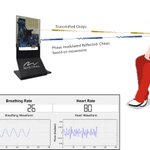
A radar sends radio waves toward your body. Those waves bounce off your chest and return back to the radar. And the time it took for the signals to return is noted down, think of echo-location from bats.
Every time you inhale and exhale, your chest moves by a tiny amount, sometimes just a few millimeters.
Modern radar can detect those changes and reconstruct them into a breathing waveform, allowing you to estimate things like breathing rate without a camera, wearable, or anything touching your body.
This gets especially interesting during sleep.
Breathing contains useful information about your sleep and, over time, could help systems understand your state and guide interventions around it.
I’ve been fascinated by this technology and working with radar for around 2 years now.
What I love about it is that it can be completely passive: you go to bed normally, wear nothing, and the sensing happens in the background. It also avoids putting a camera in your bedroom.
That’s the reason I’m using it in orisen, a non-contact, privacy protecting device that can you your sleep data.
The goal is for you to just go to bed like nothing changed.
No WHOOP. No Oura.

Abdul Haseeb retweeted

We benchmarked GPT-6 models in DOOM by having LLM agents fight each other. Across 120 matches, we found:
- Astra had the highest win rate at 82.5%
- Sol made the fastest decisions at avg of 5.34s
- Luna had the most wins per dollar at 12.8
GitHub: github.com/Rootly-AI-Labs/ro…
@OpenAIDevs @rootlyhq
Everybody is doing a tracker