
Founder & CEO of OpenResty Inc., Creator of OpenResty, Meditator
San Francisco Bay Area
Joined February 2010
- Tweets1.4K
- Following103
- Followers4.7K
- Likes46






Spent the past couple of weeks handing the admin, tax, accounting, and legal grunt work across my companies to my AI agent. It now runs my texts, voicemail, and email too, plus my bank and brokerage accounts and crypto wallets. Anything that sends money out still needs my final approval, of course. I finally feel free.
Next up: plugging a voice model into the agent so it can make phone calls for me, like Meta’s Muse. I don’t really trust companies like Meta with this stuff anyway, and an agent I build myself is more flexible and more secure.
To be clear, this isn’t a one-person-company thing. I still have a human admin, finance lead, CPA, and lawyer to do the final check and take the fall 😏 But my overhead as CEO has dropped massively.
Demis Hassabis of Google DeepMind says in a recent interview that this AI wave could usher in a new “golden age of discovery” — basically a second Renaissance.
Can’t wait. Just as long as it doesn’t wipe us out first…
Grok’s subscription isn’t worth it either — usage limits are as stingy as OpenAI’s. Tried Google’s AI plan too, and it burned through tokens fast.
Anthropic is still the one that delivers.
On our internal evals, FP8 MiniMax M3 beats FP4 by 3%.
Catch is: it hits the 2-hour timeout on the hardest cases. So we’re sticking with FP4 for everything—no point running it if a timeout leaves us with zero results.
Yichun Zhang (agentzh) retweeted

In performance troubleshooting, we always hit the same bottleneck: the issue itself isn't always complex, but few people can interpret low-level runtime data. When expert bandwidth is tight, issues just stack up.
In v26.9.1, we’re delegating this heavy lifting to the AI Assistant.
1. AI executes, evidence leads Describe what you see in plain English. The AI Assistant autonomously plans the analysis, executes tasks, and delivers key findings via chat.
Every insight is grounded in real-time data captured by OpenResty XRay from live processes—no LLM hallucinations or guessing games. This release adds time-series metrics and smarter report analysis, allowing it to easily track down complex, multi-stage issues over time.
Senior engineers no longer need to babysit every incident, empowering junior devs to drive root-cause analysis independently.
2. New Java runtime analyzer covering 9 key scenarios Core systems in finance, cloud-native microservices, autonomous driving, and gaming often rely on Java. Performance issues are usually buried deep in GC, safepoints, lock contention, and thread scheduling—invisible to plain logs or basic APM.
We now cover: memory allocation, class loading, GC & safepoint pauses, JIT compilation, lock waiting, network I/O, exceptions, thread activity, plus improved off-CPU profiling for accurate block-time stats. Full support for JDK 8, 11, 17, 21, and ARM64 architecture.
3. Zero code changes—our non-negotiable rule If it requires code modification, manual instrumentation, or service restarts, it doesn't belong in production. OpenResty XRay leverages dynamic tracing to analyze live applications on the fly—zero code edits, zero restarts, and zero source code access required. With near-zero overhead, it's 100% safe for production.
Both the AI Assistant and the new Java analyzer strictly follow this rule: drop it straight into your running clusters.
4. Diagnose from anywhere Troubleshooting shouldn't keep you chained to your desk. The AI Assistant now supports mobile, so you can review diagnostic sessions, share insights with your team, or ask follow-up questions right from your phone.
openresty.com/en/xray/releas…
#OpenRestyXRay #DynamicTracing #eBPF
In my own workflow, the most common failure mode for autonomous AI is a lack of basic taste and judgment. It constantly wastes time and tokens going down trivial rabbit holes. Tokens aren't a huge deal, I have more than I could ever burn. But time? That’s what’s actually precious.
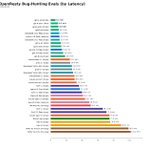
Finally benchmarked top US & Chinese LLMs on our internal OpenResty eval suite! 🚀 We tested two private benchmarks based on real, complex engineering tasks from our company:
- Coding: Designing & implementing complex algorithms from scratch.
- Bug-Hunting: Root-causing & fixing our hardest production bugs.
Both were run directly using our coding agent harness.
I'll let the results speak for themselves—attached are the quality rankings and avg latency charts for both benchmarks.
TL;DR based on our coding benchmark: The top Chinese open-source models are currently ~6–8 months behind the leading US frontier models.


Not bad—the newly released GPT-6.1 Sol is already beating (or at least matching) GPT-6 Astra on two of our internal private benchmarks: from-scratch coding and bug localization/fixing. Insane value from OpenAI here.
However, 6.1 Sol takes noticeably longer to complete tasks compared to previous Sol and Astra models. A trade-off, as always...


Big orgs with heavy processes are inherently anti-AI efficiency.
In any dev cycle, more humans = less AI impact. Human context-syncing is slow and lossy, plus humans need sleep, food, and breaks. AI agents sync context instantly with zero loss.
Fewer humans in the loop = exponential AI gains. This is why big tech barely sees an AI speedup (and often just gets more friction). Lean, flat teams are the ones actually winning in the AI era.
Turns out I barely write code or docs myself anymore. But I still have to read a ton of AI-generated output, fast.Reading speed and comprehension matter more than ever.Prompting skills matter too: clearly articulating what you want and imagining what's possible. You just don't have to write long essays anymore.
OpenAI just dropped GPT-6.1 Sol. To be fair, GPT-6 Sol wasn't noticeably smarter than GPT-5.6 Sol. On our internal evals it often did worse. Will test 6.1 Sol and compare.Also, the $200 plan is finally back… and of course there's a new $500 plan too.
Are OpenAI and Anthropic shipping new models daily now? What happened to slowing down AI progress? If anything, they're speeding up.
Just watched an interview with the CEO of Jev, who argues that RLHF — the technique behind nearly every major LLM — was a wrong turn in AI development. Interesting take.
He has a point. RLHF tends to make models sycophantic, optimizing to please people rather than to be right. That's a big reason AI shines as a collaborator or chat partner but often falls apart when running fully autonomously. Training rewards confident answers; saying "I'm not sure" earns nothing.
So for now, LLMs are most powerful in the hands of people who actually know the domain. We can't — and shouldn't — let AI make high-stakes decisions on its own yet.
Yichun Zhang (agentzh) retweeted
Coding agents like Codex, Claude Code, and Cursor can read and edit your code, but for performance work they're missing a key piece: what your program actually does at runtime.
If you already use OpenResty XRay, our new Agent Skill fills that gap. The agent pulls XRay's dynamic tracing data on its own, maps flame graph hotspots straight to source lines, and runs a full profile → fix → re-profile loop.
We tried it on an edge service under production-like conditions. Starting with issues like redundant JSON serialization and regexes being recompiled on every request, every refactor was guided by real XRay profiling data. Throughput went from 336 RPS to nearly 30,000 RPS, close to 90x.
The Skill calls the XRay API automatically and works with any tech stack, not just OpenResty/Nginx.
Full write-up, including where this approach fits best: blog.openresty.com/en/xray-a…

Under so much pressure lately — all I think about is how to burn through tokens as efficiently as possible… And I've still got $250K in Google Cloud credits waiting to be burned 😂
In practice, most of my token spend goes to Claude — mainly Opus 5, with Fable 5.1 on the side. I use Codex too, but less — mostly for Computer Use, and as a fallback for when Anthropic is down.
On the bright side, I keep coming up with new ideas. The real nightmare would be sitting on a mountain of tokens with absolutely nothing to build 😂
Anthropic just dropped Claude Opus 5.5 — supposedly smarter than Fable 5.1 and cheaper than Opus 5. Gotta upgrade ASAP lol. Funny how Anthropic is the loudest voice calling for slowing down AI development, yet they themselves aren't slowing down one bit 😂
Looking at the official benchmark charts, it's apparently outperforming GPT-6 Astra too.


A friend recommended Zeng Ming's recent interview on the development of the AI industry. I broadly agree with his overall take, but I have a few points of disagreement:
1. On his argument that AI offerings are becoming commoditized and low-value: if frontier capabilities continue to diverge with compute scale, and only a handful of companies can afford the entry price, supply isn't actually homogeneous — there are real moats, or moats you can deliberately engineer. Claude's Mythos models, for instance, have been restricted to a small whitelist of enterprises for quite some time.
2. His point about the race to own the agent entry point also feels largely settled by now. Claude Code and Codex are both grabbing for that exact foothold. Frontier model companies have a natural edge here — they have the best models and can offer massive user subsidies. It's hard for others to compete, even giants like Google. The remaining battleground is probably MCP and tool integrations.
3. The internet-era analogy has its limits — and frankly, Zeng Ming is someone who lived through that era, which may be shaping his framing. Back then, the infrastructure layer and the application layer were naturally separated; telcos couldn't become portals. In the AI era, model companies are building the entry points themselves. He even acknowledges that old-era experience can't get you to a new era's vantage point — which puts him in a bit of a self-contradiction.
On a personal note: I used to work at Yahoo, and thinking back — the only person still in the office later than me every night was probably Zeng Ming himself. He'd regularly stay past 3 a.m. I was already getting pulled aside by my manager for working too many hours 😂 This was back in 2007–2009.
TypeSafe AI's Jev model has been getting some buzz lately — supposedly dirt cheap, ultra-low latency, and built for making smart decisions inside your code. Signed up for an account today to give it a spin…
Feels like it's mainly suited for classification, decision trees, smart routing that kind of thing. Not really a general-purpose chat AI at all.
So I just found out after some digging — Fast mode in Claude Code's desktop app might actually be fake. If you don't have usage credits enabled and have no credits available, it won't throw an error. The server just silently falls back to Standard mode while the UI keeps showing "Fast mode." Super misleading! No wonder it never felt any faster…
The claude CLI doesn't have this problem though — without usage credits, it simply won't let you enable Fast mode at all.