








41.56% Decade Growth: Mexican Raspberries Lead Market Expansion
Over the last decade, raspberries have experienced a significant expansion. When comparing the 2016–2017 season against 2025–2026.
the market shows a remarkable growth of 41.56%. In terms of market share over the last decade, Mexico stands out as the only region within the top 3 to expand its dominance, registering a 27.90% increase in its total share.

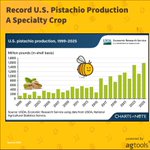
U.S. pistachio production reached an unprecedented 1.58 billion pounds in 2025, marking the largest harvest in history and continuing a steady upward trend driven by a nearly fivefold increase in bearing acreage over the last two decades.

A Specialty Crop - Pistachio Production.
U.S. pistachio production reached an unprecedented 1.58 billion pounds in 2025, marking the largest harvest in history and continuing a steady upward trend driven by a nearly fivefold increase in bearing acreage over the last two decades.


🥦 🥕 3 out of 4 Food Products Pass Through a Terminal Market in Mexico!
Terminal markets in Mexico are the backbone of food distribution, channeling 75% of national agricultural and fishery production.

This massive flow operates through 69 terminal markets where over 55,000 merchants generate 1.85 million direct jobs.
90% - From Terminal to Table: The Unseen Heroes of the Global Food Supply Chain
Every day, approximately 5 billion consumers worldwide make purchasing decisions that drive the global demand for fresh produce.

A staggering 90% of products sold in street markets and retail outlets originate from wholesale/terminal markets, highlighting the critical role these markets play in meeting consumer needs.
Join us at the #66FoodDistribution Conference! Exploring the path, provenance, & promotion in California's food landscape with leaders from supply chains, policymakers, growers, & educators. Moderated by @Agtools with @FDRSInc experts. Oct 13 | 8:30AM-10:00AM #fooddistribution

Agtools – Invited to the next step with NextGen Startup in Charlotte, NC!
More: generations.global/
#FIG2025 #Fintech #Insurtech #Innovation @RevTechLabs

#Apples a staple holiday ingredient… think apple pie, baked apples, and cider. 🍎✨
The U.S. produces over 5 billion pounds of hashtag#fresh apples annually, with demand peaking during the holiday season.

Part 2 (final) - 🍂 Food Waste: A Thanksgiving Challenge with Climate and Social Impact 🌍
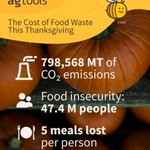
This Thanksgiving, food waste isn't just a loss of resources—it's a major contributor to climate change.
The 798,568 metric tons of CO₂ emissions from wasted food are equivalent to the emissions from driving 190,000 gas-powered cars for a year.
All of this discarded food could provide five meals to each of the 47.4 million people experiencing food insecurity in the United States.
#FoodWaste #Thanksgiving #Sustainability
Source: ReFED
