

Growth GTM AI-driven Experiment-Oriented | 4x founder 3x Dad Married 12y remote Helping companies from 0 to 1, and 1 to 1+ @spacexsi @cursor_ai Ambassador
Florianópolis, Brazil
Joined April 2008
- Tweets6.9K
- Following3.7K
- Followers1.1K
- Likes5.6K






Alex Ferrari retweeted

SpaceX’s Super Intelligence business now generates more revenue than its Space and Connectivity businesses combined.
In its Q3 results published today, Super Intelligence brought in $7.6B, ~52% of the quarter’s revenue, up from 15% a year ago. The growth mainly came from new deals renting out its computing capacity to other companies.
It also spent $19.6B on capex in the quarter, more than its entire revenue, with $16.4B of that going to Super Intelligence.


Alex Ferrari retweeted

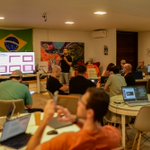
Privileged to be invited to Founder Haus by Grok Bot and Cursor 🤖
Learning about @bot and AI from some of Floripa’s 🇧🇷 sharpest builders 💻
It's truly amazing that, with the help of AI, I've been able to engineer my entire tech infrastructure myself. I certainly couldn't have done this two years ago 🚀
Florianopolis 🇧🇷
@aferrari @Founder_Haus @grok

Alex Ferrari retweeted

lets build with Grok Bot 🚀
Grok Bot Building Day at @Founder_Haus in Jurerê
free with coffee food and swag
$30 credit per guest
top 3 builders win the Ultra plan
its full, join the waitlist 👇
luma.com/3t86uc0s

Alex Ferrari retweeted

Great read from Patrick, as always.
“Personal agents will, I think, act as a kind of structural subsidy for product quality.”
Yes, and well put.

Assorted things I've been mulling over regarding agents in the economy:
• Companies are in some sense the original superintelligence. It's often the case that they can use their amortized cognitive surplus to advance their interests against those of certain consumers: relative to the optimization capacity of companies, consumers can be inattentive, underinformed, irrational, etc. (Think, say, of some of the classic insurance upsells at the end of a booking process, which is typically priced substantially above what a regular policy would cost.) Herbert Simon introduced the idea of bounded rationality, and firms often end up benefiting from it. Thanks to personal agents, we will probably get somewhat more rational in how we engage with companies.
• How exactly will outcomes change? Well, certain kinds of price discrimination will work less well (how do coupons work if every agent hunts fastidiously for them?), and certain kinds of customer cross-subsidy will change (today, people who forget to cancel subscriptions subsidize those who don't). Taken across the economy as a whole, I'm not sure what the incidence of all of this will be.
• In corporate strategy, people have long debated the relative importance of distribution and product quality. Perhaps you've made something better, but does anyone know about it? Won't people just continue to buy the ACME Corp Mousetraps? Personal agents will, I think, act as a kind of structural subsidy for product quality. How would markets look different if individuals always spent at least 10 hours researching their purchases? On the margin, focusing on making a product better is, I think, going to become a more effective strategy for companies. This is good!
• It true, a corollary is that information about product quality will become more important and impactful. Today, most people have very limited ability to aggregate and integrate such data, but agents will have insatiable thirst for such signals. (It's often said that data is becoming more valuable because it helps in the training of models. That's obviously true, but I think there's a secondary way in which it's more valuable simply as a complement to cheaper intelligence.)
• A big question is whether agents will increase superstar effects (rational agents all settle on the same product) or increase dispersion (because everyone has slightly different tastes and preferences, which agents are good at eliciting, finally overcoming the artificial clustering we've been subjected to).
• Many internet companies have monetized demand routing, which is in turn often predicated on short attention spans. "I'll click on the first thing I see." This has led to some amount of inefficiency, as companies try to propitiate capricious ranking algorithms and incur various placement fees. It's not all deadweight loss (willingness to pay is itself a kind of signal, which is valuable to buyers), but it's not great. How will the nature and value of this routing change in a world of personal agents? I don't know the answer, but I think that the effects might be pretty big.
• Much of what I'm writing hinges on the assumption that personal agents will be on the consumer's side. I suspect that that will be the winning strategy, but whether it's true, and what it means to be true, involves a lot of other questions.
Taken as a whole, the market is a massively parallelized, decentralized, and highly imperfect value attribution machine, and, taking stock of all of the effects, it seems to me that the quality point may well be the biggest: that agents will change the nature of the backpropagation such that the rewards for better products increase. Maybe this is too optimistic, but I suspect (and hope) that companies that make things that they're proud of will feel that the universe is a little more partisan in their favor.
Alex Ferrari retweeted

ANATEL just scored a huge win for the people of Brazil by voting to approve Starlink Mobile's full 2 GHz access with our global S-band priority.
Starlink will put this critical mid-band spectrum to work to make sure every Brazilian has access to high-speed mobile broadband on their devices 🛰️📱


Alex Ferrari retweeted

Reset is live! Give your @bot an ambitious task for the weekend :)

Alex Ferrari retweeted
only 42 spots left for the in person NASA SpaceApps Challenge in florianopolis
apply now:
spaceappschallenge.org/2026/…

Alex Ferrari retweeted

Wild adoption gap: the top 1% of AI spenders are spending more than 600x as much as the median company
More charts in State of Markets II: a16z.news/p/state-of-markets…


Introducing our State of Markets pt 2, along with a companion podcast where we unpack the data and discuss what comes next.
Tech is the everything cycle.
Supply: putting the buildout in context, just passed railroads as % of GDP. The wisdom of Elon is real: the factory (or the datacenter!) is the product.
Demand: diffusion is so, so early. Median AI vendor spending in the top 1% of companies is 8x that of the top 10%. Only about 30% of S&P 500 companies report a quantified AI impact, which means there’s a substantial opportunity in connecting models to a company's data and workflows. Diffusion into companies is one of the main themes of the next 5 years.
We’re entering the agent work period. Only a few million users today, but applicable to billions of internet users with massive surplus created. META/GOOG monetize US users at $200+ per year today. Agent opportunity is much higher.
Mega-trends the next 5 years: Consumer agents, Robotics, Autonomy, AI x bio, Personal health, Diffusion into enterprise, New era of American Dynamism.
Much more in our SoM report here - a16z.news/p/state-of-markets…
@a16z @sarahdingwang @aleximm @santiago__rdz


Alex Ferrari retweeted

Hoje no Founder Haus com @aferrari, embaixadores SpaceX + Grok Bot no Grok Bot Meetup Floripa. Bora construir junto 🚀
#GrokBotFlorianopolis



Alex Ferrari retweeted

AI isn’t going away. Barring unprecedented global government coordination, it isn’t even slowing down.
The only real decision is whether to centralize power, or disperse it.
Do you fear the technology? Or a small number of people controlling the technology?
Alex Ferrari retweeted

I'm giving away $100k of Grok @bot credits!!
The @spacexai team gave me 5,000 codes of $20 each to give away.
My favorite Grok Bot use case:
🔸Family Bot - my kids get so many emails from schools, sports, etc so my bot reads all of them, summarizes them, and puts important dates on my calendar. Massive time saver.
Reply below ⬇️ with your favorite Grok Bot use case (existing or planned) and my Grok Bot will DM you with a code. (1 code per person, must have >100 followers)
Alex Ferrari retweeted

you can now wake a grok @bot from anywhere!
when you create a routine, click "add trigger" and select webhook
some ideas:
- you get a whatsapp message from a specific contact
- a page changes in Notion
- your home temp sensor hits a threshold
- someone presses a button on your desk
- a github action completes
- your server hits an error rate spike
try it out and lmk what you setup!


