

Supporting young people to build accountability & innovate with @integrityicon, @hackcorruption and @opengovhub. Say hello: [email protected]
Global
Joined September 2011
- Tweets19.7K
- Following7.4K
- Followers17.3K
- Likes18.6K






How can a funder's exit be responsible and help build a resilient civil society?
Our Co-CEO, Cheri-Leigh Erasmus and Eszter Filippinyi of @TAICollab, explore this question in “Leaving with Care: Responsible Funder Exits.”
When a funder exits, the consequences can extend beyond the loss of funding. But a funder’s departure does not have to be an unavoidable crisis.
The authors highlight practical ways to make exits more responsible:
📌 Give organizations time to plan.
📌 Support a collective approach.
📌 Build a resilient civil society.
Read more about some promising practices that can help organizations navigate funding transitions: bit.ly/47n1ooB


📣 Nominations are open for the Get Loud Award: Democracy Defenders!
Together with Kerry Washington and her production company, Simpson Street, the Elevate Prize Foundation is looking for organizations in the US and around the world working to protect, strengthen, and reimagine democracy.
The Elevate Prize Get Loud Award provides funding each month to impactful community-based organizations around the world, helping them advance their work. This month, they are awarding $25,000 to one organization working to defend and strengthen democracy.
Nominations for the October award close on Friday, October 16.
Submit a nomination: bit.ly/4yQ4ttt
Eligibility: Organizations must have a charity designation in their respective country and an annual revenue under $1 million.

What does shifting power look like in practice?
Carolyn Dallmann and Lior Ipp join Cheri-Leigh Erasmus on AccountabiliTea to explore innovative approaches to grantmaking.
🎧 Watch, listen or read: bit.ly/4d5BYyU
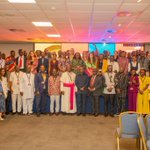
At this year’s UNGA, we joined the Ban Ki-moon Foundation, Civic Strength Partners and UNDP to convene leaders from civil society, philanthropy, and multilateral and development organizations. We met to shift the conversation about civil society’s future from diagnosis to actionable steps that strengthen the ecosystems we work in and proactively build resilient civic infrastructure.
Participants identified concrete building blocks across the three domains —organizational, financial, and relational. We discussed how CSOs are shrinking and redefining roles, with implications for knowledge retention. Financially, flows have declined, philanthropy is shifting towards new sectors, and new, non-Western funding sources are emerging. Relationally, trust is strained when networks are too informal to hold up in a crisis or when top-down, enforced formality overtakes relationships.
Read our takeouts here: bit.ly/4ydRNeM

"When money can buy influence and technology can multiply it, how can we protect elections from these forces?"
At the 3rd Electoral Integrity in Africa Summit in Accra, Ghana, participants highlighted the urgent need to equip citizens to assess and question online content, find ways to position young people as co-creators of democratic innovation, and build solidarity to protect citizen election observers’ independence and facilitate transparent and fair accreditation procedures.
We’re proud that Accountability Lab East and Southern Africa (ALESA) was among the Summit’s partners and that Habibou Diaou, Executive Director of Accountability Lab Mali, was among the speakers.


Transparency and accountability depend on a civil society that can act independently.
@accountlabng is among 31 civil society organizations calling for the withdrawal of Nigeria’s proposed Foreign Aid (Regulation, Transparency and Disclosure) Bill, 2026, which seeks to regulate foreign aid and funding.
The coalition warns that requirements to align projects with government priorities, alongside severe penalties for non-compliance, could restrict independent civic action – including work that challenges government decisions and holds public institutions accountable.
Its joint statement calls for strengthening existing transparency mechanisms while protecting freedom of association and communities’ ability to organize and support one another.
👓 Read more on Accountability Lab Nigeria’s website: bit.ly/4zgZYYx
📄 View the statement: bit.ly/47F9d95

As philanthropy takes on a growing role in public life, questions of power and accountability become harder to ignore.
@diplocourier's reflections from the Philanthropy Futures Forum included contributions from @AccountLab Co-CEO Blair Glencorse. He questioned who held philanthropy accountable as it shaped public outcomes.
The discussion also highlighted tide pool infrastructure: sustaining civic talent and networks as funding and political support recede. It speaks to a central challenge of ecosystem building – how to keep people connected and collective action possible through uncertainty.
What could this mean for how we invest in people, relationships, and collaboration?
👓 Read the full reflections here: bit.ly/3TFzscn

What is country-led development? And what makes it more effective?
Our Senior Non-Resident Fellow, Soheila Comninos, explores these questions in her recent Devex article, “Country-led development cannot mean solely government-led development."
While there’s growing interest among philanthropies in partnering with national governments, she argues that these partnerships will only be effective, inclusive, and accountable when they also make space for civil society organizations, local governments, community groups, businesses, independent media, and citizens.
Read more to explore what more inclusive development decision-making can look like: bit.ly/3VqzF3D

🎙️ What if shifting power made partnerships stronger?
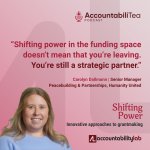
Carolyn Dallmann of @humanityunited makes a point we keep coming back to: funders can create more room for others to lead and remain strategic partners.
Hear her explore the possibilities with Lior Ipp of Proximate Futures Fund and host @cherileighe in our AccountabiliTea episode on innovative approaches to grantmaking.
🎧 Watch, listen, or read via the link in our bio.


💭 Should every new initiative become its own organization? Should every organization be built to last indefinitely?
In 'Beyond the Heroic NonProfit', Jacob Harold and Archie Kindon explore how mission-driven organizations can rethink their structures as circumstances change – from legal form and independence to what they might share or distribute.
🔎 Read the new report from Civic Strength Partners: bit.ly/4xHgXlF
Learn more about CSP: civicstrengthpartners.org/

Accountability Lab | accountlab.bsky.social retweeted

Today, we’re saying thank you to Kenya and Blair Glencorse as they conclude their time on the OGP Steering Committee.
Both played a leading role in guiding OGP as Co-Chairs in 2023–24, helping strengthen political support, and champion digital gov and youth engagement.

🎙️ A grant is a starting point. What happens after it’s made?
In this AccountabiliTea conversation, Lior Ipp and Carolyn Dallmann explore how funders can work alongside organizations, value the knowledge they bring, and stay engaged with the problems they’re trying to solve.
🎧 Watch, listen, or read: bit.ly/4d5BYyU

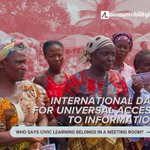
Who says civic learning belongs in a meeting room? 🏢
In western Liberia, @accountlablb and local women-led partners took conversations about participation and leadership to the markets where women gather.
In Bomi, women described how a lack of information had made it harder to get involved in leadership. The market lectures created space to ask questions, talk about the power of their votes, and consider how they could support one another to lead.
This International Day for Universal Access to Information, their story asks us to think beyond whether information is available: who is it reaching, and where are the conversations happening?
🔗 Read the full story by Parnneh T. Mallobe: bit.ly/4yjPIyL


📢 Opportunity alert!
Local Works Global is recruiting its first-ever cohort of interns across four areas:
→ Storytelling and community engagement
→ Policy and research
→ Network engagement and community support
→ Fundraising and business development
These remote roles offer interns the opportunity to take ownership of meaningful work, learn alongside an experienced global team, and receive support from a dedicated coordinator and mentor.
The internships are open to applicants worldwide, with a flexible commitment of about 5 – 10 hours per week.
Please note that the roles are currently unpaid. Local Works Global acknowledges the barriers this can create and encourages those who are interested but unable to take on unpaid work to reach out and stay connected for future paid opportunities.
📅 Applications close on October 5.
🔗 Learn more and apply: localworksglobal.org/interns…

What happens to peace when we can no longer agree on what is real?
AI-generated content, manipulated media, and algorithm-driven narratives are changing how conflicts are understood – often allowing fear and outrage to travel faster than verified information.
This International Day of Peace, we’re reflecting on why investing in peace must also mean investing in trustworthy information, media literacy, and digital accountability.
Read “Battleground Algorithms” by Muhammad Abubakar of @accountlabpk: 🔗 bit.ly/4y6e6DH


What happens when peacebuilding organizations rethink how power is organized?
Dzikamai Bere’s Community Publishing article explores shared, distributed & collective leadership, featuring our journey with co-leadership alongside others.
Read more: bit.ly/4xu5xS0
🎙️ What changes when the people closest to a problem are trusted to help shape the solution?
Our latest #AccountabiliTea episode explores lived experience, decision-making, and new approaches to risk in grantmaking.
Listen, watch, or read the transcript: bit.ly/4d5BYyU


Democracy is about more than casting a vote. And participation is about more than being invited to speak. On this International Day of Democracy, we’re reflecting on what it really means for every voice to count – and what needs to happen for those voices to shape decisions.
Across our network, teams and communities are putting this into practice:
🇳🇵 In Nepal, young people are examining electoral integrity and the barriers that can prevent people from participating fully – during elections and beyond.
Read the story from @accountlabnp: bit.ly/4cHrohE
🇳🇬 In Nigeria, residents spoke up about an unmanaged dumpsite affecting their health and daily lives. Their experiences were documented and shared with the responsible institutions. The site was subsequently cleared and barricaded.
Read the story from @accountlabng: bit.ly/46p78he
🇲🇱 In Mali, communities are learning to recognize and resist disinformation by questioning, verifying, and thinking carefully before sharing information.
Explore the work of @accountlabmali: bit.ly/4AfBvEm
These stories remind us that democracy delivers when people can participate meaningfully, see institutions respond, and access reliable information. #IDD2026


🎙️ Our new AccountabiliTea episode is out, asking what it takes to shift power in philanthropy.
Cheri-Leigh Erasmus speaks with Carolyn Dallmann from @HumanityUnited and Lior Ipp from the Proximate Futures Fund about participatory grantmaking, proximate leadership, and rethinking trust, power, and risk in philanthropy.
🔗 Watch, listen, or read the transcript: bit.ly/4d5BYyU