Pinned Tweet
It’s #PortfolioDay!!
I’m an Arizona-based geology undergraduate and paleoartist (fossil necromancer) who illustrates a variety of extinct organisms back to life.
Aberrantologist retweeted
I resurface from oblivion to present my Magnum Opus. My masterpiece. My legacy.
"Be Not Afraid"
Stylus on Screen (Procreate on iPad)
2026
Aberrantologist retweeted
The very south of Lemuria is reaching into the temperate climate zone and so the many lakes down here are often times surrounded by yellows and oranges as the colder season comes around.
Aberrantologist retweeted
In the lowlands, between the savannah and the desert the ephemeral wetlands are hotspots of biodiversity. As the monsoon rains cross the mountains in the North only a small portion of the water is retained in the desert. Instead in forms huge expanses of pools and waterways at...
...currently I am not convinced this thing could even fully close its mouth. Perhaps the reconstruction proposed by the study does not properly articulate these elements or account for taphonomy, but for now it remains "beyond the scope of this paper". Please CT scan this thing!
Aberrantologist retweeted
Somewhere in South America, 240 million years ago, lived a fuzzy, little archosaur, unaware of the dynasty it will bring forth.
Aberrantologist retweeted
i had the opportunity to see the Herugavialis cairensis material and paper early to illustrate it ahead of time! congrats to Burke et al. (2026) on the paper

ALT at night by the shoreline of Eocene Egypt, a bright light illuminates a Herugavialis that's caught a pycnodont, seafoam crashes around the large gavialoid Herugavialis is a marine gavialolid (relatives of gharials and false gharials) that lived in Egypt. its morphology was relatively similar to extant ghavialoids, but it differs in key skeletal features, like the lack of a maxilla process within its lacrimal gland, a feature which all extant crocodilians have. another thing that makes it special is that its holotype comes from the same rock layers used to construct the Great Sphinx of Giza
Aberrantologist retweeted
A study led by @/TheRhinoscaros just released:
It revises several ichnospecies derived both from erosive marks from invertebrates, and bitemarks from large Sebecids and Dyrosaurids sucessfully crushing hard-shelled turtles in the Paleocene of Bolivia :P (link below)
haunting the mist... the achlys cicatrix is in!
Aberrantologist retweeted
Through winding paths we move up into the mists of the Paramalayan Mountains. The northern slopes of this ridge are near permanently cloaked in rain and fog and hide the largest animals of Lemuria. Mistdrummers are titanic noasaurids that climb up and down these cloud forests...
Aberrantologist retweeted
#FossilFriday New work by @Formorphology just out in Current Biology quantifies burst swimming speeds in mosasaurs! Based on her results, this is how we imagined a fully-grown Tylosaurus could successfully breach. Paper below
Aberrantologist retweeted
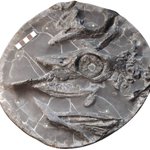
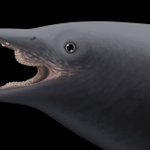
Omphalosauridae (Ichthyosauriformes): enigmatic marine reptiles in the global recovery from the end-Permian extinction
New genus and species, Ammonitritor scientiacivium
onlinelibrary.wiley.com/doi/…