Sorry, geen dienst. Mijn collega pikt je op
Joined October 2010
- Tweets15.1K
- Following5.8K
- Followers36.9K
- Likes21.6K





Chris Van den Abeele retweeted

Remembering Jimmy Carter as one of the only US presidents who spoke honestly about Palestine.
“The word ‘apartheid’ is exactly accurate…much worse than they were in South Africa by way”
Goodman: Why don’t Americans know what you have seen?
Carter: Americans don’t want to know
Chris Van den Abeele retweeted

Spelers die vorige week geblesseerd moesten afhaken bij de Rode Duivels maar vandaag in actie zijn gekomen in clubverband: De Bruyne, Theate, De Cuyper, Tielemans, De Ketelaere, Lavia, Fofana, Seys.
Chris Van den Abeele retweeted

Hij was ook al heel straf en helder bij het uitbreken van de oorlog. #gaza

Truly extraordinarily powerful interview of Dominique de Villepin, former Prime Minister of France, on Gaza.
I can't stress enough how rare it is to hear a former French PM speak like this.
He says France "no longer has a voice on the international scene", because (among other things) of its "double-standards" and lack of action with regards to Gaza.
He calls France's internal silencing of what's happening in Gaza a "real scandal in terms of democracy", making France live in "absurdity" and resulting in it "fading away". He says that we (France and the West in general) would have many levers to stop the war - in terms of armament or economic sanctions - "but we refuse to use these levers with arguments which are absolutely unreal culturally or intellectually speaking. Saying 'we need to let Israel fight its war to the end': but what end? What is the end?".
As a consequence he says that France and the West will "foot the bill" for what's happening in terms of loss of credibility and legitimacy.
On Gaza specifically he calls it "undoubtedly the biggest historical scandal since... I don't even dare to find a reference", calling it a war "not like the others since it is civilian populations that die". He also rebukes the journalist for using the usual term "according to the Hamas-run Ministry of Health" with regards to the number of death: "There's not only the Ministry of Health from Hamas which says that there are 40,000 dead. And there are probably many more, MANY more! So from this basis let's not give the feeling that it would be a number like that, unreliable. No!"
Probably the most powerful quote of the interview, literally gave me shivers: "In Gaza bodies are torn into pieces, Hearts are in pieces! Souls are in pieces! Heads are in pieces!" ("À Gaza les corps sont en morceaux! Les coeurs sont en morceaux! Les âmes sont en morceaux! Les têtes sont en morceaux!")
He says that ""Israel has no political objective and when you have no political objective the only thing you can do is war... There is a security objective, there is an identity objective, there is a messianic madness and that explains the catastrophe that we're witnessing."
Chris Van den Abeele retweeted

Recognized from the first notes. Thanks, @abeelec So glad #parlando is back on @radio1be
youtu.be/s2OnNNSSVQs?si=E5YL…


Chris Van den Abeele retweeted

I'm not religious, but the French depiction of the Last Supper is blatant disrespect and incitement. Jesus is portrayed as a woman and the disciples as transvestites. I wonder why they didn't mock Islam in a similar way. Actually, don’t answer as I know why.

Chris Van den Abeele retweeted

Hoeveel pech kan je hebben 🌧️ Europees radarbeeld van 20u20 lt. #Olympics #Paris2024

Chris Van den Abeele retweeted

Zo supporters niet (laten) gaan groeten, en boertig doen tegen een journalist die z'n job doet, als je je zo ongeveer in de meest bevoorrechte positie ter wereld bevindt. Ik denk daar wat van @KevinDeBruyne. Grow up. En veel succes. Dat ook.
Chris Van den Abeele retweeted

Zoals al vijf jaar geleden aangekondigd verzaak ik - als 69-jarige - aan mijn parlementaire uittredingsvergoeding. Ik oordeel niet over anderen. Partijen die pleiten voor een vermindering van de partijdotaties kunnen trouwens ook al (gedeeltelijk) verzaken tijd.be/verkiezingen/federaa…


Chris Van den Abeele retweeted

‘Aan elk station groeit een kamer waar je ’s ochtends al drinken kunt.’
Stukje voor De Morgen:

Chris Van den Abeele retweeted

i feel everyone needs to witness the absolute beauty and insanity of a Megan Campbell throw in so here you are
Chris Van den Abeele retweeted

Geweldig werk weer van @tijd
Must read:
“Ruim 500 rijke families ontlopen erfbelasting via private stichtingen”
tijd.be/dossiers/private-sti…


Chris Van den Abeele retweeted

Conner Rousseau neemt ontslag als voorzitter van Vooruit na zijn racistische en seksitische uitspraken. Maar dat schandaal dreigt nu ondergesneeuwd te worden door een nieuw schandaal, bij een andere partij.
#ConnerGate #vooruit
Chris Van den Abeele retweeted

Intussen bij de VN:
Iran wordt voorzitter van VN orgaan mbt Mensenrechten.
Really?
#vrt #iran #UnitedNations

No joke: this Thursday, the Islamic Regime in Iran will become Chair of the U.N. Human Rights Council Social Forum.
Say NO to the U.N. legitimizing a regime that beats, blinds, tortures and rapes women for demanding their rights.
Sign the petition now: unwatch.org/StopIRI
Chris Van den Abeele retweeted

We must have the strength to understand and denounce what happened, from this standpoint, there's no doubt about our position. But we must also have the courage, and that's what diplomacy is... diplomacy is about being able to believe that there is light at the end of the tunnel.
Absolutely masterful interview on Gaza of Dominique De Villepin, former Prime Minister of France, who famously led France's opposition to the Iraq war and who, IMHO is the best diplomat the West has produced in decades.
This is so important, so incredibly well argued, that I decided to translate it in full:
"Hamas has set a trap for us, and this trap is one of maximum horror, of maximum cruelty. And so there's a risk of an escalation in militarism, of more military interventions, as if we could with armies solve a problem as serious as the Palestinian question.
There's also a second major trap, which is that of Occidentalism. We find ourselves trapped, with Israel, in this western bloc which today is being challenged by most of the international community.
[Presenter: What is Occidentalism?]
Occidentalism is the idea that the West, which for 5 centuries managed the world's affairs, will be able to quietly continue to do so. And we can clearly see, even in the debates of the French political class, that there is the idea that, faced with what is currently happening in the Middle East, we must continue the fight even more, towards what might resemble a religious or a civilizational war. That is to say, to isolate ourselves even more on the international stage.
This is not the way, especially since there's a third trap, which is that of moralism. And here we have in a way the proof, through what is happening in Ukraine and what is happening in the Middle East, of this double standard that is denounced everywhere in the world, including in recent weeks when I travel to Africa, the Middle East, or Latin America. The criticism is always the same: look at how civilian populations are treated in Gaza, you denounce what happened in Ukraine, and you are very timid in the face of the tragedy unfolding in Gaza.
Consider international law, the second criticism that is made by the global south. We sanction Russia when it aggresses Ukraine, we sanction Russia when it doesn't respect the resolutions of the United Nations, and it's been 70 years that the resolutions of the United Nations have been voted in vain and that Israel doesn't respect them.
[Presenter: Do you believe that the Westerners are currently guilty of hubris?]
Westerners must open their eyes to the extent of the historical drama unfolding before us to find the right answers.
[Presenter: What is the historical drama? I mean, we're talking about the tragedy of October 7th first and foremost, right?]
Of course, there are these horrors happening, but the way to respond to them is crucial. Are we going to kill the future by finding the wrong answers...
[Presenter: Kill the future?]
Kill the future, yes! Why?
[Presenter: But who is killing whom?]
You are in a game of causes and effects. Faced with the tragedy of history, one cannot take this 'chain of causality' analytical grid, simply because if you do you can't escape from it. Once we understand that there is a trap, once we realize that behind this trap there has also been a change in the Middle East regarding the Palestinian issue... The situation today is profoundly different [from what it was in the past]. The Palestinian cause was a political and secular cause. Today we are faced with an Islamist cause, led by Hamas. Obviously, this kind of cause is absolute and allows no form of negotiation. On the Israeli side, there has also been a development. Zionism was secular and political, championed by Theodor Herzl in the late 19th century. It has largely become messianic, biblical today. This means that they too do not want to compromise, and everything that the far-right Israeli government does, continuing to encourage colonization, obviously makes things worse, including since October 7th. So in this context, understand that we are already in this region facing a problem that seems profoundly insoluble.
Added to this is the hardening of states. Diplomatically, look at the statements of the King of Jordan, they are not the same as six months ago. Look at the statements of Erdogan in Turkey.
[Presenter: Precisely, these are extremely harsh statements...]
Extremely worrying. Why? Because if the Palestinian cause, the Palestinian issue, hasn't been brought to the forefront, hasn't been put on stage [for a while], and if most of the youth today in Europe have often never even heard of it, it remains for the Arab peoples the mother of all battles. All the progress made towards an attempt to stabilize the Middle East, where one could believe...
[Presenter: Yes, but whose fault is it? I have a hard time following you, is it Hamas's fault?]
But Ms. Malherbe, I am trained as a diplomat. The question of fault will be addressed by historians and philosophers.
[Presenter: But you can't remain neutral, it's difficult, it's complicated, isn't it?]
I am not neutral, I am in action. I am simply telling you that every day that passes, we can ensure that this horrific cycle stops... that's why I speak of a trap and that's why it's so important to know what response we are going to give. We stand alone before history today. And we do not treat this new world the way we currently do, knowing that today we are no longer in a position of strength, we are not able to manage on our own, as the world's policemen.
[Presenter: So what do we do?]
Exactly, what should we do? This is where it is essential not to cut off anyone on the international stage.
[Presenter: Including the Russians?]
Everyone.
[Presenter: Everyone? Should we ask the Russians for help?]
I'm not saying we should ask the Russians for help. I'm saying: if the Russians can contribute by calming some factions in this region, then it will be a step in the right direction.
[Presenter: How can we proportionally respond to barbarism? It's no longer army against army.]
But listen, Appolline de Malherbe, the civilian populations that are dying in Gaza, don't they exist? So because horror was committed on one side, horror must be committed on the other?
[Presenter: Do we indeed need to equate the two?]
No, it's you who are doing that. I'm not saying I equate the faults. I try to take into account what a large part of humanity thinks. There is certainly a realistic objective to pursue, which is to eradicate the Hamas leaders who committed this horror. And not to confuse the Palestinians with Hamas, that's a realistic goal.
The second thing is a targeted response. Let's define realistic political objectives. And the third thing is a combined response. Because there is no effective use of force without a political strategy. We are not in 1973 or in 1967. There are things no army in the world knows how to do, which is to win in an asymmetrical battle against terrorists. The war on terror has never been won anywhere. And it instead triggers extremely dramatic misdeeds, cycles, and escalations. If America lost in Afghanistan, if America lost in Iraq, if we lost in the Sahel, it's because it's a battle that can't be won simply, it's not like you have a hammer that strikes a nail and the problem is solved. So we need to mobilize the international community, get out of this Western entrapment in which we are.
[Presenter: But when Emmanuel Macron talks about an international coalition…]
Yes, and what was the response?
[Presenter: None.]
Exactly. We need a political perspective, and this is challenging because the two-state solution has been removed from the Israeli political and diplomatic program. Israel needs to understand that for a country with a territory of 20,000 square kilometers, a population of 9 million inhabitants, facing 1.5 billion people... Peoples have never forgotten that the Palestinian cause and the injustice done to the Palestinians was a significant source of mobilization. We must consider this situation, and I believe it is essential to help Israel, to guide... some say impose, but I think it's better to convince, to move in this direction. The challenge is that there is no interlocutor today, neither on the Israeli side nor the Palestinian side. We need to bring out interlocutors.
[Presenter: It's not for us to choose who will be the leaders of Palestine.]
The Israeli policy over recent years did not necessarily want to cultivate a Palestinian leadership... Many are in prison, and Israel's interest - because I repeat: it was not in their program or in Israel's interest at the time, or so they thought - was instead to divide the Palestinians and ensure that the Palestinian question fades. This Palestinian question will not fade. And so we must address it and find an answer. This is where we need courage. The use of force is a dead end. The moral condemnation of what Hamas did - and there's no "but" in my words regarding the moral condemnation of this horror - must not prevent us from moving forward politically and diplomatically in an enlightened manner. The law of retaliation is a never-ending cycle.
[Presenter: The "eye for an eye, tooth for tooth".]
Yes. That's why the political response must be defended by us. Israel has a right to self-defense, but this right cannot be indiscriminate vengeance. And there cannot be collective responsibility of the Palestinian people for the actions of a terrorist minority from Hamas.
When you get into this cycle of finding faults, one side's memories clash with the other's. Some will juxtapose Israel's memories with the memories of the Nakba, the 1948 catastrophe, which is a disaster that the Palestinians still experience every day. So you can't break these cycles. We must have the strength, of course, to understand and denounce what happened, and from this standpoint, there's no doubt about our position. But we must also have the courage, and that's what diplomacy is... diplomacy is about being able to believe that there is light at the end of the tunnel. And that's the cunning of history; when you're at the bottom, something can happen that gives hope. After the 1973 war, who would have thought that before the end of the decade, Egypt would sign a peace treaty with Israel?
The debate shouldn't be about rhetoric or word choice. The debate today is about action; we must act. And when you think about action, there are two options. Either it's war, war, war. Or it's about trying to move towards peace, and I'll say it again, it's in Israel's interest. It's in Israel's interest!"
Chris Van den Abeele retweeted
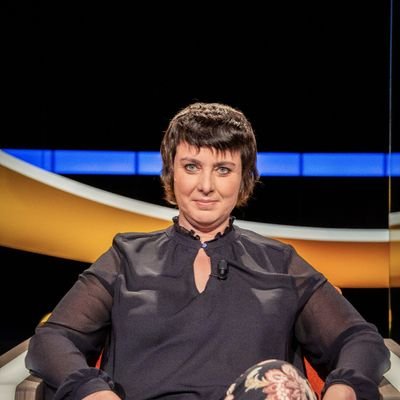
"“De koning kan om 11.30 uur”: Kris Luyckx was eerste keuze om minister van Justitie te worden, ook al ontkende De Croo dat"
nieuwsblad.be/cnt/dmf2023102…
