
Sr. Research Scientist, Agentic RL @databricks I'm interested in LLM, Agents, Tool use, Reinforcement Learning and making a JARVIS 🤖
Joined March 2015
- Tweets153
- Following518
- Followers522
- Likes558






Pinned Tweet
In 1945, Vannevar Bush imagined a machine to extend a scientist's memory. He called it the MemEx.
80 years later, we built one for LLM agents.
Tool outputs become Python objects; only print statements reach the model's context.
🧵 databricks.com/blog/memex-pr…

Ashutosh Baheti retweeted

GLM-5.3-Flash at 270 tok/s!
Databricks inference team is on fire. So proud of the team!
On our OfficeQA Pro v2 benchmark, GLM-5.3-Flash delivers 10% higher quality than GLM-5.2 at just 1/10 the cost.
Fast, cheap, and good.

Ashutosh Baheti retweeted

We are excited to share @databricks 's new AI Extract achieves the new frontier at complex document processing tasks! It addresses a few key customers' pain points:
- Process documents with 500+ pages that exceeds 1M tokens
- Large, nested schema with 1k+ of objects
- Complex schema that requires frontier reasoning
Here is how we achieved it:
- In-house custom model for document extraction that is trained for complex real-world examples and optimized for serving large volume of workloads
- Custom agent harness that is designed for long document extraction. It decomposes large extraction jobs, executes smaller tasks in parallel, and reconciles them into one final structured output.
This is the methodology behind many of our work: identify key large workloads of enterprise customers, build in-house models + harness to address it, and ship to the customers through a close collaboration between the research + product!

Ashutosh Baheti retweeted

📣 Excited to introduce OfficeQA Pro V2, the next generation of OfficeQA Pro!
It's built on a new corpus of 120,000 PDFs provided by the U.S. Treasury.
Frontier AI agents average 26% accuracy. More info below 👇
databricks.com/blog/introduc…

Ashutosh Baheti retweeted

@databricks has the fastest and lowest latency on Kimi K3 (max)! Great job by Databricks AI team!
artificialanalysis.ai/models…

Ashutosh Baheti retweeted

I'm at #ICML2026 this week, and today I'll be presenting FlashOptim, our latest work on memory efficient optimizers! We are in Poster Session 8 at 5pm, so come to HALL A #410 to get a free explainer, grill me with questions, or to hear the war stories of doing optimizer numerics!
Ashutosh Baheti retweeted
Databricks ranks #1 on NVIDIA’s SOL-ExecBench kernel leaderboard, in the L1 single operation track, powered by KDA (Kernel Design Agents) 🎉
What’s crazy is: we 100% leveraged AI agents to beat the competition.
This is a sneak peek at recursive self-improvement. The core frameworks we used were KDA, Humanize, and Omnigent: Claude writes code, Codex reviews. Together, they enabled agents to run autonomously for as long as possible. The key is setting up the right framework to let the agents cook.
This work was driven by @leshenj15 at Databricks, in collaboration with NVIDIA and MIT HAN Lab’s @LigengZhu and @DongyunZou03 .
Databricks AI is like a neolab. Join us if you’re cracked!

Ashutosh Baheti retweeted
You may have heard that GLM-5.2 at 328 token/s is cool,
How about 392?
Databricks is now #1 in inference speed for GLM-5.2 on Artificial Analysis. It's a great model, and we did a lot of optimizations.

Ashutosh Baheti retweeted

Really excited to open source a new project: Omnigent, a meta-harness for AI agents.
It lets you build multi-agent coding and custom agents, sitting above Claude Code, Codex, Pi, and agent SDKs to let you compose them. It also adds live collaboration and rich control policies.

Ashutosh Baheti retweeted

Most agentic search systems get better by thinking longer: more tool calls, more reason-act loops, each step waiting on the last. Quality goes up, but so does latency.
Instructed-Retriever-1 takes a different route. Instead of scaling test-time compute sequentially, it scales it in parallel. One retrieval-specialized model fans the work out: it generates multiple query and filter formulations to widen recall, then reranks the merged evidence with a multi-pivot reranker to sharpen precision. Both stages run at once, so searching more broadly no longer means searching more slowly.
The result inside Knowledge Assistant: search time drops more than 3x and answer time 2x, with time to first token around two seconds, and no drop in quality (it matches Claude Sonnet 4.5 retrieval quality on KARLBench). For the people using it, that means far less waiting between question and answer, the freedom to ask more follow-ups, and more of the knowledge base actually surfaced. Rolling out to all customers now, with no reconfiguration.
Read how we did it: databricks.com/blog/3x-faste…

Ashutosh Baheti retweeted

New Product Update: We trained a retrieval-specialized model for Knowledge Assistant. It matches Claude Sonnet 4.5 retrieval quality at substantially lower latency.
Introducing Instructed-Retriever-1.
🤖 Made with AI

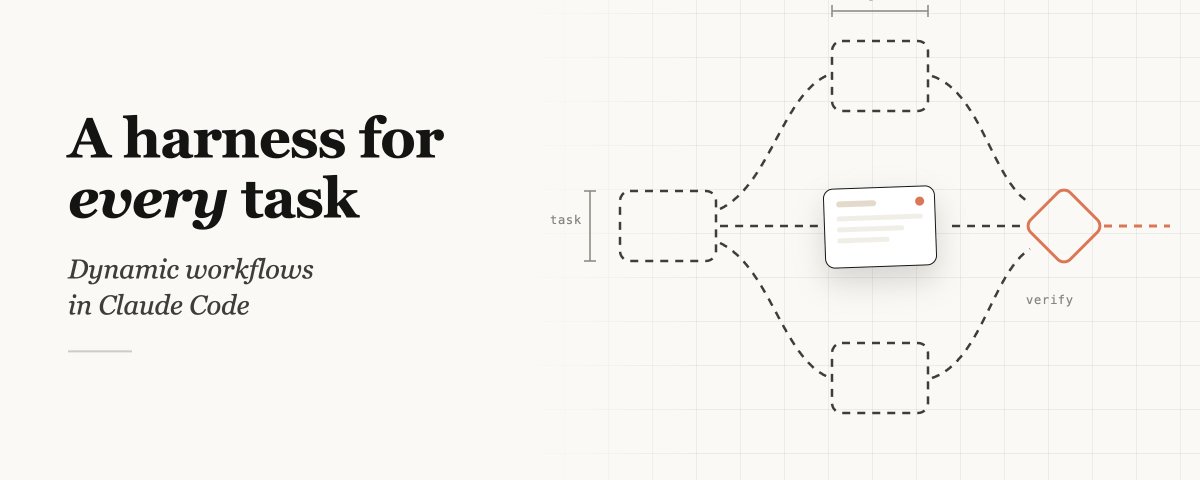
Scriptable subagents are the key ingredient that makes dynamic workflows possible!
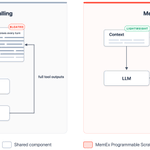
@DbrxMosaicAI we built MemEx harness which allows composing subagents via python code🐍. Subagents can also return live objects for further manipulation.
Read more here databricks.com/blog/memex-pr…


Ashutosh Baheti retweeted

Ever wished we had fewer X-training hyphenates? Pre, mid, post etc. Why not just Training?
Trying to bridge the divides (and get all our friends into one team again), we intro *Introspective X Training*, an offline RL inspired method that scales effectively across any LLM stage by annotating your data with a thinking reward generated language critique!
Up to 2.8x FLOP efficiency + 5-10 point score gains (esp with math and code) at any stage from scratch to 24T tokens on 8b (active) sized models!! We burned much compute ablating so you wouldn't have to
Moral of the story is‼️don't throw out any data via filtering, just feedback condition it‼️
You can spend FLOPs up front on inference to *classify* data quality and then train so that tokens aren't all treated equally based on the feedback starting early in training itself. Right now they're really only separated out much later during mid/post training
This improves overall compute efficiency and gives us benchmark perf not possible with just baseline methods!
Paper here: arxiv.org/abs/2605.20285
Thanks to @BrandoCui and @GXiming for leading this w/ @__SyedaAkter @davidjesusacu @hyunw_kim @jaehunjung_com Yuxiao Qu @shrimai_ @YejinChoinka
Ashutosh Baheti retweeted

Extremely excited to see this hit the timeline the same day I give a talk where I spend 2 minutes ranting about how As We May Think might be the most relevant essay to today's information retrieval world.
And on top of that, it's great work going in the right direction!


Ashutosh Baheti retweeted
We're pushing the frontier of enterprise agents that reason over massive amounts of structured and unstructured data at @databricks. A recurring barrier is that agents burn tokens reading data and grow fuzzy as their context fills up. MemEx is an elegant solution. It lifts performance on both frontier and smaller OSS models, while significantly cutting the cost and latency of complex agentic tasks.
Ashutosh Baheti retweeted
New research from Databricks: the context window is the only persistent substrate today's LLM agents have, and it floods fast. A single SQL query can return millions of rows that ride along in every subsequent turn, even when only one cell ever mattered. We hit this constraint every day in the agents we run in production, from Genie to Agent Bricks' Supervisor Agent to KARL.
In a new post from the Databricks research team, we introduce MemEx: a programmable Python scratchpad that lets agents transform, slice, and persist tool outputs as typed objects in a live kernel. Same observe-act loop. Different action space.
Across nine frontier and open-weight models on two enterprise agentic tasks (OfficeQA Pro and Enterprise Structured Retrieval):
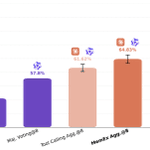
• Frontier models (Opus 4.6, Sonnet 4.6, Gemini 3.1 Pro) gain 2 to 5 accuracy points at 25 to 30% lower cost
• Qwen 122B and Qwen 397B nearly double accuracy at 40 to 50% lower cost
• Four of the five points on the OfficeQA Pro cost-accuracy Pareto frontier are MemEx configurations
MemEx extends the code-as-action line (CodeAct, Anthropic Programmatic Tool Calling, Cloudflare Code Mode) with persistent scope across turns, eager spawn_agent for parallel sub-agents that share the parent's namespace, typed submit() for validated returns, and live-object scope injection. Built on aroll, the same Databricks agentic rollouts framework already powering those production systems.
MemEx is rolling out across Databricks first-party agents and Agent Bricks soon. If you build on Databricks agents today, you'll be able to try it.
Full write-up: databricks.com/blog/memex-pr…

Ashutosh Baheti retweeted

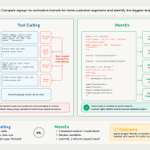
Agents are bottlenecked by the current tool-calling based harness. Outputs get flattened to text, added to context, and re-parsed each turn. The model spends most of its tokens transcribing.
We just shipped MemEx where the agent gets supercharged with a Python scratchpad!
In 1945, Vannevar Bush imagined a machine to extend a scientist's memory. He called it the MemEx.
80 years later, we built one for LLM agents.
Tool outputs become Python objects; only print statements reach the model's context.
🧵 databricks.com/blog/memex-pr…
🚀 MemEx is rolling out across @databricks's first-party agents and Agent Bricks.
Full write-up (numbers, design, trace analysis):
databricks.com/blog/memex-pr…

🙏Huge thanks to my co-authors @ShubhamToshniw6 , Arnav Singhvi, @kristahopsalong, @seankski, @sam_havens, Jonathan Li, @Mdjxjxnsk, @j_nadan_chang, @WenSun1, @alexrtrott, @jefrankle, Xing Chen, and @matei_zaharia.
MemEx is the future of agentic harnesses!
📈 On complex long-horizon enterprise tasks like OfficeQA Pro and Enterprise Structured Retrieval:
Frontier models like Opus 4.6: +5pp at 30% less cost.
OSS like Qwen3.5-122B: doubles, 18% → 36%.
Same agent. Same model. Same tools. Same prompts.
Different action space.


