

National advocate caring for those with chronic, severe, long-standing pain - for patients, clinicians, researchers & scientists.
Joined March 2012
- Tweets48.3K
- Following4.6K
- Followers6.9K
- Likes134K






Pinned Tweet
1. My #RealPainStory: in 2006, I jumped down a mountainside to stop a child from going over a cliff. I herniated a few discs. 6 months later, a neurosurgeon confused me with a different patient, & cut out the back of my lumbar spine. That plunged me into my first 15 years of pain
Andrea Anderson retweeted

“Your opioids are making your pain worse.”
That claim has been used to justify forced tapers, treatment cutoffs, and switches to Suboxone.
But where’s the evidence?
We expose the opioid induced hyperalgesia hoax, the experts, and the FDA's role.
Our full investigation is NOW PUBLIC!
youtu.be/P0U_UCjB6No

Andrea Anderson retweeted

I met Dr. Robert Jackson at the recent Association of American Physicians and Surgeons meeting in Atlanta, and was so honored to record this podcast with him!
“A warm body with a beating heart is brought to the operating room, labeled “brain dead,” and still requires anesthesia that looks exactly like the care we give the living. That moment changed Dr. Heidi Klessig, a retired anesthesiologist and pain specialist, and it launched her deep dive into the ethics of organ donation, organ procurement, and the medical meaning of death.
We walk through how “brain death” entered modern medicine, why the 1968 Harvard proposal mattered, and how the dead donor rule is supposed to protect public trust. Along the way, we compare the legal standard in the Uniform Determination of Death Act to the realities of bedside testing, including what guidelines do and do not measure, what counts as “irreversible,” and why families may be making life-and-death decisions without true informed consent. We also talk about the high stakes: if a patient is declared dead, basic human rights protections can vanish in an instant.
Then we get practical and specific. Dr. Klessig explains cases of recovery, including Zach Dunlap, and the physiology behind “global ischemic penumbra,” a brain “power outage” where function can disappear before tissue is destroyed. We also discuss the 2023 American Academy of Neurology brain death guideline, the subjectivity of interpreting movement, the risks of the apnea test, and what recent events like the TJ Hoover case and Kentucky’s pause law suggest about where policy may be headed.
If you’ve ever checked the organ donor box, faced an ICU decision, or simply want ethical clarity on organ transplantation, this conversation will challenge your assumptions. Subscribe for the next conversation, share this with someone who needs it, and leave a review with the question you want answered next.”

Andrea Anderson retweeted

A Hidden Cause of Low Back Pain
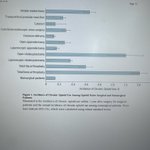
•Stanford pain scientists Einar Ottestad and Anthony Machi highlight a little-known cause of low back pain: superior cluneal nerve entrapment.
•This happens when small nerves near the lower back get trapped, leading to pain in the back, buttocks, or upper leg.
Key points:
•This condition may affect up to 14% of people with low back pain.
Doctors can find it using ultrasound or special X-ray techniques.
•Treatments include nerve blocks, heat treatments (radiofrequency ablation), cold treatments (cryoablation), nerve stimulation, or surgery.
•One patient had an 80% drop in pain after a heat treatment. Another study showed 50–90% pain relief within 10 weeks.
Why it matters:
Many people with back pain never find out what’s causing it. If doctors look for this nerve problem, more patients might get the right treatment and feel better. Scientists still need to study the best ways to diagnose and treat it.
Source: bit.ly/4s81LwX

Andrea Anderson retweeted
Thank you to Fox News Digital reporter Rachel del Guidice for this interview!
People with a severe neurological injury are labeled “brain dead,” and are then used as experimental research subjects while still biologically alive.
foxnews.com/video/6405981468…

Andrea Anderson retweeted
Rebecca Charles Jackson has a well-researched Substack detailing how an anatomical “gift” given by a grieving family is transformed into a billion dollar industry:
“A system built on a gift that is free by law moves hundreds of millions of dollars a year through tax-exempt books, banks nine-figure reserves, and pays chief executives more than most families will earn in a decade. The only party in the entire chain who is told nothing about the money is the family that made the gift.”
For example, according to the 2025 Milliman report, the estimated total U.S. billed charges for a kidney transplant is $446,800.
The Organ Procurement Organization (OPO) that solicited the family and coordinated the transaction receives $135,400 of that amount.
“That is the charge for obtaining a kidney which, by federal law, cannot be bought or sold, and for which the donor’s family received nothing. It is the second-largest line on the bill. It is more than six times what the surgeon is paid.”
Who is paying these OPO fees? Well, mostly you are:
“Medicare is the single largest payer for organ acquisition in the country. In 2016 it reimbursed certified transplant centers roughly $1.6 billion of about $3.3 billion claimed.”
Jackson shows the Indiana Organ Procurement Organization Inc.’s (Indiana Donor Network), IRS Form 990, fiscal year ending December 2024:
Revenue $112.5 million.
Net assets $71.8 million.
Executive compensation $5.56 million. CEO Kellie Tremain paid $830,837.
But, you say, OPOs are supposed to be nonprofit organizations! Jackson reminds us:
“Nonprofit status governs how an organization distributes surplus. It says nothing about how much money passes through it, what it pays its executives, or how much it banks.
Donations to it are tax deductible. The families whose relatives supplied the inventory are not on the payroll and are not in the footnotes.”
The US House Ways and Means Committee is investigating the transplant industry because it’s mostly Medicare and Medicaid — taxpayer funded programs — that are funding OPOs. Says Jackson:
“Congressional oversight and the HHS Inspector General have found OPOs spending it on retreats at five-star hotels and private jets, undisclosed financial conflicts among OPO chief executives, and two OPO executives sent to federal prison for a multi-million dollar kickback scheme.”
I spend a lot of time educating people about the medical ethics problems in the transplant industry.
But undoubtedly the massive profits to be made are a big part of what keeps these unethical transplant practices rolling.

Thank you, @ChadDKollas, for the research, the design, the evidence, and your commitment to relieving pain.

@ChadDKollas gave a great comment at the FDA meeting. I know we feel alone, but there are doctors who do speak up. Long-Term Opioid Therapy Has Evidence—Dr. Chad Kollas Brings the Data to... youtu.be/lIO2vv3ItGg?si=-s4L… via @YouTube

Andrea Anderson retweeted

This was my 3 minute testimony at FDA's meeting last week: youtu.be/VtHfJ2yn4CQ

Andrea Anderson retweeted

“Out beyond ideas of wrongdoing and rightdoing, there is a field.
I'll meet you there.
When the soul lies down in that grass,
the world is too full to talk about.”
~ Rumi
“Encore” & “Lovely Rita” dahlias

ALT Big, bright yellow dahlia with flame petals. “Encore” is a late season dahlia.

ALT Bright red button dahlias. “Lovely Rita”
Andrea Anderson retweeted
@mattMD and @ibdgirl76, here is the actual data on this incorrect claim: how many women who had a simple mastectomy went on to develop disordered use?
Answer: This study evaluated over 650,000 patients for over 11 types of surgeries, including mastectomy. The incidence rates for long term use after surgery ranged from 0.12 to 1.41.
The incidence rate, (not “disordered use) ie, addiction, for long term use after surgery ranged from 0.12 to 1.41
In other words, a tiny amount.
Source: Sun, Darnall, Baker & Mackey
JAMA Int Med 2016

Andrea Anderson retweeted

This is the part of tort reform that worries me most.
It’s not just about what an injured patient can recover.
And the focus of tort reform can’t be “How do we make accountability less painful for the defendant?”
Sometimes a malpractice case is one of the only ways a pattern gets exposed.
Peer review can fail. Boards can fail. Hospitals can protect their own. Families often don’t know enough to connect the dots.
And in states with laws like Florida’s “free kill” framework, there have been situations where there was so little financial incentive to bring a case that serious problems could stay buried until the harm became impossible to ignore.
Financial exposure and records are powerful accountability mechanisms.
I’m all for protecting good doctors from garbage lawsuits.
But if you weaken one accountability route, you’d better make d@mn sure the others actually work.
Andrea Anderson retweeted

The 2016 CDC opioid guidelines were followed. Within 24 months, fatal overdoses had doubled.
Charles LeBaron, MD, spent his career at the CDC. He is an internal medicine and pediatric physician, and he learned the second half of this story from an ICU bed.
A staphylococcal septicemia put him in the hospital, then meningitis, then collapsed vertebrae in his neck and lower spine, and then disseminated shingles ulcerating half his body while he was still fighting the first infection. He came out of it with an intimate understanding of severe pain and of the obstacles standing between a person in severe pain and relief, some of which his old employer had helped construct.
The sequence is worth walking through, because it reads as a policy failure and not as a villain story.
In the 1990s, the consensus was that pain was undertreated. Opioid manufacturers read that consensus as a profit environment and promoted accordingly. The result was a prescription overdose crisis.
The CDC responded in 2016 with three restrictions: narrow who gets opioids, cap the dose, cap the duration. Every one of them had evidence behind it. People on high doses for long periods really are more likely to end up addicted.
What the guidelines did not account for was the population that already existed. Addiction treatment was not widespread. Alternatives to opioids were not freely available. So a large group of opioid dependent people lost legal access more or less at once.
Entrepreneurs in Sinaloa had been selling heroin to a fixed customer base. Now there was a much larger one. They moved fentanyl into it, and cartels do not hold to the safety procedures or the dosing an FDA opioid would. Overdose deaths exploded.
The result is the paradox LeBaron describes: severe restriction on prescription opioids for people who need them, alongside wide availability of far more dangerous illicit ones. The worst of both.
LeBaron quotes Churchill on this. However beautiful the strategy, you should occasionally consult the result. Within 24 months the fatal overdose count had doubled. It took roughly five years for the CDC to revise.
And the 2022 revision has a second problem. Insurers, pharmacy benefit managers, Medicaid and Medicare had embedded the 2016 numbers in their own rules by then. Loosening the federal guidance did not loosen the implementation. LeBaron's assessment: it's a piece of paper.
Two practical notes from the episode for anyone still prescribing in this environment.
The DEA no longer treats exceeding the guidelines as inherently criminal, though physicians have gone to jail over this, and the caution is rational.
Naloxone is available over the counter as a nasal spray. Write it as a prescription anyway. Patients get no insurance reimbursement on the counter version, and most plans will cover the prescription. It is a strange recommendation and it is the one that keeps the antidote in the house.
Overdose is now the number one killer of adults between 18 and 45, above guns and automobile accidents combined, above every single cancer.
Listen to the full conversation on The Podcast by KevinMD. Link in the replies.
What is the change to prescribing rules you would make first if the constraint were evidence rather than liability? #ThePodcastbyKevinMD

Andrea Anderson retweeted

Sjogrens resource from Penn's Sjogrens Clinic avail for free online. Clinical scenarios of various Sjogrens presentations along w f/u education. You might be surprised!
#MedTwitter #RheumTwitter

Feel free to check out the entire curriculum: med.upenn.edu/pennsjogrens/e…
#Sjogrens #meded #rheumatology
Wondering if you may have an auto immune disorder, but don’t know where to start? Sjogrens Disease is one worth considering.
Dr. Schafer has put together the most comprehensive and helpful,guide for patients to begin the process of investigation into Sjogren’s.

Check out @DrChadJohr post above. My response illustrates the real world impact when Sjogrens continues to be mischaracterized & the classification criteria are misused as a rigid diagnostic checklist. Like me, many patients experience, extreme delays in diagnosis and care.
Andrea Anderson retweeted
The human toll is well-documented. A 2023 UC Davis study of over 110,000 stable long-term opioid patients linked tapering to more emergency department visits, hospitalizations, reduced primary care engagement, and poorer adherence to medications for co-occurring conditions. Studies and reports from Human Rights Watch, pain medicine societies, the American Medical Association (AMA), and patient advocates describe a “silent public health crisis of untreated chronic pain,” with rapid tapers tied to tripled overdose risk, increased suicides, mental health crises, worsened function, and eroded trust in health care. The AMA’s 2025 report reinforces that individualized, patient-centered care, not arbitrary restrictions, must guide treatment decisions.
As a 2024 STAT analysis noted, blaming clinicians for overprescribing never solved the epidemic. The crisis has multiple roots, including social and economic conditions, limited addiction treatment capacity, and illicit synthetics. It is not a simple story of “too many prescriptions.” Reducing or forcibly tapering prescribed opioids in isolation is ineffective and can actively harm patients.
kevinmd.com/2026/04/how-cdc-…

Getting a diagnosis and care for this syndrome is almost impossible, esp if the first set of labs shows “normal” - even though all symptoms are present. Some form of clinical guideline pathway would be so helpful. Do you think that might ever occur?

An autoimmune disease more common than lupus has zero approved treatments. And 30 to 40 percent of the people who have it show completely normal blood work.
Sjogren's disease affects about 1 in 100 people. Roughly 90 percent are women. Most clinicians learned it as a dryness syndrome, dry eyes and dry mouth, an afterthought at the end of the autoimmune lecture.
Kara Wada learned it differently. She's an adult and pediatric allergy, immunology, and lifestyle medicine physician, and she became the patient. A dental hygienist at a routine cleaning told her that her mouth tissues looked dry, and years of symptoms snapped into place: dry eye that ended her contact lenses, mascara she couldn't wear without looking like a raccoon, back pain that eased during pregnancy when everyone else's got worse, fatigue like gravity turned up a few notches.
She was fortunate. As an immunologist she knew which labs to order, and hers came back blatantly abnormal. For 30 to 40 percent of Sjogren's patients, they don't.
What she wants clinicians to know is that dryness will rarely be the chief complaint. Patients come in with body pain that sounds like fibromyalgia. Fatigue from the moment they wake up until they go to bed. Autonomic problems: trouble swallowing, gastric motility issues, constipation, dizziness on standing, heat intolerance. Sjogren's is a common cause of POTS and other forms of dysautonomia.
The diagnosis is clinical. Labs support it, but they aren't the end-all.
Treatment is where it gets uncomfortable. Hydroxychloroquine, methotrexate, and in severe cases rituximab are all used off label. Nothing is approved for Sjogren's itself. Several drugs are in phase 3 trials now, and Wada is going through screening for one of them. She says there's an undercurrent of hope in the patient community for the first time.
The cost is real even when the disease is held in check. After a significant flare, Wada cut her clinic time to half for a while, rebuilt her life around sleep and pacing, and describes her energy like an old iPhone battery: slower to recharge, quicker to drain. She is back up to about three-quarter time and has since had another child.
Meanwhile, some rheumatologists still describe it as a nuisance disease, and patients describe being gaslit when their pain and fatigue aren't taken seriously.
Her ask of colleagues is small and specific: "Just at least have Sjogren's on your differential. And it doesn't always mean just dry eyes and dry mouth."
Listen to the full conversation on The Podcast by KevinMD. Link in the replies.
What condition were you taught to treat as minor that your patients experience as anything but? #ThePodcastbyKevinMD


*FIBROMYALGIA PATIENTS:
Such important news has recently been published studying the genetic risk factors for developing fibromyalgia. No, you’re not just stressed. You don’t need to do yoga or eat more healthy or have better sleep hygiene. While those things might help, it is a real disease, with what appears to be an identifiable, legitimate genetic root.

The Scientist: 'A Meta-Analysis Uncovers Genetic Risk Factors for Fibromyalgia'
'Today, Wainberg uses statistics and modeling to study chronic pain and Ollila explores post-infectious diseases and sleep disorders.'
the-scientist.com/a-meta-ana…
✨✨✨ @ChadDKollas - Wow! This is such an achievement - as you are one of the authors of a very important chapter. Congratulations!✨✨✨
Can you tell us more about the section you wrote?

Coming soon! Bonica's Management of Pain, Sixth Edition, will be released on September 30, 2026. You can get more information here...
shop.lww.com/Bonica-s-Manage…


Bumping for @umichmedicine to acknowledge and correct. Please inform us that you’ve received this and will make necessary corrections.
@umichmedicine in your brand new opioid prescribing webinar for nurses you tell people to use the opioid risk tool which includes the sexual abuse question. Considering this was removed from the tool in 2019 due to being unnecessary and harmful, I’m wondering why you still use this question?
Andrea Anderson retweeted
“Brain dead“ organ donors are not dead, they are neurologically injured. There is no evidence that their souls have departed, and they are definitely biologically alive with beating hearts, and ongoing metabolism, wound healing, etc.
Donation after controlled circulatory death (DCD) organ donors are not known to be dead at the time their organs are removed, because they are harvested during a timeframe when resuscitation is still possible.
NRP (normothermic regional perfusion) organ harvesting involves clamping off the brain circulation and then re-starting these unfortunate people’s hearts in their own chests before removing their organs. How dead are you if your heart is beating again in your own chest?
These moral atrocities are being imposed every day on people who signed up as organ donors solely on the basis of good intentions without any informed consent process.
Get the information here:
respectforhumanlife.com
