

phd student in text-to-speech, cstr edinburgh
Joined December 2020
- Tweets20
- Following37
- Followers38
- Likes11
dan wells retweeted

1/2 Along with the Onkwawenna Kentyohkwa Kanyen'kéha immersion school, W̱SÁNEĆ School Board, University nuhelot'įne thaiyots'į nistameyimâkanak Blue Quills and @EdinburghUni, #NRCDigitalTech is developing speech synthesis systems and techniques for #IndigenousLanguages in Canada.

dan wells retweeted

Tha obair Dan air guthan compiutaireach airson na #gaidhlig iongantach fhèin 🙌! Ma tha a' Ghàidhlig agad, nach gabh sibh pàirt san rannsachadh aige? Tha e fìor chudromach airson a' chànain
@ScotsGaelicDuo @SabhalMorOstaig @LeughLeabhar @bordnagaidhlig

Seeking Scottish Gaelic speakers to help evaluate text-to-speech synthesis in the language!
I'm trying to make it easier to build TTS systems so that people can access speech technology in their own languages. If you speak Gaelic, you can help by taking part in a listening test.
This involves listening to and rating short samples of artificial Gaelic speech. We'd like to recruit 30 participants, both native speakers and language learners, and you'll earn £5 for 20 minutes of listening.
If you're interested, please sign up here: forms.office.com/e/c6jvejmQx…

And for a taster, you can listen to some initial samples from one of our systems here: wellsd.net/gaelic-tts/
The original speaker is Ruairidh MacIlleathain, who graciously gave us permission to use his vocal likeness as we get started with Gaelic TTS.
dan wells retweeted

#acl2022nlp Best Special Theme Paper
Requirements and Motivations of Low-Resource Speech Synthesis for Language Revitalization
(@AidanPine , Dan Wells, Nathan Brinklow, Patrick William Littell and Korin Richmond)
aclanthology.org/2022.acl-lo…

Very pleased with this for our paper "Requirements and Motivations of Low-Resource Speech Synthesis for Language Revitalization", based on @AidanPine's MSc project work which I had a lot of fun helping to supervise! You can read it here: aclanthology.org/2022.acl-lo…

Very humbled and honoured to have been awarded Best Theme Paper along with my fellow co-authors at ACL 2022 this year. (1/2)
2022.aclweb.org/best-paper-a…
Eventually, we hope that TTS can be usefully integrated in the classroom to help language revitalisation efforts, led by Indigenous language communities in Canada as for Kanien'kéha, Gitksan and SENĆOŦEN.
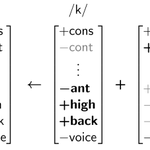
Presenting my first paper at SSW11 this week! We looked at using phonological feature vector inputs for low-resource speech synthesis: isca-speech.org/archive/ssw_…
Plenty still to do! We'd like to expand this to a wider set of more phonetically diverse languages, and explore methods for encouraging more information sharing in the input space. Thanks @Edin_CDT_NLP for supporting this work!