

Distinguished Research Scientist @NVIDIA | LLM post-training, reasoning, agentic coding, and multimodality
San Francisco, CA
Joined June 2020
- Tweets380
- Following412
- Followers3.7K
- Likes800


Pinned Tweet
🚀 Introducing Nemotron-Cascade 2 🚀
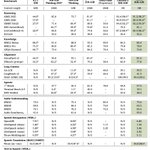
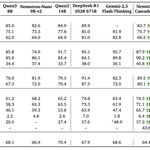
Just 3 months after Nemotron-Cascade 1, we’re releasing Nemotron-Cascade 2: an open 30B MoE with 3B active parameters, delivering best-in-class reasoning and strong agentic capabilities.
🥇 Gold Medal-level performance on IMO 2025, IOI 2025, and ICPC World Finals 2025:
• Capabilities once thought achievable only by frontier proprietary models (e.g. Gemini Deep Think) or frontier-scale open models (i.e. DeepSeek-V3.2-Speciale-671B-A37B).
• Remarkably high intelligence density with 20× fewer parameters.
🏆 Best-in-class across math, code reasoning, alignment, and instruction following:
• Outperforms the latest Qwen3.5-35B-A3B (2026-02-24) and even larger Qwen3.5-122B-A10B (2026-03-11).
🧠 Powered by Cascade RL + multi-domain on-policy distillation:
• Significantly expand Cascade RL across a much broader range of reasoning and agentic domains than Nemotron-Cascade 1, while distilling from the strongest intermediate teacher models throughout training to recover regressions and sustain gains.
🤗 Model + SFT + RL data:
👉 huggingface.co/collections/n…
📄 Technical report:
👉 research.nvidia.com/labs/nem…

Wei Ping retweeted

What should you post?
What content actually works?
How do you show up consistently while still building your product?
For most founders and small teams, there’s simply never enough time.
So we built the marketing team we wished we had.
Meet AdAnt — your proactive, 24/7 AI social media marketing team.
Give AdAnt your product URL, and a team of AI agents gets to work:
Research your niche & competitors → spot trends → build strategies → create videos → plan your calendar → schedule & publish.
No constant prompting. No waking up wondering what to post today.
Just an AI team that keeps your social presence moving while you keep building.
AI isn’t waiting for your prompt anymore.
Today, AdAnt is open to everyone. 🚀
Your Muse for social media marketing.


Introducing the Muse for Social Media Marketing.
A proactive team of AI agents working 24/7 to research, create and publish your social content.
In the last 30 days alone, we’ve generated 35M+ organic views for a single account, 100M+ for us and our clients in the last 6 months.
Our content has also helped clients reduce customer acquisition costs by 60% on average when repurposed for paid ads.
Your AI marketing team is ready to work. 24/7.
- Strategist: research your niche on TikTok, Instagram, YouTube and Meta Ads.
- Creator: turns every strategy into a batch of videos.
- Analyst: listens on X and Reddit for conversations worth joining.
- Manager: assigns tasks to all agents, plans the calendar and publishes posts.
Try it for free → @adant_ai
Wei Ping retweeted

Introducing the Muse for Social Media Marketing.
A proactive team of AI agents working 24/7 to research, create and publish your social content.
In the last 30 days alone, we’ve generated 35M+ organic views for a single account, 100M+ for us and our clients in the last 6 months.
Our content has also helped clients reduce customer acquisition costs by 60% on average when repurposed for paid ads.
Your AI marketing team is ready to work. 24/7.
- Strategist: research your niche on TikTok, Instagram, YouTube and Meta Ads.
- Creator: turns every strategy into a batch of videos.
- Analyst: listens on X and Reddit for conversations worth joining.
- Manager: assigns tasks to all agents, plans the calendar and publishes posts.
Try it for free → @adant_ai
meta is so back!

🍉 MUSE WONDER 🍉
our research process starts with evals. we developed the Personal Superintelligence Index (PSI) internally to help us measure the important dimensions of what actually makes a model useful for personal agents, vs just focusing on external benchmarks.
the end result is that our model is incredible for personal agents in many subtle and important ways, including Active Memory and Active Focus.
i'm especially proud of our research team for taking a particular focus on developing useful models. the whole point of building advanced frontier models is to make them useful to real people, and we have thought about that every step of the way in our research process.
muse wonder is quite advanced across the board, and certainly has big model smell (which we quantified!), but is truly state of the art for personal agents.

This cute panda video my wife made somehow touched my heart. 🐼❤️
Even though disagreements far outnumber agreements, every meeting can bring the two countries a little closer.
May there be peace in the world 🕊️

Wei Ping retweeted

Thrilled to share that our paper has been accepted to the NeurIPS 2026 Datasets and Benchmarks Track! I feel extremely fortunate to have collaborated with such incredible co-authors and teammates throughout my first year at NVIDIA. Huge thanks to everyone involved!

Introducing Nemotron-Terminal: a systematic data engineering pipeline for scaling LLM Terminal Agents.
We bridge the gap between open models and proprietary models with a fully open synthetic-to-real trajectory pipeline.
🤯The payoff: SFT on our Nemotron-Terminal-Corpus boosts Qwen3-32B from 3.4% → 27.4% on Terminal-Bench 2.0 (+24.0), rivaling models multiple its size.
What makes it work?
🌟Terminal-Task-Gen: A lightweight data curation pipeline that seamlessly combines the adaptation of existing datasets with robust synthetic task construction.
🌟Nemotron-Terminal-Corpus: A massive, open-source dataset covering diverse terminal interactions, which contains explicit planning and execution traces for complex long-horizon tasks.
And we’re releasing everything:
📦 Nemotron-Terminal-Corpus (Large-scale dataset)
🤖 Nemotron-Terminal models (8B, 14B, 32B)
Paper: arxiv.org/abs/2602.21193
HF Daily: huggingface.co/papers/2602.2…
Models & Data: huggingface.co/collections/n…
Our tech report just hit the #1 spot on Hugging Face Daily Papers!
We're also incredibly excited to see the open-source community putting our work to the test, with the Nemotron-Terminal-Corpus dataset currently trending at over 1,800 downloads and counting.
We can't wait to see what the community build with it!


Wei Ping retweeted

Thrilled that Nemotron-Cascade has been accepted as an Oral at #NeurIPS2026! 🎉
It's our fully open-source RL recipe for LLM post-training. Huge thanks to all my amazing teammates at @NVIDIA.
model+data: huggingface.co/collections/n…


This spirit of transparency, openness, and sharing makes me genuinely hopeful about the future with AGI.

Nearly half a year of silence. We spent it studying one problem: how far RL can scale.
MiMo-V2.6 is in the middle of its RL run right now. Three things we scaled: compute (~2B tokens per step, 1568 prompts × 16 rollouts, fully async), environments and harnesses (multi-task agentic RL, mixed across multiple harnesses in one run), and grader compute (agentic in-group credit assignment, with test-case and rubric-based rewards). We'll open-source the details piece by piece over the coming weeks.
Streaming the run: mimo.xiaomi.com/rl/
Jul 31: V4-Flash-0731
Aug 13: V4-Pro-0813
Aug 21: V4-Flash-Vision-Exp
Sep 9: V4.1-Flash
you guys are insane..


First time in my life seeing a benchmark scramble overnight to fit a model. It used to be benchmaxxing; now it’s model-maxxing 🤣 Build a great model, and the leaderboard will chase after you 😉

Announcing Artificial Analysis Intelligence Index v4.2. We are accelerating elements of our upcoming v5 release with interim updates to keep pace with the frontier. Index v4.2 has more complex and realistic tasks, and more private test sets to prevent gaming
Intelligence Index v4.2 changelog:
+ AA-Briefcase, our agentic knowledge work evaluation with a private test set
+ @HelloSurgeAI's GDP.pdf, long context document reasoning across 4,592 PDF pages
- GPQA Diamond, an exceptional scientific reasoning evaluation that has now been saturated
… plus greater weighting on held-out test sets to prevent gaming, and grading infrastructure upgrades to increase robustness
This update brings the Index closer to real-world use cases with more challenging, complex and realistic tasks and private test sets to prevent gaming. We have been planning and building elements of Index v5 for months - it’s been 8 months since we launched Index v4 in January.
We have deliberately held back updates to keep the Index stable through recent major model launches. However, with the frontier moving so quickly in the past weeks, we feel it is important to deliver an immediate interim update to ensure our Index remains as relevant and useful as ever to users.
Beyond this interim update, our team is hard at work on v5 of the Index. We are planning more incremental releases in the near future. Stay tuned!
Intelligence Index v4.2 changes in detail:
➤ Adding AA-Briefcase: Our in-house evaluation with a private held-out test set, AA-Briefcase tests models on realistic agentic knowledge work tasks in complex projects built by industry experts. Models are evaluated on multi-week knowledge work projects, each with many linked tasks and thousands of input source files. AA-Briefcase combines rubric and pairwise grading to evaluate verifiable task success, analytical quality, and presentation quality, giving a holistic view of overall agentic capability in knowledge work.
➤ Adding GDP.pdf: Created by @HelloSurgeAI, GDP.pdf evaluates single-turn professional document reasoning across 100 PDFs and ten domains. Models must synthesize evidence distributed across 4,592 pages, including text, tables, charts, footnotes, and exclusions. Responses are graded against 1,275 expert-authored atomic criteria; the headline All-pass Rate credits a task only when every criterion is satisfied.
➤ Weighting to measure real-world use and prevent gaming: 40% of our Index weighting is now private, held-out test sets - double the figure from v4.1. Held-out data includes AA-Briefcase, AA-Omniscience, and solutions for CritPt. This reduces the ability for labs to game evaluations. The held-out percentage will increase further in Index v5.
➤ Improving our grading infrastructure: In AA-LCR v1.1, we have added a grading system prompt and corrected errors and ambiguities in answer keys, improving scoring accuracy. For GDPval-AA v2 and AA-Briefcase, we have improved our sampling and re-anchored the Elo scale, making ratings more stable as new models are added. For SciCode we have improved robustness of grading sandboxes to ensure slow but correct code does not count as a failure.
Key results:
➤ Anthropic and OpenAI lead the Index: Anthropic’s Claude Fable 5.1 leads the Index, followed by OpenAI’s GPT-6 Astra, which shows a 4pt gain over GPT-5.6 Sol. Meta is the third-ranked lab on the leaderboard, followed by SpaceXAI, Moonshot/Kimi, Z AI, and Google
➤ Cost per Task Pareto frontier shared by four labs: Anthropic, OpenAI, Meta and Z AI occupy the updated Cost per Task Pareto frontier
➤ GPT-6 Astra dominates the output token Pareto frontier: GPT-6 Astra is more token efficient than almost every other model near the intelligence frontier, with Claude Fable 5.1, Grok 4.5 and Gemini 3.5 Flash-Lite at either end of the curve (excludes models below 25 on the Index)

Wei Ping retweeted

Thoughts About Scaling Law
Scaling, but not only of parameters. Every model release now ends with the same question: how many parameters? It isn't a question that can be answered on its own. Parameter count is only meaningful alongside three others — how much data you have, where you intend to spend your compute, and who will run the model, under what conditions.
The field learned this the hard way. Kaplan et al. (2020) fit an exponent that told everyone to grow parameters faster than data — roughly 2.7:1 — and the industry complied: GPT-3, Gopher, MT-NLG. Hoffmann et al. (2022) redid the experiment across four hundred models and found the compute-optimal split is closer to 20 tokens per parameter, and that with sufficient compute the two should grow at the same rate rather than drifting apart. The error in the earlier fit compounded with every order of magnitude of compute, which is why the largest models of that generation were the most misallocated. The trillion-parameter round was, in retrospect, a detour the whole field took together and then reversed.
Chinchilla wasn't the end either. It optimized training compute for models that would be trained once and evaluated. Today a model is called billions of times a day and inference dominates lifetime cost. Put inference into the objective and the optimum moves toward smaller models trained far longer — deliberate over-training, which is what Llama-2-7B and Gemma-2-9B were doing at roughly 290 and 889 tokens per parameter.
Sparsity moved the target again. In a MoE model two quantities have to be kept apart: total parameters govern roughly how much the model can hold — knowledge, facts, the long tail — while activated parameters and effective depth govern roughly how far it can think, how many steps of a causal chain it can carry before it comes apart. A dense 20:1 ratio does not transfer. And the ratio isn't a single number at all: Roberts et al. (2025) find the optimal tokens-per-parameter is task-dependent, with memorization favoring more parameters and reasoning favoring more data. Follow-up work on MoE observes that at fixed TPP, pushing total parameters higher actually degrades reasoning, while activating more experts reliably helps it.
This matters for what we are building toward. Finding a vulnerability is not a retrieval problem. It doesn't come from having memorized more CVEs; it comes from carrying a twenty-step chain of inference to the end without losing the thread. That capability does not live in total parameter count.
Which brings us to this release. Total parameters appear to matter up to a threshold — enough to hold the world — after which additional capability comes from scaling elsewhere: effective depth per forward pass, and above all post-training. GLM-5.3 is our controlled experiment on that claim. Same base, same architecture, same total and activated parameters as GLM-5.2. One month of scaling long-horizon environments and RL. The gains are not marginal. Well, scaling has more than one dial. We turned the post-training one this time because it had the most slack left in it — not because the others are finished. Base model size, pretraining data, compute spent per forward pass: all of them are still on the table, and we will come back to each. What this experiment taught us is that the dials do not have to be turned together, and that the one worth turning next is rarely the one that was worth turning last. We are not done scaling. Next time, maybe mid-training, pre-training, and even more.
it’s so great to see meta getting back to open source!
Wei Ping retweeted

Releasing the model weights and technical report of Kimi K3.
Kimi K3 is our most capable model: a 2.8T MoE model with native visual understanding and a 1M-token context window.
New model architecture: 2.5x the intelligence per unit of compute, not just more params.
Alongside Kimi K3, we're opening up more of the stack behind it — high-performance attention kernels, MoE communication library, and infrastructure for running agent environments at scale.
Model weights: huggingface.co/moonshotai/Ki…
Tech report: github.com/MoonshotAI/Kimi-K…
Tech blog: kimi.com/blog/kimi-k3


Wei Ping retweeted

Open source is a positive and important force for both empowering people and preventing centralization. Proud to support this.

Open-weight models are essential to a healthy AI ecosystem. Together with others across our industry, we are outlining a path for open-weight models to strengthen American competitiveness and expand economic opportunity, while protecting national security. microsoft.com/en-us/corporat…


Wei Ping retweeted

The biggest question facing US AI leadership is whether we will treat AI models as infrastructure.
Infrastructure (like the internet, electricity, transportation networks) is best built by lots of organizations and countries working together - in cooperation and in competition.
The US knows how to build great infrastructure. Every time we have done it, we have opened new horizons of possibility.
I believe it is inevitable that we will do the same with AI, and open models will be at the heart of this new infrastructure.
Open models are enabling companies and institutions from brand-new startups to titans of every industry to build their own future, to capitalize on their perspective and ideas to better serve customers and solve problems. Open models make sovereignty possible.
Policymakers that want to keep America AI at the forefront of this opportunity will understand how necessary open models are: they are now the critical infrastructure of the AI age.

For my first post, I’m sharing a letter @NVIDIA signed on why open models matter.
AI will transform every industry, power every company, and be built by every country.
Open models strengthen safety and cybersecurity, accelerate innovation and diffusion, and enable sovereignty.
The world needs both frontier closed models and frontier open models.
images.nvidia.com/pdf/Open-W…


Wei Ping retweeted

For my first post, I’m sharing a letter @NVIDIA signed on why open models matter.
AI will transform every industry, power every company, and be built by every country.
Open models strengthen safety and cybersecurity, accelerate innovation and diffusion, and enable sovereignty.
The world needs both frontier closed models and frontier open models.
images.nvidia.com/pdf/Open-W…
Wei Ping retweeted

NVIDIA Nemotron just dropped an audio-native model that hears the world, not just words 🔥
transcription, translation, sound recognition & audio Q&A, TTS and full speech-to-speech, hears, thinks, and talks back natively
open weights, 2B and 30B
▶️ hf.co/spaces/nvidia/Nemotron…
Wei Ping retweeted

Fun fact: I'm responsible of editing the limitations part, and this final line was written by Zhilin himself.


Wei Ping retweeted

insane. they distilled american frontier models that haven't even been invented yet. damn chinese

Big news: Kimi-K3 by @Kimi_Moonshot is now #1 in the Frontend Code Arena with 1679 pts, surpassing Claude Fable 5.
This is a 17-place jump from Kimi-k2.6 (#18 -> #1).
In Frontend, Kimi-K3 ranked #1 in 6 of 7 domains: Brand & Marketing, Reference-Based Design, Data & Analytics, Consumer Product, Simulations, and Content Creation Tools, landing #2 only in Gaming behind Fable 5.
The full model weights will be released by July 27.
Congrats to the @Kimi_Moonshot team on this major milestone!

Wei Ping retweeted

Kimi K3 scores 57 on the Artificial Analysis Intelligence Index. Its intelligence is comparable to Opus 4.8 and GPT-5.5 but remains behind Fable 5 and GPT-5.6 Sol. Moonshot AI has expressed plans to release the 2.8T parameter model's weights, which would make it the leading open weights model
Key results:
➤ Strong agentic task performance: @Kimi_Moonshot's Kimi K3 reaches an Elo rating of 1668 on GDPval v2. This is a marked improvement over K2.6’s 1190, surpassing GLM-5.2 (1514), GPT-5.5 (1494), and Claude Opus 4.8 (1600). However, it still lags behind Claude Fable 5 (1760). Kimi K3 also scores an impressive 53% and takes the #1 position on AutomationBench-AA, our implementation of Zapier’s Agentic SaaS workflow evaluation.
➤ Second-highest performance on AA-Briefcase (agentic knowledge work): On our private long-horizon knowledge work evaluation, Kimi K3 reaches an overall Elo of 1547, +732 points from Kimi K2.6 and behind only Claude Fable 5. It is well-rounded: its rubric scoring and analytical quality almost reach Claude Fable 5’s scores, while GPT-5.6 Sol continues to outperform other leading models on presentation quality.
➤ Set to lead open weights models once weights are released: Moonshot AI has not yet released the weights but expressed plans to do so. Once available, Kimi K3 would clearly lead other open weights models including GLM-5.2 (51) and DeepSeek v4 Pro (44). However, at 2.8T parameters, it is significantly larger than its open weights peers (eg. GLM-5.2 at 753B params and DeepSeek V4 Pro at 1.6T), as well as the Kimi K2 to K2.6 models (1T params).
➤ Cost per task ($0.94) is similar to GPT-5.6 Sol ($1.04), ~1/2 the price of Opus 4.8 ($1.80) and higher than open weights peers: Moonshot AI’s pricing for K3 is significantly higher than their K2 pricing (K3’s output token price is $15/1M tokens while K2.6 was $4). This positions the model as cheaper on a cost per task basis than Opus 4.8, similar to GPT-5.6 Sol ($1.04) and more expensive than open weights peers, GLM-5.2 ($0.32) and DeepSeek V4 Pro ($0.04)
➤ Improved token efficiency alongside higher intelligence: Kimi K3’s token usage on the Artificial Analysis Intelligence Index decreased significantly, using 21% fewer output tokens than K2.6. The new model used approximately 132M output tokens to complete all nine evaluations, compared to approximately 166M for K2.6, while achieving higher scores.
➤ Native multimodal capabilities: Kimi K3, like K2.6, is released with native image and text multimodal input. If weights are released, this will position Kimi K3 as one of the leading open weights models with multimodal input capabilities
Other model details:
Context window: 1M
Size: 2.8T total parameters
Pricing: The first-party API is priced at $3.00/$15.00 per 1M input/output tokens, with cached input discounted 90% to $0.30 per 1M tokens.
Modality: Native multimodal input supports text and images, and the model remains text-only for output.
Accessibility: Accessible at launch through Moonshot’s first party API. Model weights are not yet released but Moonshot AI has expressed plans to do so.
