
Co-founder and member of technical staff @FlourishAILabs. Past: @AIatMeta (FAIR, Neural Interfaces)
Joined December 2008
- Tweets173
- Following424
- Followers509
- Likes967




I don’t understand how @leothecurious’ takes are always spot on

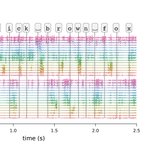
Love it! There was so much organizational resistance at Meta to opening up the SDK and access to raw EMG. It was a struggle to even release the small datasets that we managed to do with github.com/facebookresearch/… and github.com/facebookresearch/…
An exciting platform opportunity was lost.


Vish Sivakumar retweeted

What is the role of academic computer vision research in the age of increasingly powerful large models? Is GPT-6 Astra a step change? How can a researcher have an impact today in academia?
These are the questions I ask myself as I head off to ECCV 2026, a conference I’ve attended since 1992. One of my papers this year is VIGA, a method that takes an image as input and outputs a 3D Blender scene that represents that image. This is a classical inverse-graphics task and VIGA was the first method to solve it using an agentic approach.
The idea is now several years old and the first version of the paper was rejected. This delayed publication significantly. After it was accepted at ECCV, it was quickly surpassed by people using Claude Code for the same purpose. Today GPT-6 Astra blows away all previous results. But we still head off to ECCV to tell the community about our invention that is now fully out of date.
The way academic work often progresses is that one reads recent papers, notices that they have limitations, comes up with a new idea, explores this, publishes it, etc. Any published paper I read today is based on ideas that are at least a year old. And those ideas were based on the literature of the time, which was also a year old. That means that any paper I see at ECCV is likely two years out of date. In AI today, two years means your work is likely irrelevant.
At CVPR this summer I noticed that many authors have not gotten the message. They continue to work on “old” problems that have a long history. This history is based on assumptions about how the “vision problem” will be “solved”. The truth is that it is being solved in a very different way and many of these problems are no longer relevant. Another group of papers focuses on very niche problems where large models likely fail because of insufficient data or lack of business interest. The impactful papers were largely from industry and had long author lists and massive data+compute behind them. These papers were also out of data, describing systems that had been released months before, but at least they served to provide the community with more complete documentation and analysis of commercial systems.
So what should academics do? First, we need to put aside the tools we’ve used for years and start from scratch. Every project should start by trying really hard to solve the problem with existing tools. I would like to see every paper begin with a detailed experimental analysis of how existing models perform and why they fail (if they do). This gives the kind of insight we need today. Then, assuming current models fail, the solution should provide some fundamental insight that will outlive the next release of such models.
Reviewers today still focus on technical novelty. This pushes people to focus on tweaking architectures rather than clearly moving the field forward. Papers need to be judged based on their novel insight and not their novel technical contribution. This is a real shift in thinking but it focuses us on what matters - progress of the field.
If we want there to be a “field” of computer vision, then it can’t become a marginal backwater, focusing on esoteric problems. If you haven’t tried using Astra (or whatever comes next) to solve your problem, then you have not done your homework. This omission should be seen as negatively as not having a previous work section.
Concretely, I think papers should include a new section analogous to “Related Work” where that related work is current models and how they perform on the task. Reviewers should start asking for this and expecting authors to be able to articulate their insights about the limitations of existing large models.
I'm interested in your thoughts.


Vish Sivakumar retweeted

Ride your bike every chance you get. You'll run out of years, long before you run out of road.
If only one could have 1/10th the career and impact Jeff has had (on technology, and on people)!

We created a pitch deck to tell a handful of VC firms about us and what we were up to (a fun experience!). Here’s a few slides about our background and some of the things we’ve worked on from the pitch deck (it was fun putting together the list of people in our teams who have gone on to found a whole range of exciting companies). We are delighted to have selected @radicalvcfund
and @khoslaventures to lead our initial funding round, along with participation from @lightspeedvp, @kleinerperkins, Doerr Capital (@johndoerr), and Alphabet (@Google). We’ll be working with them to close our seed round over the next few weeks.


Vish Sivakumar retweeted

I was always slow on Forward v.s. Reverse KL. Then I realized a mnemonic trick.
FOrward -> FOMO
Fear of missing out on some probability mass:
min_q KL(p || q) encourages mode coverage of p.
Reverse -> Retreat
Retreat to a high-density mode:
min_q KL(q || p) is mode seeking.
Vish Sivakumar retweeted

Prediction is compression. Same thing.

As someone who's been shipping LLMs since the GPT-2 days, this lecture on cross-entropy from a Stanford math grad is the closest thing to an ML PhD qualifying exam I've ever seen released publicly for free.
Everyone thinks language models predict the next word. They don't. They compress language. Once you see the math, you can't unsee it.
33 minutes. Bookmark & watch today.
Lempel-Ziv comparison is a beautiful thought exercise. tldr inductive biases are useful.

Lempel-Ziv algorithm has been my example counterpoint against simplistic takes of bitter lesson.
LZ makes hardly any assumptions. Just stores strings. Is provably asymptotically optimal — will reach the entropy rate of the source given enough data.
So as bitter-lesson pilled as it goes.
but…the convergence rate is painfully slow….so it will be a lousy language model compared to transformers in practice although in theory it is bitter-lesson pilled and all you need is scale.
Vish Sivakumar retweeted

I think narratives like the "permanent underclass" mindset can be very harmful. Not because they cause emotional depression, but they change the game-theoretic dynamics.
People cooperate in prisoner's dilemma/commons scenarios when they believe the game has many turns.
But if you believe the game only has a few turns, and that you should win otherwise you become the "permanent underclass", then the rational self-interested move is to defect: do whatever you can to win in the short term.
I think the whole AI research community is in that scenario now. No one stays in academia to educate new talent. Frontier lab competition becomes more and more aggressive and toxic.
I can't imagine how much public benefit those doomer narratives alone will cost us. Especially if they're wrong, which I think they are
Vish Sivakumar retweeted

I find motor control to be a particularly compelling example of the discrepancy between human and AI sample efficiency:

Vish Sivakumar retweeted

NEWS 🚨 We first partnered with the inimitable Thomas Reardon at CTRL-labs (acquired by @Meta)
Now we're proud to back him again at @flourishailabs
Elite AI powerhouse recruiting insanely smart computational talent to solve AI's massive energy and data crisis
Full story via @StevenLevy 👇

Here's an exclusive inside look at Flourish, a startup full of neuroscientists and AI researchers working together to make discoveries about the brain and use them to create a more efficient form of AI that learns like people do. wired.com/story/jeff-bezos-i…

Vish Sivakumar retweeted
I recently left @DbrxMosaicAI to join @flourishailabs.
Why did I decide to make the jump?
I believe that some of the most interesting problems in science might now be within reach. With all the wild advances in AI, there’s no better time to pursue the big questions.
Flourish is doing just that. We are a mix of AI researchers, engineers, and neuroscientists tackling one of the most ambitious problems in the field: human-level intelligence and learning with human-level efficiency.
I have immense respect for the founders @TRReardon , Robert Williams, @jovo, @_vishar and for the team - many of whom built CTRL-labs from the ground up.
I really loved my time at @databricks and MosaicML before that. The caliber of the people and the research is sky high, and I am incredibly proud of the work we did over the past 5 years. In particular I’d like to thank my mentors @jefrankle , @mcarbin and @bemikelive, as well as the cracked @DbrxMosaicAI team.
If you’re interested in working at the intersection of AI research and human intelligence, don’t hesitate to reach out.
Vish Sivakumar retweeted

ARCH is excited to back Flourish in its initial financing. Low power, distributed cognition is how humans invented these words and LLM’s. Exploring how it can be harnessed and expanded further will be fun and maybe world-changing.
Vish Sivakumar retweeted

Neolab made in NY 🗽
Here's an exclusive inside look at Flourish, a startup full of neuroscientists and AI researchers working together to make discoveries about the brain and use them to create a more efficient form of AI that learns like people do. wired.com/story/jeff-bezos-i…
At @flourishailabs, we are tackling one of the hardest problems in AI: human-level intelligence and learning with human-level efficiency. We are inspired by biology, seek guidance where appropriate, but aren't dogmatic about it.
If this appeals to you and you'd like to embrace the age of research, consider joining us. We are hiring in NYC and SF.
Here's an exclusive inside look at Flourish, a startup full of neuroscientists and AI researchers working together to make discoveries about the brain and use them to create a more efficient form of AI that learns like people do. wired.com/story/jeff-bezos-i…
Vish Sivakumar retweeted

We created @FlourishAILabs not to compete with LLMs but instead to attack the AI "efficiency crisis" head-on.
Thanks for your support, @wolfejosh!
