

Founder & CEO, ChaosChain | Building Worldline: the multiplayer workspace for people + AI agent | Astrophysicist
Earth
Joined February 2021
- Tweets1.9K
- Following183
- Followers1.3K
- Likes12.4K






Your company should own the intelligence its AI work creates.
That’s the thesis behind ChaosChain and Worldline, our governed workspace for human-agent work.
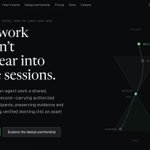
Our new company site brings together the vision, product and open research:
chaoscha.in/

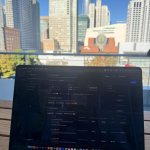
Worldline in the wild. SF Tech Week.
We’re meeting the people putting AI agents to work every day and learning where context, evidence and decisions get lost between runs.
If your team works across multiple agents and sessions, come find us.
getworldline.com

Customers should own the intelligence their work creates.
Worldline starts by carrying the record from one agent run into the next, so the learning doesn’t disappear with the session.
DM for early access.

An agent session ends. The work should carry forward.
Worldline turns Claude Code and Codex sessions into a record of actions, changes, costs and open questions then links that record to the next run.
Keep the context. Build on the work.
getworldline.com
I’ll be in SF for Tech Week. I’m building getworldline.com for teams scaling AI agents: carry context across runs, know what worked, and keep what the work teaches.
Using Claude Code or Codex across real workflows or investing in agent infrastructure? DM me to meet.

Agents finish. Teams reconstruct context, repeat reviews and pay again (in engineering time, not just model bills).
@getworldline makes agent work multiplayer: context and evidence travel across people, agents and handoffs.
I’ll be in SF for Tech Week. DM me.

An agent finishing a run isn’t the same as a team knowing what happened.
What changed?
What did it cost?
What can the next person build on?
That’s why we’re building @getworldline
Does your team work across multiple AI agents? I’d love to hear where your handoffs breaks.
AI agents are doing more work. Keeping track of what they did is becoming a job of its own.
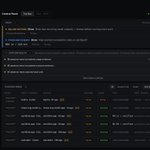
A peek at Worldline’s new multiplayer Control Room for people and agents to share context and hand off work without starting over.
Pro + Team are coming. DM me for an early look.

Harvey built this for legal. The broader market needs the same capability without building an AI research lab: governed work, data rights, task-specific evals, specialist training, promotion and rollback.
That is the evidence-to-deployment layer getworldline.com is building.
xitter.cf/harvey/status/20904547…


Introducing Tenet, our first model post-trained for legal.
Tenet is a Kimi K3 base that we post-trained with @FireworksAI_HQ on a corpus of publicly available legal data, synthetic data, and human expert data simulating long-horizon legal work.
Training increases Tenet's all-pass rate by 82% on LAB and 22% on LAB Contracts relative to the Kimi K3 base model. It achieves state-of-the-art performance on LAB Contracts and places second on LAB.
These gains generalize to other leading agentic benchmarks including @mercor's Apex Agents - Corporate Law, @crosbylegal's Redline Bench, and @scale_AI's Professional Reasoning Bench.
Tenet is also optimized for token efficiency, operating at less than a fourth the cost of leading foundation models.
We additionally post-trained three specialist models for Tenet to use as subagents:
1) M&A Diligence: post-trained with @baseten on our LAB Diligence environment in an RLM harness, this model is optimized for high-scale, long-horizon tasks.
2) Review Tables: trained with @appliedcompute on our Review Table environment, this model is state-of-the-art and cost-effective at high-volume document review and structured data extraction.
3) Firm Knowledge: trained with @EngramLab on our synthetic law firm environment, this model is optimized to learn and search over a firm's knowledge via memory and structured notes.
More details on model training, environment design, benchmarking, results, and more in the article by @gabepereyra below.
What's next for Harvey’s research?
- Scaling LAB to more jurisdictions, practice areas and workflows
- Scaling compute to bring new generalist models and capabilities to Harvey
More to come soon.
Karp is right about sovereignty. Palantir calls it the ontology/application layer. For agentic work, it must also bind who acted, under what authority, what changed, whether it passed, what may teach and which model has earned promotion. That is Worldline.
xitter.cf/PalantirTech/status/20…

Palantir CEO Alex Karp predicts the future business landscape will be defined by companies that got sovereignty right competing against the frontier labs:
“I am quite certain that the companies that get this right will just be the dominant companies, because de facto, it'll be you competing against a frontier lab.”
“And you can win because you have access to things that are outside the spectrum, that are outside the model, that are proprietary, that only you understand.”
“Or you can selectively use their models, but make sure that alpha is not being migrated out by using an application layer or what is commonly now called an ontology.”
An extraordinary outcome and validation that intelligence will be multi-model.
@OpenRouter built the access and routing layer. The next control point is organizational: what work may teach, which model has earned promotion and whether its output passed.
That’s what we’re building at Worldline.
xitter.cf/alexatallah/status/209…

Worldline turns verified enterprise work into customer-controlled AI capability: governed datasets, evaluations, specialist models and routes.
We’re opening three paid 60-day sovereign inference design partnerships.
getworldline.com
We’re hiring a Founding GTM Lead in India.
Own 0→1 enterprise and public-sector GTM for Worldline: sales, category marketing, partnerships and paid sovereign-AI design engagements.
Mid to Senior, hands-on, remote.
getworldline.com/careers
We’re hiring the early engineering team building Worldline.
Open roles:
→ Rust Systems Engineer — Desktop, Edge & Security
→ Product Engineer — React/TypeScript, Enterprise Control Room
→ Engineering Interns — Systems or Product
Remote within India.
This is foundational product work across agent capture, independent verification, Fleet, AI security and multiplayer human-agent workflows.
Apply: getworldline.com/careers
Agent work shouldn’t disappear into private sessions.
Worldline is the multiplayer control room for human-agent work: a shared, sovereign operating record of context, actions, evidence, decisions, outcomes and cost across models.
Our new home is live: getworldline.com


Nikesh is right: most enterprises are not ready to bet on one final AI architecture.
The move is to start with today’s bounded, human-reviewed workflows while owning the layer every future architecture needs: operational context, evals, permissions, outcomes, corrections and cost.
If that learning is trapped inside a model vendor, portability is mostly theoretical. If it sits in an enterprise-owned, evidence-labelled context graph, the company can compare models, improve agents, govern increasing autonomy and, where it chooses, create proprietary training datasets from its own operations.
Models will change. The enterprise learning loop should remain sovereign.
That’s the control plane we’re building with Worldline.

Interesting take. The challenges today:
1. Most enterprises don't know how to make AI game changingly effective. As they embark on the journey, the use cases being addressed are "80%" single shot, semi deterministic use cases with multiple guardrails or humans in the middle. We are a little ways away from mass adoption of custom models.
2. More complex cases which require any multi agent orchestration and context retention are beginning to be conceived and tested. These cases will make model portability harder, requiring new evals and harnesses. One will have to commit to one structure and also commit to constantly updating and retraining your model..
3. CIOs and CEOs aren't sure if the ultimate architecture is single stack, multi model - interoperable orchestration and context/harness/eval, or a custom model. Uncertainty causes slowdown on longer term decisions, which in this case is perhaps right.
4. Custom and Opensource come with the need to deploy on either your own GPUs or public cloud. "Interesting fact - if token prices fall as I hope - it will be cheaper to run frontier LLMs than open source on your own GPUs"
5. Generally horizontal solutions that can serve tens of thousands of customers make more money than vertical custom solutions, but maybe this time it's different?
Even if we solve the model conondrum, the enterprises need to redefine workflows, collect more training data on each use case and rebuild the application in a simple UI flow, not everything will be done in a conversational window.
But time will tell, this will continue to be a space to watch, lots of minds at work to solve this.