

Private launches, Ghost Buys, Dark OTC, airdrops, Mystery Bags, Glass Keys, rewards. On Helius Privacy Rings $SHADE 12bTtDLSegj1rw2oxXWYm63Rxw5QxkVSXDHCEvRShaDe
Joined November 2026
- Tweets242
- Following7
- Followers187
- Likes17






Pinned Tweet
Privacy Rings made private payments native to Solana.
We used them to fix the oldest problem in memecoins: every launch leads straight back to the dev's wallet.
Introducing Shade. Launch a coin with no wallet trail.
The problem
Every Solana launch is a public map. Fund a deployer and anyone can follow the SOL back to you: bubble maps, sniper bots, copy-traders. Hiding it meant CEX hops and burner chains, and those still leave a trail.
How Shade fixes it
1. Shield SOL into Helius Privacy Rings, where amounts are hidden
2. Pay for a launch pass from your shielded balance
3. The pass is blind-signed, so not even Shade can tell which payment bought it
4. A fresh deployer no wallet ever funded creates your coin
On-chain, your coin's creator has no funding source. Shade's relay pays the rent and makes your dev buy in the same transaction as the launch, so nobody can buy before you. No transaction connects your wallet to the token, its pool or its dev bag.
After launch, your stealth deployer still never needs SOL. Shade sponsors its sells and creator-fee claims, and you can recycle the proceeds into a pass for your next launch, unlinked from this one.
And it's fast. One page, one button: shielding, pass and launch run in under 30 seconds. You set the trading fee, 2% to 10%, and keep about half of it.
Every step is checkable: Shade's explorer shows what a launch reveals on-chain, and what it doesn't.
Private launches are finally possible on Solana, at Solana speed.
Built on Helius Privacy Rings and Meteora.
shadesol.fun


How long privacy takes on Solana: every private step we ran while recording our demo videos, timed from the click to the confirmation on screen.
One run each, on mainnet, from a headless browser on an ordinary connection, 20 Nov 2026. Your times will vary with network load. Every private transfer here is proved by Helius's prover, inside an attested enclave, before it's sent.
→ Shield SOL into the vault: about 4 seconds
→ Send a shielded token to another vault: about 12
→ Pay with receipt, two private transfers plus the receipt: about 17
→ A private airdrop to five recipients, in one transaction: about 11
→ Claim an airdrop link to a wallet holding no SOL: about 6
→ Fund three Mystery Bags: about 15
→ Open and claim a bag: about 5
→ Reclaim two unopened bags, one claim each: about 16
→ Fund a Glass scope: about 10
→ Open an unspent proof and get a result: about 6, counted from loading the link
→ Move that note out: about 8. The proof page, which re-checks every 20 seconds, turned red on its next check, 15 seconds after the move's block time
→ Pay a holder reward to three holders, three transactions: about 13
The shape of it: anything with a proof costs seconds, not minutes; a batch costs about the same as a single payment, because one proof covers it; and claims are quick for the person claiming, because the relay sends them.
shadesol.fun/app/vault

1
3
124
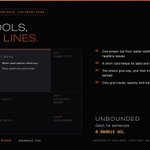
Builder note: fitting nine tools on one screen, on any laptop, without a single cut-off line.
The new first screen had one rule: a visitor sees all nine tools before scrolling. Screens disagree about how much room that is, so the layout negotiates.
→ From tablet width the hero is exactly one screen tall. The headline takes what it needs and the 3 by 3 grid takes the rest, capped on very tall screens, where the whole block centres
→ Each card is a size container. A card with room to spare shows its Hidden and Public lines from the start, Hidden still under its redaction bar. A short card shows its label and name only
→ Opening a card widens its column and row, and the others give way. While squeezed, they drop their sentence at once and bring it back only after the grid has settled, so no line is ever drawn half inside a card
→ Opened on a short screen, the vault in the middle lets its Hidden and Public lines stand in for its sentence and fact, so they fit
→ Only grid tracks, opacity and transforms animate. Touch screens keep the cards still. Reduced motion snaps
We checked it by opening each of the nine cards, by hover and by keyboard, at 1440×900, 1440×768, 1424×970, 1920×1080 and 2560×1440.
The type does the rest. Unbounded capitals for display, extra-light, spaced wider the smaller they're set, and nothing bold anywhere: hierarchy comes from size, spacing and colour. Geist for sentences. Geist Mono for figures, so amounts line up in columns and 0.000015 reads as exactly that.
shadesol.fun

1
69
How to check a Shade launch yourself, without trusting us, in about a minute. Recorded with no wallet connected.
1 → Start at the explorer's live feed. One of Shade's configs sits in every launch, trade and graduation, so the feed is read straight from Solana: buys, sells and claims, each with its token, its SOL and its signature
2 → Paste the token's creator into search. Here it's $SHADE's, 5Q9DxU3y…eeCEt
3 → The page answers the first question in large type. Funded by: nobody. Its first transaction is the launch itself. SOL received before launch: 0
4 → It also says what's still exposed: SOL this deployer receives after launch is public, and sending it to a wallet you use elsewhere links that wallet to the token
5 → Open the launch. Fee payer: Shade's relay. Signers: the relay, the token's mint and the stealth deployer. One Meteora instruction creates the pool, and the relay's balance is the one that goes down
6 → The page puts it in a sentence: the deployer is the on-chain creator, the relay paid the rent and the network fee, and it wrote a spent-marker so the pass can't be used twice
What you've checked: nobody funded the creator, and the launch was paid for the way every Shade launch is. What you can't check, and nobody can: which vault's pass paid for it. That's the blind signature doing its job.
None of this needs our explorer. Every line comes from public chain data you can read in any other. Ours labels the accounts and says it in plain words.
shadesol.fun/app/explorer
1
93
What our eight demo videos cost on mainnet: 29 transactions and about 0.00034 SOL, all of it read back from chain.
We recorded them on shadesol.fun with our own test wallets: a vault session, a private airdrop, Mystery Bags, a Glass proof and a holder reward. The landing tour, the explorer and the launch form sent nothing.
The bill, job by job
→ Vault: the top-up and the shield cost 0.000005 SOL each on top of the amount, and each private transfer 0.00001
→ Airdrop to five recipients: one transaction, 0.00001 SOL, plus 988 lamports of batch marker
→ Three Mystery Bags: one transaction, 0.00001 SOL
→ Glass: funding the scope 0.00001, moving it out 0.000015, since that one needs two signatures
→ Holder reward: 0.00002 SOL across the deployer's three transactions, on top of the 0.006 it shared
Seven claims needed no SOL from whoever claimed: one airdrop link, one bag, two bag reclaims and three reward shares. Shade's relay fronted each fee and was repaid inside the same transaction. On all seven, its balance before and after is identical to the lamport. Each one cost its own link, bag or share 0.000015 SOL.
All in, measured as the drop in our test wallets' combined balances, public and private: 0.000337 SOL. That includes retakes and one private send from a take we didn't use. It went to Solana's network fees, Privacy Rings and one 988-lamport batch marker. None of it went to Shade, whose fees live in launches, chips and trading.
shadesol.fun/app/docs#rings

A creator thanks their top holders in SOL, and nobody watching learns the total or anyone's share. Then a holder claims with one signed message and no SOL. Recorded on mainnet on BORN, our test token.
The creator's side
→ On the token page, the creator panel only appears in a browser whose vault derived the token's stealth deployer
→ Reward holders: 0.006 SOL. The snapshot is taken when the form opens: the largest 50 holders, leaving out the curve, any pool or lock, the deployer and Shade's own wallets
→ Shares under 0.001 SOL are dropped and the total is re-split. Here: 3 of 4 holders, largest 0.002595, smallest 0.001297
→ Three transactions from the deployer: it shields its spare SOL, pays three claim keys privately, then posts the sealed holder list with the announcement, reward #4
The holder's side
→ Connect on the token page. Reward #4 is waiting in the Holder rewards card
→ Claim to wallet. The wallet signs a message naming the token, the reward, the wallet, where the SOL goes and a ten-minute expiry. A message, never a transaction
→ Shade's server checks it and pays the share out, and the share repays the relay's fee in the same transaction: 0.00258 SOL claimed, 0.000015 fee
Public: reward #4 of BORN, 3 holders, the snapshot slot, the deployer paying three fresh keys. Hidden: the total and each share. But shares follow public balances, so a single share claimed to a public wallet, as here, lets anyone work out the rest.
Two honest notes. A real reward comes from the creator's fee income on the deployer; BORN has no trading, so we topped its deployer up from a test wallet first, which on a real launch would link you. And unclaimed shares sit with keys that Shade's server can derive. Holders get 30 days, then the creator can take back what's left.
shadesol.fun/app/docs#reward…
2
131
Off the bubble map: what shielding does to a token's holder list.
Holder trackers draw every wallet holding a token as a bubble sized by its balance, with lines between wallets that funded each other. It's how people spot a dev's cluster, and also how they choose whom to watch, copy or message.
Every Shade token can move into Privacy Rings from its first minutes. Right after a launch lands, the relay creates the token's Rings interface, and the token page reads Private mode on.
What happens to your bubble when you shield
→ Your tokens move into the token's interface vault, one program-owned account that holds everyone's shielded balance together
→ Holder lists show that vault as a single holder. Your own balance, and how you've split it across your keys, stop being readable
→ Send privately to another shielded address and the token and the amount are encrypted. The two keys and the time are not
→ Sell straight from shielded on a SOL pair's curve, in one transaction, with the relay fronting the fee and repaid from the sale
What still shows
→ The shield itself: which key deposited, which token, how much
→ The token's total shielded supply, which is the interface vault's balance and is printed on the token page
→ An unshield: which account was paid, and how much
→ In a token's first hours the shielded total is mostly the dev bag, and the deposit behind it points at the deployer
One trade-off to know before you shield: holder rewards follow public balances. Tokens you keep shielded sit in a program-owned vault and earn no share of a reward.
shadesol.fun/app/docs#born-s…

3
127
Proving money is there without showing your wallet, then watching the proof notice the moment it moves. Recorded on mainnet.
1 → A new Glass scope, labelled "Community reserve". It's its own shielded identity, derived from the vault seed, so it comes back on any device
2 → Fund it privately with 0.003 SOL. On chain: our vault paid the scope. Not how much
3 → Prove unspent. The link holds one note's opening (owner, amount, blinding), the transaction that created it, and the scope's nullifier key. No viewing key, no spending key
4 → Open it in a browser with no wallet. The page rebuilds the note's commitment, confirms that transaction created exactly that note, computes its nullifier and asks the indexer whether it was ever published. Green: Hasn't moved, 0.003 SOL, as of slot 471,547,188
5 → Back in the vault, Move out: everything in the scope returns to the vault
6 → The viewer's page, untouched, re-checks every 20 seconds. On its next check it turns red by itself: Moved, spent at slot 471,547,290, with a link to the transaction
That last step is the honest one. A proof like this is a live reading, not a lock. It can't stop the owner moving the money and doesn't pretend to. It tells whoever holds the link the truth as of the indexer's latest slot.
What the viewer never learns: the vault's balance, any other note, any other scope. What they can learn: the scope's address and, on the Default Ring, that our vault funded it.
A link can prove. It can never spend: spending always takes the owner's own signature on the transaction.
shadesol.fun/app/vault
81
Four people who need to sell without pressing Sell, and what Dark OTC does for each.
1 → The holder with a large bag. A market sell walks the curve against them, and everyone watching sees the size. By offer, they set one price in SOL for the whole amount and send a link to one buyer
2 → Two friends settling a deal they agreed in a DM. Usually one of them sends first and hopes. By offer, the tokens and the SOL move in one transaction, or neither does
3 → A team member moving part of an allocation to a long-term backer. On a public swap, the amount and the price become the day's talking point. By offer, token, amount and price are all encrypted
4 → The seller who changes their mind. An open offer can be cancelled from the vault up to the moment it's taken, even once the link has expired, and everything comes back
What all four still show
→ Making the offer: their vault paid a new address
→ When it's taken: one transaction in which two vaults trade. Who traded with whom, and when, is public
→ The tokens must sit in the shielded balance beforehand, and shielding is public
What the relay does, and doesn't: it co-signs every take, and before signing it checks that the buyer's payment opens to the seller for at least the price. It takes no cut. It can't move the tokens without the link, and with the link anyone could take the deal, so the link goes to your buyer and nobody else, Shade included.
Right now offers only sell shielded tokens, priced in SOL. There's no way yet to post an offer to buy.
shadesol.fun/app/docs#otc

2
130
EXAMPLE: a trader buys a token on Thursday with a chip bought on Monday. What the chain shows each day.
Monday
→ Their vault, already holding private SOL, buys one 0.5 SOL chip for 0.505 SOL. On chain: the vault paid Shade's relay through Privacy Rings. Not the size
→ The relay blind-signs a chip it can't read. The browser unblinds it and keeps it, and can rebuild it from the vault seed on any device. Chips don't expire
Tuesday and Wednesday
→ Nothing happens, which is the point. Every unspent 0.5 chip bought before Thursday is now a candidate for what comes next
Thursday
→ The browser derives ghost wallet #0 from the vault seed and hands the relay the chip, the token and the ghost's address
→ One transaction: the relay writes the chip's spent-marker, buys 0.5 SOL of the token with its own SOL, and the tokens land on the ghost. If the price has moved past the slippage limit, all of it fails and the chip stays unspent
→ On chain: the relay spent 0.5 SOL on this token for this fresh address. The ghost signed nothing and never received SOL
Later
→ To exit, the ghost sells via the relay, which pays the network fee up front and recovers it from the sale inside that one transaction
→ The SOL is shielded on the ghost and recycled into another chip or a pass
What a copy-trader gets: a ghost buy, recognisable as one, and its size. What they don't get: which vault, among everyone holding a 0.5 chip, was behind it. Early on that crowd is small, which is why Monday and Thursday shouldn't be the same hour.
shadesol.fun/app/docs#ghost-…

1
1
100
Three bags, one link each, and nobody watching can tell which one holds the most. Recorded on mainnet.
The drop
→ From our test vault: 3 bags of SOL, split at random, smallest 0.001, largest 0.003. Before you commit, the form shows the most it can cost: 0.009 SOL
→ One private transfer funds all three bag keys. On chain: this vault paid three fresh keys. Not how much each got
→ The draw came out 0.002344, 0.002032 and 0.001876. Only the dropper's vault can read that list
The opening
→ Bag 1 went to a brand-new wallet. Its header reads 0 SOL
→ The link shows what's inside, 0.002344 SOL, decrypted in that browser from the fragment after the #, which never leaves the browser
→ Claim to the wallet: the relay fronts the network fee, simulates the claim, and signs only if its own balance comes out unchanged. It's repaid out of the bag inside that same transaction. 0.002329 SOL landed, 0.000015 paid the fee, and a wallet that started at zero now holds SOL
The leftovers
→ Bags 2 and 3 were never opened, so the dropper took them back with Reclaim, one claim each, straight into the vault. Their links now open empty
Why random amounts matter in a giveaway: with equal bags, the funding transfer plus one claim to a public wallet tells everyone what every bag held. With random bags, one opened amount says nothing about the others.
And open bag links only on shadesol.fun: whoever sees a link first can take the bag.
shadesol.fun/app/vault
6
181
The people a public airdrop exposes are the ones it pays.
Senders plan for privacy. Recipients rarely get a say. When a project pays forty wallets from a public multisend, each address goes on chain beside its amount, from a sender everyone can name, permanently.
What one recipient's line tells a stranger
→ That this wallet was close enough to the team to be paid, and how close, by the size
→ Roughly what it holds now, since the payment is the first page of its history
→ Where it might sell, and how much it has to sell
→ That it's worth a targeted message. Phishing works best with a real amount in the first line
None of that required the recipient to do anything.
What changes when the amounts are encrypted
→ A Shade airdrop pays the whole list from your vault, in batches, every amount encrypted. A batch shows how many keys and vaults were paid, and when. Not who got the most
→ A recipient who hands you a shielded address is paid straight into their vault, privately
→ A recipient without one gets a claim link that needs no SOL to use. Claimed into a vault, the amount stays private. Claimed to a public wallet, that one withdrawal shows it
What it can't change
→ The Default Ring shows who paid whom. A recipient can be seen receiving from your vault, or from a link key your vault funded
→ A claim link is cash until it's claimed, so each one goes privately to its own person
If you're paying people, ask them for a shielded address first. Of all the ways to receive, it shows the least about them.
shadesol.fun/app/docs#airdro…

5
146
Paying five people from one vault, recorded live on mainnet, and what each of them, and everyone else, can see.
The list: four wallet addresses and one Shade shielded address, 0.01 SOL between them, pasted one per line, address then amount. The form checks it as you type and sums it up before anything is sent: 5 recipients, 1 delivered privately, 4 by link, one transfer, 0.00001 SOL in network fees, 988 lamports of batch marker.
What happened on chain
→ One transaction from our test vault paid all five: four claim-link keys and one vault, each amount encrypted
→ The shielded address got its 0.0025 straight into its vault's private balance. Nothing to claim
→ Each wallet got a link instead, ours to send privately
→ The first link went to a wallet that had never held a lamport. Opened in a browser with no wallet at all, it showed the allocation, 0.003 SOL, and claimed to the listed wallet. Shade's relay fronted the fee and the link repaid it in the same transaction: 0.002985 SOL landed, 0.000015 covered the fee, and the relay's balance ended exactly where it started
Who sees what
→ Anyone: our vault paid five keys at 01:48 WAT. Not who got the most, or whether it was SOL at all
→ Each recipient: their own amount, and that our vault paid them
→ Claim a link to a public wallet and that one amount shows, because a withdrawal is public. Claim it into a vault and it stays private
The usual tool for this is a multisend, which prints every recipient's amount beside their address for good. That's fine for a public grant round. For a team, contributors or anyone who'd rather not have their pay compared, it's a leak.
shadesol.fun/app/vault
77
The vault sits in the middle of Shade's front page because every other tool either fills it or spends from it. Here's every way money enters and leaves one, and the line each leaves on chain.
In
→ A top-up from your wallet: public, amount and all
→ A shield: a public deposit into Privacy Rings, size included
→ Paid by someone's vault, by receipt or by airdrop to your shielded address: their vault is public, the amount isn't
→ A claim into it, from a bag, an airdrop link or a holder reward: the key that paid you is public, the amount isn't
→ A Dark OTC sale: your vault and the buyer's appear in one transaction; the token, amount and price don't
→ Reclaims: unopened bags, unclaimed links, a Glass scope moved back
Out
→ A pass or a ghost chip: your vault paid Shade's relay. The amount, and with it the tier or the chip size, stays hidden
→ Pay with receipt, an airdrop, a bag drop, funding a Glass scope: your vault paid those keys or vaults; every amount stays hidden
→ An OTC offer: your vault paid a fresh address made for that one offer
→ Unshield: a public withdrawal, amount included
One pattern runs through all of it: the edges are public and the weights aren't. Anyone can draw which keys your vault has touched. Only your browser can write the amounts on those lines.
So the habits that matter are about edges. Keep a standing balance in the ring instead of topping up per job. Don't unshield straight back to the wallet that funded you. And use a separate scope or a fresh claim wallet when the other side shouldn't see your vault.
shadesol.fun/app/vault

3
147
One private payment, read twice: as anyone on Solana sees it, and as the vault that made it sees it.
The payment is the 0.002 SOL from our vault demo: transaction 5L6NjGHN…bXYjR9H, slot 471,539,393.
The chain's view
→ One signature, from the paying vault, ErRvhn…yV2F4, which also paid the fee
→ One program: Privacy Rings. Its instruction is 645 bytes, a proof and the encrypted outputs
→ SOL moves only for fees: the vault paid 0.00001 SOL in all
→ No token balance changes anywhere, because nothing left the ring
→ On the Default Ring the recipient stays visible, so which vault was paid is public
Missing from that list: the amount, and that it was SOL at all.
The owner's view, decrypted in the browser with the vault's viewing key
→ Moved between notes, 0.002 SOL, 24 slots earlier: the split that lets the payment leave no change
→ Paid privately, −0.002 SOL
→ A receipt link for this payment alone, carrying its note, "Logo design, November"
The receipt is the only bridge between the two views, and it's a narrow one. It opens this transaction's outputs and nothing else in the vault's history. Whoever you hand it to sees who was paid and how much, and that your vault signed it. Your balance, your other payments and your passes stay out of it.
It's the same switch as on our new front page, the chain's view and yours, except here the transaction is real and you can look it up.
shadesol.fun/app/explorer

3
106
A vault's first session on Shade, recorded on mainnet with one of our test wallets.
1 → Connect, then sign one message: free, and not a transaction. From that signature your browser derives the vault and every other key Shade will use for you, and none of them leave the tab
2 → Fund the vault from the wallet: 0.01 SOL. The dialog says it plainly: this transfer is public, and it links the vault to your wallet
3 → Shield 0.01 SOL into Privacy Rings. The deposit is public too: which key, how much, when. What the vault does with it afterwards is not
4 → Pay with receipt: 0.002 SOL to another vault, with a note for whoever opens the receipt, "Logo design, November". Shade first carves out a note worth exactly 0.002 and pays with that, so the receipt shows the payment and no change from the rest of the balance
5 → The private history: Shielded +0.01, Moved between notes 0.002, Paid privately −0.002. Decrypted in this browser with the vault's viewing key. Nobody else can draw this list
What it cost, read back from chain: 0.000005 SOL on top of the shielded amount, then 0.00001 SOL for each of the two private transfers. Shade took nothing.
What stays public afterwards: the top-up, the deposit and its size, that the vault paid itself (the split) and then paid the other vault. What doesn't: how much, and in what, for everything after the deposit.
The cut in the middle is a retake. An earlier take had already topped this vault up, which is why its public balance doesn't start at zero.
shadesol.fun/app/vault
65
Picking a trading fee for your launch, worked through on the same 100 SOL of trading.
Every Shade launch picks one fee, from 2% to 10%, and keeps it. The split doesn't change with the level: Meteora takes 20% of the fee, then 88% of what's left goes to the creator and 12% to Shade. That's 70.4% and 9.6% of the fee.
EXAMPLE: 100 SOL of buys and sells on the curve
→ At 2%: 2 SOL in fees. 1.408 to the creator, 0.192 to Shade, 0.4 to Meteora
→ At 5%: 5 SOL. 3.52 to the creator, 0.48 to Shade, 1 to Meteora
→ At 10%: 10 SOL. 7.04 to the creator, 0.96 to Shade, 2 to Meteora
What else the number decides
→ Every buyer and seller pays it, in SOL, on every trade. A higher fee earns the creator more per trade and makes each trade cost more for the people making it
→ It can't be changed later. Each fee level is its own Meteora config, and a pool's terms are fixed when it's created
→ It doesn't change the first minute. Every launch opens at 25% and falls in a straight line to its own fee over 60 seconds, in 12 steps, and what snipers pay in that minute is split the same way
→ It follows the token after graduation. The Meteora DAMM v2 pool keeps charging the fee you chose, and its liquidity is locked for good, half the creator's and half Shade's
And how you collect it: you claim your share from the stealth deployer at any time, with Shade's relay covering the claim's network fee. The deployer never has to be topped up by you, and nothing ties it to your wallet unless you move the proceeds there.
shadesol.fun/app/docs#fees

2
3
158
How Shade signs a pass it never sees, explained with an envelope.
David Chaum, who invented blind signatures in the early 1980s, explained them with carbon paper. Put a slip inside an envelope lined with carbon. The signer signs the outside without opening it, and the carbon presses the signature onto the slip. Take the slip out: it carries a real signature the signer has never seen. Show it to them a week later and they can confirm it's theirs, but not which envelope it came from.
Shade's passes are that envelope, done in RSA
→ Your browser makes a pass token from your vault seed and hashes it to the full width of a 2,048-bit key
→ It multiplies that by a blinding factor, also derived from your seed, that only you know. That's the envelope
→ Your vault pays the relay through Privacy Rings, and the blinded number rides in the payment's encrypted memo
→ The relay signs the blinded number with that tier's key. That's the signature through the carbon
→ Your browser takes the blinding factor back out and keeps a valid signature on a token Shade has never seen
When you launch, the relay verifies the pass with that tier's public key and creates a small spent-marker account at an address derived from the token's hash, so a second launch with the same pass fails. It can tell the pass is genuine. It can't tell which payment bought it, because the number it signed and the number it now checks are different numbers.
What the envelope can't hide: the tier, since the dev buy shows on chain; the time; and the fact that your vault paid Shade's relay at all. The crowd you stand in is everyone who bought the same tier, which is why buying early helps.
shadesol.fun/app/docs#passes

1
94
Every choice a launch asks of you, set on one page, then read back before anything is paid. We stopped this recording one click before Launch, so nothing went on chain.
The choices, in the order the form asks
→ The token: picture, name, ticker, description, links. The picture is redrawn in your browser, which drops camera and location data, and the form warns that links are public and can identify you
→ The pair: SOL, a dollar, a tokenized stock, a major, a memecoin, or any token you paste. Buyers still pay in SOL
→ The fee: 2% to 10%, set once. At 5% the split reads 3.52% of each trade to you, 0.48% to Shade, 1% to Meteora
→ The dev buy: none, or 0.1, 0.25, 0.5 or 1 SOL, bought by the relay inside the very transaction that mints the token
→ Lock it or shield it. A 30-day lock is a public promise held in Jupiter Lock. Shielding moves the bag into Privacy Rings right after launch. Choose the lock and the shield switches off, because a lock holds the tokens in public
→ A creator alias, if you want buyers to follow you from one launch to the next. We called ours duskworks
The panel we'd point a first-time dev at sits on the right the whole time: "What the chain will show". It names the creator as a fresh stealth deployer, says nobody ever funded it, puts rent and fees on Shade's relay and leaves your wallet out of it. It updates as you choose, so you see what each option costs you in privacy before you commit.
Then the review lists everything again, pass included (0.27 SOL for a 0.25 dev buy), and says what your wallet will be asked: one signature to unlock the vault, then one transfer.
Afterglow is a made-up name for this demo. No token was created.
shadesol.fun/app/launch
2
6
149
Launching without your main wallet, the way most devs do it today, and the four places it leaks.
The usual routine
1 → Withdraw SOL from an exchange to a fresh wallet. A regulated exchange knows who you are, and the withdrawal is public: amount, time, destination
2 → Hop it through a wallet or two. Every hop is public, the amounts match minus fees, and the timestamps sit minutes apart
3 → Maybe bridge it. The same amount leaves one chain and lands on another a moment later, which is an easy pair to match
4 → Deploy from the last wallet. Any explorer shows what funded it, one click back, then the next, until the trail reaches the exchange
Each step sounds careful. Together they draw a straight line, and wallet trackers follow straight lines for a living.
What Shade does instead
→ The creator is a stealth deployer derived in your browser, used for one launch and never sent a lamport. Its explorer page reads "Funded by: nobody"
→ The relay covers rent and the dev buy for every launch alike, so seeing it pay tells nobody anything about you
→ The launch is paid with a pass your vault bought through Privacy Rings. Shade signs it blind and can't tell which payment it belongs to
→ Passes of one tier are interchangeable, so a launch reveals which tier paid for it and nothing about who
What it doesn't change
→ Your wallet funding your vault is an ordinary public transfer
→ Your vault paying the relay is public on the Default Ring. The amount isn't
→ Timing. Get the pass days ahead, in a common tier, and don't announce the minute it lands
shadesol.fun/app/docs#threat…

2
6
195
The new shadesol.fun, in one take: nine tools on the first screen, and every one of them says what it can't hide.
What you're seeing
→ The line first: launch and move money without being followed. Under it, nine jobs around one vault: Launch, Buy, Sell, Pay, Drop, Reward, Prove, Check, with Hold in the middle
→ Point at a card and it widens while the rest give way. Its Hidden line comes out from under a redaction bar, and its Public line sits right below it, the same size
→ Further down, each job gets an example transaction and a switch: the chain's view, or yours. Flip it, and what changes is exactly what the chain can't read
→ On a phone the grid folds into two columns, the menu becomes a sheet, and the switch rides along at the foot of the screen
Why the public line is on the front page
Privacy tools tend to sell the hidden part and leave the rest to the docs. On the Default Ring, a transfer's amount and asset are encrypted, and who paid whom is not. A launch hides who funded the creator, not the token or its trades. A Glass link proves one thing and still names an address. Those facts decide whether a tool fits your job, so they sit next to the promise instead of three clicks behind it.
Two details from building it
→ The switch sets one attribute on the section, and CSS swaps every value. Nothing re-renders, and with scripts off the page simply stays on the chain's view
→ Only grid tracks, opacity and transforms move. Touch screens keep the cards still, and reduced motion snaps
shadesol.fun
3
115