

Exec coach, operator, & helper. Helping leaders become more self-aware. - 1st CoS to Matt Mochary, COO of Mochary Method, and Head of Ops @ On Deck
PNW
Joined June 2019
- Tweets7.2K
- Following759
- Followers3.6K
- Likes30.9K




"Oh Regina, I can tell you worked so hard on this."
When I was Matt's Chief of Staff, he said this to me more times than I'd like to admit. And I always knew what came next:
"I just wish you had come to me sooner for my feedback, instead of spending so much time trying to do as much as possible, only for me to tell you it's not what I actually wanted."
Matt was always understanding to me when I rabbit-holed. He knew I was the kind of operator who got excited about projects really easily. I'd tunnel-vision, do a whole bunch of work, and only bring it back once I was done. Then I'd watch a lot of that work go in the trash.
—
Now I see this in my coaching all the time, at every level, including with CEOs and SVPs.
Your CEO asks you for a launch plan. You spend two weeks on it, pull in product, engineering, and sales, and walk into your 1-1 proud of what you built. Then your CEO takes one look and says, "This is NOT what I wanted."
Or you're halfway through a project, everything's on track, and you get a Slack message: "Why am I chasing you down for an update??"
You've been working nonstop, but your CEO thinks you've been doing nothing.
The frustrating part is, in both cases you did the work. Your CEO just never got the version they had in their head, or never saw any of it happening.
—
I made a video on why your brain sets you up for both of these mistakes, with the five steps and the simple habit I use so nobody ever has to chase me down for an update again. Link is below.
You're already doing the hard work. Make sure your CEO gets to see it.

2
5
617
One of the biggest mistakes founders make is thinking Founder Mode is an excuse to be an a**hole to everyone.
The second biggest mistake is the opposite: a founder is so scared of becoming an a**hole that they rule by consensus. Then, the company dies slowly.
One founder I knew was angry about missed deadlines. Instead of asking the team why it was happening, he started having micromanaging daily standups.
Morale collapsed. The company failed a few months later.
Another founder told me he was sure it was "inevitable" that his company would be worth $1T someday. The only problem was, he hadn't figured out how to make his first million yet.
The founders I've seen who get Founder Mode right are obsessive too - just about very different things.
I made a video on what those things are, starting with the 3 types of founders I've seen across hundreds of companies. Link below.
3
4
382
"Our biggest customer just told me they're looking at a competitor. What are we doing about this??"
Your CEO drops that in Slack at 4pm on a Monday. What do you do in the next 30 minutes?
Most leaders either dive or freeze. Let me explain:

3
2
358
DIVING: This happens when you offer a discount, pull three engineers off the roadmap, and call an emergency meeting. By Wednesday, your team is slammed, but nobody knows why the customer is actually unhappy.
FREEZING: This happens when you start a doc called "Retention Strategy" and book a meeting with the customer for Thursday. A week later, your doc is beautiful, but your customer has already signed with a competitor. 🤦♀️
It turns out, pro goalies do the same thing on penalty kicks ⚽️ Researchers looked at 286 of them: goalies almost always dove, even though staying in the center would have worked better.
If the ball goes in while you're standing still, it looks like you did nothing. At least diving looks like you tried.
The faster you move on the wrong thing, the more people you drag along with you.
There's a third way, and I share about it in my latest video. Don't dive or freeze: Bias towards action instead. Link to watch below.
1
78
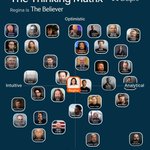
Took the @withdelphi Thinking Matrix and landed smack-dab in the middle, skewing slightly towards optimistic and intuitive.
Feels like a good place to be - balanced. 🪷
Cool tool @daraladje

Regina Gerbeaux retweeted

Funding rounds aren't milestones. It shouldn't be your goal to raise a series A. It should be your goal not to need to.
Most operators say "I hear you, but..." and think they've made the other person feel heard.
But to the person you're talking to, they don't feel heard. Why?
The phrase "I hear you, but..." tells the person you're talking to that you weren't actually listening to them. You were just waiting for your turn to talk.
I see this constantly with co-founders.
The technical one thinks the business one is overpromising to hit growth numbers.
The business one thinks the technical one is too attached to perfect architecture to ship.
Each person is sure the other is protecting their ego.
But the craziest thing happens when I sit them down together: they agree on almost everything.
Building it right matters. Closing deals matters. Overpromising is bad.
They're just not listening and really hearing each other.
I use one skill to break this standoff in nearly all of my coaching. I made a video with the 3 steps, plus a script for your next disagreement. Link below.

2
179
Regina Gerbeaux retweeted

We instituted an official AI Writing Policy at @Clay.
Massive thanks to @sophiebits on our engineering team who wrote this.
Originally this was just for eng, but other teams found it so helpful we expanded it company-wide.
Here are the four guiding principles:
1. You must stand behind every idea and sentence
It is your responsibility to make sure that the entire document is representative of your own thoughts before you share it.
2. Writing is thinking
Spending time on the writing process teaches you more about your topic. If you circumvent this process, you will walk away with a poorer understanding of the subject matter.
3. More time should be spent writing a document than consuming it
If you generate a document from a short prompt then ask your readers to go through the longer output, you are disrespecting their time. They can talk to ChatGPT themselves if they want to.
4. Longer is not better
AI makes it easy to generate long docs, and it loves padding them with sentences that say nothing. If you're producing docs from a short prompt, consider just sharing the prompt.
You can read (and borrow) the full policy below. Hopefully we all communicate a bit more clearly now :)

Another one: I’m a member of a popular women’s workout forum.
Recently, there was a poll on preferred AI chatbot.
There were maybe 3 people total who said Claude…But the overwhelming preference was Gemini (bc it’s free), or OpenAI (several ppl said “I love my boyfriend Chat!”)

Fascinating observation: in my workout class full of non-technical, mostly stay-at-home moms, none of them had ever heard of Claude or Anthropic before. They asked, “Is it like a ChatGPT?”
2
4
915
Fascinating observation: in my workout class full of non-technical, mostly stay-at-home moms, none of them had ever heard of Claude or Anthropic before. They asked, “Is it like a ChatGPT?”
Ran into Alex Honnold and his family at the airport elevator a few days ago, and all I could say was "Damn, that's a lot of luggage" 🤦🏻♀️ He said, "Tsh, yeah." 😂
Of course it was a lot of luggage; I'll bet half of it was climbing gear!
4
404
Regina Gerbeaux retweeted

also: so what it gets harder? when was that ever a reason to not do something
Regina Gerbeaux retweeted

now that I’m no longer doing a startup and won’t for many years, some early stage startup fundraising advice:
don’t spend any time at all with investors until you’re ready. tell them you’re too busy. do not meet with them. yes especially if an associate emails you 5 times
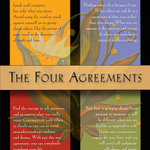
THE FOUR AGREEMENTS 👇
1. Be impeccable with your word
2. Don't take anything personally
3. Don't make assumptions
4. Always do your best
If all people lived by these rules, life would be more joyful. Work would be more fun. The world would be a more harmonious place.

1
5
285
Can't recommend the principles of this book enough. It's a little woo-woo, but I love a short, easy read packed full of wisdom.
Start your 2026 off properly by reading it: amzn.to/3Z2jEzh

2
154
Thanks, @meetgranola! Somebody tell my boss 😂 this is the biggest compliment an executive coach can get

4
406