

✨ Exploring theology, philosophy, science, art, and more.
Korea
Joined June 2010
- Tweets41.2K
- Following12.7K
- Followers12.7K
- Likes4.3K



Eddy retweeted

님들 돈 한 푼 안 쓰고 AI 제대로 배우는 무료 사이트 5곳 정리해 옴
[1] Claude Academy
Anthropic이 직접 만든 무료 강좌임. 한국어 지원도 되고 4시간짜리 AI 기초 코스 듣기 딱 좋음
[2] OpenAI Academy
ChatGPT 계정만 있으면 전부 무료로 풀림. 1시간짜리 기초 코스 듣고 테스트 통과하면 수료 배지도 줌
[3] Google Skills
Google이 직접 운영하는 학습 플랫폼임. 짧은 무료 강의가 많아서 가볍게 찍먹해보기 완전 편함
[4] Elements of AI
헬싱키대가 비전공자용으로 만든 입문 강의임. 코딩이나 수학 1도 몰라도 부담 없이 들을 수 있음
[5] DeepLearning AI
영어 위주 개발자용이긴 한데, 1시간 안팎 짧은 강의가 무료고 최신 트렌드가 제일 빨리 올라옴
📌 댓글에 사이트 접속 주소 첨부해놓음 이미지 번호랑 텍스트 매칭해서 들어가면 됨
주말에 넷플릭스 대신 하나씩 도장 깨기 ㄱㄱ
Eddy retweeted

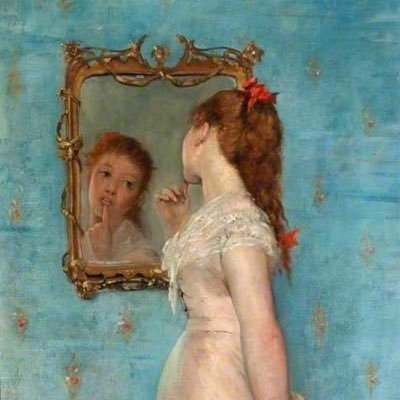
Ivan Aïvazovski est un peintre exceptionnel.
Considéré comme l'un des maîtres de la peinture de marine, ce peintre a marqué l'histoire de l'art russe. Les œuvres d'Ivan Aïvazovski nous offrent un spectacle époustouflant, nous faisant ressentir les plus puissantes émotions.
Envoûtantes, ses oeuvres se caractérisent notamment par la recherche de la lumière. Ce travail de la lumière est saisissant et nous plonge dans une atmosphère absolument incroyable !
De plus, les peintures d'Ivan Aïvazovski sont réalisées de mémoire !
Le peintre, par son étude minutieuse de la lumière sur l'eau, et sa capacité à retranscrire ses émotions, crée des chefs-d'œuvre à contempler encore et encore.



Eddy retweeted

Exactly.
The West, particularly Britain, ended the majority of global slavery that had existed for thousands of years in all cultures and did so at great expense in blood & treasure.
That a minority in America and Britain wanted to continue slavery is overshadowed by the fact that a supermajority within the West fought and many died to end slavery.


Eddy retweeted

A 22-year-old graduate student in Kazakhstan got so angry at journal paywalls in 2011 that she built a pirate website holding 88 million scientific papers, and last month she turned the whole thing into an AI that lets you ask one question and get the actual research as the answer.
Her name is Alexandra Elbakyan, and the website is called Sci-Hub.
The AI she just launched is called Sci-Bot. It lives at sci-bot.ru and almost nobody outside academia knows it exists yet.
Here is the story, because it is one of the strangest things to happen in science publishing in the last 50 years.
Elbakyan was born in Almaty in 1988, the year the Soviet Union started to collapse. She taught herself programming at 12. She read Soviet science books that explained things her family used to call miracles. She got into computer security at university and graduated in 2009 with a degree she barely needed because by then she was already a serious hacker.
Alexandra moved to Moscow that fall. Then Germany. Then a research internship in the United States. She was working on brain-computer interfaces, the kind of research that requires you to read hundreds of papers a year just to keep up with the field.
And every single one of those papers was locked behind a journal paywall that cost between 30 and 50 dollars to read once.
She did the math. A graduate student in Kazakhstan could not afford to read science.
The first thing she did was learn how to get around the paywalls one paper at a time. She passed the trick around to other students. They asked her for papers constantly. She got tired of doing it manually.
So in September 2011, in three days, she wrote a script that automated the whole thing. A user pastes a DOI. The script logs in through a donated institutional credential. The paper comes back free. The website caches it.
The next person who asks for that paper gets it instantly because the previous request already saved a copy.
That was Sci-Hub. Three days of code. One graduate student. Done.
15 years later, the cache holds 88 million scientific papers. Almost every piece of scholarly literature published before 2020 is sitting on her servers. Researchers in 190 countries use it. Studies in Nature have shown that roughly half of all academic paper downloads worldwide now go through Sci-Hub, not the publishers who actually own the copyrights.
Elsevier sued her in 2015 and won a 15 million dollar judgment. She did not pay. The American Chemical Society sued her and won an injunction. She did not comply. Courts in India, France, Russia, and the UK have tried to block the domain. She just moves it. Sci-hub.se. Sci-hub.ru. Sci-hub.ee. The site has had over 20 domains and is still up.
Nature put her on its list of the 10 people who mattered most to science in 2016. The New York Times compared her to Edward Snowden. The Verge called her the pirate queen of science.
She has not been to the United States in over a decade because she would be arrested at the airport.
The Sci-Bot launch in April 2026 is the part that nobody is talking about.
She took the 88 million paper database and put a small language model on top of it. You ask a question in plain English. The model searches the entire shadow library, pulls the relevant papers, synthesizes an answer grounded in real citations, and links you to the full text of every source. Free. No login. No institutional credential. No paywall.
Three real scientists tested it for a Chemical and Engineering News article last month. They asked it medical and chemistry questions. The radiologist said the answer he got was usable. The chemist said the gaps in recent literature were obvious but the older science was solid. The publisher community is furious.
What she built is what the paid academic AI tools are trying to build. Except the paid ones are limited to what their parent publisher legally owns. Hers is limited to almost nothing.
Alexandra still lives somewhere in Russia. She does not give her address. She does not do video interviews. She gives talks over Skype with the camera off. She runs the largest illegal library in human history from a laptop and a donation page.
A graduate student who could not afford to read science built the system the entire scientific community now quietly depends on.
The publishers have spent a decade trying to shut her down.
She just shipped an AI that makes their entire business model outdated.

Eddy retweeted

Nunchi (눈치) is one of the most important and subtle parts of Korean social culture, and it’s honestly difficult to fully understand until you live in Korea for a while.
The closest way to describe it is: the ability to read the room and understand unspoken social expectations.
But it goes deeper than that. Nunchi is about sensing social atmosphere, understanding unspoken expectations, and noticing other people’s emotions
adjusting your behaviour accordingly & knowing what should or should not be said in certain situations without people needing to explain things directly.
For example, noticing when a group wants to leave even though nobody said it aloud, understanding when someone senior should speak first, and realising everyone is quietly waiting for one person before eating, sensing tension in a room immediately, knowing when silence is more appropriate than speaking, etc.
People may not explicitly tell you, “You’re talking too much.” “This is awkward.” “Please stop.” or “Now is not the right time.”Instead, you are expected to sense it. A person considered to have good nunchi is usually seen as socially aware, considerate, emotionally intelligent &
adaptable, while someone with bad nunchi may unintentionally make situations uncomfortable without realising it.
After years here, you start unconsciously noticing seating order, group mood, pauses in conversation, hierarchy dynamics and when people actually mean “no” politely.
A lot of people describe this as something very different from African cultures, but honestly, as a Yoruba person, I wouldn’t fully agree. In Yoruba culture, especially when interacting with elders or people older than you, you are also expected to communicate carefully, respectfully, and sometimes indirectly rather than being overly open or confrontational.
You learn to observe tone, timing, mood, hierarchy, body language, facial expressions, and social atmosphere before speaking freely. Sometimes what is not said directly matters just as much as what is actually spoken.


Eddy retweeted

This is the Hwangudan Altar in Seoul, South Korea. It was built in 1897 by Emperor Gojong, and used to perform rites to heaven and hold the enthronement ceremony for the Korean Empire.
The Japanese demolished most of the complex in 1913 but the altar hall and some stone structures remain today.


Eddy retweeted

When I was Muslim, my entire world was this feeling: I was doing everything right, but still not enough.
I was praying on time. Fasting. Obeying. Trying your hardest to please God.
But still feeling far from Him?
That’s the orphan spirit.
And I didn’t realize I carried it until I left Islam.
Because here’s the truth nobody ever told me:
Islam doesn’t raise sons. It trains servants.
You obey to survive. You perform to prove your worth. And you never actually know if it’s enough.
So you live anxious.
Always striving. Always exhausted. Always trying to earn security that never fully comes.
I lived like that for 20 years.
Then I met Christ.
And I didn’t meet a distant judge.
I met a Father.
A God who didn’t tell me to climb my way to Him, but came down to rescue me Himself.
That changes everything.
Because now my relationship with God is not built on fear of failing over and over again.
It’s built on adoption.
And trust me, I still fail. I still mess up constantly.
But a son runs to his Father differently than a servant runs to a master.
That’s the difference.
So if your relationship with God feels cold, distant, exhausting, and transactional, maybe the issue isn’t that you’re broken.
Maybe you’ve just never known what it feels like to be fully loved by a Father.
Jesus didn’t just save me.
He adopted me.
