

Energy Trader. Papa. Hubby. Professional Brow Furrower. Bringing Balance to The Force. One America. MIT/NYU Alum.
TX
Joined May 2023
- Tweets3.6K
- Following6.9K
- Followers484
- Likes8.3K







Pinned Tweet
In the war of lies, half-lies, and half-truths, the seeker of truth wields discernment like a sword, integrity as a shield, and a stoic's balance.
Marc Fernandes retweeted

Candidates in the Senate debates are tying themselves up in knots on tariff policy. On one hand, they criticize tariffs for raising prices to consumers. On the other, they fear removing tariffs will expose local businesses to unfair foreign competition and cost American jobs. To square the circle, they call for better trade deals (who can disagree with that?) without offering a framework of how to get there. It's clear Congress can't legislate this.
The contradiction extends to fiscal policy. Candidates warn about the growing federal deficit but don’t explain how they would replace the revenue lost by eliminating tariffs, now around $16 billion/month more than in 2024.
Further, states have broadly different interests in tariffs. Northern border states want to normalize trade with Canada. Georgia wants tariff adjustments to protect its ports and related businesses. Farm states want lower tariffs on farm inputs but like the protections against imported ag products. The Midwest generally wants protections on steel; the rest of the country wants exemptions on intermediate goods.
These competing interests make a comprehensive tariff legislation almost impossible. Every tariff has beneficiaries who want to preserve it and opponents who want it removed. Any tariff bill would create concentrated political opposition, whether it raised or lowered duties. Concentrating tariff authority in the presidency carries the obvious risks, but Congress will be inept at the challenge.
Status quo is the strongest force in politics. My expectation is that, despite all the handwringing, the eventual tariff regime will look similar to today's. That is a 10-15% baseline tariff on most imports, higher rates on countries with blatantly unfair trade practices and/or geopolitical rivals, and industry specific adders on those deemed strategic to national security or economic interests.
Most businesses prioritize certainty so they can make investment decisions, forecast expenses, and have confidence in supply chains. That certainty is probably more important than the rates.
Marc Fernandes retweeted

When the US government carries out a just killing- and this is what it is- it should do it soberly and w/ a heaviness. I fear turning it into a spectacle will undermine support for just and careful capital punishment.
I hope this decision will be reversed.

BREAKING: The Pentagon says it will livestream the firing squad execution of Fort Hood shooter Nidal Malik Hasan. apnews.com/article/fort-hood…

Marc Fernandes retweeted

Abdul El-Sayed is entirely unfit to serve in the U.S. Senate, not because of his name or religion, but because of his deeply troubling, anti-American views.
I am a Democrat who very much wants our party to regain control of the House and Senate.
But embracing toxic bigots like El-Sayed, Darializa Chevalier, and Zohran Mamdani will do far more damage to our party and its electoral prospects than any political advantage we might gain from embracing them.
Marc Fernandes retweeted
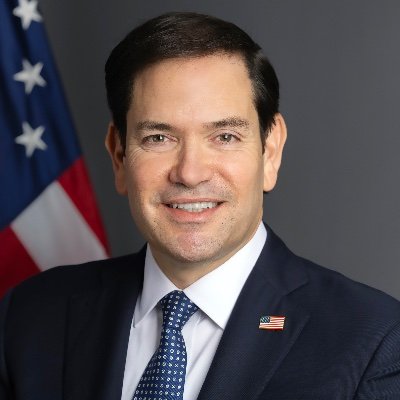
Today, we find ourselves at a crossroads because the next decade and the decisions we make will write the story of the next century.
The course we take will determine whether the West maintains its place at the head of the world, or resigns itself to a future of atrophy, servitude, and decline.
We will either choose to act now, or lose the choice to act at all.
Under President Trump, the United States has made its choice.
He must have called on some Kali goddess energy. The intifadists are learning their god is only as powerful as the next man's.

My salute to the Indian pilot Captain Smit Machchhar for his extraordinary bravery.
Despite being stabbed and seriously injured, he fought back, resisted, opened the cockpit door, and enabled passengers and crew to overpower the attacker — preventing a catastrophic mid-air disaster.
He saved the lives of 174 people, including Israeli citizens and other nationals.
I wish Captain Machchhar a speedy and full recovery.
He is a true hero.
Lol at the IRGC fatwads. They on borrowed time.


Marc Fernandes retweeted

I don't fan out about many gov't figures.
Scott Bessent is awesome.
Historic.
Marc Fernandes retweeted

Jolting essay from @Ayaan that intellectuals in the West will find uncomfortable but which explains the “why”
What Mohamed Atta Was Trying to Tell Us tabletmag.com/sections/news/…

Marc Fernandes retweeted

Good news on the China front.
This is a thoughtful and informative OpEd. Well worth the read. wsj.com/opinion/china-overpl…

Marc Fernandes retweeted

Everyone watching Iran's state-run TV news program probably noticed they picked up an Anduril Dive-LD, our mass-produced attritable submarine.
This particular vehicle has been swimming in CENTCOM for months, successfully operating in support of American forces for thousands of hours. It was explicitly designed to operate in environments too dangerous for humans where capture is an expected possibility. I can't get into the details, but it provided significant value for months before capture.
Rest in peace, little buddy.

Marc Fernandes retweeted
Last week, a highly anticipated Phase 3 trial failed despite producing a dramatic improvement in the biomarker it was designed to target. The result has important implications for how the FDA evaluates new drugs.
LDL cholesterol is a biomarker. There is a strong relationship between LDL and health outcomes. The higher the LDL, the greater the cardiovascular risk. But no one really cares about LDL levels as an end; they care about risk of heart attack, stroke, etc.
Statins are an example of a drug that lowers LDL and also lower the risk of cardiovascular events. They are among the most impactful drugs in modern medicine.
LP(a) is another cardiovascular biomarker. I'm no doctor but ChatGPT calls it a "specialized, more genetically determined cousin of LDL." There were strong reasons to believe that lowering LP(a) would have similar effects to lowering LDL, particularly reducing heart attack and stroke deaths.
Quick sidetrack... there is a big debate about how much regulators should rely on biomarkers when approving drugs. Some drugs, like statins, improve both the biomarker and clinical outcomes. Other drugs improve the biomarker but have no effect on outcomes that actually affect patients.
The appeal of approving based on biomarkers is speed. A drug's timeline for a patient may be: take the drug, time delay, biomarker improves, time delay, noticeable improvement in patient outcomes. Defining the primary outcome of a drug as improvement in the biomarker can shorten the time to regulatory approval, often by years.
There has been a push in recent years to do just that, prioritizing speed to market over confidence of efficacy. The problem is that the drug might not actually improve patient health, and might have negative side effects and/or substitute for a more effective treatment.
Back to the story... the first trial of a drug that lowered LP(a) was released last week. There was unusually strong consensus among the medical community that a drug that lowered this biomarker would decrease cardiovascular risk. Some argued the FDA should approve the drug just because it lowered LP(a) by up to 80%.
Thankfully, the FDA had not granted LP(a) as a surrogate endpoint worthy of making a drug eligible of accelerated approval. Novartis had to go through a full phase 3 trial measuring actual patient outcomes.
The trial failed. Patients saw significant reduction in LP(a) but did not improve cardiovascular outcomes.
Why is this important? There is enormous pressure from drugmakers, investors, and some patient groups to get drugs approved faster. That pressure is understandable. For patients with serious diseases, years of waiting can matter enormously.
But ineffective drugs don't help. They can have side effects. They can displace treatments that do work. They can discourage more meaningful innovation. And they usually do have significant financial cost, to patients, employers, and taxpayers.
Like most issues of public policy, the challenge is finding the right balance between competing tensions. There is good reason to get drugs to patients as quickly as possible but also to ensure that the drugs are effective. These can be at tension with each other.
The FDA is under enormous pressure from industry to accelerate access to new drugs. We @Arnold_Ventures have been one of the few voices emphasizing that speed has to be balanced against confidence in clinical efficacy.
The failed Lp(a) trial is a powerful reminder of why that balance matters. RCTs on actual patient health outcomes are still the gold standard.

Marc Fernandes retweeted

SECRETARY RUBIO: There was this fantasy, really, that the whole world would become a free enterprise democracy, and that everyone would look like us. That ran into reality.
Great books. Great show.

The season finale of Season 3 of Silo drops tomorrow night.
It's on Apple TV+.
If you like dystopian sci-fi, Silo is an amazing series, with incredible writing, acting and character development, and never-ending mysteries as to why these people are living in an underground silo 300+ years in the future.
For every mystery solved, three more emerge.
It's really an amazing show and highly bingeworthy.
Marc Fernandes retweeted
I found 29 Fortune 500 companies that relocated >200 miles and across state lines over the past decade:
13 moved from CA; 9 from Northeast
0 moved to West Coast or Northeast
59% moved to TX; 20% to Southeast; 10% to VA
19/29 moved from a state with an income tax to one without

Marc Fernandes retweeted
Masoumeh Ebtekar - also known as "Screaming Mary" - was the spokeswoman for the Islamic terrorists who stormed the U.S. Embassy in Tehran in 1979 and held 52 Americans hostage for 444 days - subjecting them to beatings, starvation, and mock executions.
In 2014, the Obama Administration granted visas to her son and his family to enter the United States. In June 2016, the Obama Administration gave them lawful permanent resident status via the Diversity Immigrant Visa Program.
This week, I terminated their lawful permanent resident status and today, Seyed Eissa Hashemi, Maryam Tahmasebi, and their son are now in the custody of U.S. Immigration and Customs Enforcement pending their removal from our country.
Her family should never have been allowed to benefit from the extraordinary privilege of living in our country.
America can never become home for anti-American terrorists or their families - and under the Trump Administration, it never will.
Marc Fernandes retweeted
Gambling is appealing because humans evolved a capacity for risk-taking. A society in which no one ever took risks would not have thrived, and ultimately would have been outcompeted.
Risk-taking is still enormously valuable in modern society. Innovation exists because someone accepted the possibility of failure in pursuit of a larger reward. Entrepreneurship, scientific discovery, exploration, and investment all depend on a willingness to tolerate uncertainty. Risk taking can benefit both society and the individual.
Males were disproportionately engaged in roles in which variance was useful: resource acquisition, war, trade, exploration and leadership. Meanwhile, lower variance and greater reliability are evolutionarily valuable for raising children, where consistency of food, protection, and care matter.
Thus humans, particularly men, are drawn to activities that have variable and potentially outsized payouts, like gambling. Archaeologists have found dice and other games of chance originating from 5000+ years ago.
Companies have become highly sophisticated in using these principles to make money, even when the benefit to society is tenuous at best. Casinos, sports betting, financial trading, collectibles, fantasy sports, video games, and many retail promotions all utilize some lottery-like payoff structures because they work.
The greater the potential upside, the more compelling the product. The faster the outcome is revealed, the more appealing. The more appealing to men, the more profitable. The result is an evolutionary pressure on the products: ever-larger jackpots, faster feedback, and larger jackpots, even as the vast majority of participants lose.
Many people enjoy these products and the thrill of the uncertainty. A life without variability would be dull. We're wired to seek it out. The challenge is how to allow the entertainment value of variability while minimizing the harms. It's a fine line between providing entertainment and exploiting a deeply rooted human instinct.
Marc Fernandes retweeted

Elon Musk on why physics is the only law you can't break
"Physics is the law, and everything else is a recommendation. I've met a lot of people who can break the law, but I haven't met anyone who could break physics"
"For any kind of technology problem, you have to make sure you're not violating physics. First-principles analysis can be applied to really any walk of life"
"It's really just saying, let's boil something down to the most fundamental principles, the things we are most confident are true at a foundational level. That sets your axiomatic base, and then you reason up from there"
Marc Fernandes retweeted

The Perseid meteor shower is one of the best celestial shows of the year.
Every August, this shooting star spectacle lights up the sky as Earth passes through a trail of debris left by Comet Swift-Tuttle.
Video of a night sky time-lapse at Oregon Islands National Wildlife Refuge
