




🌞 retweeted

The funniest socialist fantasy is that we can replace markets with a sufficiently powerful supercomputer.
The problem isn't computational power. It's that the information needed to coordinate an economy is dispersed, changing, and often doesn't exist until people make choices.

🌞 retweeted

Los "todo es político" cuando les preguntas sobre la inflación en lugar del aborto o el racismo
🌞 retweeted

Francia tiene salud pública gratuita, educación pública gratuita, semana laboral reducida de 35 horas, aborto, planes sociales para desempleo, ley de alquileres, preescolar gratuito y licencia maternal extendida, ley de paridad de género y ley de cupo trans, subsidios a la industria, al transporte, empresas de energía estatizadas, regulaciones e impuestos al carbón y las leyes ecologistas más duras del mundo. Tienen fronteras completamente abiertas, pagan reparaciones por haber colonizado otros países, y hasta viviendas gratuitas para inmigrantes.
Tienen todo lo que quiere la izquierda, y aún así los zurdos salen a las calles y prenden fuego TODO.
Los socialistas son insaciables. NO HAY QUE DARLES NUNA NI UN CENTÍMETRO.


🌞 retweeted

On my way to the office this morning, I passed a group of young people protesting, a Palestinian flag draped over their shoulders.
And I asked myself a question I can't shake: why does this generation always fall into the same trap? No matter the history. No matter the context. Even the ones from wealthy families, who went to the best schools, who were dealt every good card. Always the same trap.
I don't think it's stupidity. I think it's a mechanism. And a mechanism can be taken apart, piece by piece.
A. The observation: everything the state touches becomes unaffordable.
Look at economist Mark Perry's famous chart, the one people call "the chart of the century." It tracks US prices since 2000.
At the top, what explodes: hospital services, college tuition, textbooks, childcare, housing. Increases of +100%, +150%, up to +250%, far above general inflation.
At the bottom, what collapses: TVs, software, phones, toys, clothing. A TV today costs a fraction of what it did in 2000, for an infinitely better product.
Look at what separates the two groups. It isn't technology. It isn't complexity. It's one variable: how much the state is involved.
At the top, sectors that are subsidized, regulated, shielded from competition, where the state funds demand and blocks supply. At the bottom, sectors where companies fight every single morning to serve you better and cheaper.
B. The mechanism: why it's systematic.
When the state subsidizes demand without freeing supply, prices rise. Every time. Guaranteed student loans, and universities raise tuition. Housing aid plus blocked building permits, and rents skyrocket. Administered healthcare, and bureaucracy eats the budget before it ever reaches the patient.
In France it's even more vicious, because the price doesn't disappear: it hides. You never see the hospital bill, you pay it through payroll contributions. You never see the cost of school, you pay it through taxes. Public spending at 57% of GDP, one of the heaviest tax burdens in the world, more than €3.4 trillion in debt. And the result? Overflowing ERs, falling PISA scores, young people who can't afford to live in the city where they work.
The market didn't fail in these sectors. It was never allowed in.
C. Suffering demands a culprit.
A 22-year-old lives all of this in their bones. They can't find a place to live. Their degree either buries them in debt or opens no doors. The future feels blocked. That suffering is real, and I don't deny it for a second.
But human beings can't stand suffering without a culprit. They need a face. A scapegoat.
And this is where everything is decided: who taught them how to read the world?
D. Whoever tells the story picks the villain.
Schools are public. Universities are public. Culture runs on grants. Film goes through funding committees. Public broadcasting shapes the narratives. The people handing down the interpretive framework are, overwhelmingly, paid by the very system that creates the problem.
Do you really think that system is going to name itself as the culprit?
No. It names the capitalist. The boss. The landlord. "The rich." The multinational. The commercial West. Same role, same casting, every time.
E. One lens, a thousand causes.
And this brings me back to that flag. A generation taught to read every situation through a single lens, oppressor on one side, rich, Western, capitalist, oppressed on the other, will apply that lens everywhere. To housing. To climate. To conflicts on the other side of the world. The cause changes, the lens stays. That's why the trap is always the same: it's not the cause that draws them in, it's the way of thinking that was installed in them.
F. The perfect inversion.
Here's the irony. Capitalism is the force that drove down the price of almost everything it touched. The state is the force that blew up the price of almost everything it captured. And young people blame the first for the crimes of the second.
It's like blaming the firefighter for the fire because you saw him at the scene.
G. The ballot box confirms it.
In the US, a few weeks out from the midterms, a large share of urban young voters is getting ready to vote Democrat for more state, more spending, more regulation. New York elected a self-described socialist mayor, carried by young voters, on promises of rent freezes and city-run grocery stores. Rent freezes, the policy that has made housing scarcer everywhere it's been tried. The cure that worsens the disease.
In France, it's the same play in two acts. Part of the youth votes for the radical left, which promises more state. Another part votes for the center, which promises to "manage" the state well, and has dug the debt deeper than ever. Two different ballots, one shared assumption: the problem is the market, the solution is the state.
H. The way out.
These young people aren't stupid. They're right to be angry. They're just aiming at the wrong target.
The day they understand that their rent, their tuition and their hospital are expensive precisely because the state runs them, their anger will change direction. They'll stop protesting against those who create. They'll start protesting against those who capture.
That day, the greatest intellectual scam of our time will be over.



🌞 retweeted

En Francia 🇫🇷 están protestando contra el Estado, pidiendo más Estado, para solucionar problemas que produjo el tener más Estado.


🌞 retweeted

🇫🇷 | El dueño de una tienda llora después de que toda su tienda fue saqueada en los disturbios en Francia esta noche.
🌞 retweeted

“Why are young people economic leftists?”
I can’t answer this question for the francophone world, but in the United States my answer/s would be:
1) young people are broadly extremely misinformed about the structure of Western economic systems. Many of them are convinced that our economies are far more laissez-faire and deregulated than they actually are.
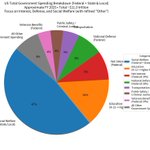
2) young people are extremely misinformed about the sheer quantity of government spending, and especially how much the government spends relative to the income/wealth of the richest people (e.g. all the assets of every billionaire in America would fund single payer healthcare for a year and a half)
3) young people broadly feel like the ability to accumulate wealth is not a benefit to them and like they are locked out of systems of asset accumulation.
4) in youth circles, economic griping is paradoxically often “high status.” developing radical political approaches wrt cost of living is generally viewed positively.

🌞 retweeted

Lo de Francia muestra que el esfuerzo del contribuyente no compra gratitud. Ayudar sin exigir nada cría monstruos que se creen con derecho a todo. No agradecen, no retribuyen y siempre exigen más. El Estado benefactor cultiva un hombre de mierda.
🌞 retweeted

Liberamos la VTV para que la puedas hacerla en cualquier taller, concesionaria, o con el service (CABA ya lo está implementando). Pero la Provincia de Buenos Aires dijo que no. Acá el resultado. Nada, para recordar el año que viene cuando votes en la provincia. VLLC!

LA VTV AUMENTÓ UN 17% EN LA PROVINCIA DE BUENOS AIRES
La provincia de Buenos Aires autorizó un aumento promedio del 17% en la Verificación Técnica Vehicular (VTV), vigente desde este jueves. El ajuste, vinculado al acuerdo salarial entre el Sindicato de Mecánicos y Afines del Transporte Automotor (SMATA) y la Cámara Argentina de Verificadores de Automotores, estaba previsto para julio, pero fue postergado tres meses para reducir su impacto en los usuarios.
El Gobierno bonaerense confirmó que mantendrá las verificaciones exclusivamente en plantas autorizadas y advirtió sobre estafas con obleas falsas y servicios no habilitados. Según el Ministerio de Transporte, hasta el viernes pasado se habían dado de baja 993 publicaciones y sitios web fraudulentos y realizado casi 200 denuncias ante fiscalías penales.
Nuevos valores de la VTV
- Vehículos de hasta 2.500 kilos: $114.105,99 (IVA incluido).
- Motos: $45.614 aproximadamente.
- Vehículos de más de 2.500 kilos: $205.264 aproximadamente.
(+) en Clarín: clar.in/4eaRb2c

🌞 retweeted

I’m pro-capitalism because “make something people want” beats “get appointed to decide what people need.”

🌞 retweeted

no solo son un grupo demográfico que es 100% externalidades negativas (contaminación, delincuencia, privatización de los espacios públicos) sino q encima existe la noción de que los que sufren sus externalidades negativas tienen la obligación moral de asistirlos. raped mentality
