


Manan retweeted

My OpenAI dot produced this PCB and then hit its usage limit and gave up. AGI is here

Manan retweeted

Introducing Decision 2.0: our newest state-of-the-art decision models, open in every size from 0.6B to 27B ⚡
HF collection 🤗: huggingface.co/collections/v…
#OpenSource #Decision #Jev #LLM
Manan retweeted

text-to-cad plugin extension is now live on codex!
- generate 3D models as STEP, STL, 3MF, or GLB
- DFM for printing, sheet metal, CNC, injection moulding
- connect to fab services like bambu and sendcutsend
100% open source and free, runs locally inside the codex desktop app
Manan retweeted

Google just ruined OpenAI's dev day lmao
Gemini 4 Pro leaks absolutely dominates both Anthropic and OpenAI
This means Fable 5.5 and GPT 6.1 has to price match Gemini 4 Pro now IPO DELAYED 🤣


Manan retweeted

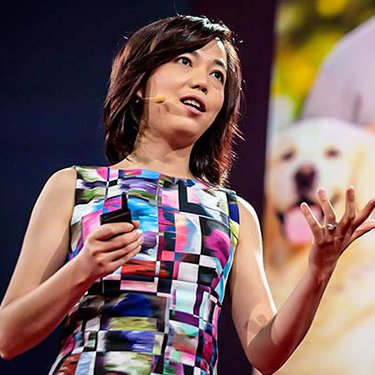
“Reinforcement Learning for Real-Time Vision-Language-Action Policies”
VLA models are usually too slow for reactive robot control, so this paper lets the VLA generate actions slowly in the background, while a lightweight RL policy uses the latest observation to rapidly edit and select actions in real time.
This simple split improves real-world success from 42% to 97% with just 10 minutes of online robot data.
alphaxiv.org/abs/2609.18207


Manan retweeted


We used GPT-5.6 Sol Pro to prove a new lower bound for gradient descent in smooth convex optimization.
For GD with arbitrary predetermined step sizes, we prove \Omega(T^{-1.9319}).
arxiv.org/abs/2608.10418

Manan retweeted

Meta AI researcher who created DINOv2 explains modern self-supervised learning!
Also introduces a new approach called CAPI
@TimDarcet gave a brilliant talk about his research at the @MedARC_AI journal club last month.
Very clear and information-dense, I learned a lot from his talk.
Give it a watch!


Manan retweeted

🚨 Gemini 4 will drop Soon
> Gemini 4 Significantly larger than previous Gemini models
> Reportedly targeting late August / early September
> Early claims suggest it could outperform Fable 5 and GPT-5.6 Sol
> Flash models will continue releasing while the flagship is being trained
Are you looking forward to Gemini 4?


Manan retweeted

🚨 BREAKING: AMD just acquired Taalas
Nvidia bought Groq for $20B
> SRAM-based LPUs
> model-agnostic, low-latency
> run any model, fast
Now AMD buys Taalas
>model-specific ASICs
>hardwire the model into the chip
>one model, max efficiency, zero flexibility
AI inference wars INCOMING


Manan retweeted

What if a compact 0.1B ASR (Speech-to-Text) model could handle rap, fast dialogue, mixed-language speech, and multi-speaker audio — entirely on-device?
Meet Audio8-ASR-0.1B.Small model. Full-scale capability.
We open source the model, weights, and code.
Thread ↓
Manan retweeted

Day 5: Inference Engineering
Today was more about ML than inference tbh. Got caught up reading the Gated Delta Net and Kimi Delta Net attention papers. I think that this is the future of models (no chance OAI and Anthropic don't adopt these linear memory architectures) so its really important to understand from first principles.
GDN and KDA (used by Qwen and Kimi respectively) use 3 linear layers followed by one MLA layer; so you technically still have a KV cache but it is compressed (bc of MLA) and of that only 1/4th its typical size (bc of it only being every fourth layer). It is hard to overstate how large of a difference this causes for inference. So much of model serving is memory/KV management and if KV computation is no longer quadratic in size you are able to serve across far higher batches bc you are less restricted by the memory wall.
In the linear layers, you have a single dim(k) x dim(v) matrix that, upon each step, is degraded (GDA degrades the entire matrix by a scalar, KDA across feature dimensions by a learned vector) and then add on a vk^T outer product. It is genuinely absurd to me how few people talk about how large of a deal these model arch updates are; especially for them to be open source. Such a big part of being an engineer is constantly refreshing your knowledge and keeping up with the cutting edge (although I admittedly first read about GDA in March, I wrote it off naively).
Also read a lot about Looped Transformers. Rumor has it a lot of future open and closed source models are gonna be based on this arch. Basic idea is that, instead of doing 1 full pass through 32 layers, each with independent Attention and FFN weights, you do 4 'looped' passes through 8 layers of Attention and FFN weights. So you use the same amount of compute, but save 4x (this parameter is adjustable) the weight memory. Pair this with linear attention and you are using soooo much less memory than a vanilla transformer (Say GQA with full KV cache) would use and this is still even *before* quantization.
The fact that the model passes through the same set of weights a certain number of times means each layer receives an updated residual vector on each loop, meaning the residual has layers to be corrected/shaped into a more accurate area of the embedding space. These continual pass throughs are very analogous to training epochs (imagine doing a single epoch in training and thinking you were chillin).
This also allows each recurrent linear memory state to receive a new residual input and thus get new k and v projections from their respective W_K and W_V matrices.
These are both such deep papers and this is only the surface so I hope you understand why working my way through these two papers took me more or less all day
arxiv.org/abs/2605.22791
arxiv.org/abs/2510.26692


Day 4: Inference Engineering
Read mostly about memory today. A lot about the developing HBF and then brushed up on my NAND Flash and HBM knowledge. Read about how Flash cells are tiered as SLC, MLC, TLC, and QLC (Single, Multi, Triple, and Quad Level Cells). SLC means each cell holds 1 bit and thus two states, MLC means each cell holds 2 bits and thus four states, 3 bits and 8 states for TLC, and 4 bits and 16 states for QLC.
These extra states are not free tho. The cell does not change in size, so QLC is trying to fit 4 bits into the same sized cell as SLC. This means that the voltage difference between each state in the QLC is far more granular and thus more susceptible to read errors. Also as you pack more bits into the cell, the cells lifetime degrades significantly. An SLC cell can be written to on the order of 100,000 times, a QLC cell can only be written to ~1,000 times (and the intermediary MLC and TLQ cells scale similarly).
When flash was first invented, it was initially planar (2D) but now NAND chips incorporate 3D stacking up to 300 layers. Now they are trying to extend this in an HBM fashion by stacking up to 16 flash dies on top of the logic for more long term storage (mainly for weights and KV offload). HBF will be entirely SLC to ensure strong write lifetimes (every write to flash degrades its lifetime, reading is more or less free however)
One issue I see with HBF tho is that, with the cells on top of the logic, it is likely to get really hot. And flash cells degrade significantly at higher temperatures. Curious how they'll handle this.
Tmr will be back back to more actually LLM research. Gotta look into this speculative decoding technique @mohitwt_ put me onto


Manan retweeted

Pictured: Google Deepmind CEO Demis Hassabis steps down to become chair


Google DeepMind CEO Demis Hassabis steps down to become chair ft.trib.al/R3sWuoE

Manan retweeted

It performs as good as it looks! Definitely a step up from last week's muscle design.


Manan retweeted

Here's a follow-up, this time with a more ambitious building (+animation, yes!) and with GPT-5.6 Sol (High), in the same thread.
The prompt:
"Use the ImageGen skill to generate a low-poly 3D mining rig, then use img2threejs to build it. Allow me to animate it with a button."


