

Husband to One, Dad to Three, Pastor to the Saints at Foothill Bible Church.
Upland, CA
Joined March 2013
- Tweets18.4K
- Following4.5K
- Followers4.7K
- Likes38.6K








T. S. Sinclair retweeted

According to the Roman Catholic Church, justification is acquired instrumentally through the sacraments. The Reformers responded that the instrumental cause of our justification is not baptism or penance; it is faith in Christ.
T. S. Sinclair retweeted

Saving faith is the faith of God's elect; the special gift of God to them, wrought in them by his Spirit.
- Thomas Boston
“As our mediator, God the Son assumes responsibility to obey his Father, not for his own sake, but on behalf of his elect. In other words, Jesus obeyed because he loves you.” @PastorPerks @thepactum
podcasts.apple.com/us/podcas…

T. S. Sinclair retweeted

Christ was imputed, reckoned to be a sinner, though he himself committed no sin. By the same logic, we in Christ are reckoned, counted to be righteous, though we have no deeds that should merit such a standing before God. @RevKevDeYoung
"Christ is a compete savior for and in the place of his people."
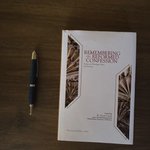
— Chad Vegas, “Reforming the Church,” in Remembering the Reformed Confession: Essays on Theology, Piety, and Practice, ed. Harrison Perkins, 54.

“The Covenant of Redemption is a reformed way of expressing the ecumenical doctrine of God in application to the doctrine of salvation.” @PastorPerks @thepactum
podcasts.apple.com/us/podcas…
“Worship grounded not just in the immediate tastes of the day but in theological truths that have demonstrated a perennial relevance across the centuries—that is, the truths of classical theology—overcomes our natural propensity to make ourselves and our concerns the measure of all things and points us instead to those great truths that we might otherwise be inclined to neglect.”
— Carl R. Trueman, Classical Theology for the Modern Mind, 57.
“In the Lord's Supper, "examine yourself." But it's "Do this in remembrance of me." It's called a means of grace, not a means of scolding.” @nocoradio
podcasts.apple.com/us/podcas…

“Gods promise is unchangeable because he makes his promises within covenants that obligate him—of course by his own choice—to be faithful to those promises.”
— Harrison Perkins (@PastorPerks)
“The Reformation recovered the doctrine of assurance.” @nocoradio
podcasts.apple.com/us/podcas…
“The Covenant of Redemption is an eternal plan, meaning it is about God's decree of election in choosing some sinners for the certainty of redemption. And in this respect, it undergirds how salvation must be: by grace alone, apart from our works.” @PastorPerks @thepactum
podcasts.apple.com/us/podcas…
“The gospel is certainly opposed to the law. For the law works wrath and announces the curse, but the gospel proclaims grace and blessing.”
— Second Helvetic Confession 13.1
"How-to preaching, like moralism, pushes the person and work of the redeeming Christ out of the realm of the hearer's consideration... The how-to sermon implies that human behavior is not a matter of an intractable will, not a matter of total depravity, not a matter of rebellion against the reign of God the Creator, but merely a matter of technique."
–– T. David Gordon, Why Johnny Can't Preach, 82.
“The whole Bible is about God’s one, unified, unfolding plan of salvation through the work of our Savior Jesus Christ, expressed through Covenant.”
— Harrison Perkins (@PastorPerks)
“This is progressive sanctification, a Spirit-wrought grace that follows logically, necessarily from the first benefit, justification.” @RScottClark

"How-to preaching has reduced Christianity to a moralistic exercise, where Jesus is little more than a great example for what we really can all do on our own, and his work and his person are abstractions for theological nerds, not something that really matters." @SteveMeisterVDM
“It was Rome that took away assurance.” @nocoradio
podcasts.apple.com/us/podcas…