

Investing @OKX_Ventures. Technology diffusion is as vital as innovation. Opinions are my own.
Joined October 2011
- Tweets696
- Following480
- Followers1.9K
- Likes3.9K




Pinned Tweet
🧵 1/ Beyond the Checkout Page: Who Will Build the Economy for Agentic Commerce?
A deep dive into the battle between human-centric design and machine-native protocols. As AI agents evolve from assistants to autonomous entities, they're reshaping commerce.
Here is the full link of the research: okx.com/en-sg/learn/beyond-t…


The future of commerce is here: Agentic Commerce is redefining how we shop, pay, and trust in a machine-driven economy! From AI agents handling purchases to crypto-powered, machine-native payments, we're on the cusp of a revolution. 💸
Read more: okx.com/en-sg/learn/beyond-t…

Ray Xiao retweeted

Architect submitted its comments on compute derivatives to the CFTC on October 16, followed by the Hyperliquid Policy Center (HPC) on October 20. Both support bringing regulated compute derivatives to U.S. markets, though they take different approaches to benchmark standards and the rollout of perpetuals.
Around the same time, AI infrastructure credit came under renewed pressure. CoreWeave's 9.625% notes due 2032, issued in June, saw their yield climb above 15% in the secondary market. As of October 21, they were still yielding around 14.7%.
How much of the risk in AI infrastructure financing can GPU futures actually hedge?
@CoreWeave ended Q2 with roughly $104B in revenue backlog and $640M in quarterly net interest expense. Long-term take-or-pay contracts provide revenue visibility, while lenders also have to underwrite execution risk, refinancing conditions, and what the underlying GPUs will be worth when those contracts expire.
Consider a five-year financing arrangement backed by three years of contracted compute revenue. Once those contracts roll off, the economics depend on what the GPUs can earn under new rental agreements and what the hardware would fetch on the secondary market. Rental futures could help hedge the repricing of that capacity, provided the settlement benchmark tracks the rates the operator can actually realize.
That brings us to a problem with the underlying market.
Much of the GPU rental market still operates through private, long-term bilateral agreements. Architect notes that even the Compute Desk H100 index it plans to use relies primarily on published quotes, with executed transactions accounting for a smaller share of the benchmark.
Research from HEC Montréal found that weekly price changes in Silicon Data's and Ornn's H100 rental indices had a correlation of just 0.17 through July 2026. These indices track the same GPU generation, yet their price movements show limited alignment. The study doesn't establish which benchmark better reflects commercial rental rates, but the choice of settlement index clearly matters for basis risk.
Pricing also varies across hardware generations. Architect cites Compute Desk data showing the B300 rental index rising from $4.55 in November 2025 to a reported $7.39 per GPU-hour, a roughly 62% increase. As newer GPUs change the economics of serving compute, rental rates and residual values across generations can move quite differently.
The two CFTC submissions approach this market from different angles.
@HyperliquidPC argues that listed futures can help an immature spot market develop common pricing standards, drawing a parallel with Henry Hub natural gas futures. It supports competing qualified benchmarks and a regulatory path for both dated futures and perpetuals.
@Architect_Fi puts more emphasis on benchmark integrity and favors establishing a track record in dated futures before expanding to perpetuals. One of its proposed safeguards is particularly interesting: exclude spot transactions priced off a futures contract or the same reference index from that index's settlement inputs.
Here's why that matters.
As GPU futures gain traction, more commercial compute agreements could move toward index + spread pricing. A provider and its customer could agree on a rental rate tied to a published H100 index, plus a negotiated premium or discount. That would make contracts easier to price and give lenders a common reference for projecting rental income.
But suppose those index-linked agreements are then reported as fresh transactions and fed back into the same benchmark.
The benchmark would effectively start incorporating prices derived from itself. Futures trading could also influence commercial contract pricing, which in turn could feed back into futures settlement.
Over time, the index might appear to be supported by a growing volume of transactions, even as the amount of independently discovered price information grows much more slowly.
The more widely a benchmark is adopted, the more important it becomes to preserve independent price formation beneath it.
This is particularly relevant for compute perpetuals. GPU-hours are non-storable: unused capacity today cannot be carried into tomorrow. That makes it difficult to establish the same kind of spot-and-carry arbitrage available in assets such as BTC. Without an expiry date, perpetuals depend heavily on funding and a reliable reference index to keep prices aligned. If that index drifts away from executable rental rates, funding can keep the contract anchored to a distorted reference.
As GPU futures become more widely used in rental agreements and equipment financing, the same benchmark could influence derivatives settlement, contracted cash flows, and the valuation of GPU-backed credit.
A pricing distortion that starts in a relatively thin rental market could then feed into a much larger pool of financial exposure, with the benchmark serving as the link between them.

Ray Xiao retweeted

MAYBE I WAS WRONG ABOUT BLOCKCHAIN TECHNOLOGY
I wrote about how I always used to make fun of the guys who said things like "Bitcoin is speculative, but the underlying blockchain technology is interesting." And now I think maybe they kinda had a point.


Ray Xiao retweeted

I was wrong.
Agents don't need crypto. It's us humans who do.
I break down what the industry got wrong in my @token2049 talk, Agents + Crypto: What's Real and What's Cope 👇
Ray Xiao retweeted
During Token2049 Singapore last week, the OKX Ventures team actively contributed to @okx Dev Day by evaluating project pitches and sharing our thesis on building AI software and how X Layer can support founders in this space.
We met talented developers building across RWA and AI agents. Many brought thoughtful ideas to the stage, and their energy was great to see firsthand.
Thanks to everyone who took part. Keep building! @XLayerOfficial
🤖 Made with AI


I attend TOKEN2049 SG every year, and this year its role in driving business across the industry felt stronger than ever.
Takeaways:
- Strong conversations and a noticeably stronger presence from international financial institutions.
- Roles across the financial value chain are becoming more specialized, and distribution channels are expanding in the real world.
- Traditional asset managers and financial firms are sending dedicated crypto business leads to meet clients and explore partnerships. People really see it as a valuable opportunity to face to face meet existing and potential clients.
- Onchain protocols also focused on finding institutional clients, securing distribution and discussing product integrations. At the private dinners we attended, most guests were the hosts’ clients or prospects.
- The level of expertise has improved substantially. BD teams discuss their products, customers and business details with a depth of understanding comparable to the founders.
- On the investment side, we heard more new interest from traditional institutions and LPs in increasing their crypto exposure than the last year, with a clearer understanding of where the technology can add value.
Overall, there’s more interest in putting capital and resources into the industry. People came with clearer goals and much deeper expertise. The crypto tourists felt down 90%. This time, the tourists in SG were here just for F1 :)
🤖 Made with AI


Ray Xiao retweeted

Today we are announcing a major step forward for OKXICE, the joint venture between @okx and Intercontinental Exchange, parent company of @NYSE:
OKXICE has notified the SEC that we intend to launch our Tokenized Securities Venue (TSV) under the SEC’s new Innovation Exemption.
Our notice includes more than 60 companies listed on U.S. stock exchanges.
This is a landmark step toward a truly global, 24/7 Wall Street — and toward keeping the future of digital finance anchored here in the United States.
The digital asset revolution is already transforming our financial system. Tokenized securities are part of what comes next.
And we’re just getting started.
okx.com/en-us/okxicetsv

It is surprisingly easy for founders and vc investors, even exceptional ones, to place their own experiences too high in the hierarchy of user needs. Our brains naturally overestimate how representative our personal experiences are, mistaking “what I like and need” for “what the market likes and needs.”
Founders who are genuinely willing to push beyond the boundaries of their own thinking tend to listen, again and again, to a sufficiently broad and diverse range of users. It sounds simple, but is extraordinarily difficult to do consistently. Very few people truly manage it.

I helped build @vectordotfun. It was a really wild ride.
It's been fascinating watching @fomo's rise this year.
Wrote down some reflections and lessons in this piece.

Ray Xiao retweeted

all paths lead to becoming a neocloud
neolab, some AI product company, RL service, etc. we saw this again this week with Gimlet !!
"neocloud" means lots of things now:
- rent out their own gpus: @CoreWeave, @nebiusai , @LambdaAPI
- started closer to power and data centers: @CrusoeAI , @IREN_Ltd , @nscale
- gather compute from different providers: @runpod , @vast_ai, @akashnet
- do research/RL and also sell compute: @PrimeIntellect , @togethercompute
- built their own chips and now sell inference: @GroqLLC, @cerebras
- run inference across different chips: @gimletlabs
why though? because AI companies need more and more compute. renting it gets expensive so long-term contracts make sense. then they get their own gpus but they need an infra team or figure out financing it to keep it busy. of course they'd start selling their compute or managed workloads 🤷♀️

Ray Xiao retweeted

Build the next layer of onchain capital markets.
Create an RWA application, tool, or protocol on X Layer and compete for a share of $100K in prizes. Finalists take the stage in Singapore at @OKX Dev Day on Oct 6.
Apply by Sep 11: luma.com/l4aq8vii

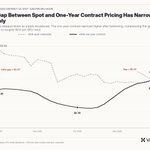
Open-weight model releases are starting to show up in GPU prices. DeepSeek V4, GLM-5.2 and Kimi K3 all coincided with sharp moves in merchant GPU rents this year.
As enterprises increasingly self-host models that offer comparable quality at a lower cost, these release-driven demand spikes should become more visible.

The market is responding by securing capacity through long-term contracts. These contracts perform some of the economic function of a hedge by locking in future supply and pricing. Yet they remain bespoke, bilateral and illiquid procurement agreements.

This is why the market will eventually need a credible compute forward curve and standardized instruments that allow price risk to be actively priced and transferred.
xitter.cf/OKX_Ventures/status/20…


Crypto regulation is finally moving from enforcement toward market design.
At the CFTC Innovation Advisory Committee’s first meeting, Chairman Selig framed the question clearly. Blockchain, AI and prediction markets are reshaping finance. Where will these markets be built, and can U.S. regulation keep pace?
People spoke candidly about lawsuits, debanking, conflicting rules, teams moving offshore and no clear path for DeFi.
A meaningful change in direction.
The changing face of the CFTC’s Innovation Advisory Committee is a massive tell for where finance is heading.
CME, Nasdaq, ICE, and DTCC are represented alongside OKX, Robinhood, Coinbase, Kraken, Uniswap, Ripple, Solana, Consensys, a16z crypto, Multicoin, Paradigm, Chainlink, FalconX and others.
For years, crypto companies were largely on the receiving end of regulation. Today they're increasingly participating in the discussions around market structure, infrastructure and financial innovation.
The inaugural agenda reflected that shift as well: crypto came first, followed by AI and prediction markets.
The next phase of adoption isn't just about bringing traditional assets on-chain. It's about crypto firms becoming part of the institutions that help shape how future financial markets are designed.
cftc.gov/About/AdvisoryCommi…


A few thoughts on how AI compute finance may develop:
AI compute is becoming a productive capital asset. Jensen Huang recently put it more directly: “In AI, compute is revenue.”
The next phase is the development of a capital market around that asset—one capable of financing capacity, pricing future compute delivery, and distributing rental rate and residual value risk.
• Debt will be the first major catalyst for the global GPU market.
As more AI infrastructure is financed with credit, lenders need to underwrite utilization, rental rates, customer concentration, technological obsolescence, and collateral value.
The missing layer is a credible term structure for compute. The market has few reliable forward-price benchmarks and almost no instruments for hedging future rental income or GPU residual values. As a result, lenders still depend heavily on sponsor balance sheets, customer guarantees, and bespoke contracts.
A functioning forward curve would change the nature of underwriting. Capital providers could begin pricing the cash flows of compute itself, rather than relying primarily on the credit quality of the operator behind it.
• Open weight models will be the second catalyst.
Until recently, advanced model compute demand was concentrated within hyperscalers and leading AI labs, so much of it never appeared in the merchant market.
Open-weight models are beginning to loosen that structure. As more enterprises deploy models independently, a growing share of compute demand is moving into arm’s-length capacity and inference markets.
Each route creates compute exposure. Capacity buyers face changing rental prices and availability. Inference providers carry compute costs inside their gross margins. For both groups, compute becomes a variable operating input that must be procured, budgeted, financed, and eventually hedged.
• Timing still matters.
AI compute finance remains nascent because the physical market is fragmented, heterogeneous, and heavily OTC.
A GPU-hour is not yet a fungible commodity. Its economic value depends on the chip generation, cluster configuration, networking, power availability, location, software environment, service level, and counterparty delivering it.
Financialization will follow contract standardization. The market is likely to begin with narrowly specified instruments tied to particular hardware, delivery periods, locations, and service levels. Broader benchmarks and derivatives can develop once enough comparable transactions exist around those standardized claims.
• Crypto native markets may have some advantages in one specific part of this stack.
We think the most credible opportunity lies in what we call Inference Capital Markets: markets for financing, transferring, and settling claims on future compute and inference services.
GPU credits and transferable claims on future service are natural starting points. They are digitally deliverable, programmable, divisible, and potentially usable as collateral. Onchain rails could make prepaid capacity easier to distribute, allow service claims to trade before delivery, and open the market to buyers and capital providers outside the hyperscaler ecosystem.
The hard problems remain offchain. A viable claim still needs enforceable service rights, standardized delivery terms, credible usage verification, and clear default resolution. Tokenization supplies the financial wrapper; contract standardization and reliable delivery give the asset its value.
Our full breakdown below👇


Ray Xiao retweeted

First Principles Ep. 6 with Shafi Goldwasser
What if you could prove something is true without revealing why it’s true? Turing Award winner Shafi Goldwasser tells the origin story of zero-knowledge proofs: how a playful question about playing poker securely over the telephone led her, Silvio Micali, and Charles Rackoff to rethink what a mathematical proof could be.
Goldwasser traces those ideas through interactive proofs, the sum-check protocol, SNARKs, and the systems now used to verify computation and preserve privacy on blockchains.
She also reflects on why breakthrough ideas are often rejected at first, how toy problems can produce foundational theories, and whether AI systems should have to prove their answers.
Hosted by @Tim_Roughgarden with @SuccinctJT
00:00 Intro
03:36 How mental poker inspired zero-knowledge proofs: Proving that something is true without revealing the underlying information
06:30 The simulation paradigm and the meaning of “zero knowledge”
08:33 Why the original paper was repeatedly rejected
10:33 How interactive proofs became more powerful than conventional proofs
13:36 The road to modern SNARKs
19:02 Why the sum-check protocol is so useful for verifiable computation
25:31 Why many so-called “zk proofs” are not actually zero knowledge
34:06 Why toy examples, playfulness, and narratives can produce deep theory
37:23 The role of rigor and computational assumptions in cryptography
42:44 Applying zero-knowledge proofs to law, evidence, and secret software
45:23 Training AI systems to provide proofs alongside their answers
54:27 Why genuinely new ideas are often difficult for experts to recognize
A sharp read on what’s taking shape in the trenches and why it really matters to all of us building here.
The regulatory building blocks are stacking up, and we’re getting closer to the point where incremental progress becomes a step change. CLARITY is one piece, parallel work across agencies and growing competition across jurisdictions are adding to the same momentum. That is laying the foundation for the next phase of market evolution.
And that next phase is coming into view: internet capital markets bringing capital formation, trading, and new asset creation to internet speed and scale.

