

Daily crypto news, blockchain education, market insights, and security tips. Educational content only—not financial advice.
Miami, FL
Joined July 2010
- Tweets97.9K
- Following78
- Followers829
- Likes2.4K

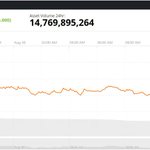





After a significant rebound from the $62,000 area, Bitcoin is currently consolidating around $79,000, and on-chain data shows that large holders are still continuing to increase their holdings.

1
52
Google launched **Google Pics**, an AI image creation tool powered by its latest AI models, taking aim at Canva and **Adobe Express**.
🔥 AI image creation
🔥 Built into Google Workspace
🔥 Direct competition for Adobe
**Could Google become Adobe’s biggest AI threat?**
The AI race is creating new opportunities across the technology and investment landscape.
**DM me to join my FREE Investment Insights Group.**

📊 **Tokenized Treasuries Are Getting Bigger**
BlackRock’s BUIDL has regained the top spot among tokenized U.S. Treasury funds at roughly **$2.8B**, narrowly ahead of Circle’s USYC.
But the bigger signal is the market itself.
Tokenized Treasury funds have grown more than **15,000% since 2024**, giving investors a way to access traditional Treasury yields directly through blockchain infrastructure.
This could become an important bridge between **Wall Street and crypto.**
**Do you think tokenized real world assets will become the next major growth narrative in crypto?**
👇 Let me know what you think.
5
44
Crypto investment community retweeted

💰 The Future of Moving Money Is Changing
For centuries, finance has been trying to make moving money faster, safer, and cheaper.
From gold and paper notes to correspondent banking and SWIFT, every generation has built a new system for transferring value.
Now, stablecoins, tokenized deposits, and blockchain based payment networks are challenging the traditional financial infrastructure.
SWIFT itself is already moving toward blockchain based settlement, while major banks are testing 24/7 transactions that can settle in seconds instead of days.
The bigger question is not whether traditional finance will disappear.
It is who will control the next generation of financial infrastructure?
I’m watching the shift closely. What do you think will play the biggest role in the future: SWIFT, stablecoins, or blockchain networks?
👇 Share your view. Follow for more market and financial infrastructure insights.

🚨 **A $17B Insurance Deal Could Be Coming**
Aon ($AON) is reportedly close to acquiring USI Insurance Services from KKR ($KKR) in a deal valued at roughly **$17 billion including debt**.
If completed, the transaction would significantly expand Aon’s scale in commercial insurance brokerage and strengthen its position in a highly competitive market.
For investors, the key questions are now the **purchase price, financing structure, potential cost savings, and regulatory approval**.
For KKR, the deal would also mark a major exit from one of its sizable insurance related investments.
The bigger question is whether Aon can turn this acquisition into long term growth without taking on too much financial or regulatory risk.
**Do you think this deal would be a major win for AON, or is $17B too much to pay?**
👇 Curious to hear different views. Follow for more market and business insights.

Wall Street searched for direction on Friday as traders digested Federal Reserve Chair Kevin Warsh's speech at the Jackson Hole Symposium.
S&P 500 (SP500) +0.3%, the Dow (DJI) +0.2%, and the Nasdaq Composite (COMP:IND) +0.3%.
Now, here are 3 news stories that broke in the morning to watch out for:
Treasury yields jump on Warsh comments: Short-dated Treasury yields rose sharply Friday after Federal Reserve Chair Kevin Warsh warned at Jackson Hole that recent inflation data have not shown enough improvement in underlying trends. The 2-year Treasury yield climbed 7 basis points to 4.30%, while the 10-year yield edged up 1.7 basis points to 4.69%. Fed funds futures now price in a 55.0% probability of a September rate hike, up from 35.4% a day earlier. Warsh stressed that the Fed must be confident inflation is moving toward its 2% objective "clearly and at sufficient speed," adding that otherwise "we have work to do."
Stripe-led consortium abandons PayPal pursuit: PayPal Holdings shares dropped 11.68% to $54.29 Friday after Bloomberg reported that a consortium led by Advent International and Stripe had abandoned its pursuit of the payments company. The group had previously offered about $60.50 per share, valuing PayPal at more than $53 billion. The stock is now testing its 50-day moving average at $53.81, with the 200-day moving average at $51.28 representing the next major support level. Block, Stripe, and Advent had first approached PayPal together in April, but Block exited the consortium before the formal offer was submitted.
Apple TV increases monthly subscription price: Apple raised the price of its Apple TV streaming service in the U.S., with the monthly rate climbing to $14.99 from $12.99 and the annual plan increasing to $119 from $99. The new rates take effect Friday for new and existing subscribers. Apple also increased the individual Apple One bundle to $21.95 a month from $19.95. This marks the fourth price hike in four years for the streaming service, which launched in 2019 at $4.99 a month and has since tripled in price as its library expanded to more than 300 original shows and movies.
NVIDIA👍

Michael Burry is betting against NVIDIA. But there’s an interesting twist. 👀
Burry increased his short exposure to NVDA, while also buying December call options as a hedge.
That tells me the setup is not simply bullish vs. bearish.
NVIDIA just delivered another extremely strong quarter, and the stock jumped about 7% on Thursday. But Burry believes the current valuation may still be difficult to justify over the long term.
The real question now is:
Is NVIDIA entering another major leg higher, or is the market underestimating the risks behind the AI investment cycle?
I’ll be watching NVDA, AI spending and semiconductor stocks closely from here.
What do you think? Is Burry early, or is he seeing something the market is missing?
👉 Follow for more daily NVIDIA, AI and U.S. stock market analysis. 📈

Tokenization could fundamentally change how investors access traditional markets, but the structure matters. Price exposure is one thing; actual ownership, dividends, voting rights and investor protection are another
🚨 TOKENIZED STOCKS ARE GROWING FAST, BUT THE STRUCTURE MATTERS
Demand for tokenized equity exposure is accelerating.
According to CoinDesk, perpetual futures linked to tokenized equities have grown from around $16B in 2025 to more than $590B in 2026 so far.
But there is an important detail investors shouldn't overlook.
Not every tokenized stock gives you the same rights.
Some structures can represent actual ownership or a securities entitlement, while others provide only synthetic exposure to the stock price.
That difference can affect:
📌 Ownership rights
📌 Voting rights
📌 Dividends
📌 Counterparty risk
📌 Investor protection
The SEC itself recognizes different structures for tokenized securities, including issuer sponsored, custodial and synthetic models.
So when I look at the rapid growth of tokenized stocks, I'm not only watching how much volume is moving onchain.
I'm watching what investors actually own.
Because two tokens can track the same stock price while giving holders very different rights and protections.
Is tokenization creating a new way to own stocks, or simply a new way to trade stock exposure? 👀
Follow me for more tokenization, crypto and U.S. market analy

Crypto investment community retweeted
🚨 TOKENIZED STOCKS ARE GROWING FAST, BUT THE STRUCTURE MATTERS
Demand for tokenized equity exposure is accelerating.
According to CoinDesk, perpetual futures linked to tokenized equities have grown from around $16B in 2025 to more than $590B in 2026 so far.
But there is an important detail investors shouldn't overlook.
Not every tokenized stock gives you the same rights.
Some structures can represent actual ownership or a securities entitlement, while others provide only synthetic exposure to the stock price.
That difference can affect:
📌 Ownership rights
📌 Voting rights
📌 Dividends
📌 Counterparty risk
📌 Investor protection
The SEC itself recognizes different structures for tokenized securities, including issuer sponsored, custodial and synthetic models.
So when I look at the rapid growth of tokenized stocks, I'm not only watching how much volume is moving onchain.
I'm watching what investors actually own.
Because two tokens can track the same stock price while giving holders very different rights and protections.
Is tokenization creating a new way to own stocks, or simply a new way to trade stock exposure? 👀
Follow me for more tokenization, crypto and U.S. market analy
LayerZero unveils trading infrastructure for crypto and tokenized markets, ZRO surges
LayerZero, the blockchain infrastructure firm that has been working with financial heavyweights like DTCC, Intercontinental Exchange (ICE) and Citadel Securities, is moving deeper into trading infrastructure to serve as the backend for exchanges and other platforms offering crypto and tokenized assets.
ATLAS, short for Aggregated Trading Liquidity and Settlement, combines trade matching, clearing, settlement and risk management in one system built on Zero, LayerZero's blockchain announced earlier this year.
Markets could range from spot crypto and perpetual futures to stocks, bonds, commodities and prediction markets, LayerZero said in a Tuesday press release.
Trading around $1 earlier in the session, LayerZero's ZRO
ZRO
$1.3248
token surged more than 30% on the plans.
The launch comes as stablecoins and tokenization put more financial assets onchain, raising the question of where those assets will trade. LayerZero argues that existing market infrastructure, with separate systems for matching, clearing and settlement, isn't built for assets that can move around the clock.
“The world's global asset base is expanding faster than ever before,” Bryan Pellegrino, co-founder and CEO of LayerZero said in a statement. “It is globally accessible, continuously available, and includes an increasingly large number of assets with sufficient depth and liquidity to build meaningful markets around.
“We built ATLAS to be the neutral, performant backend to power them all," he added.
The move broadens LayerZero's ambitions beyond moving assets between chains and into the markets where those assets can trade. In February, the firm announced its Zero blockchain with partners including DTCC, ICE and Google Cloud and a strategic investment from Citadel Securities.
ATLAS won't have its own trading app like most exchanges. Instead, trading venues can plug into the infrastructure while keeping their own interface and customers.
The system will have two configurations: Open ATLAS targets crypto trading apps and prediction markets, while Institutional ATLAS lets exchanges and financial firms set their own market rules while using the same underlying engine, according to the team’s X post.
The infrastructure also gives native token ZRO a more direct link to trading activity. Venues can stake the token for higher fee rebates, while 75% of fees left after venue rebates and payments to market creators will be used to buy and burn ZRO, reducing its supply.
The expansion also comes after a rough patch for LayerZero's cross-chain business: several protocols moved away from its bridging infrastructure after attackers stole about $292 million worth of assets from Kelp DAO's LayerZero-powered bridge in April.

🚨 NVIDIA’S AI INFRASTRUCTURE IS GOING TO SPACE
Nvidia says SpaceXAI plans to deploy Nvidia Vera CPUs to power the next generation of AI applications behind Grok.
What makes this interesting is that the AI infrastructure story may be expanding beyond traditional data centers.
AI agents → Vera CPUs → Massive AI factories → Orbital computing
SpaceXAI plans to scale its AI infrastructure toward gigawatt level computing while exploring the use of the Vera Rubin platform in space.
Nvidia shares were down around 3%, but the long term story is worth watching.
The big question is:
Could space based computing become the next frontier for AI infrastructure? 👀
I’m watching NVDA, AI infrastructure and SpaceXAI closely.
Follow me for more AI and U.S. stock market analysis.
#NVIDIA

Bitcoin reclaiming $75K to $78.5K is definitely encouraging.
But the bigger signal will come from what happens after the breakout.
Does capital continue flowing in?
Does spot demand increase?
Does leverage stay under control?
If those signals improve together, this could be more than just a technical rebound.
The next Bitcoin move may already be forming beneath the surface. 👀
I’m watching the data, not just the candle.
Follow me if you want to see what I’m watching next.

Survived the crashes, the FUD, the hacks and the endless “crypto is dead” headlines. If you stayed disciplined through all of that, you absolutely earned the right to enjoy this move

🚨 MUSK’S $200M MIDTERM BET COULD BE BIGGER THAN POLITICS
Elon Musk could spend as much as $200 million to support Republican candidates in the 2026 midterms, with Texas and the Senate race among the areas attracting attention.
But what caught my attention isn't simply the size of the number.
It’s the bigger trend.
Billionaire money is becoming a major force in the 2026 election.
Crypto, AI and other emerging industries are also putting significant capital behind political campaigns and policy efforts. Reuters reports that these sectors have already contributed hundreds of millions through political groups and related networks.
That could matter far beyond the election itself.
Crypto regulation.
AI policy.
Technology regulation.
Tax policy.
Market sentiment.
The question I’m watching is:
Can political capital translate into policy influence, and which industries could benefit if the regulatory environment shifts?
For investors, this is becoming more than a political story.
It could become a market story. 👀
Follow me for more analysis where politics, markets, AI and crypto intersect.


Crypto investment community retweeted
If XRP gets clearer commodity treatment, how much could that change institutional demand?

BREAKING: 🇺🇸 Brad Garlinghouse, the CEO of Ripple, will be attending the CFTC IAC meeting today.
The CFTC and SEC have classified #XRP as a commodity, placing it alongside GOLD and SILVER.

Crypto investment community retweeted

JUST IN:🎙️🇺🇸 "All Americans should have equal opportunity to generate wealth and own crypto assets," says Robinhood's Vlad Tenev.
"If you're an individual in the state of California and you want to participate in crypto, you're just economically disadvantaged," adds @vladtenev.
If XRP gets clearer commodity treatment, how much could that change institutional demand?
BREAKING: 🇺🇸 Brad Garlinghouse, the CEO of Ripple, will be attending the CFTC IAC meeting today.
The CFTC and SEC have classified #XRP as a commodity, placing it alongside GOLD and SILVER.