








Epitaten retweeted

The baya weaver is a master engineer, meticulously making an intricate, suspended nest using nothing but its beak.
🤖 Made with AI
Epitaten retweeted

Leda Atomica (1949) captures Dalí's "nuclear mysticism" in one frozen tableau. Objects hover and don't touch, as though the whole scene is suspended by atomic repulsion. Here, Dali turned his skilled classical draftsmanship into a special effect.

Epitaten retweeted

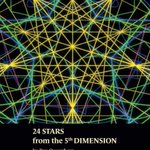
A star polygon {n/k} joins n points on a circle, stepping k at a time: vertex j sits at angle 2πjk/n.
A point runs its edges at constant speed, so its height moves in straight lines between the values sin(2πjk/n), a sine sampled n times a turn. For {25/12}, k/n = 0.48 is just under ½, and the heights become (−1)ʲ⁺¹ sin(πj/25): a fast zigzag under one slow beat per turn.
That is aliasing, the effect that makes a filmed wheel spin backwards.
Epitaten retweeted

My dad called Claude “a toy for people who can’t trade.”
He’s been trading for 20 years.
I didn’t argue.
I just turned the monitor toward him.
He read the results twice.
“…That can’t be right.”
27 days.
$200 → $25,400.
74% win rate.
Sharpe 2.47.
While 92% of traders lose money, a tiny fraction quietly extracts millions.
Then I showed him why.
86M+ Polymarket trades analyzed.
Every wallet.
Every entry.
Every exit.
One Claude prompt:
“Find every wallet with 100+ trades and a win rate above 70%. Rank them by profit.”
14,000 wallets scanned.
47 elite wallets found.
The top 20 earned more than the other 13,000 combined.
He looked at me and said:
“That’s not data. That’s a treasure map.”
But that wasn’t the real edge.
Three independent AI agents vote on every trade.
✅ 2 agree → Full position
⚠️ 1 agrees → Half position
❌ No consensus → No trade
That one rule eliminated nearly 40% of losing trades.
Another AI watches for fresh smart wallets entering low-liquidity markets before everyone else notices.
One wallet grew $35K into $442K.
73 live dashboards handle everything:
• Whale tracking
• Insider detection
• Wallet clustering
• Signal scoring
• Arbitrage opportunities
• Smart money monitoring
No emotions.
No guessing.
Just data and execution.
Then he asked:
“How much does this cost?”
“About $25/month.”
Silence.
“I’ve been paying analysts six figures to do half of this.”
The crazy part?
The tools are public.
Most people still think AI is just for writing emails.
Meanwhile, others are quietly using it to build an edge.
🎁 I’m putting together the exact AI trading stack, prompts, and workflow behind this.
Like + Repost + Comment “AI” and I’ll DM it to you.
Follow @NextGenAi5 for More.


Epitaten retweeted

Ancient Egyptian Gold Ring with a Carnelian Bezel in form of a Cat (symbol of goddess Bastet); belonged to the Third Intermediate Period (1070-712 BC), from eastern Delta region, Egypt 🇪🇬
According to Egyptian mythology, gods and goddesses had the power to transform themselves into different animals. The goddess named Bastet, had the power to become a cat. Ancient Egyptians held cats in such high regard because of practices and preferences of their gods, but also because their kings, pharaohs, kept giant cats,” Skidmore says. “Members of the Egyptian royal class dressed their cats in gold and let them eat from their plates.” Although members of the lower classes weren’t in a position to dress their cats in precious metals, she notes that they did make and wear their own jewelry featuring feline designs. While cats were a favorite of pharaohs, some of their characteristics were more important during some dynastic eras than others, Skidmore explains. “Bastet, daughter of the gods Ra and Isis was first depicted as a fierce lioness, but later as a domestic cat: a dutiful mother with several kittens, and a protector of the family.
Along with hieroglyphics, obelisks and geometric patterns, cats feature prominently in ancient Egyptian art, reflecting animal’s unique status among people who dwelled along Nile River. Animals were initially adopted as useful predators in ancient Egypt and gradually became symbols of divinity and protection. Whether or not they were worshiped as deities, cats were an integral part of ancient Egyptian life. And, based on mummified cats discovered in tombs alongside humans, they carried an important role in the afterlife, as well.
For most of civilization’s history, ancient Egyptians saw cats as mutually beneficial companions, cats might come inside when it was hot, and they in turn would chase away dangerous animals, such as snakes many of which were venomous and scorpions. Some of what we know about the function of cats in ancient Egyptian society comes from scenes of everyday life depicted in paintings on the walls of tombs. “In tombs scenes, cats are shown laying or sitting below chairs, chasing birds and playing,” Troche says. “In some mortuary texts, they are shown with a dagger, cutting through Apopis: the snake deity who threatens Ra (the sun) at night in the Underworld.”
Cats in ancient Egypt were also seen as possessing another type of power: fertility. “They are often depicted sitting under women's chairs, implying a connection to women, and perhaps fertility more broadly,” Troche says, noting that the association may stem from the fact that cats have multiple kittens in a litter.
Egyptians believed cats were magical creatures, capable of bringing good luck to the people who housed them. To honor these treasured pets, wealthy families dressed them in jewels and fed them treats fit for royalty. When cats died, they were mummified. As a sign of mourning, the cat owners shaved off their eyebrows, and continued to mourn until their eyebrows grew back. Art from ancient Egypt shows statues and paintings of every type of feline. Cats were so special that those who killed them, even by accident, were sentenced to death.
(Ring D: 2cm; Bezel L: 1cm)
British Museum
#archaeohistories

Epitaten retweeted
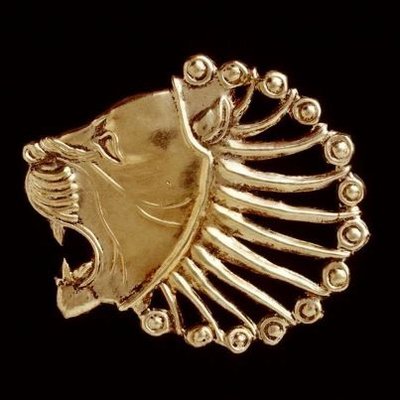
Lascaux Cave, located in France’s Dordogne region, is famous for its intricate Paleolithic artwork...
The paintings, primarily of animals, date back approximately 17,000 years, placing them within the Upper Paleolithic period, likely the late Solutrean or early Magdalenian cultures.
Researchers have used various dating methods, including radiocarbon analysis and the examination of artifacts such as a carved reindeer antler, to estimate their age.
#drthehistories


Epitaten retweeted
In northwestern Australia’s Kimberley region, rock art dating back 41,000 to 50,000 years ranks among the oldest on Earth.
Found in rock shelters and boulders, these sites number in the tens of thousands. The Gwion Gwion paintings feature intricate, dynamic figures, while Wandjina spirit images are known for large eyes and halo-like heads.
Artists used ochre, carvings, beeswax, and stone arrangements, with some techniques revealing contrasting colors. Protected by remote locations and ochre’s durability, these artworks endure as Indigenous Rangers and archaeologists work to preserve them.
#drthehistories

Epitaten retweeted

The statue of Ramses III, housed in The Egyptian Museum in Cairo, dates back to around 1186-1155 BC during Egypt’s New Kingdom. This striking artwork portrays the pharaoh in a dignified stance, underscoring his divine role and authority. Carved from stone, the statue depicts Ramses III standing between two prominent deities—Horus, the god of kingship and protection, and Seth, the god of chaos and disorder. The juxtaposition of these two gods highlights the constant tension between order and chaos in Egyptian mythology, emphasizing the pharaoh’s pivotal role in maintaining harmony.
Ramses III, who reigned from 1186 to 1155 BC, is often regarded as one of the last great pharaohs of Egypt's New Kingdom. His rule was marked by military confrontations, particularly defending Egypt against invasions by the Sea Peoples. Despite these external threats, he worked to preserve Egypt’s stability and culture. The statue reflects his authority, showcasing him in traditional regal attire, symbolizing his position as Egypt’s protector and ultimate ruler.
The positioning of Horus and Seth beside Ramses III in the statue carries deeper symbolic meaning. Horus represents the divine right to rule, ensuring the pharaoh’s legitimacy, while Seth embodies the chaos that must be controlled. This arrangement suggests that Ramses III’s reign was essential in maintaining cosmic balance and protecting Egypt from both internal and external dangers. The statue serves as a powerful reminder of his leadership and connection to the divine forces that safeguarded the ancient Egyptian world.
© Egyptian Museum, Cairo
#archaeohistories

Epitaten retweeted

"It is impossible to be a mathematician without being a poet in soul."
- Sofia Kovalevskaya



Epitaten retweeted

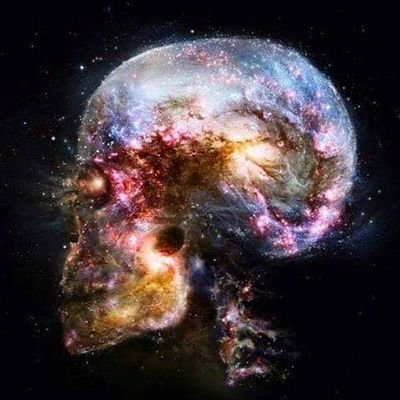
This isn't CGI, it's a real-life creature known as a sea angel (Clione limacina) found in the cold waters of the Arctic and North Atlantic Oceans.
Credit: Alexander Semenov
Epitaten retweeted

Olympic Gold Medalist Caitlyn Jenner calls out the Paris Olympics for ignoring concerns over athletes with male chromosomes.
“XX, you’re with the women. XY, you’re with the men. It’s got to come down to that…This issue has hurt the Olympic Games so much.” - @Caitlyn_Jenner
Video: @FoxNews
Epitaten retweeted

On the 113th day of the year, we commemorate a remarkable mathematical identity that links a continued fraction with the exponential function, the Golden Ratio, and π.

Epitaten retweeted
In 1997, Julia Hill climbed a 200-foot 1000-year-old Californian redwood tree and did not come down for 738 days to prevent Pacific Lumber Company loggers from cutting it down.
She ultimately reached an agreement with the company to spare the tree and a 200-foot buffer zone surrounding it.


Epitaten retweeted
Incredibly rare, a 2300 year-old Ancient Greek Gold Crown (300 BC) could worth at least £100,000, was kept for decades in a tatty box of old newspapers under bed by owner who had no idea what it was ...
In 2016; the delicate Greek Myrtle Wreath (300 BC), was found in a cottage in Somerset under a bed. Artefact was discovered when elderly owner, who wants to remain anonymous, asked valuers from Duke's of Dorchester in Dorset to look at some items he had inherited from his grandfather. But Guy Schwinge from auctioneers was astonished when he pulled aside the newspaper inside a tatty box to reveal the precious ancient artefact.
Gold wreaths like this were meant to imitate the wreaths of real leaves that were worn in Ancient Greece in religious ceremonies and given as prizes in athletic and artistic contests. They usually depicted branches of laurel, myrtle, oak and olive trees, which were symbolic of concepts such as wisdom, triumph, fertility, peace and virtue. Due to their fragile nature, gold wreaths like this were only worn on very special occasions. Bits of dirt embedded on the wreath suggest this one was buried at some point.
Most date to the Hellenistic period (323-31 BC), which this one is also thought to date from, and show the exceptional skill of goldsmiths at that time. Some were made during earlier periods but the wreaths became more frequent after Alexander the Great's Eastern conquests, when gold was more available in Greece.
Current owner's grandfather was a great collector who was fascinated by archaeology and the ancient world. Although his family do not know how he acquired it, it is likely he bought it sometime in the 1940s when he travelled extensively.
He said : "I knew my grandfather travelled extensively in the 1940s and 50s and he spent time in the north west frontier area, where Alexander the Great was, so it's possible he got it while he was there. But he never told me anything about this wreath.
"I inherited quite a lot of things from him and I just put this to one side for almost a decade and didn't really think anything of it. Recently I decided I needed to sort through things and called in Duke's to have look at some of the items he'd passed on to me. The wreath is a beautiful piece but I never expected it to be so valuable. It was a mixture of excitement and just disbelief when they told me what it was."
Mr Schwinge from Duke’s said : "When the owner pulled the gold wreath from a tatty cardboard box filled with paper, my heart missed a beat. When I went to the cottage the last thing I expected to see was a piece of gold from antiquity. It is notoriously difficult to date gold wreaths of this type.
Stylistically it belongs to a rarefied group of wreaths dateable to the Hellenistic period and the form may indicate that it was made in Northern Greece. It is eight inches across and weighs about 100 grams. It's pure gold and handmade, it would have been hammered out by a goldsmith. The wreath is in very nice condition for something that's 2300 years old. It's a very rare antiquity to find, they don't turn up often. I've never seen one in my career before."
#archaeohistories

Epitaten retweeted
Pythagorean Theorem; found on 'Clay Tablet' 1000 years older than Pythagoras : It predates Pythagoras by over 1,000 years.
Study math for long enough and you will likely have cursed Pythagoras's name, or said "praise be to Pythagoras" if you're a bit of a fan of triangles.
But while Pythagoras was an important historical figure in the development of mathematics, he did not figure out the equation most associated with him (a2 + b2 = c2). In fact, there is an ancient Babylonian tablet (by the catchy name of IM 67118) which uses the Pythagorean theorem to solve the length of a diagonal inside a rectangle. The tablet, likely used for teaching, dates from 1770 BC – centuries before Pythagoras was born in around 570 BC.
Another tablet from around 1800–1600 BC has a square with labeled triangles inside. Translating the markings from base 60, the counting system used by ancient Babylonians showed that these ancient mathematicians were aware of the Pythagorean theorem (not called that, of course) as well as other advanced mathematical concepts.
"The conclusion is inescapable. The Babylonians knew the relation between the length of the diagonal of a square and its side: d=square root of 2," mathematician Bruce Ratner writes in a paper on the topic. "This was probably the first number known to be irrational. However, this in turn means that they were familiar with the Pythagorean Theorem – or, at the very least, with its special case for the diagonal of a square (d2 = a2 + a2 = 2a2) – more than a thousand years before the great sage for whom it was named."
So why did this get attributed to Pythagoras ? No original writing from Pythagoras survives. What we know of him was passed on by others, in particular the Pythagoreans – members of a school he set up in what is now modern-day southern Italy. The school, named the Semicircle of Pythagoras, was secretive, but knowledge learned there or discovered was passed on, and often attributed to the man himself.
"One reason for the rarity of Pythagoras original sources was that Pythagorean knowledge was passed on from one generation to the next by word of mouth, as writing material was scarce," Ratner continued. "Moreover, out of respect for their leader, many of the discoveries made by the Pythagoreans were attributed to Pythagoras himself; this would account for the term ‘Pythagoras’ Theorem’."
Though Pythagoras did not come up with the theory, his school certainly popularized it, and it became associated with him for the next few thousand years, at least.
#archaeohistories
