



Zuko retweeted

Everyone wants to have solved a hard problem, but almost nobody wants to live inside the grind of actually solving it. The breakthroughs belong to the few who are obsessed with the process, not just the idea of the outcome

Zuko retweeted

🔥 BREAKING: The White House just posted this video of President Trump sharing his 11 life lessons with young Americans.
"Think of yourself as a winner."
"Be an original...God only created one of you, so don't try to be someone else."
"Finally - never, ever, give up,"
FOLLOW ME FOR MORE NEWS DROPS!
Zuko retweeted

Game theory advice:
Whenever you plan something grand, do not start planning from the beginning (t=0). Start at the end, at the final state you wish to reach. From there, you will now go backwards. Constantly ask yourself, "What do I need to do to get there?" and break the large goal down into smaller steps. This method is called backward induction, and it works particularly well when you lack direction. You will be able to work toward your goals with unmatched clarity.


Zuko retweeted

today we launch @morphic_io: the sovereign AI platform around one core principle.
human knowledge is our most precious asset and needs to compound for the people contributing it.
we unlock our potential only when experience does not walk out the door every time someone leaves
Zuko retweeted

"Your Son Is WATCHING" - Harvard Professor @arthurbrooks Says Fathers Determine Their Children's Faith





Zuko retweeted

Everyone should have at least one skill that makes no money and takes ten years to master
Zuko retweeted

"Your lack of urgency is wasting your potential."


The best career advice for young people is to just focus relentlessly on 3 things:
1. Get skilled. Technical skills, writing skills, people-orchestration skills, everything.
2. Get involved contributing to a mission you're aligned with. It doesn't have to be pure bliss and your contribution doesn't have to match your top strengths exactly. But at the end of the day you have to feel some pride in what you did or what you learned. If you can find something like that while becoming skilled in a number of different ways then you'll find ways to increasingly wrap your skill profile around it (and you'll find/develop strengths in your skill profile that you never expected).
3. Pick up momentum. If you do (1) and (2) right then you've got direction and potential and all that's left is to sprint forwards and achieve it. The more momentum you pick up, the better you get, the more real value you produce, the more opportunities you create, the more you get noticed, the more value you capture into your own life, the more effort you want to put in... you create a virtuous cycle with so much momentum behind it that it becomes an unstoppable virtuous cyclone.
Zuko retweeted

One summer trip. Zero agreement on the budget. ☀️🏡
Who would you trust to plan the trip? 👀

Zuko retweeted

Whose judgement to trust on what topic is the hardest decision an entrepreneur makes. Very hard problem. Most people listen to almost anyone. Some listen to no one. Key is to collect all opinions and then pick very discriminately which 5-10% you trust. Use first principles when posssible
Zuko retweeted

The real GOAT.
Ludwig von Mises rebuilt economics from the foundation up, and a comparison to Einstein is not flattery: it is a structural observation about what each man did to his field.
Einstein rewrote physics by showing that measurements of space and time depended on the observer's frame of reference. Mises did something comparably radical in 1912 with The Theory of Money and Credit, then again in 1920 with the socialist calculation paper, and definitively in 1949 with Human Action: he showed that economic calculation is impossible without private property in capital goods, because prices emerge only from voluntary exchange. The Soviet planners in Moscow were not making policy errors you could fix with better data. They were attempting something logically incoherent, the way you cannot find a square root of a color. Stalin murdered millions chasing a mathematical phantom that Mises proved impossible before the Soviet state was even ten years old.
What separates Mises from most geniuses is the range. Einstein worked physics. Mises worked epistemology, monetary theory, capital theory, business cycle theory, and political philosophy simultaneously, weaving them into a single coherent system. His 1922 book Socialism predicted the collapse of every centrally planned economy with the precision of a structural engineer predicting which wall bears load. The Berlin Wall fell in 1989. The Soviet Union dissolved in 1991. The math was settled in 1922.
The state, being an institution that lives by compulsion rather than consent, cannot tolerate this kind of clarity. Governments fund universities. Universities employ economists. Those economists publish papers justifying central banking, redistribution, and regulation, because tenure flows toward conclusions that flatter power. Mises spent years teaching in Vienna without a paid university position, funding himself through the Chamber of Commerce. He was excluded not because he was wrong, but because clarity about power's limits threatens the institutions that distribute tenure.
You want to rank intellectual giants; let's rank them by what they overturned and what they built in its place. Mises overturned classical economics, demolished the theoretical case for socialism, and constructed a complete science of human choice on aprioristic foundations. Einstein, asked about Mises by journalist Henry Hazlitt in the 1940s, expressed genuine admiration. The greatest physicist of the 20th century respected the greatest economist. The tenured mediocrities who ignored Mises respected neither.

Zuko retweeted
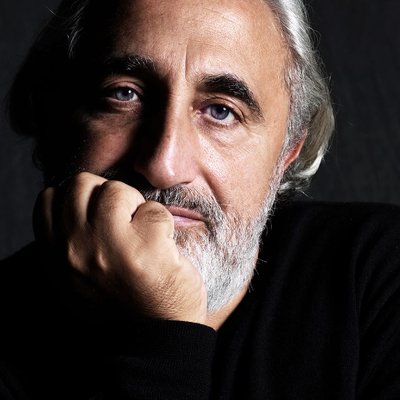
This past year I read a biography on von Mises whom I cited in The Parasitic Mind. He was something else, truly.

The real GOAT.
Ludwig von Mises rebuilt economics from the foundation up, and a comparison to Einstein is not flattery: it is a structural observation about what each man did to his field.
Einstein rewrote physics by showing that measurements of space and time depended on the observer's frame of reference. Mises did something comparably radical in 1912 with The Theory of Money and Credit, then again in 1920 with the socialist calculation paper, and definitively in 1949 with Human Action: he showed that economic calculation is impossible without private property in capital goods, because prices emerge only from voluntary exchange. The Soviet planners in Moscow were not making policy errors you could fix with better data. They were attempting something logically incoherent, the way you cannot find a square root of a color. Stalin murdered millions chasing a mathematical phantom that Mises proved impossible before the Soviet state was even ten years old.
What separates Mises from most geniuses is the range. Einstein worked physics. Mises worked epistemology, monetary theory, capital theory, business cycle theory, and political philosophy simultaneously, weaving them into a single coherent system. His 1922 book Socialism predicted the collapse of every centrally planned economy with the precision of a structural engineer predicting which wall bears load. The Berlin Wall fell in 1989. The Soviet Union dissolved in 1991. The math was settled in 1922.
The state, being an institution that lives by compulsion rather than consent, cannot tolerate this kind of clarity. Governments fund universities. Universities employ economists. Those economists publish papers justifying central banking, redistribution, and regulation, because tenure flows toward conclusions that flatter power. Mises spent years teaching in Vienna without a paid university position, funding himself through the Chamber of Commerce. He was excluded not because he was wrong, but because clarity about power's limits threatens the institutions that distribute tenure.
You want to rank intellectual giants; let's rank them by what they overturned and what they built in its place. Mises overturned classical economics, demolished the theoretical case for socialism, and constructed a complete science of human choice on aprioristic foundations. Einstein, asked about Mises by journalist Henry Hazlitt in the 1940s, expressed genuine admiration. The greatest physicist of the 20th century respected the greatest economist. The tenured mediocrities who ignored Mises respected neither.