

Archaeologist, tinkerer, France and Croatia. I also fake as @spatialiser Work @CHEC_Clermont https://xitter.cf/t.co/eLmuw0szLo
Clermont-Ferrand
Joined June 2016
- Tweets683
- Following241
- Followers195
- Likes899
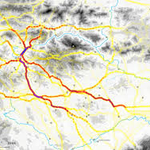
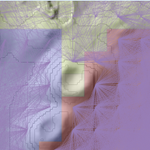

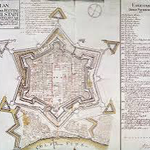



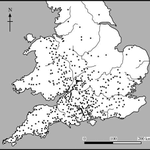
🎉 Our mini-exhibition on computer modelling of prehistoric paths will open at the Slovenian National Museum on Thursday, 18 December, at 12:00 (Ljubljana).
Big thanks to Boštjan Laharnar, Matic Zupan, Nejc Dolinar and Elise Fovet.
nms.si/si/razstave/obcasne/1…

41
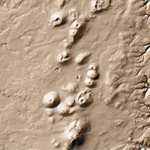
European "desert kites" a fascinating new discovery:
Prehistoric hunting megastructures in the Adriatic hinterland | PNAS pnas.org/doi/10.1073/pnas.25…

2
62
Zoran Čučković retweeted

This is the craziest paleo story of the year. Hominid mandible in someone's bathroom reno! johnhawks.net/weblog/how-man…

Zoran Čučković retweeted

Les chats domestiques ne se seraient pas répandus en Europe avec les agriculteurs néolithiques,comme on le pensait.De nouveaux résultats suggèrent qu'ils ont été introduits en Europe au cours des 2000 dernières années, depuis l’Afrique du Nord biorxiv.org/content/10.1101/…
Zoran Čučković retweeted

“To write for impact means to keep it as simple as possible.” Good read and very insightful.
nature.com/articles/s41587-0…

Zoran Čučković retweeted

(1/9) I’m hiring! Join my ‘Terraform’ ERC project at the University of Malta, looking at the origin, evolution, and impacts of agricultural terracing in the Maltese Islands. Please circulate to anyone you think could be interested. Starting in the summer.


Zoran Čučković retweeted

Excited to share my new paper in the #JournalOfArchaeologicalScience
The study from the Danube Limes (Noricum) reveals insights into movement, trade, and military logistics. 🔗 doi.org/10.1016/j.jas.2024.1…
#Archaeology #FrontierStudies @HeasVienna @ElsevierArchaeo @ElsevierConnect

Zoran Čučković retweeted

In the #Eridu region, we identified over 200 primary & 4000 minor #canals (connected to the ancient Euphrates) and more than 700 #farms.
To download the paper
doi.org/10.15184/aqy.2025.19
To download the #kmz canals file
researchgate.net/publication…
Many thanks to @BISI1932 for funding!


Landscape chambers: a new method for (cognitive) landscape analysis.
Insight: landscapes are composed of specific spaces, such as mountains or valleys. Problem: how to delimit such spaces ?
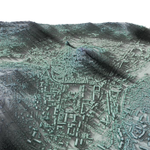
Below: a non-trivial topography (Puy-de-Dôme, France) and modelled landscape areas.


The method relies on intervisibility network segmentation, where landscape chambers are separated by breaks in chains of visual connections.
Published recently : link.springer.com/article/10…
... with a hands on tutorial : landscapearchaeology.org/202…
#QGIS #Archaeology

57
Famous gold helmet from Coțofenești stolen from Drents museum (Netherlands) nltimes.nl/2025/01/25/ancien…

152
hakubutsukanyoku ou "le bain muséal:
courrierinternational.com/ar…

34
Zoran Čučković retweeted

Studenti Filozofskog Fakulteta u Zagrebu pozvali na solidarnost sa studentima u Srbiji. U znak podrške njihovoj borbi sutra od 11:52 do 12:07 okupljaju se ispred svog fakulteta uz poruku – Jedan Svijet, jedna borba!

Zoran Čučković retweeted

In northern Fennoscandia, the Indigenous Sámi used standing stones, cairns and engraved trees to demarcate boundaries #StandingStoneSunday These trees are rare surviving examples of Sámi culture, but are now under threat from deforestation.
🆓 buff.ly/3Ct7BmN

ALT Marked Scots pine trees: upper left) a dead tree with an X-mark; upper right) a live tree with a geometric pattern; and below) a down log with a geometric pattern.
Why did people start eating Egyptian mummies? The weird and wild ways mummy fever swept through Europe theconversation.com/why-did-… via @ConversationEDU
41
Zoran Čučković retweeted

The BSA mourns the passing of Colin Renfrew, thought by many to be the world’s greatest living archaeologist, at the age of 87. Professor Colin Renfew, Lord Renfrew of Kaimsthorn, was a Vice-President of the BSA and former Chairman of Council.
Obituary: bsa.ac.uk/2024/11/25/profess…

Zoran Čučković retweeted
Tout était destiné au marché parallèle…. « 8 urnes intactes, 2 sarcophages et des trésors funéraires du 3e siècle avant J.-C. ! La gendarmerie italienne a découvert et saisi un trésor extraordinaire d'objets étrusques »! 😰

Zoran Čučković retweeted

Si vous avez déjà été à l'école en France, alors vous connaissez sûrement la chaise "Mullca 510".
La Mullca 510 est une chaise (généralement d'école) emblématique en France 🇫🇷, créée en 1947 par l'entreprise Mullca.
Sa robustesse légendaire, grâce à un design simple mais (...)

Dana island shipyard from the Iron Age (800 BC onwards): an industrial scale shipbuilding?
rdcu.be/d0xwz
52
Zoran Čučković retweeted

Pourquoi les constructions romaines sont si solides et ont pu traverser le temps lorsqu'elles n'ont pas servi de carrière de matériaux au Moyen Âge ?
Adrien, maçon artisan au château de Guédélon, explique simplement les qualités des liants utilisés dans l'Antiquité : chaux aériennes, obtenues à base de calcaire pur chauffé à 1000 °, et utilisée en mortier souple au sèchage lent et autocicatrisant, et la chaux hydraulique, au sèchage plus rapide et constituant un mortier rigide mais insensible à l'eau, à l'aide de pouzzolane ajoutée dans la chaux aérienne. Les romains utilisaient ces derniers matériaux pour les constructions maritimes ou fluviales.
L'industrie cimentière actuelle redécouvre les vertus du béton de pouzzolane, dont les performances mécaniques sont inégalées, outre le fait qu'il s'agisse d'un béton "bas carbone".