

Product @meta TBD | ex-@Scale_AI | ex-@LandingAI — Opinions are my own
Mountain View, CA
Joined March 2012
- Tweets601
- Following741
- Followers497
- Likes4.1K


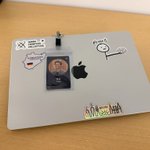




I'm in London for the VBI, but the thing I was most excited about was a little pilgrimage to the place where #AlphaGO began. I watched all five games against #LeeSedol live in 2016 — 10 years ago already.
#DeepMind has since moved next door into Platform 37, named after Move 37 from Game 2. But the move that still gets me is Move 78 in Game 4, the one where Lee Sedol won a game back for humanity. That was the year I decided to switch careers and go into AI.
Thank you, AlphaGo, for giving me the push to change course. Just walking around the building was enough for me.


2
22
699
Kai Yang retweeted

We launched Muse Ember, our smallest and most efficient model. It is designed for the work agents repeat all day like tool calls, coding subtasks, routing, extraction and long document parsing. It delivers more intelligence per dollar than Claude Haiku or GPT Luna.
Read our research blog research.meta.ai/blog/muse-e… and try it on our API.

Kai Yang retweeted

In collaboration with @HuggingFace, we’ve released the largest open robot dataset, alongside their first open System 1-System 2 model that can reason over step-by-step actions.
FineART is built with 40K+ demonstrations across 151 tasks and 500K subtask labels.
Together, the dataset and model were designed for each other, and both are available on @LeRobotHF where robotics developers work today.


This is the part of the AI automation debate that usually gets skipped. Worth reading.

AI will not automate radiologists like you think
We have been talking for years now about AI automating jobs. Radiology has been a prime target, with Geoff Hinton once claiming, “people should stop training radiologists now, it’s just completely obvious that within five years, deep learning is going to do better than radiologists”, which is funny since he said that in 2016. There is now more demand for radiologists than ever, so clearly things did not turn out the way many thought. Here I will make a prediction that while radiology will change in the coming decade, radiologists will not be automated away any time soon. I will use radiology as an example but I think these principles will broadly apply to any field where demand can be elastic and quality can scale with increased intelligence.
First of all, we have seen in the short history of language models that there is a “jagged edge of intelligence”, where AI excels at verifiable tasks with a lot of data but is underwhelming on less common tasks. One thing most AI researchers underestimate about radiology is that it is actually extremely multi-task. There are at least a hundred conditions that can be diagnosed from x-rays alone, and thousands using CT and MRI. AI will first master common and easy-to-see conditions and it will not be as good as experts at less-common diseases just because there is less data for that. This jagged edge will certainly improve over time but this means that AI will certainly be used as a triage tool at first, rather than full automation in one go. I would guess that this process from solid triage tool to full automation would take 3-5 years in the best case scenario, because training AI to get all the edge cases right will be bottlenecked by data collection of rare diseases, and also because radiology isn’t currently a focus for frontier labs.
Second, there will be elastic demand for radiology as it gets cheaper per unit. I think elastic demand (“Jevons paradox”) is the most underrated phenomenon when people think about AI automation. In software, it is obvious that I have way more demand than before because Claude Code makes it so easy. These days I ask Claude Code to build a custom three-thousand line html viewer to help me visualize every little RL run that I do. The same thing will happen in radiology. If there is essentially no cost or latency of interpreting an MRI, a physician can order many scans preemptively to better diagnose a case. So with AI tools, a radiologist might have to read only 20% of inbound scans, but there might be 5x more scans inbound. Many developing countries have fewer than one radiologist per million people and they will also want to send a lot of radiology to be interpreted.
Longer term, cheap and fast radiology interpretation will also drive incentives to build cheaper radiology scanners. If an MRI had essentially no latency for interpretation, medical devices companies will want to build much cheaper MRI machines that can be used more frequently, perhaps even in the middle of a surgery. AI will accelerate the development of scanning technology, too. If a full body MRI was only $100 dollars I would totally want to get one every month instead of every two years. I can imagine a world where people get 10 or 100x the number of scans they do today, largely for preventative care, if radiology were 10-100x cheaper.
Third, even if we did have a model that could outperform the world’s best radiologists today, that would not be the end of all work on radiology. Medicine is a field of change. We may develop new treatment protocols that require reading radiology images in a way that radiologists currently aren’t used to. New scanners may reveal diseases that we cannot currently diagnose today with radiology alone. Some radiologists will change their work from reading scans to doing frontier research to advance our understanding of radiology and translate new knowledge into updated models.
Moreover, I am sure that we will ask for more out of our AI models than ever before. With a good flywheel, we may one day train AI models that can use radiology images to predict disease probabilities far into the future. With good prediction algorithms, cancer may be detected months earlier than we can detect it now. Society will invest a lot into this research and this will contribute even more to increased demand for radiology and the best AI around it.
On top of all of this, the medical system is typically slower to adopt new technology and has more regulation compared to technology companies. There is legacy infrastructure and medical centers need to constantly support patients which makes it hard to integrate new technology. This is even more true in developing countries. Moreover data access tends to be limited due to HIPAA, deidentification, IRBs, etc. So I think radiologists will be in demand for a while.
While some worry about radiology being totally automated, I think there is a more exciting future for radiology than ever before—one where there is more demand and we ask for more predictive power from our intelligence. This is similar to how many of us feel that programming will thrive more than ever before despite drastic change in the field. More generally, any domain where demand can be elastic and quality can scale with increased intelligence will, like radiology, similarly flourish with the development of AI. This is certainly a more exciting and nuanced future than what Hinton described in 2016!
(Finally, to be fair to Hinton, he did acknowledge in a recent podcast that he was wrong and also agrees with the elastic demand argument.)
Thanks @JayRothschild and @engyziedan for feedback on this post.
3
251
Kai Yang retweeted

In our health workstream at Meta we did a project where we wanted to see what research papers medical experts could write using a Muse Wonder coding scaffold that could access a database of 5M electronic health records we licensed from a vendor. The goal is that with 5M patients in this database, AI could do research to answer arbitrary questions like “did people who take statin have higher rates of diabetes later in life”? The thing we were betting on here is on what happens when you put human experts, a strong coding model, and access to data all together
We worked with a small group of medical experts to help them use this AI tool and the punchline is that they all found that this setup enabled a much faster pace of health research. They generated ten manuscripts in around two weeks, with one researcher (Paddy Ssentongo) generating three. Throughout the process, they collaborated with each other to review manuscripts and write skill files to help our coding scaffold improve at doing research. The medical experts liked how quickly they could test different hypotheses and choose the best ones to continue working on
Health research is pretty unique in that it is super important to be able to interpret noisy data and have taste to know which variables are important, which was still a significant value add from human researchers. Given that medicine is one of the oldest fields in human history and it is ultimately about humans, keeping a substantial human component in this type of research is probably important. In the near future I see AI primarily as a tool to facilitate human-led research. With the right scaffold I believe health researchers can be 10x or even 100x more productive using AI tools that have appropriate access to the wealth of data that the world has collected about human health
One way to see this work is through the broader lens of AI for science. You can think of science as two parts: (1) collecting raw data about the world, and (2) synthesizing that raw data into understanding. In this project we already had existing data about the world and we aimed to accelerate part (2) using AI. Eventually, I imagine a world where we have such great AI tools that the time to synthesize raw data into understanding is driven towards zero. In that world, science will be substantially faster and most of the work will be focused on collecting the right raw data via physical experiments
We did this in a pretty short amount of time (which was the point) and I think the future of scientific research will be more faster and more exciting than ever

We’re exploring how AI can accelerate health science research.
While AI has made significant breakthroughs in formal sciences like mathematics, health data science depends on imperfect real-world data and consequential choices about cohorts, variables, and causal assumptions.
To explore how AI can assist health researchers, we built a human-led research scaffold powered by Muse Spark 1.3 and Muse Wonder with access to 5M retrospective de-identified electronic health records and publicly available data. A cohort of medical experts used the system to conduct original research, accelerate hypothesis generation, code execution, and manuscript drafting while maintaining full authority over scientific decisions.
Today, we’re sharing 10 research manuscripts produced through this exploration, spanning cardiology, oncology, infectious disease, emergency medicine, and more.
Read more in our research blog: go.meta.me/3U06wvD
Kai Yang retweeted

Cheeky Pint is back! Mark Zuckerberg @finkd and Alexandr Wang @alexandr_wang came to the pub to discuss their new frontier model, Muse Wonder.
00:00:24 Muse’s breakout use cases
00:07:28 The model is the product
00:14:35 Muse Wonder
00:24:56 How frontier models are built
00:48:26 Betting $100B
01:07:21 Agentic commerce
01:19:34 OpenRouter
01:20:06 Beyond the smartphone
01:27:00 Funding
01:34:06 Why AI won’t be winner-take-all
01:40:46 Meta Superintelligence Labs (MSL)
02:08:11 Working for Mark Zuckerberg
🍉🍉🍉

🍉 🍉 🍉 Muse Wonder and Muse Wonder Full is here. A new series of model where we push hard towards the personal superintelligence mission. The models achieve sota on internal personal and professional agent tasks across domains. Try it out today!
research.meta.ai/blog/muse-w…

3
198

Kai Yang retweeted

Meta's chief AI officer Alexandr Wang says @ElonMusk taught him something that helped shape Meta's AI strategy
You don't necessarily need thousands of engineers to move fast.
You need a small group of exceptionally talented people, very little hierarchy, and the freedom to get things done.
Wang says he brought that idea to Mark Zuckerberg, who embraced it as a central part of their approach to AI.
Meta, a company with enormous resources, is now deliberately borrowing from the way Elon builds small, highly technical teams.
At some point, adding more people stops making you faster.
And in AI, where the technology can change dramatically in a matter of months, the speed of a decision can matter as much as the resources behind it.
Source: @davidsenra / Writer: Oliver
Really proud of the team !!

We’re introducing Humanity’s Sixth Sense, a new benchmark testing the intuitive visual reasoning people rely on every day.
Across 522 open-ended tasks spanning images and video, HSS tests everything from spatial and causal reasoning to social understanding.
The gap is significant. Humans score 93.1%, while the strongest model, GPT-6-astra, reaches 53.6%. The median model scores just 30.9%.

Wrapping up almost two years at @scale_AI
Product → GTM → Engineering → Research
GenAI → Physical AI
A pretty wild range of roles and problems, an incredible amount learned, and the chance to work with some truly exceptional people along the way.
Grateful for the journey.
On to the next chapter. 🚀


Kai Yang retweeted

Incredible progress by our operation and collection team at @ScaleAILabs ! 🚀
We are officially expanding our YAM robot offerings to cover mobile bimanual setups (LinearBot + FLOW base) with rich real-world tasking data!
Quick specs:
• Dual YAM arms + I2RT Leader teleop (50Hz control / 300Hz joint states)
• 3x ZED X Mini stereo cameras (60 FPS)
• Clean MCAP format with spatial odometry & elevator tracking
• Granular sub-goal text annotations with mistake & movement flags
So proud of the team scaling this collection pipeline! Excited to see what models get trained on this 🦾We're already putting early batches through our research training pipelines and the results are super promising. Huge thanks to ops for scaling this 🦾 Reach out at physical-ai@scale.com !


This is going to be one of the most exciting leaderboards!
📣Call for contributions + co-authorship!
RSI Bench is our ongoing effort to evaluate whether AI agents can develop the capabilities required to advance AI R&D.
Got a frontier AI research problem on your mind? Submit it to RSI Bench, and set the standard the whole industry uses to measure progress!
Contributors receive:
→ Co-authorship on the RSI Bench research paper
→ $2,000 per accepted task for the initial 50 tasks
→ Modal compute credits to build + iterate
→ Access to the RSI Bench research community
Register below for full requirements.
6
372
Kai Yang retweeted

Data <> Labs relationships are a research partnership, not a vendor contract!
Large parts of SV missed data as a sustainable business and still argue the revenue won't be sticky. That take is myopic.
There's no ceiling on what a frontier lab will pay for true model gains.

Frontier data is a research problem.
For example, some of the biggest academic CUA papers are solely focused on data synthesis for SFT (OpenCUA, from last August) and RL (CUA-Gym, from this June). Good data requires diligent researchers and engineers.
By next year, I'd expect data talent to look increasingly similar to the current research scientist talent. Already hear small stories of data talent poaching wars and such.