

Giants, Rangers, (Knicks), Cautiously Optimistic Mets Fan. Sports, my own gadgets & whatever else comes to mind. @myrajmedia 🇮🇱🇮🇱🇮🇱
Israel
Joined June 2009
- Tweets5.6K
- Following629
- Followers336
- Likes4.8K












Yaakov Rosenberg 🇮🇱 retweeted

As a diehard NBA fan, I was thankful this morning that my kids woke me up extra early.
Since I was already up, I caught the 4th quarter of Game 5 and watched another incredible comeback by the Knicks - a team that has brought a fresh spirit to the game.
But what I've been thinking about all day isn't the comeback.
It's Jalen Brunson.
All season long, and especially throughout these playoffs, there was something about him that kept catching my eye.
Here's a guy who was overlooked from the very beginning.
A second-round draft pick.
Too small.
Not athletic enough.
Not what people imagined when they thought of a superstar.
Not a 1A guy.
Yet he just kept going.
And even after becoming one of the biggest stars in the league, he chose something that almost nobody chooses anymore. He left an enormous amount of money on the table—over a hundred million dollars—because he wanted his team to have a better chance to win.
There's something beautiful about that.
And then came the moment every kid who grows up around basketball dreams about.
The championship.
The son of an NBA player reaching the place he imagined his whole life.
And when they put the microphone in front of him and asked him what he was feeling, he couldn't really find the words.
All he could say was:
"I'm in awe."
There was something about that that touched me very deeply.
The two middot that I keep seeing in Jalen Brunson are perseverance and humility.
He kept showing up.
He kept working.
He kept believing.
And when the dream finally came true, he stood there in awe.
I'm grateful that young people all over the world got to witness that.
Perseverance and humility.
When those are your guiding lights in life, anything is possible.


I've been a fan of @mikeeisenberg for years, even had a chance to work with him for a bit, and I really enjoyed his recent podcast with @DBashIdeas on @18_forty on the responsibility of Jews worldwide to ensure the prosperity of Israel in the future. Well done.
Yaakov Rosenberg 🇮🇱 retweeted

⚾️
⚾️
⚾️
⚾️
⚾️
⚾️⚾️⚾️⚾️⚾️
⚾️⚾️⚾️⚾️
⚾️
⚾️
⚾️⚾️⚾️
⚾️
⚾️
⚾️⚾️⚾️⚾️
⚾️⚾️⚾️⚾️⚾️
️ ⚾️
⚾️
⚾️
⚾️
⚾️
⚾️⚾️⚾️⚾️
⚾️ ⚾️
⚾️
⚾️
⚾️ ⚾
⚾️️⚾️⚾️⚾️
⚾️⚾️⚾️⚾️⚾️
⚾️
⚾️ ⚾️⚾️⚾️
⚾️ ⚾️
⚾️ ⚾️
⚾️⚾️⚾️⚾️⚾️
⚾️⚾️⚾️⚾️⚾️
⚾️ ⚾️
⚾️ ⚾️
⚾️ ⚾️
⚾️ ⚾️
⚾️ ⚾️
⚾️⚾️⚾️⚾️⚾️
⚾️ ⚾️
⚾️ ⚾️ ⚾️ ⚾️
⚾️ ⚾️ ⚾️
⚾️ ⚾️
⚾️ ⚾️
⚾️ ⚾️
⚾️⚾️⚾️⚾️
⚾️
⚾️
⚾️⚾️⚾️
⚾️
⚾️
⚾️⚾️⚾️⚾️
⚾️⚾️⚾️⚾️⚾️
️ ⚾️
⚾️
⚾️
⚾️
⚾️
⚾️⚾️⚾️⚾️
⚾️ ⚾️
⚾️
⚾️
⚾️ ⚾
⚾️️⚾️⚾️⚾️
⚾️
⚾️
⚾️
⚾️
⚾️

Yaakov Rosenberg 🇮🇱 retweeted
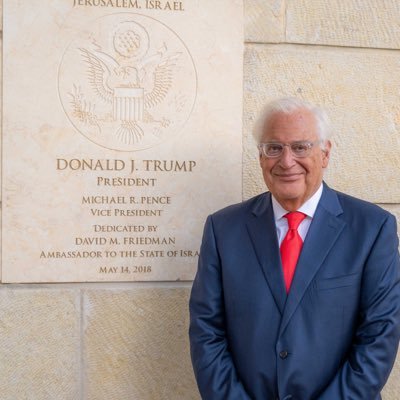
The facts are inescapable that the fight against Iran is NOT being fought solely on behalf of Israel:
— Saudi Arabia, UAE and other Arab nations all support the war
— Iran is viciously attacking those countries along with others in the Gulf
— Iran is threatening the world’s oil supply by attempting to choke off the Straight of Hormuz; but the US gets less than 2% of its energy from the passageway and Israel gets Zero. Israel is fighting here for others, not itself.
— the US has persuaded many countries to join in the military operation to keep the Straight open.
— Israel is systematically working in partnership with the US to decapitate Iran’s command and control and weapons — it is the best and most effective military partner America has ever had.
— in exchange for Israel’s efforts, it has been forced to close its airport, cut off all tourism at the busiest time of the year (Passover/Easter) and its citizens are running in and out of shelters every day. Some have lost their lives or been seriously injured.
— Israel is limiting its offensive to military targets; Iran is responding with 40 foot long ballistic missiles aimed at civilians.
Don’t lie that this war is to protect Israel. Israel is fighting to protect the world. Those nations — and there are many — affected by Iranian terror all know and appreciate this, and when this war successfully ends a new era of peace and diplomacy will be ushered in to this troubled region.
To all those seizing on this just battle to advance an agenda of Jew-hatred, shame on you.
Yaakov Rosenberg 🇮🇱 retweeted

Regardless how the propaganda will try to convince people otherwise, the Arab states around Iran have had their eyes opened during this war as to who the real threat is… and it isn’t Israel.
They don’t need to like us, and as Muslims they will probably continue to hate us and want our destruction. But they now know that it’s Israel who has been fighting to protect even them from their real enemy - their own neighbor in the Islamic regime.
Did they say where? I bet @TheMossadIL already knows.

Iran's Assembly of Experts announced that it would "meet within a day" to select the new leader to succeed former supreme leader Ayatollah Ali Khamenei, Iranian media reported.
jpost.com/middle-east/iran-n…

23
Yaakov Rosenberg 🇮🇱 retweeted

Iran has now attacked or struck targets connected to: Azerbaijan, Bahrain, Cyprus, Iraq, Israel, Jordan, Kuwait, Oman, Qatar, Saudi Arabia, Turkey, the United Arab Emirates, the United States and the United Kingdom
Israel and the United States, to be clear, are fighting back. They are the ones carrying out the strikes against Iran.
But look at the rest of the list.
Most of these countries are currently sitting in a purely defensive posture while missiles and drones rain down across the region.
Why?
What exactly are they afraid of? Iran is already launching missiles across half the Middle East. It is difficult to imagine how the situation gets meaningfully worse for them than it already is.
So what is the hesitation?
Are they worried about being seen as collaborating with Israel or the United States? Are domestic politics tying their hands? Are their leaders simply hoping that if they keep their heads down someone else will solve the problem for them?
Every statement we hear sounds the same. Calls for restraint and warnings about escalation.
Meanwhile the Islamic regime is taking a massive beating.
If the goal were truly to de-escalate the situation, the fastest way to achieve that would be to remove the regime that is launching missiles across the region in the first place.
Instead many of these governments appear perfectly content to sit back while Israel and the United States do the fighting for them.
In a sense this is not surprising. For decades most Gulf states structured their security around a very simple assumption. If a major regional war ever broke out, the United States would ultimately step in. Their militaries were built around that reality. They purchased enormous amounts of equipment, but the real strategic backbone of the system was the American security umbrella.
What we are seeing now is a version of the classic free rider problem. When a real conflict emerges, regional actors prefer that someone else absorb the escalation risk.
At the moment that someone else is Israel.
Israel’s situation is different. Israel cannot sit comfortably in a purely defensive posture because it has almost no strategic depth. It cannot simply absorb missile fire for months and hope the problem goes away. Its military doctrine has always been built around moving quickly from defense to offense and eliminating the source of the threat.
When ballistic missiles start flying, Israel does not have the luxury of waiting.
Many of the other countries on that list do.
There is also a political dimension that is impossible to ignore. Several of these governments quietly cooperate with Israel on security matters, especially when it comes to Iran. But their domestic populations remain deeply hostile to the idea of openly aligning with Israel. That creates a strange balancing act. Privately they may welcome Israel weakening Iran. Publicly they need to pretend they have nothing to do with it.
So they issue statements about de-escalation and hope nobody asks too many questions.
But there is a cost to this posture.
The Middle East is a region where governments spend enormous sums on their militaries. Fighter jets, missile defenses, expanding arsenals. Leaders puff out their chests and speak constantly about strength and deterrence.
Deterrence, however, is not just about owning weapons. It is about demonstrating that you are willing to use them.
A country can buy the most advanced fighter jets in the world, but if it never responds when its territory is attacked, people begin to draw conclusions.
And the conclusion many observers are drawing right now is that when push comes to shove, Israel appears to be the only country in the region willing to move from defense to offense and actually eliminate the threat.
That is not a flattering comparison for anyone else.
1/2
Yaakov Rosenberg 🇮🇱 retweeted
President @realDonaldTrump and Prime Minister @netanyahu had incredible foresight and fortitude to prosecute this war against the Iranian clerical death cult.
Here is My conversation with @ErinBurnett on @CNN


Yaakov Rosenberg 🇮🇱 retweeted

BREAKING: Hamas has released an updated casualty list, and it completely vindicates Israel.
The majority of casualties were military-aged men. If Israel were indiscriminately bombing Gaza, we'd see equal distribution.
Another one of Gaza's viral lies, debunked.

Yaakov Rosenberg 🇮🇱 retweeted

Israeli pride on the NBA’s biggest stage 🇮🇱⭐
Deni Avdija named an NBA All-Star, a historic moment for Israeli basketball players.
We’re proud of you. We’re with you all the way🏀🔥

Yaakov Rosenberg 🇮🇱 retweeted

Beshalach: Moses, Joseph, The State of Israel, Ran Gvili, and the Wisdom that Brings Everyone Home
In this week's Torah reading, Moses undertakes a sacred mission, recovering Joseph's remains to fulfill the ancient oath and bring him home for burial in the Land of Israel. Today, the State of Israel completed a contemporary expression of that same mission—recovering the body of Master Sgt. Ran Gvili, 24, a Yasam police fighter, from Gaza and bringing him home for burial in the Land of Israel. He was the last hostage whose remains were held in Gaza by Palestinian militants following the October 7, 2023 attacks—a young officer who, despite a broken shoulder from a motorcycle accident, insisted on joining his unit that terrible morning because he wouldn't let his friends fight alone.
The commitment echoes across millennia: no one can be left behind, and the attention to the dignity of each of us defines who we are as a people.
The Talmud (Sotah 13b) draws an emphatic contrast based on the verse, "The wise-hearted person takes (yikach) mitzvot, but the fool of lips will stumble" (Proverbs 10:8). This, we are taught, is a characterization of Moses: while all of Israel was occupied with the spoils of Egypt—bizat Mitzrayim—Moses busied himself with the sacred task of locating and transporting Joseph's remains. This seems puzzling, even unfair. All the Jewish people were engaged in mitzvot; taking the spoils of Egypt was itself a specific divine commandment.
As Rabbi Chaim Yaakov Goldvicht explains, the language of "yikach"—takes, acquires—suggests a kinyan, a genuine acquisition that transforms one's character. Yes, the Jews were fulfilling their commandment to take the spoils of Egypt, yet functionally it was far easier than Moses's choice—to serve, essentially, as the chevra kadisha for Joseph's remains. The distinction isn't about the technical performance of mitzvot or not; it's about recognizing which commitments will forge one's soul most deeply. Just as those who today devote their time to the sacred work of the chevra kadisha understand that caring for the deceased is among the most character-defining acts one can perform, a demanding, sensitive task of preserving dignity that offers no tangible reward, Moses recognized the transformative power of this particular mitzvah.
Rabbi Naftali Tzvi Yehudah Berlin, the Netziv of Volozhin, in his commentary Ha'amek Davar (Numbers 15:41), cites the verse "Rejoice, O young man, in your youth, and let your heart cheer you in the days of your youth, and walk in the ways of your heart, and in the sight of your eyes; but know, that for all these things God will bring you into judgment" (Ecclesiastes 11:9). He explains that "walking in the ways of your heart" means that within the framework of Torah's directives, one must be sensitive to the pull of one's natural tendencies and proclivities, understanding that this is likely indicative of what is best for that person. For some, Torah study will emerge as the dominant pursuit; for others, it will be chesed. Recognizing where one's energies will yield the greatest character growth represents the best investment in personal development. Moses was a chacham lev, a wise-hearted person, because he possessed an awareness of which mitzvot would impact his character most profoundly, and set those as a personal mission.
Rabbi Yisrael Meir Druk, in his Eish Tamid, sharpens this point further. Rashi (Exodus 26:15) notes that some Jews were engaged in clearly religious acts, such as cutting down acacia trees for the eventual construction of the Tabernacle. These trees had been planted by Jacob when he arrived in Egypt, specifically so his descendants could use them for that purpose. Cutting them down was a holy task, contributing directly to God's dwelling place. Yet even within religious observance, Rabbi Druk observes, there exists a crucial distinction. It's easier to give to the synagogue, so to speak, than to give to your neighbor. Mitzvot between people are often less obviously "religious" than building God's sanctuary. The wisdom to recognize how profoundly such interpersonal mitzvot impact one's character, to choose them even when more blatantly spiritual options exist, reveals Moses's profound appreciation of humanity's purpose.
Rabbi Zalman Sorotzkin, in his Oznayim LaTorah, offers a crucial insight into why Joseph's remains mattered beyond the fulfillment of a promise. Joseph himself had become a symbol of royalty, of maintaining faith under the most difficult circumstances, of resisting temptation and preserving integrity in a foreign land. The people needed to see themselves as bnei melachim—children of royalty, people of dignity and profound responsibility. When Joseph said "pakod yifkod Elokim et'chem veha'alitem et atzmotai mizeh itchem" (Exodus 13:19, a rewording of Genesis 50:25)—God will surely remember you and bring my bones up from here with you—he used the word "itchem," with you. Rabbi Sorotzkin notes the significance of this particular phrasing: "et" indicates two entities going for two separate purposes, while "im" indicates one unified purpose. Despite the relating of Joseph's language, the beginning of the verse states that Moses took Joseph's remains "imo," together with him and the nation, as part of the unified mission of the Exodus itself. Joseph may have thought his burial in Israel would simply be a personal favor, a separate purpose from the Exodus. Moses understood it as something far greater: a statement about national identity and responsibility. This wasn't just doing a favor for Joseph; it was modeling the essential message of what we do as a people—honoring a hero who gave his life for the Jewish people, showing gratitude, preserving dignity, and demonstrating interpersonal responsibility as integral to our character. Like Joseph, who had devoted himself to the welfare of his people, those who serve and sacrifice for us deserve to be remembered and honored. This becomes a defining feature of who we are.
Undoubtedly, these missions took place in different spheres. Moses's mission was covenantal and ritual, while modern Israel's efforts are military and statecraft, involving complex operations with intelligence agencies, international cooperation, and strategic negotiations. Yet both express the same national ethic: the recognition that each individual matters, that gratitude and dignity are not optional, that we define ourselves by how we care for those who cared for us.
This is the mentality that modern Israel has embraced in its extraordinary commitment to recovering fallen soldiers, even decades later. In 2019, after a two-year operation involving Russian cooperation in Syria, Israel recovered the body of Sergeant Zachary Baumel, 37 years after he went missing in the 1982 Battle of Sultan Yacoub. His mother Miriam, nearly 90 years old, finally saw her son laid to rest. His father Yona had spent 27 years searching for any information about his son's fate, traveling the world to interview witnesses, before passing away in 2009 without knowing Zachary's fate. Prime Minister Netanyahu called Baumel's return "the repayment of a moral debt to the fallen soldiers of the IDF, a repayment of a moral debt to their families."
Israel's dedication to this sacred task spans generations. Operation Entebbe in 1976 became legendary not just for rescuing 102 living hostages from Uganda, but because the mission commander, Yonatan Netanyahu, gave his life in the effort—and Israel brought his body home. The IDF maintains a unit, known by its Hebrew acronym EITAN, largely staffed by reservists who dedicate their free time to searching for long-dead soldiers. According to military records, around 175-180 fallen soldiers still have unknown burial places, yet that number steadily decreases. In the past decade alone, 24 soldiers whose burial places were unknown have been found, identified, and given proper Jewish burial. The recoveries in 2025 of Staff Sgt. Oron Shaul's body in January and Staff Sgt. Hadar Goldin's remains in November—both held since 2014—demonstrated Israel's unwavering commitment even across a decade of searching.
The recovery efforts of the past year have been particularly intense. Throughout 2024 and 2025, Israel conducted multiple operations to recover hostages' remains from Gaza: the bodies of Shani Louk, Amit Buskila, and Yitzhak Gelernter in May 2024; American-Israeli couple Judy and Gadi Haggai in June 2025; Ofra Keidar, Yonatan Samerano, and Staff Sergeant Shay Levinson in June 2025. Each recovery operation involved "precise intelligence" from military intelligence, the Shin Bet, and dedicated units working around the clock. Some hostages were rescued alive in daring operations—like the four rescued from Nuseirat in June 2024. Others, like Ran Gvili, required an operation centered on a cemetery in northern Gaza.
When the Jews complained at the Red Sea, they asked, "Hamibli ein kevarim beMitzrayim lakachta lanu lamut bamidbar"—"Is it because there are no graves in Egypt that you have taken us to die in the wilderness?" (Exodus 14:11). While Rabbi Samson Raphael Hirsch understood this as a sarcastic comment intended as a coping mechanism, the medieval Spanish commentator Rabbi Shlomo Astruk and the later Ketav Sofer saw a serious question embedded in the complaint. The people had witnessed Jacob and Joseph taken out of Egypt for burial in the Land of Israel. Perhaps, they wondered, that was the entirety of the plan—they were simply being taken out to be buried, just as their ancestors had been. Ironically, what they had witnessed was indeed profoundly relevant, though in a completely different way than they imagined. Moses's choice to bring Joseph's remains wasn't about a personal commitment; it infused profound meaning for the living. It became a statement about national responsibility, about the bond between the living and the fallen, about choosing the path that shapes our character most profoundly, about remembering who we are meant to be.
Ran Gvili's family witnessed this firsthand. His parents, Talik and Itzik, conducted a public campaign to ensure their son would not be forgotten, that he would remain Israel's priority even as he was the last fallen soldier held in Gaza. They met with Netanyahu in Florida during his talks with Trump, receiving promises that every effort would be made to return Ran before advancing to the next phase of the ceasefire agreement. Israel kept its word—conducting a "large-scale operation" in northern Gaza, using intelligence, excavation equipment, and the coordination of international actors, all to bring home the body of one 24-year-old officer.
Moses understood that the mitzvah of Joseph's remains wasn't just about Joseph. It was about who we would become as a nation. Would we be the kind of people who remember our obligations even amid the distractions of newfound wealth and freedom? Would we be the kind of people who recognize that caring for those who cared for us and now can no longer care for themselves shapes our character most profoundly?
Israel's answer, generation after generation, has been yes. From Entebbe to Sultan Yacoub to Gaza, the commitment remains: "Lo na'azov, velo nishkach"—we will not abandon, and we will not forget. Every soldier who enlists knows that if they fall, heaven forbid, the State of Israel will move mountains to bring them home. This is more than military policy; it is the fulfillment of the ancient covenant that Moses taught us at the shores of the Red Sea, a recognition of the infinite worth and dignity of every individual.
As Ran Gvili's family lays him to rest today after 843 days of anguish, the profound truth of Moses's wisdom comes into sharp focus. Ran Gvili refused to leave his friends to fight alone. Today, Israel has shown that he has not been left alone. In bringing him home—joined now with his nation and its sacred mission of preserving human dignity—Israel fulfills not only our obligation to the fallen, but Moses's ancient teaching about who we are meant to be. While the world may loudly question and critique, Israel pursues its own path, demonstrating the wisdom of a people that knows what truly matters: choosing the commitments that forge character most deeply, honoring those who sacrifice for the collective, and recognizing that each act of devotion to each other defines and completes us as a nation. Ran is home now, just as Joseph came home; to the homeland that is defined by who its people choose to be.


Just cancel the 2026 MLB season now (and 2027, and 2028) and hand the trophy to the Dodgers.
I'm rooting for a lockout at this point.
#LGM
1
59