




Pinned Tweet
Facts don’t win arguments on their own.
The narrative that wraps them does.
People don’t memorize isolated data points. They remember which story made the facts feel meaningful.
#NarrativeAnalysis
1
84
There is no such thing as an inherent “flaw” in a product. There is only a trait framed as a downside.
A slow-brewing coffee machine is a flaw for busy people. It is a premium feature for people who value ritual. The object stays the same; the narrative around it changes everything.
This is true for products, for people, and for almost every argument you see online.
#NarrativeAnalysis #Framing
7
I first assumed Uma Musume was a piece of media engineered by the gambling and capital apparatus behind horse racing.
It turned out the stories originated from fans and illustrators, with real horse history merely used as reference.
My initial suspicion came from how horse racing normally operates in reality. That framework is valid — yet this narrative deliberately separates itself from that system.
Same symbol, two worlds.

41
This week has been a public reckoning for the grand AI narrative, split cleanly into three layers.
Nvidia delivered a blowout earnings beat, proving real compute demand is not a myth — yet the stock stretched its losing streak, as the market repriced the “founder premium” that once buoyed its valuation. Strong fundamentals are real, but they no longer come with the same governance certainty premium.
Anthropic’s record-setting IPO confirms public markets will pay for AI. But its prospectus tells a quieter story: nearly $900 billion in committed compute spending, paired with a $567 million quarterly operating loss. The market is willing to buy the AI story — just not at any price.
Through all this narrative noise, the quietest certainty remains upstream: tungsten hexafluoride at 1810 yuan/kg, and the tightening supply gap for strontium carbonate. They face no earnings trial, no sentiment swing. They are the physical floor beneath every AI story, no framing required.
#NarrativeAnalysis #AI #Markets
30
Today’s 4.5% Nikkei rout and Korean market circuit breaker aren’t just a routine pullback — they’re the crack of a 20-year-old market narrative finally giving way.
Japan’s pension trust banks have turned net sellers of 10-year JGBs for the first time since 2004, offloading 522.4 billion yen in the tenor. For two decades, the market operated on an unchallenged premise: JGB yields would stay permanently capped, backed by two unwavering buyers — the BoJ and public pensions. One of those two pillars just stepped away.
That broken assumption is rippling through every corner of East Asian markets. Rising yields force yen carry trades to unwind, pulling leveraged capital out of high-beta tech stocks. SoftBank closed down 7.2%, SK Hynix 8%.
The 522.4 billion yen number is headline-grabbing, but the narrative shift is the real driver. Markets don’t sell off this hard over raw numbers alone — they sell off when a long-held guarantee of stability stops feeling like a given.
#NarrativeAnalysis #Markets #JGB
39
This is my Pomeranian mix, with a very noticeable underbite.
In formal purebred breeding standards, this would be classified as a flaw — a malocclusion that falls outside the show ring ideal. But in everyday pet culture and online, it’s the exact quirk that makes him feel one-of-a-kind, instantly memorable, and endlessly endearing.
This is framing at its quietest, most everyday form. The exact same physical trait can be a defect in one narrative system and a beloved signature charm in another. “Cute” is never an objective fact; it’s a set of unspoken rules we collectively agree on, shaped by which story we choose to prioritize — breed perfection, or individual personality.

33
This CATL-Li Auto standoff dates back to September 2025. Li i8 underperformed sales forecasts, leaving over 10,000 pre-produced battery packs stuck in inventory. Li hoped to pause deliveries, while CATL held firm to the signed contract. A Li Auto team arrived at CATL’s Liyang site with more than ten trucks to collect the batteries, got blocked at the gate, and the congestion led CATL to call the police.
Back then, online narratives simplified it into a straightforward tale of a dominant battery supplier squeezing its auto client. The popular subtext: CATL held the upper hand. But market performance since then tells a more layered story. Both names have drifted lower. Today, CATL trades at HK$1.29 trillion market cap versus Li Auto at HK$96.5 billion, around a 13-fold gap. The valuation hierarchy remains, yet the stock price of the supposed “winner” has also lost ground.
This incident was not just a one-off commercial clash. It joined a string of later frictions and pushed Li Auto to speed up its in-house battery roadmap and diversify its supplier base. A critical caveat: the story comes primarily from a former Li Auto employee’s account. CATL has never offered its full side, and the contract stays private. Share prices reflect broad sector sentiment, and we cannot pin their declines on this single dispute.
#NarrativeAnalysis #SupplyChain
43
There’s a dangerously appealing narrative that frames genius and atrocity alike as mere products of individual mental flaws.
It simplifies literature’s layered creation and erases the systemic, historical roots of human catastrophe.
Pain never automatically births art, nor does one personality trait alone rewrite history. Complexity cannot be reduced to pathology.
#NarrativeAnalysis #Framing
1
29
GTA 6’s Vice City isn’t a 1:1 copy of Miami — it’s a copy of the *cultural narrative* we already tell about Miami.
Rockstar didn’t replicate street grids. They replicated the vibe, the memes, the unspoken assumptions everyone already has about Florida chaos.
That’s why it feels real before you even play it.
#NarrativeAnalysis #GTA6

100
Cleon Peterson’s iconic red-black-white palette for The Economist’s *The World Ahead 2027* isn’t just an illustration — it’s a pre-built narrative framework for how we’ll talk about the year ahead.
Creators don’t forecast the future. They curate the fears, shifts and stories that will feel “obvious” in hindsight, long before the year unfolds. This is how collective sense-making starts: as a single image.
#TheWorldAhead2027 #CleonPeterson #NarrativeStudies
1
75

YBill123 retweeted

Modern life can feel like being in a sci-fi story—all that is missing is the aliens. They probably won’t appear in 2027. Here are ten other things to watch out for bit.ly/3UCxXw9
Illustration: Cleon Peterson

Global narrative this week: split pricing, institutional stalemate. The probability of a Fed rate hike in December stands at 89.6%, and the 10-year Treasury yield is up 25bp to 5.125%—yet the Philadelphia Semiconductor Index still rose 8.1% for the week, which Nomura calls a “technical repair.” AI regulation is tightening: Nvidia’s CEO resignation has sparked KYC concerns, and its price target has been halved. Geopolitics remains frozen: Russia and Ukraine exchanged prisoners, but territorial issues remain unresolved; the U.S. and Iran are “talking de-escalation while preparing for war.” Physical shortages are moving independently: the average export price of tungsten hexafluoride is up 365% year on year, while 5N strontium carbonate has risen 153%–180%. Next week, watch: Nvidia’s earnings, the December 11 funding deadline, and whether AI CDS can show a sustained tightening trend. #GlobalMacro #AIRegulation #TungstenHexafluoride #Fed
1
37
Just got my account back after X’s AI mistakenly flagged and shadowbanned me.
Getting "cyber-exiled" for a few days was a weirdly profound lesson: algorithms don't care if you're a good person. They only care if your behavior matches their "safety metrics."
Push too hard to get noticed, and they suppress you. Play it safe, and you drown in the noise.
No more trying to game the system. From now on, just raw business and market observations.
Let's see how long this account survives. 😂

1
29
Renaissance Technologies cut its Nvidia stake by 99.7% last quarter. From $1.42 billion** to almost nothing. At the same time, it built Micron into its **largest holding: $1.62 billion, up 619%.
This is a quant fund. No narrative, no sentiment, no “AI vision.” Just signals.
The most sophisticated money in the room didn’t rotate out of AI. It rotated from the story of compute to the physics of memory. Nvidia sells the narrative premium. Micron sells the bottleneck.
Renaissance made this move before the Jensen Huang controversy. That timing is either luck or a model that saw something the headlines hadn’t caught up to yet.
When the quants rotate from the story to the substrate, what does that tell you about where we are in the AI cycle?
1
26
Two weeks ago, I wrote that the "quiet" Double 11 wasn't about people refusing to spend—it was about who gets to verify what a "deal" actually is.
Today, the platforms proved my point. They are terrified of your verification power.
Here is how they are retreating:
1. They are dismantling their own complexity.
JD completely scrapped pre-sales and cross-store stacking for direct discounts; Tmall followed by killing cross-store math. Why? Because when 66.7% of consumers use AI to calculate and verify the "real" price, complex rules backfire. The platforms realized their pricing monopoly was being reverse-engineered by algorithms.
2. They are borrowing the government’s credibility.
The 62.5 billion RMB trade-in subsidy is the only real "bottom line" this year. Platform discounts have lost their magic, so they are leaning on state subsidies. But the math is rigged: state subsidies sit at the very end of the discount chain, meaning every platform fee shrinks the actual benefit.
3. They are pivoting from "cheap" to "fast."
Since AI has made pricing completely transparent, Tmall is now flexing 12-minute (and even 9-minute) medicine deliveries. They are abandoning the illusion of "big discounts" and desperately trying to win you back with instant gratification.
The narrative arc is closing. Platforms used to dictate the rules and make you do the math. AI took that power away. Now, the platforms are just trying to survive the loss of their pricing monopoly.
---
Which one are you this year?
A. Just waiting for the lowest price
B. Using AI to verify the deal before buying
C. Completely ignoring the noise
2
35
Jensen Huang isn't accused of being a spy. His former lover is. He admitted the affair. He denies the chip smuggling. Beijing calls the spy claim "fabrication." Singapore says it isn't investigating her. And yet, the story won't die.
That's the Infernal Affairs trap. Not guilt. Permanent suspicion.
Tony Leung's undercover cop dies on a rooftop because his file was deleted—no one can prove he was the good guy. Huang built the most valuable company on earth, but he can't prove a negative. The label outlives the evidence.
What's a situation where you realized you could never "prove" your innocence, no matter what you did?

1
40
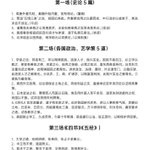
In 1904, the Qing Dynasty held its final imperial exam. Look at the questions.
They are being tested on ancient history, but the essay prompts are about modern geopolitics: Why did Japan succeed with foreign experts while Egypt went bankrupt? How should China respond to the US Chinese Exclusion Act?
A dying empire, trying to answer the 20th century using the philosophical tools of the 10th. It’s a fascinating and tragic collision.
What’s an institution in our world today that is using the "old rules" to solve brand new problems?

1
49