

We aim to show you a true, comprehensive, and multi-dimensional Xinjiang!
Xinjiang
Joined June 2023
- Tweets2.4K
- Following228
- Followers31.6K
- Likes544






Shayuanzi, a traditional Chinese medicinal herb, is ready for harvest in trial fields in Yanqi at the southern foot of the Tianshan Mountains. Drought-resistant and hardy, it fits the local dry climate. Growing Shayuanzi not only stabilizes sand and optimizes land use but also opens up new income sources for local farmers 🚜. #XinjiangNow

Trial plots of Shayuanzi (Astragalus complanatus) in Yanqi County, on the southern foothills of the Tianshan Mountains in Xinjiang, are now ready for harvest.
A traditional Chinese medicinal herb, Shayuanzi is believed in TCM to nourish the liver, improve eyesight, tonify the kidneys and consolidate essence. Drought‑resistant and adaptable to poor soil, it thrives in the local arid climate. Once sown, it can be harvested for years with low maintenance costs and fairly steady market demand. Local farmers are trialling this medicinal crop to match regional climate and soil conditions, making better use of land and opening an extra stream of income. In Xinjiang, herb cultivation and sand fixation go hand in hand — bringing in harvests while protecting the land.
42
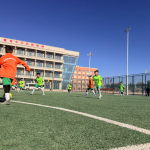
Supported by paired assistance from Shenzhen, the youth football training base in Kashi builds a complete youth training and competition system. Local kids receive systematic football training here. Former local female players return as coaches, nurturing promising young footballers and helping them pursue their football dreams ⚽️.#XinjiangNow
english.ts.cn/system/2026/11…

34
Thirty thousand sugarcane plants introduced from Guangxi and planted in April are ripe in Kunyu, Xinjiang. They feature thick stalks and thin crisp rind with sugar content up to 16.9 Brix. The yield reaches 6-8 tonnes per mu, bringing a sweet harvest right beside the desert.🎋#XinjiangNow
Recently, 30,000 sugarcane plants in Kunyu, Xinjiang are ripe for harvest. Imported from Guangxi and planted back in April, they now boast thick stalks, thin crisp rind and a sugar content of up to 16.9 °Brix. Yield hits 6–8 tonnes per mu (roughly 90–120 tonnes per hectare). A sweet harvest has bloomed right on the desert’s doorstep.
44
Used drip irrigation tapes gathered after autumn harvest in Xinjiang are crushed, cleaned and reprocessed into raw materials to make brand-new tapes. This smart circular loop curbs plastic pollution in farmland soil, eases farmers’ financial burden and gets materials ready for the coming spring ploughing 💧.#XinjiangNow
Where do old drip irrigation tapes removed after harvest end up? In Xinjiang, they get recycled and put back into use. After autumn harvest, used drip tapes from local farmland are collected centrally, then crushed, washed, purified, melted and pelletised into recycled raw materials to manufacture brand‑new drip tapes for the fields. This closed‑loop system recycles agricultural supplies, cutting plastic residue in soil, lowering farmers’ input costs for the next growing season and stocking materials ahead of spring ploughing.
1
56
Benefiting from favorable climate and agricultural technologies, Beitun City of Xinjiang develops its sunflower seed sector via contract farming. Local high-quality sunflower seeds are processed by enterprises in the industrial zone. The products are exported to 32 countries and regions, bringing steady income for local growers 📦.#XinjiangNow
english.ts.cn/system/2026/11…

1
42
As Xinjiang’s representative performance, The Wonder Ball of Yutian was staged at the 2026 China Sports Culture Expo & China Sports Tourism Expo in Suzhou. Adapted from Maire Ball, the state-level intangible cultural heritage Uygur hockey, it marks the show’s first performance outside Xinjiang 🏉. #TrendingXinjiang
english.ts.cn/system/2026/11…


62
Peacekeeper Elite launched its "Snowy Xinjiang: Altay" themed map, faithfully recreating local landmarks including Xinjiang Jiangjunshan Ski Resort and Xinjiang Hemu Village. It features distinctive local elements such as Altay big-tailed sheep and dombra. The "gaming + tourism" project will also host offline activities to encourage players to visit real Altay ❄️. #TrendingXinjiang
english.ts.cn/system/2026/11…

1
1
47
Horgos Port in Xinjiang, a major land port for vehicle exports, has greatly improved customs clearance efficiency. It is shifting from pass-through trade to local development. Cross-border e-commerce and processing industries have settled here, attracting enterprises and talents, turning its transit location advantage into tangible industrial gains 🚛. #XinjiangNow
english.ts.cn/system/2026/11…

1
1
51
The 4th Xinjiang "Atushi Cup" Football Invitational opens on November 13 at the Football Park in Atushi, northwest China's Xinjiang. 15 teams from different prefectures across Xinjiang gather here to compete. Laughter and shouts fill the air, and everyone here is caught up in the fun of football ⚽. #XinjiangNow


32
Check out how Xinjiang’s seed cotton, known as "white bread", is compressed and baled! Once sealed and wrapped, the bales shrink to one-third of their original volume. Windproof, rainproof and moisture-proof, they can stay outdoors for up to 24 months, which takes a lot of the stress out of storage 👏.#XinjiangNow
Take a look at Xinjiang’s cottonseed “white bread” being produced! This video shows the whole compression and baling process of seed cotton. Once sealed and wrapped, the bales shrink to one-third of their original volume. Windproof and rainproof, they resist moisture even in open-air storage and can be kept outdoors for up to 24 months, greatly easing storage strain.
1
59
Akto’s intangible cultural heritage pottery has been revived through technical cooperation with Jingdezhen. Ubultalip Aji, the inheritor from Akto, Xinjiang, traveled to Jingdezhen, Jiangxi to learn advanced ceramic skills. They built the "Miras" brand, upgraded techniques and equipment. The yield rate rises greatly. The pottery features delicate carvings, wins wide recognition, and brings stable jobs and income for local villagers ⚱️. #XinjiangNow
english.ts.cn/system/2026/11…


36
The vast Taklimakan Desert in Xinjiang enjoys abundant sunshine all year round, creating perfect conditions for building photovoltaic power stations. In early November, Tarim Oilfield secured more than 5 million green power certificates, among which 2.92 million have been listed and sold. Each certificate represents 1,000 kWh of renewable electricity. The booming clean energy sector cuts carbon emissions remarkably, marking Xinjiang’s steady strides toward green and low-carbon growth ⚡️. #XinjiangNow
As of November 2, Tarim Oilfield in Xinjiang has obtained over 5 million green power certificates, of which 2.92 million have been listed and sold. Clean electricity generated from the Taklimakan Desert is gaining market traction.A green power certificate serves as a “green ID” for renewable electricity, with each certificate representing 1,000 kWh. Five million certificates equal 5 billion kWh of clean power, capable of replacing roughly 1.5 million tonnes of standard coal and cutting 2.92 million tonnes of carbon dioxide emissions.The Tarim Basin enjoys 2,600–3,400 hours of sunshine every year, making it ideal for photovoltaic power stations. Tarim Oilfield has completed five large-scale PV plants with a total installed capacity of 2.6 million kilowatts. The sale of these 2.92 million certificates marks market recognition of the environmental value of more than 2.9 billion kWh of green electricity.
1
58
It's moving day for yaks in Xinjiang!
Bound for winter pastures, herds kick up clouds of dust in a spectacular seasonal migration across Zhaosu County 🦬. #XinjiangNow
english.ts.cn/system/2026/11…
50
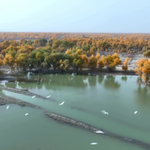
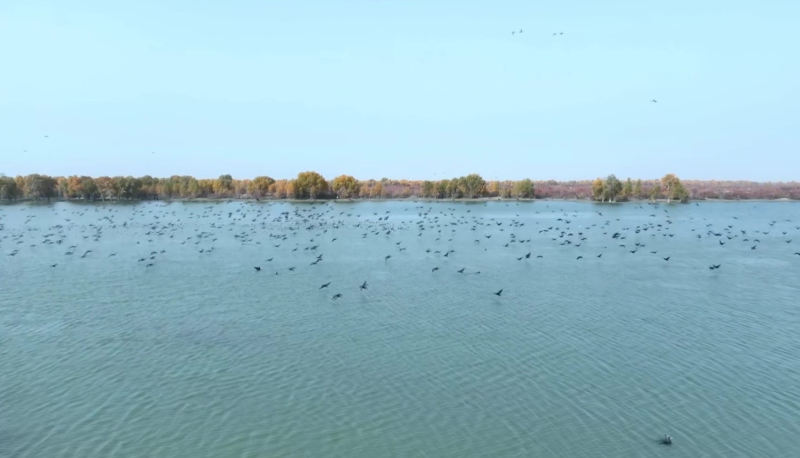
Euphrates poplars have turned the Caohu pasture wetland in Luntai County, Bayingolin, a brilliant gold as autumn migration peaks. Hundreds of thousands of migratory birds have settled on the water to rest and feed, a sign that years of ecological restoration along the Tarim River are paying off 🦤. #IncredibleXinjiang
english.ts.cn/system/2026/11…


1
71
At Kekeya Memorial Hall in Aksu, NW China’s Xinjiang, visitors can trace the full story of the Kekeya Greening Project. Explore satellite images, historical records and exhibits that show 40 years of continuous efforts to fight desertification and the remarkable ecological gains achieved on once-barren land.


50
At Hongqipo’s apple orchard in Aksu Prefecture, NW China’s Xinjiang, the famous “crystal sugar heart” apples thrive thanks to perfect latitude, abundant sunshine, and snowmelt irrigation. These crisp, sweet apples with their unique amber sugar cores truly showcase the charm of premium, specialty fruit farming.


53
In Aksu Prefecture, NW China’s Xinjiang, a rich variety of camel-related products are being developed, including organic camel milk powder, camel wool garments, and mattresses. These products serve as a vivid example of the local camel industry.


45
American cyclist Alex K. was rescued by local police and herders during a snowstorm in Xinjiang in 2024. This summer he revisited Xinjiang. He toured the Grand Bazaar and cycled toward Horgos Port for Central Asia. Deeply moved by locals’ kindness, he hopes to come back to explore Xinjiang’s scenery and cultures. #XinjiangStory
english.ts.cn/system/2026/11…
54
Adopting the "enterprise + cooperatives + farmers" model, a local agricultural firm in Xinjiang Kashi processes local dried fruits. Supported by R&D and multi-channel sales, it raises product value and builds brands. The firm ensures stable purchases from growers, lifts orchard incomes, creates local jobs and helps tens of thousands of farmers earn more 👍. #XinjiangNow
english.ts.cn/system/2026/11…


29
Alar in Xinjiang makes use of local saline-alkaline water to develop aquaculture. Technicians adjust water components to breed mud crabs, sea bass, shrimp and other aquatic products. The farming area keeps expanding. Boasting clean water, the base produces high-quality seafood, bringing remarkable economic gains to the region 🦀.#XinjiangNow
english.ts.cn/system/2026/11…


1
57