

We are a Christian relief, development and advocacy organisation, working with the most vulnerable because Jesus is alive in the hardest places to be a child.
Joined March 2008
- Tweets16.7K
- Following29.2K
- Followers978K
- Likes20K


Pinned Tweet
We’re streamlining our presence here. This account will now be dedicated to sharing our media releases and breaking news. For stories, updates, and behind-the-scenes content, connect with us on our other social channels. We’d love to stay in touch there!
Cash is not the destination. Local power is.
In his latest op-ed, Isidro Navarro Paya calls for a humanitarian system where communities shape decisions, control resources, and lead responses that affect their children and futures.
The article highlights how the growth of #Cash and Voucher Assistance across the humanitarian sector, including through organisations such as the @WFP has demonstrated that people make sound decisions when trusted with resources. It further reflects the importance of accountability and participation principles championed by @UNOCHA in ensuring decisions are shaped by those most affected by crisis.
Read the op-ed and join the conversation on what genuine localisation looks like in practice.
ow.ly/7fgW50ZXt7g
#Localisation #CVA #ChildRights #CashAssistance #HumanitarianAction

Imagine working more than four full days just to afford a basic basket of food.
That's the reality highlighted in our 2026 Price Shocks report, which found that workers in the countries analysed would need an average of 34.3 hours of labour to purchase a standard basket of essential foods.
Behind every statistic are families making difficult choices: fewer meals, mounting debt, postponed healthcare, or children leaving school.
In this new article, Paul Kinuthia explores why food affordability is one of the defining challenges facing children today, and what governments, donors, and humanitarian partners can do about it.
Read the article and discover why affordability, not availability, is increasingly at the heart of the global hunger crisis: ow.ly/5WsC50ZZ38i

Human capital doesno't begin when someone enters the workforce.
It starts in childhood through access to health, nutrition, education, protection and opportunity.
As the World Bank Annual Meetings focus on jobs, growth and economic transformation, one reality should remain front and centre: the workforce of tomorrow is shaped by the investments we make in children today.
Our future begins with children.
@WorldBankGroup
@UNICEF
@ADB_HQ
@UNDP
@IMFNews
#WBGMeetings #WorldBank #HumanCapital #DevelopmentFinance #FutureOfWork


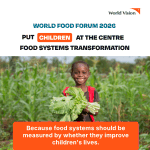
Children experience hunger and food insecurity directly, yet their perspectives are often missing from food systems discussions.
At the World Food Forum 2026, we're calling for children's nutrition, well-being, and voices to be at the heart of every decision.
Meaningful participation leads to more relevant, effective, and accountable solutions. If food systems are to deliver lasting results, children should be participants, not mere observers, in the decisions that shape their food, nutrition, and future.
@WorldBankGroup @UNICEF @nopovertyhunger @WFP @FAO
#WFF2026 #WorldFoodForum #ChildrenFirst #FoodSystems #Nutrition #FoodSecurity #EndHunger #ENOUGH #FoodSecurity #Hunger #FoodSystems # #GlobalAlliance


Rising Food Costs Are Putting Children’s Future at Risk
• Workers in some countries need weeks of labour to afford a basic food basket.
•
Healthy diets remain out of reach for one in three people globally.
•
Children are among the hardest hit, with 35.5 million acutely malnourished worldwide in 2025.
FOR IMMEDIATE RELEASE
- "There are days when my children eat rice with only oil and salt. This is no longer occasional; it has become a daily reality."
For Khin, a mother of eight living in Myanmar's Yangon Region, the food affordability crisis is measured by what she can no longer put on the table. As conflict, economic hardship, and displacement have eroded families' ability to afford food, the money she earns is no longer enough to buy the foods her children once ate regularly, such as chicken or fish. Instead, she looks for the cheapest ingredients she can find.
Khin's story reflects the experience of millions of families around the world highlighted in World Vision's 2026 Price Shocks Report, which finds that food affordability remains a critical challenge for children and families and a clear measure of global inequality.
World Vision's fifth annual food basket survey examined how far families' earnings stretch across 62 countries by comparing the cost of a standard basket of food with average wages. The findings reveal a stark divide in what families can afford.
While workers in high-income countries such as Ireland, the United States, and the United Kingdom can afford a food basket in just over one hour, workers in the least affordable countries require several days or weeks to buy the same basket. In the Central African Republic, it takes almost 30 days of earnings to purchase it.
According to the State of Food Security and Nutrition in the World (SOFI) 2026, global hunger has eased for a third consecutive year. However, progress remains uneven, and healthy diets remain unaffordable for around one in three people globally. World Vision's findings show how rising food costs can leave families with fewer choices, forcing them to buy less food, choose cheaper or less nutritious options, take on debt, sell assets, or go hungry.
For children, the consequences can be immediate and long-lasting. In 2025, an estimated 35.5 million children were acutely malnourished worldwide, including nearly 10 million with severe acute malnutrition. Malnutrition can harm children's physical and cognitive development, weaken their immunity and increase their risk of death. These impacts can continue throughout childhood and into adulthood and are not always easily reversed.
Conflict, displacement, economic crises, and climate change can make these pressures even worse by disrupting livelihoods, markets and supply chains, and making nutritious food harder for children and families to access. Across 47 comparable countries, food basket costs increased in 33 countries and decreased in 14, with the average increase far exceeding the average decrease.
The cost of food is more than a measure of prices. When families cannot afford nutritious food, children can pay the highest price through poorer nutrition, lost opportunities to learn, and risks to their health, safety, and future.
Governments, donors, businesses, and international institutions must make food affordability and children’s access to nutritious food a priority. World Vision calls for action to:
• Protect children during shocks through expanded school meals and stronger social protection programmes.
•
Invest in resilient local food systems and livelihoods that can withstand future crises.
•
Address the conflict, climate, and economic pressures that continue to keep nutritious food out of reach for millions of children and families.
•
Ensure people and communities affected by conflict and displacement can access timely, nutritious food assistance, while supporting pathways towards longer-term food security.
###
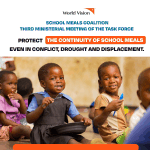
At the #SchoolMealsCoalition Ministerial Meeting, organised by the @SchoolMeals_ Coalition Secretariat led by the @WFP, we're advocating for school meals that protect children's nutrition, learning and future opportunities.
Our #PriceShocks5 report findings show rising food costs are pushing healthy diets further out of reach. Strong advocacy means connecting children's realities to policies, budgets and accountability.
Because advocacy succeeds when it closes the distance between a global promise and a child's plate.
#SchoolMeals #FoodSecurity #InvestInChildren

As the World Bank Annual Meetings convene in Bangkok, much of the conversation will focus on jobs, productivity, digital transformation and economic growth.
But one issue sits underneath all of them.
The future of East Asia's workforce is already being shaped by climate pressures, migration and demographic change. Yet policy debates often treat these as separate challenges rather than part of the same human capital story.
If children and young people are moving across borders, facing disrupted education, or struggling to access basic services, what does that mean for the region's long-term economic trajectory?
The most important question may not be how many jobs economies create, but whether development investments are building the capabilities and resilience future workers will need.
As discussions on IDA21 implementation and IDA22 priorities advance, how should the World Bank measure success in building the workforce of tomorrow?
Read the full article at ow.ly/8SEj50ZX8nj
@WorldBankGroup @UNICEF @ADB_HQ @UNDP @IMFNews @WBG_IDA
#WBGMeetings #WorldBank #HumanCapital #DevelopmentFinance #FutureOfWork

World Vision is deeply concerned following the Ministry of Health's confirmation of Kenya's first imported case of Ebola (Bundibugyo) virus disease. Preventing further transmission is now critical.
@WorldVisionKE is strengthening infection prevention measures and working with health authorities to protect children and communities.
Containing Ebola requires equipped health workers, accurate information to counter fear and stigma, and strong regional cooperation.
Children must remain at the centre of the response. World Vision stands ready to work with governments and partners to prevent further transmission and keep communities safe.


In Lebanon this week with partners from @UNICEF and @Refugees, UNHCR, the UN Refugee Agency, our, Disaster Management, Global Lead, Isabel Gomes, met local community members, including, children, teachers, responders and community leaders affected by conflict. Children’s needs still remain urgent, and lasting recovery depends on strong partnerships, local leadership, and sustained support. Together, we must keep protection, wellbeing and hope at the centre of our efforts. #Lebanon #ChildrenFirst #HumanitarianAction

For children and families affected by conflict in #Lebanon, protection and essential services cannot wait.
Many continue to face displacement, disrupted services and protection risks.
During a joint inter-agency mission, senior global emergency representatives from UNICEF, @UNHCRLebanon and @wvlebanon met with affected families and engaged with Government and local authorities, humanitarian partners, NGOs and donors to hear first-hand about needs and challenges on the ground.
The mission looked at increasing needs, humanitarian access constraints, coordination, and how reduced funding is affecting partners’ ability to sustain essential services and emergency response capacity.
The message was clear: sustained and coordinated action is critical to protect children and families, maintain essential services and strengthen preparedness.


Now that UNGA81 is over, the most important work is only just beginning.
Global gatherings play a vital role in building consensus, shaping priorities, and reinforcing a sense of shared responsibility for the challenges ahead.
Their lasting impact, however, is determined long after the final speeches and meetings conclude.
The months ahead offer an opportunity to translate commitments into meaningful progress, strengthen confidence in international cooperation, and demonstrate the value of collective action where it matters most.
The measure of success will not simply be what was agreed in New York, but how effectively those ambitions are carried forward.
What outcomes would you most like to see achieved before leaders return for the next General Assembly?
Read the full piece at ow.ly/uZIr50ZTMmm
@UN @UNICEF @EduCannotWait @WorldBankGroup @UNDP @AUC_MoussaFaki @WHO
#Multilateralism
#ChildRights
#DevelopmentFinance
#GlobalGovernance
#TrustInInstitutions

Malnutrition affects millions of children, yet progress remains stubbornly slow. What if we focused more on prevention, local food solutions, and listening to communities? A thought-provoking read from Dan Irvine: ow.ly/EBK650ZTkli


Escaping extreme poverty is not about one opportunity. It's about overcoming many obstacles at once.
When families are facing food insecurity, limited resources, and repeated shocks, even small setbacks can have lasting consequences.
Our Ultra Poor Graduation approach supports families through a carefully designed journey that helps them create livelihoods, grow their assets, and build resilience for the future.
Because lasting change happens when families have the tools to lead their own progress.
Swipe through to discover the steps behind the approach. →


Donor funding delivers greater impact when communities are part of the solution. Through our food assistance approach that links immediate food security support with protection, accountability, market awareness, climate responsibility, and long-term resilience, we're committed to save lives today while contributing to stronger systems for tomorrow.
With partners including the @WFP , local actors, governments and communities, World Vision ensures food assistance protects children, respects dignity, and strengthens resilience.
Read more about how World Vision protects children and strengthens resilience through food assistance
ow.ly/uvQN50ZTkeg
#HumanitarianAction #FoodSecurity

Sustainable change requires more than short-term solutions. Livelihood programmes help families increase their incomes, strengthen resilience, and reduce vulnerability to poverty.
In 2025, these efforts reached 1.7 million children and 700,000 families around the world.
Key results included:
• 150,000 ultra poor households receiving productive assets
• 100,000 Savings for Transformation groups supported
• 100,000 people participating in Local Value Chain Producer groups
These achievements reflect what's possible when communities, partners, donors, and local leaders work together to create opportunities that last.
Swipe to explore the impact and learn more.


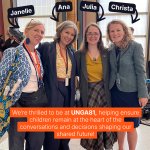
As #UNGA81 draws to a close, one message stands out: the decisions made today will shape the world children inherit tomorrow.
Throughout the week, World Vision engaged with partners, policymakers and global leaders to help ensure children's rights, well-being and future opportunities remain at the heart of global discussions. We were encouraged by the commitment to tackling shared challenges and advancing solutions that can deliver lasting change for children and communities.
The conversations may be ending, but the work continues. Together, we can help build a better future for every child.
#ForChildren #ChildRights #UNGA81


PRESS RELEASE: One Month On: Nepal's Flood-Affected Children Still Carry the Weight of Loss
A month after flash floods devastated Rasuwa and Nuwakot, World Vision International Nepal has reached more than 8,600 people-but children's safety, dignity and education remain urgent priorities as the response shifts from relief toward recovery.
26 September 2026, Kathmandu, Nepal- Children are the most vulnerable in any disaster. One month after glacier-triggered flash floods tore through Nepal's Rasuwa and Nuwakot districts, children remain at the centre of a slow and difficult recovery. An estimated 22,000 children have endured- homes destroyed, routines shattered, and for many, the loss of family members, friends and classmates. According to Nepal's National Disaster Risk Reduction and Management Authority (NDRRMA), the disaster has claimed 1,451 lives, with 5,786 people, including 587 foreign tourists, still missing as of 20 September.
Learning remains disrupted for 9,800 children across 32 schools in the worst-affected districts, 18 of which were fully or partially destroyed. The Education Cluster has documented 267 students, teachers and other school staff who remain missing in Rasuwa. Displacement, family separation and disrupted services have also heightened protection risks for children.
“One month on, for many children in Nepal, the crisis is still not over,” said Roslyn Gabriel, National Director, World Vision International Nepal, “Children are trying to make sense of what they have lost. There are children who lost their homes, their schools and in some cases their loved ones.”
“At this critical stage, children need more than food and shelter. They need safe spaces to heal from the trauma, protection from the heightened risks that come with displacement, access to clean water and sanitation, and the opportunity to return to learning and regain a sense of normalcy. These are essential to a child’s recovery and wellbeing,” she said
A month of fear that hasn’t fully faded
“The flood did not only wash away our homes, it took away our children’s sense of safety,” said Smita, a grandmother sheltering with her family in Nuwakot. “Even today, whenever there are safety announcements on floods, the children panic and prepare to run despite their parents reassuring them that the flood wouldn’t reach this center. The children cry and beg us to leave, convinced the river would overflow right up to here. Their minds are completely consumed by that fear.”
Dignity denied - the hidden toll on adolescent girls
Access to menstrual hygiene has emerged as one of the more overlooked struggles of displacement. Fourteen-year-old Prinsha and 17-year-old Suvekshya, both sheltering in evacuation centres, described the fear and indignity of managing their periods without basic supplies or privacy.
“I was scared that my periods would come since I did not have sanitary napkins. My mother was praying that I don’t get my periods,” said Prinsha, 14.
“Being displaced by the flood was frightening, but what made it even harder was managing my period without access to sanitary materials, clean clothing, or privacy. I was fortunate that a friend provided the supplies I needed,” said Suvekshya, 17.
WVI Nepal's dignity kits- which include sanitary pads alongside soap, underwear and other essentials- have so far reached 489 women and girls, though the response's own field assessments confirm the need remains far greater.
Income – the biggest worry of the parents
“Our restaurant was our family’s only source of income. It allowed us to provide for our children’s education and meet their everyday needs. Now that we have lost it, I do not know how we will manage. More than anything, I worry about my children’s future,” said a mother of two, who lost her restaurant.
For affected families, restoring livelihoods is an essential part of recovery. Without timely support, families may be forced to adopt negative coping strategies, including borrowing, selling remaining assets, and reducing food consumption.
The impact can be particularly significant for children. Prolonged household food insecurity can increase risks related to malnutrition, interrupted education and child labour.
World Vision International Nepal’s Response so far
World Vision follows the One-Door Policy of the government in this disaster response, working through trusted local partners KIRDARC Nepal and Good Neighbours Nepal (GNN), ensuring compliance with national regulations.
As of 20 September, WVI Nepal has reached 8,684 people, including 3,521 children and 258 people with disabilities
3,750 people have been assisted through 750 emergency 15-day food packages
116 children supported through 2 Child Friendly Spaces (CFSs)
455 people (including 182 children) supported with shelter kits
2,325 people (including 930 children) provided with hygiene kits
555 women and girls provided and benefitted with dignity kits
395 people benefitting from 169 kitchen sets
860 people supported through 172 bedding sets
33,700 aqua tabs distributed for household water purification
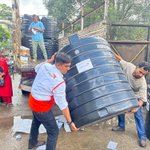
50 water tanks (1000 L capacity each) and pipe sets provided
Office equipment provided to 4 institutions (1 health post, 1 ward office and 2 municipality offices) in Rasuwa enabling them to restart essential services in Uttargaya and Gosainkunda Rural Municipalities of Rasuwa district.
3 volunteers mobilized to support local government in collecting detailed data on people staying in evacuation centres.
Two 110 kVA stabilizers were handed over and installed for the Bidur Water Users' Committee in Bidur Municipality, contributing to the uninterrupted supply of safe drinking water for approximately 25,000 people, including 10,000 children.
“This is a response of hope and it goes beyond these emergency supplies we’ve been able to provide,” says Roslyn Gabriel, National Director, World Vision International Nepal, “The most important part in our response is that we are present for the affected children and their families. They are heard, they are seen and that they are not alone.
“Hope is not just a feeling. But hope has to be supported by action. For a child, hope is having their basic needs met, a safe place to sleep, a school to return to, and people who will stand beside them as they rebuild. That is what we want to help make possible,” she says, “Our partners on the ground also work extremely long hours in very challenging circumstances. Without their work we wouldn’t have been able to reach these many individuals on our own.”
The road to recovery
The three-month emergency relief period runs to 30 November focusing on emergency food assistance, access to clean water, shelter kits, non-food and hygiene kits, and child protection.
After this, a 12-month early recovery phase will begin, focusing on livelihoods restoration, safe return to learning, shelter rehabilitation, restoring long term access to inclusive health, education and WASH facilities, and building stronger local child and woman protection systems.
The response is funded through a US$4 million appeal-US$2 million for emergency relief and US$2 million for early recovery. To date, more than US$3.5 million has been confirmed through World Vision Support Offices and partner funding, including Australia's DFAT and New Zealand's MFAT, leaving a gap of approximately US$440,000.
WVI Nepal thanks its local partners, KIRDARC Nepal and Good Neighbors Nepal, and the Government of Nepal, including NDRRMA and local authorities in Rasuwa and Nuwakot, for their coordination and leadership throughout the response.
Our heartfelt gratitude also goes out to the donors and partners whose generosity has helped us bring immediate support for those most in need.
For further information, contact:
Uma Thapa
Communication Manager
World Vision International Nepal
Email: [email protected]
Notes for the editor:
World Vision International (WVI) Nepal is a part of the World Vision International global partnership operating in around 100 countries. WVI started its long-term development program in Nepal in 2001 to contribute for the well-being of children. Today, WVI Nepal implements development programmes in 17 districts, supporting vulnerable children, families, and communities to build a better future.
World Vision is a child-focused relief, development, and advocacy organization that has contributed to the transformation in the lives of millions of children around the world in vulnerable situations. WV aspires to achieve this through a partnership with local communities, civil societies, government, and private sectors where we believe in mutual participation and trust, shared vision and goal, accountability, and responsibility. We are child child-focused organization driven by Christian values to serve children and families regardless of their religion, age, gender, ethnicity, class, and caste.


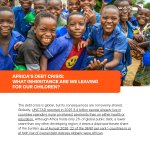
Debt discussions usually focus on repayment. Perhaps they should focus more on inheritance.
The real question is not whether future generations will repay today's debt, but whether they will inherit the benefits of the borrowing that created it.
Should debt sustainability frameworks measure what is left behind for children, not just what is owed?
Read the full article: ow.ly/ajat50ZRcFm
@UNCTAD
@WorldBankGroup
@UNICEF
@AfDB_Group
@OECDdev
@FinDevLab
#DebtSustainability #FinancingForDevelopment #PublicFinance #DevelopmentPolicy #AfricaDevelopment

In humanitarian response, a cash transfer is only as strong as the currency behind it.
As inflation and currency depreciation accelerate across fragile contexts, @Youssef_Mhanna_ , our Senior Technical Advisor, Cash Voucher and Market Based Programming, raises an alarm of how humanitarian assistance can lose value before it reaches families. For children, that means fewer meals, less education, and futures at risk. In places like #Lebanon and #Sudan, protecting purchasing power is becoming just as important as delivering assistance.
Innovative solutions already exist. We must move beyond delivering #cash, to protecting its value. With partners such as @WFP @UNICEF @UNOCHA World Vision is ensuring aid keeps pace with economic realities and delivers what children need most.
As leaders gather for #UNGA81, discussions on humanitarian financing, economic resilience and support for vulnerable communities must include how we safeguard the real value of #cashassistance for children and families.
Read to learn more:
ow.ly/xmB750ZQOS3
#FoodSecurity #ChildrenFirst #HumanitarianAction

What if every global decision began with one question: what will this mean for children?
At the 81st Session of the United Nations General Assembly, World Vision is calling for children to be placed at the centre of policy and financing decisions.
That means protecting investment in children, prioritising those living through conflict and crisis, listening to children’s voices, and strengthening partnerships that turn commitments into action.
Our future starts with children.
Visit World Vision at the #UNGA81 to explore our events, priorities, research, and perspectives.

‘No child should be a guinea pig for unregulated AI.’
Brazil protects 51 million children from manipulative AI. Elsewhere, millions of children face risks.
At the UN General Assembly, Governments must turn obligations into concrete action.
🔗Read our call: ow.ly/n3B650ZONLY


