

Former college player | 9+ yr Varsity HC Most programs lack systems, not talent I help coaches simplify & win ↓ Full toolkit
Joined February 2026
- Tweets775
- Following3.8K
- Followers1.9K
- Likes571


Pinned Tweet
Most teams have plays.
Few have a system.
That’s why:
Film doesn’t transfer
Practice feels random
Players hesitate on Friday
It’s not effort.
It’s lack of structure across:
• Film
• Practice
• Offense
• Defense
Everything has to connect.
I built a system that ties it all together:
Film → tells you what matters
Practice → trains it
Offense/Defense → executes it
Now players don’t guess… they understand.
I put the full system together here ↓
Understanding personnel should be one of the first things every young coach learns.
10 = 1 RB, 0 TE
11 = 1 RB, 1 TE
12 = 1 RB, 2 TE
20 = 2 RB, 0 TE
21 = 2 RB, 1 TE
First number = RBs.
Second number = TEs.
The rest are WRs.
But knowing the numbers isn’t enough.
Personnel tells you WHO is on the field.
Formation tells you WHERE you put them.
Same 11 players. Completely different pictures for the defense.
Learn personnel. Then learn how to manipulate it.
Motion should do more than change the formation—it should force the defense to communicate, adjust, and reveal its plan.
Use it to identify coverage, create leverage, gain numbers, and build better matchups.
Every motion needs a purpose.
Nasty splits aren’t just for blocking.
Reduce the WR to 1–3 yards outside the tackle and force the defense to adjust its leverage. Now you’ve created better blocking angles, more space outside, and natural traffic in the pass game.
Same alignment. Run and pass. Don’t let the split become the tendency.
The H-back is one of the most valuable pieces in an offense.
He can insert on linebackers, kick out the edge, lead through the hole, sift across the formation, release into the flat, or work the middle of the field.
The key is making sure he isn’t a run-only player.
If the defense knows his movement always leads them to the football, you’ve created a tendency. Build runs, play-action passes, screens, and boots from the same alignment and initial movement.
Same personnel. Same picture. Multiple answers.
That’s how you make the defense hesitate—and hesitation creates offense.
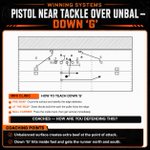
DOWN “G” FROM PISTOL UNBALANCED 🔥
The offense creates an extra surface at the point of attack, forcing the defense to adjust its front and account for another gap.
The goal is simple: create numbers, widen the edge, and hit the crease inside the kick-out block before the defense can react.
If the defense doesn’t recognize the unbalanced surface before the snap, Down “G” can create a major numbers advantage at the point of attack.
Coaches—how are you adjusting your front and defending this?

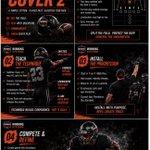
Cover 2 isn’t complicated—when everyone understands the system, communicates, and plays with discipline.

Most quarterbacks don’t need a stronger arm.
They need a better throwing motion.
The biggest problems I see:
• Poor base
• No hip-shoulder separation
• Arm-dominant throws
• No weight transfer
• Inconsistent finish
Velocity comes from sequencing—not muscling the football.
Build the movement pattern first.
Arm strength becomes a byproduct.
What’s the most common throwing flaw you see in young QBs? 👇
The more 7-on-7s I watch…
The more convinced I become that we’re confusing entertainment with development.
Don’t get me wrong, we do 7-on-7s, and I absolutely believe there are benefits.
QB timing.
WR chemistry.
Communication.
Coverage recognition.
Competition.
Those things matter.
But somewhere along the way, the focus shifted.
Instead of using 7-on-7 as a tool to develop better football players, we’ve turned it into a summer spectacle.
Football is still won by blocking, tackling, physicality, discipline, and execution.
If your July doesn’t make you better in November…
What’s the point?
Coaches spend too much time chasing the next great play.
Great programs spend their time building better players.
Players who understand the game.
Players who communicate.
Players who execute under pressure.
The playbook matters.
Player development matters more.
Build the player.
The plays will take care of themselves.
Choice routes aren’t about giving receivers freedom.
They’re about teaching them to make the same decision your QB would make.
If they see the field differently, the route is already broken.
Has anyone ever thought about this…
Every mistake in practice is data.
It tells you what needs to be taught better.
Use the data you collect!!!
Stop buying plays.
Start building a system.
The coaches who consistently win aren’t searching for the next trick play every offseason.
They’re refining a system their players understand.
A system their coaches can teach.
A system that holds up when the pressure is highest.
That’s exactly why I created Winning Systems.
Every resource is designed to help you:
✅ Build a clear identity
✅ Organize practice with purpose
✅ Teach faster
✅ Develop players more consistently
✅ Stop starting from scratch every year
Don’t just collect PDFs.
Build a program that gets better year after year.
👇 If you’re ready to coach with a system instead of chasing ideas, check out the Winning Systems resources. The link is in my bio.


Great coaches don’t spend every offseason changing everything.
They spend every offseason making everything better.