

PhD Student @UCBerkeley, former @JPAL/@LSEEcon. Development economics, global health, economics of science, et al. 🏳️🌈
Berkeley, CA
Joined June 2020
- Tweets483
- Following585
- Followers902
- Likes2K


Pinned Tweet
Move to Berkeley: complete! ✅
Turns out that what it lacks in affordable one bedrooms it makes up for in world class trail running! 🌄🏃♂️


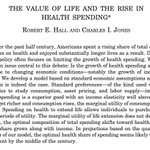
Hall & Jones (2007) is one of my favorites!
Why do rich countries spend so much more on health than poor ones?
An elegant answer: if utility is concave in consumption, then the value of extending life outpaces the marginal utility of consumption fairly quickly


BREAKING NEWS
The Royal Swedish Academy of Sciences has decided to award the 2026 Sveriges Riksbank Prize in Economic Sciences in Memory of Alfred Nobel to Robert E. Hall and Michael Woodford “for microeconomic foundations of macroeconomic stabilisation.”
#NobelPrize


Neat paper!
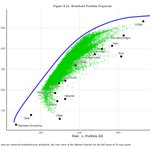
Small-scale farmers in low-income countries are solving an incredibly sophisticated portfolio optimization problem under difficult conditions.
Even so, many farmers are close to the efficient frontier. Unconditional cash helps them get even closer.


Does cash enable farmers to take on more risk? @vinnyarmentano applies Modern Portfolio Theory to crop choice in Mali and shows instead that an unconditional cash transfer reduced portfolio risk with no return penalty.
Read more: vincentarmentano.com
#EconJobMarket

A non-exhaustive 🧵 of my (many) favorite Michael Kremer papers:
1. Quirks in market incentives can lead to an undersupply of preventive drugs, relative to cures
An elegant case for why pharmaceutical companies might underinvest in some vaccines


ANNOUNCEMENT: Michael Kremer appointed as World Bank Group Chief Economist and Senior Vice President for Development Economics. bit.ly/4cQg0zT

5. Deworming improves health & school attendance for kids in Kenya, but efforts to sustain treatment without outside intervention largely failed
Willingness to pay for health products with large ROI is strikingly low


Wilson King retweeted

Mumbai has an elegant solution for slums: relocate residents to tall buildings on some of the slum real estate, develop the rest.
This is an elegant solution to the perpetual slum dilemma: cast out the poorest, or accept low value land use in perpetuity. Did it work? 1/

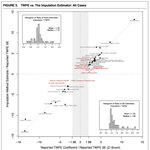
Beyond Albouy (2012), another AJR critique I’d appreciate more back-and-forth on as a reader:
Conley & Kelly (2025) argue that huge chunks of the history of econ development literature are over-rejecting the null by failing to adequately account for spatial correlation


Great new review article from Pascaline Dupas, with a new take on the Jeff Sachs vs AJR debate:
20+ years of rigorous, empirical evidence point to a strong role for geography in shaping econ development outcomes

Some interesting speculation on whether a focus on institutions, over geographic endowments, has given rich country voters less sympathy for foreign aid:


A huge share of DALYs lost today come not from an absence of new technologies, but incomplete adoption of existing ones: ORS, latrines, clean cookstoves, vaccines, bednets, etc.
Maybe AI will solve the adoption puzzle. My guess is probably not.

2/2 Second, on the messaging around AI. I do not agree that my messaging has been disproportionately negative. In fact it has been about equally balanced between risks and benefits: I’ve written one major essay about each, and even in interviews where I discuss the risks, I make sure to frequently mention the incredible benefits as well as proposing possible solutions to the risks (short clips from my interviews that end up on social media tend to be disproportionately negative, as that gets clicks). In fact, I wrote Machines of Loving Grace because I didn’t feel the AI industry was painting an inspiring enough picture of how the technology could radically transform the world for the better. The bulk of the essay is devoted to refuting skepticism of AI’s potential in health and biology, and showing why I think it will actually be possible to cure most human disease in ~5-10 years, as crazy as it may sound to ordinary people and frankly to biologists as well (I used to be one!). And, if you read my most recent essay (Policy on the AI Exponential), I discuss concrete proposals for how to streamline the FDA process to make sure the deluge of AI-accelerated drugs isn’t slowed down by the regulatory process. I feel the urgency here: I lost my father to Hepatitis C only a few years before the development of direct-acting antivirals (sofosbuvir), which cure 95% of patients and probably would have cured him.
I do agree that the public has a negative view of AI (and that this is a big problem), but I don’t think it is primarily caused by me or any other AI leader warning about AI’s risks. I think it is fundamentally a crisis of trust. I think that ordinary people don’t trust companies, governments, or the tech industry and always suspect that we are cooking up some new way to screw them over. The causes of this go back decades and AI is just the latest iteration of it. I don’t think that a glitzy marketing campaign with a positive spin (which some have advocated that Anthropic do) is the way to win back that trust — at this point, saying that AI will cure cancer is more a cliche than it is inspiring, and most people think it is deceptive. The thing that will work is *actually curing cancer*. I think by far the most accurate criticism of AI companies including Anthropic is that we haven’t yet delivered on our big promises to benefit the world. That is totally on us, and I think it’s the criticism you should be making, instead of all this stuff about messaging and marketing.
We are however doing our best to fix this: Anthropic is ramping up its efforts very quickly in biology and medicine, and we hope to have incredible results in the coming years and some early glimmers in the coming months. When we’ve actually accomplished something real, the whole world will hear about it, as loudly as possible, you have my word on that. But until then I don’t want to make empty promises, and in the meantime I feel compelled to speak honestly about the very real risks of AI and how to address them. Honesty is the right thing on the merits, and in terms of public credibility and trust it is no worse than, and may in fact be better than, an approach that ignores or distracts from risks which people instinctively understand are real.
Wilson King retweeted

Cool paper on the (beneficial) effect of delaying the start of primary school on academic outcomes, jobs, and even health


One paper forthcoming in AEJ-App estimates effects of starting primary school later in Lesotho + finds that later initiation⬆️ schooling; and ultimately ⬆️ prob of professional occupations, initiate marriage + childbearing later. w/@JWDeNeve @JacobBor
topcat.aeaweb.org/articles?i…


