

Ancient DNA, human health, and infectious diseases Junior Research Fellow at Magdalene College, Cambridge
Joined February 2009
- Tweets80
- Following1.1K
- Followers1.7K
- Likes1.2K






Will Barrie retweeted

Happy to see my work with Regev Schweiger @Regevschweiger and Richard Durbin @richard_durbin now published in Genetics! Link to paper: academic.oup.com/genetics/ad… (open access). A thread on the main ideas....1/n

How megaliths spread along the Atlantic seaboard has long been debated: was it an idea that spread, or did people actually move and bring this technology with them?
A new preprint by @hmcccoll shows that neither explanation is exclusively right.
biorxiv.org/content/10.64898…

They found that megaliths were spread within regions of Cardial-related ancestry, but only in the British Isles/Ireland coinciding with the migration. Elsewhere megaliths diffused across groups whose long-distance trade networks formed in the wake of earlier population movements.
So, some demic diffusion and some cultural diffusion. It seems like the Cardial-related ancestry formed the basis of long-distance trade networks, which later allowed a small number of seafaring people to spread the megalith building technology.
Great work @hmcccoll!
Will Barrie retweeted

Our paper on the evolutionary history and genetic diversity of Indigenous Americans is featured on the cover of Nature.

Absolutely thrilled to see our work featured on the cover of @Nature, with the stunning artwork of Emiliano Bellini! Deeply grateful to all collaborators, the Indigenous communities who made this work possible, and the funding agencies for their support!

Great to see that Akbari et al devote part of their paper (and 1/8 supplementary notes!) to assess our 2024 findings regarding selection on DRB1*15:01. They largely confirm what we found, but this is not how their findings are presented. So, I thought I’d write a short rebuttal:

Will Barrie retweeted

NEW Analysis of ancient DNA from monumental tombs in Neolithic northern Scotland suggests they were physical embodiments of prehistoric kinship, tracing lineages over centuries.
🆓 doi.org/10.15184/aqy.2026.10…
@cardiffuni @UniofNewcastle
Will Barrie retweeted

Pretty cool map of Anglo-Saxon and Brittonic sites over time in the UK.
reddit.com/user/ChromedDrago…

I wrote a short review article on the evolutionary origins of MS from an aDNA perspective. This link gives free access. My key points🧵:
tinyurl.com/2s4zm55d

... zoonotic infections resulting from their pastoralist lifestyle. It is possible that this may have occurred in a context of high levels of anti-inflammatory helminth infections, which resulted in a balanced pro- and anti- inflammatory response.
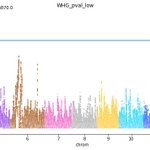
Last week I posted about the legacy of WHG ancestry in modern British genomes. But what about the Neolithic transition? We carry about 50% 'Anatolian farmer' ancestry, but it's not evenly distributed across the genome, and it tells an equally striking story. A 🧵:

Diet, density, new diseases. The selective pressures visible in Farmer ancestry in modern genomes are consequences of the agricultural transition: a 6,000-year-old set of adaptations, still legible in British genomes today. /end