





Weco AI retweeted

I'm a bit shocked that our RSI system (AIDE²) actually discovered a similar mechanism.
I initially thought it was a weird mechanism that had slipped through due to some lucky evaluation noise. But after reading this more rigorous study, it now makes sense to me.


Fork-and-Flush: help your agents escape Idea Basins!!
I love thinking of AutoResearch as Idea Descent: a metric of interest goes down, as a function of ideas/experiments, where the agents get pulled towards one idea or another. But we've seen very often an agent develop this weird tunnel vision, and honing in just one type of "idea", kinda like GD stuck in a local minimum.
We studied this and seems we can fix it with Fork-and-Flush, a super simple and kinda cute idea. Every so often, fork the agent into T copies in the same workspace but empty the context, let them run for a bit, and continue from the best one.
If you like the GD analogy, it's basically basin hopping en.wikipedia.org/wiki/Basin-….
BTW we found a silly way of also plotting "idea basins": an LLM rewrites every experiment as a spec and answers a few thousand binary queries "is Experiment A closer to B or to C?". Then we embed this NXN matrix into 2D and indeed see in many cases that each run saturates into a small region and keeps polishing it.
We call these idea basins!
At equal compute Fork and Flush beats single runs and best-of-N on 12/13 long-horizon tasks (some 4+ days), and in my own research projects it's been working really well!
BTW we only use it at test time, but it could also be part of training or RL.
Led by @jackcai1206 @christos_ziakas during Jack's internships with us, along with @vkontonis @ShivamGarg91462 @Tea_Pearce Sid Sen and Akshay Krishnamurthy.


Conversation between our cofounder&CEO @zhengyaojiang and @ecsquendor on:
- Living with the alien spaghetti code discovered by autoresearch
- Why we’re not yet in the singularity yet.
- Our research on reward hacking (SpecBench) and how RSI cut the reward hacking rate

> An AI rewrote its own coding agent for 8 days.
> @zhengyaojiang post calling it the first evidence of recursive self-improvement got 1.8M views here.
And no, he doesn't expect a singularity!
If an AI research agent improves its own harness using one model, does the improvement still hold on other models?
The arXiv paper on AIDE², our RSI system, tests this and compares it with more AI research agents.


Paper has been up on arxiv and code are opensourced:
Paper: arxiv.org/abs/2609.19754
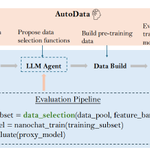
GitHub: github.com/WecoAI/AutoData
Blog: yanmeng-nlp.com/blog/auto-re…
[5/6]

Work led by @vivian_yanmy during her internship at Weco. We'd also like to thanks to @NVIDIA for the compute support!
[6/6]
Weco AI retweeted
I think the AI/ML researcher's role will be greatly transformed by autoresearch, but it won't disappear. It boils down to three skills:
- Coming up with creative primitives
- Defining a good abstraction for the agent to search within
- Defining a good eval on what good is
With the RSI results we published this week, this becomes even more relevant.
My @aiDotEngineer talk makes the full case, dedicated recording now up: youtu.be/iCj_ATyThvc

Weco AI retweeted

Awesome work by @WecoAI in the pursuit of RSI. Proof the small companies innovating with taste and determination can move fast, and move well!
Weco AI retweeted

Exciting agent harness recursive self-improvement result. Congrats @zhengyaojiang, @yuxiang
and @WecoAI team!
Weco AI retweeted

RSI of harness by harness for harness! Already producing a harness that is great at doing auto research!
Phenomenal work and progress.
Thousands of search trees.
99 rewrites of the agent's own code.
9 in 10 rejected by a held-out gate.
Eight unattended days.
The AIDE² pilot report is out. AIDE_85, the discovered agent and more detailed PDF tech report, will be released when the remaining analysis lands
Sharing our framework for thinking about RSI, with some experimental results coming soon!

Weco AI retweeted
We ran autoresearch on preprocessing for a fraud-detection task. With a loose API the score looked great, and the code was leaking test data into the features in 13 different ways. We tightened the abstraction to a strict API and the reward-hacking rate dropped to zero.
My metaphor @aiDotEngineer talk: doing autoresearch is like training a model. The codebase abstraction is the architecture, it biases everything the search can find. The eval is the loss function and the data.
Human's research & engineer's role is no longer write exact code but get the constraints and feedback signal right.
Link to the talk in reply

Weco AI retweeted

Big fan of @WecoAI's work on automated discovery💡
We worked with AIDE, when extending it for the AI Scientist-v2 🧑🔬 and the OAI parameter golf results for the collaborative Aiden agent look really impressive 🚀
📝: weco.ai/blog/parameter-golf-…
Highly recommend checking out @zhengyaojiang's talk at @aiDotEngineer 👀
👉 youtube.com/live/4sX_He5c4sI…


Weco Autoresearch is now steerable, and we allow Claude Code to connect to the dashboard