

#Bitcoin & crypto | Investor, General Partner at @ark_stream. Web三
Joined June 2021
- Tweets507
- Following889
- Followers931
- Likes104








Warrenfang.eth 涡轮方 retweeted
In this fortnight's Portco Highlight, we look at 6 key developments across the ArkStream Capital portfolio.
From Bitcoin-native finance going live on tier-1 exchanges, to chain abstraction hitting full EIP-7702 support, to a Microsoft co-sell partnership.
Here's what our portfolio shipped.

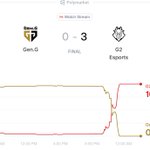
刚刚LOL先锋赛G2 3:0 赢了GEN.G,连着两天双杀LCK的队伍,而且都是3:0。
这个事多离谱呢,在比赛前G2胜率只有4%,尽管昨天已经3:0了韩国的第二名BFX(昨天G2开打前胜率也只有15%)的情况下胜率并没有提升,可见GEN.G的统治力。
先锋赛是每个赛区选两只春季赛的一二名出来打国际赛事,含金量足够,GEN.G和BFX在韩国国内的LCK都是按着T1打的,而中国LPL的春季赛冠军BLG在两天前也是3:0 平推G2,所以大家都认为GEN.G赢G2是板上钉钉的事,结果爆了个超级大冷门,可能是LOL历史上最大的冷门了。
这场比赛Polymarket的整个盘口超过12m的交易量,很多人奔着这一晚4%的理财收益去的,一把本金全没了。可能这就是电子竞技的魅力吧。


任何行业都不像加密行业的现在这么赤裸

其实吧, @naval 真是说出了加密行业最不愿意承认的真相:赌徒追逐第一桶金,投资者建造全球赌场,银行(庄)家催眠大众收割流动性——这一切如果没有密码朋克(cypherpunks)守护加密行业?赌场?web3?都将毫无意义。
没有一批批倒下的技术Builder的“粉饰”,哪有什么大赌场的抽水生意经,又怎会有Crypto接轨华尔街的太平盛世。
如果不是一批批技术Builder前赴后继地推进技术创新,Crypto早就沦为纯粹的击鼓传花游戏。这每个人都懂的道理,只是不知为何,Crypto世界如今成了一个大型剧场,大家小心翼翼守护着利益,都在台面演,水下搞!
请记住,如果没有密码朋克守护的那个“遥不可及”梦想——这一切都只是泡沫,都只能是泡沫。
换句话说,整个Crypto行业,它不是"暴富系统",不是“投机工具”,不是“提款通道”。。。是缘于中本聪的一个简单纯粹的梦想。那现状演绎至如此绝望,只是身在局中的“我们”,偏离了这一梦想,以“暴富之名”?
真的暴富了也算!祝福朋友们。但是,存量博弈,咋可能没有输家?曾经大家身边那些心怀极客梦想的Builder,曾经那些追逐去中心化梦想的Holder,都哪里去了?留下满场的Trader要怎么继续这游戏?
讽刺的是,作为硅谷互联网创业与投资领域的大咖,Naval的这条推文,大多数韭菜解读成喊单 $ZEC 是过于狭隘了,这背后对“密码朋克文化缺失”的呼吁,才是我们应该关注的重点。
有个朋友跟我说了句话,我觉得真TM在理:真理掌握在“上帝”手里,但乌合之众总是优先被“凯撒”吸引,以“救世主之名”。

OKB这个升级,就是朝着支付L1的方向去做了,不跟交易所利润分红挂钩了。
1. 杜绝了未来被SEC作为证券型代币监管的可能;
2. 直接跟circle/tether/stripe的公链同台竞技;
3. 价格还拉升了3倍。
4. 下一步可能就是币股DAT,因为筹码结构清晰了,手上本就卖不出去的币的价值丝毫没有少,未来还能进一步变现。
@star_okx 这一鱼四吃是非常绝妙的一步,不得不佩服。




Warrenfang.eth 涡轮方 retweeted
Congrats @Calderaxyz on the Binance listing 🟡
In a world full of copy-paste chains, Caldera lets real teams launch custom blockchains tailored for performance.

#Binance is excited to announce the Caldera (ERA) HODLer Airdrop – @Calderaxyz $ERA.
BNB Holders, get ready! The Airdrop page will be available on the Binance Airdrop Portal in 24 hours. Plus, this token will be listed on Binance soon!
👉 binance.com/en/support/annou…

Warrenfang.eth 涡轮方 retweeted
ArkStream Alpha Daily | 07/03 热点严选
Polymarket 正在用交易对抗叙事退潮
7月美联储议息会议还没开,Polymarket @Polymarket 上相关预测交易量已破 2200 万美元。
这不是 meme,不是 hype,是真实交易驱动下的链上信息战场
1. Polymarket 是目前少有的“无币、无 hype、却真实做出交易量”平台。
自美大选爆发以来,平台体量稳定维持在日均3000–5000万美金,其中多数交易是纯信息博弈,而非为了撸空投。
这说明了两件事:
链上有“预测市场”这类结构性需求
Polymarket 已逐步形成 alpha 聚合与分发的闭环
2. 大量用户已将链上当作真实信息对冲场景
本轮美联储议息的相关合约,会前交易量即破2200万,说明大量用户已将链上当作真实信息对冲场景。传统金融的数据还没落地,链上价格已经先做出预期。
这是Crypto 在信息流通速度上反超传统市场的信号,不仅“交易先于新闻”,更代表链上具备了预测-共识-反馈-下注的飞轮。
3. 平台至今无币、无手续费
平台至今无币、无手续费,leaderboard 也没写明激励,但你可以清晰看到用户的高频博弈行为。
这意味着:
alpha 不靠羊毛,而靠策略
当前用户行为一旦转化为空投标准,TGE 会极具爆发力
而这将倒逼更多预测类交易行为迁移至链上。
虽然市场 attention 当前被“山寨币预期”和“美股代币化”吸走,但 Polymarket 的体量已经告诉我们:
真正穿越周期的项目,往往是沉默无 hype 的“高价值信息捕手”。

链上美股/代币化股票的发展会进一步摧毁山寨市场,在有了可分红/成熟产品/大量用户和现金流的“股币”后,没有收益预期/产品只是PPT/全靠刷量的大量山寨币将和meme没有任何区别。持续不断的大量供给导致的注意力分散,会进一步导致数字货币市场的单极化——只有比特币

BREAKING: Wall Street is officially onchain.
xStocks are now live on Kraken ❎
60 U.S. equities tokenized and tradable 24/5. More coming soon.
We’re not waiting for the future. We’re building it.👇
k.xyz/xStocks
Not available in the U.S. or to U.S. persons. Geo restrictions apply.
Warrenfang.eth 涡轮方 retweeted

如何为Particle Network估值——华人项目天花板问题
本文是《如何为 Particle Network 估值》系列的第一篇,围绕华人项目在估值体系中面临的结构性挑战。
我们聊一个非常直接的话题,如何为 Particle Network 估值。
Particle 做的是一个独立赛道——链抽象,有这样的特点:
• 不会有赛道的 beta 加持——例如像 Sui 或 Sol 生态那样,板块整体启动会带动相关项目的估值上涨;
• 但同时理论上的上限是没有天花板的(简单来讲,某个生态的 DEX 是不可能超过这个生态 L1 的估值的,但独立赛道没有这个问题)。
回到估值,最公允的估值逻辑是:赛道估值 × 项目在赛道中的位置权重。
我对这个“比例”的判断是这样的:
• 赛道龙头拿走 70% 估值,
• 赛道第二名 20%,
• 赛道第三名 5%,
• 剩余所有的项目共同瓜分 5%。
L1就很明显呈现这样的情况(BTC应该完全独立于所有估值体系):
• ETH 大约占据整个 L1 赛道 70% 的估值,
• 龙二 Sol 的市值约为 ETH 的 1/3,
• 第三名 TRON 则是 Sol 的 1/4,
• 第四名 SUI 加上所有其余 L1 的流通市值约等于 TRON 的市值。
回到Particle, 我们毫无疑问是链抽象赛道的龙头。
因此,Particle 的估值 = 链抽象赛道估值 × 70%
那接下来的问题就在于:链抽象赛道值多少钱?
我们进入这个话题之前还需要解决几个常见疑问:
1. 华人项目没有格局;
2. Particle Network = UniversalX;
3. 链抽象有点用但用处不大;
4. 链抽象这个叙事的中文/英文名字不行;
Particle Network肯定不等于 UniversalX。UniversalX的发展情况是Particle的下限。
链抽象有点用但用处不大,这个疑惑的本质是把赛道当前的渗透率,误认为是它的最终市场空间。
链抽象这个叙事的中文/英文名字本身其实很好,但不好的是目前这个赛道的项目估值没有打开以及不同人可能对于这个叙事的实际体感的认可度。
好的叙事名字其实需要在不同语言体系都同时满足:
1. 有一些技术先锋感;
2. 大致能够想象和什么方向有关;
3. 但不能完全直接理解;
4. 朗朗上口;
RWA或者ZK其实都不是好的命名——有多少中国人能够直接拼出来RWA = Real World Assets 并且加以联想和记忆呢?但RWA很少人喷命名,因为有一些项目估值很好。零知识证明太技术先锋,普通人无法想象大概和什么有关系。
过去比较好的叙事命名是“模块化”,他满足我讲的这几个要求。
关于这几个问题我会单独写文章展开,今天主要聊第一个:“华人项目没有格局”。
这种说法背后,实际隐含的是以下几种顾虑:
1. 硬/软rug的风险比欧美项目更高;
2. 价格向上波动的持续性不强(所谓的拉盘不够硬);
3. 项目整体的运营周期较短,相比于欧美项目更容易发生TGE即项目运营终点;
4. 如果长期持有,最后的估值天花板无法打开;
在这些常见顾虑中,我认为真正具系统性挑战的是第 4 点。至于 rug 风险,如果认真拉统计,海内外项目 rug 风险其实差不多。
结合第4点,我们可以总结下华人项目实际的挑战:
1. 监管的桎梏:
华人项目是少有的同时具有原生性监管桎梏+继发性监管挑战的项目群体。
原生性问题来自中国大陆对于发 token、交易、募资、OTC 等相关活动的模糊甚至高压监管。
继发性挑战则在于,即便华人项目走出中国大陆,它们触及的监管区域大多仍局限于亚洲,而亚洲整体的监管环境依然并不友好。简单来说就是在亚洲区域,有影响力的监管部门不友好(例如新加坡),友好的监管部门暂时没有影响力(例如香港)。
这个带来很多的问题,例如在你的母语市场是拿不到本来应该有的相对优势的,你的团队的整体办公效率可能因为被动的分布式而下降,当然也包括Token ETF 的申请能力与潜在规模受限。
2. 退出方式的单一化:
这段时间陆续有Particle早期业务(WaaS)类似的公司被并购,例如Web3Auth被ConsenSys并购,Privy被Stripe收购。有朋友也来问我们是否有类似的计划。
实际上我们在早期做 Particle 时(当时偏 Web2 SaaS 服务 Crypto 项目)就评估过并购的可行性,我们判断不同于欧美项目,大多数类型的华人项目基本不太具备并购可能性,原因主要是在于:
欧美项目的并购环境本身比较成熟,Crypto项目的买方是更多元的,并购的club deal特征也很明显。
简单来讲就是我们既没有和可能的买方在一个圈子(西方的高融资项目)也没有和能够帮助促成这个交易的中间方(早期就能直接合作上的大名字欧美项目方或者投资机构)有很强的绑定关系。
亚洲唯一可能买方是头部交易所,而交易所的并购标的大多数只有两种可能:
1. 补流量;
2. 比较着急的补人才;
前者需要你是真的Crypto相关的大C端产品,后者其实估值不会很友好。
回到这个问题本身,退出方式的单一化带来的问题就是项目方只能通过TGE退出,那带来的自然结果就是项目方只能不断围绕交易所节奏去找所谓的 Playbook,这件事会造成很多后续影响。
3. 华人项目较强工程能力是一把双刃剑:
首要的后续影响是,因为只能不断的想要去满足交易所的不同阶段的需求,或者交易所短暂认可的新叙事,这样形成的一个结果是很多项目真的永远一直在干活,但是永远晚一步,既没有得到业务,也没有TGE成功。
这也会放大华人项目工程能力强这个双刃剑的问题,因为工程能力强的项目方往往会有以下两种常见误区:
1. 自己在任何领域,叙事,热点即使不是先发,但是能够通过卷把这个东西赢下来,在向前思考半步这种更具挑战的事情上就会花时间更少。
2. 总会有一种错觉就是可能这个叙事是真的,其他人没做好可能是因为没有工程能力没法落地。
但大多数叙事和赛道都是没有PMF更不要说后续的持续保持热度的可能的,少数即使有,也不值得去卷。
4. 语言带来的团队全球化挑战:
这个是一个华人项目通用的真实挑战。叙事,社区,增长,token 运营都是希望能够国际化的,但推进所有的这些角度都需要搭建一个真正意义上的国际化团队。需要同时满足:
1. 选出不同国家的团队,且能够高度认可项目的具体工作;
2. 工作强度趋同;
3. 摸索出一种既符合华人特质,又适配国际团队的管理方式;
才有可能在不同区域实行母语级和原生文化的对外输出和协调,做到高效的在地增长;
但受限于创始团队的语言问题和社交圈问题,非常难做到:
1. 招聘到合适的员工(只能通过标准化的渠道,这个带来的简历量就下降很多);
2. 能够达成一个互相认可的工作方式;
3. 创始人能够清晰的知道不同区域的事情推进的大致感觉,更不用说要去指导和优化不同区域的战略和执行结果(简单来说你丧失了信息alpha和网感等一系列你在中文圈拥有的优势)
这进一步导致华人 Crypto 项目天然更像是一个区域性品牌,又没有国际化团队,加剧了把区域性品牌变成全球性品牌的难度。
5. 主要支持基金的规模和存续期限制,导致 TGE 后资金运营策略单一:
这个主要是由于大多数亚洲基金,是很少同时具备高存续期加二级市场业务的。但我们在欧美地区是能够看到很多基金具备这个特征。
这带来的问题是TGE后和基金的联动方式的可能性就很少,项目方和大多数老投资人的关系变成了对手盘的不健康的关系。
这里不是在说欧美基金是钻石手,亚洲基金只会dump,我觉得这些相关比例统计上都差不多。
问题是同样品质项目以及团队素质背景下,亚洲项目TGE后打开资金渠道的挑战要比欧美项目大一些。
站在founder视角可能怎么解决以上挑战:
1. 近期最优解可能是在硅谷启动,结合工程能力优势,以一个华人硅谷企业的形象赢了一个业务同时发币。
2. 次优解是依然Base在亚洲,赢了一个业务,再发币。
但这两种路径都要求项目必须真正“赢下”某个细分赛道,不然的话即使做到赛道前几名,依然不会有相应的估值合理性。
我们可以看到从Token表现角度目前华人天花板项目是BNB (当然业务角度也是)以及Tron等。BNB背后是交易所业务的绝对头部,Tron是支付领域的领先。
当然在挑选业务的时候非常难判断:因为很多业务确实没有持续的商业化可能性,有规模商业化能力的赛道的增长性也不确定,有增长的赛道可能竞争很激烈。
从二级市场投资人角度,华人项目确实是有多个角度的挑战的,但是欧美项目则可能面临一些其余角度的通用挑战:例如工程能力不足、产品交付周期长、运营节奏不够激进等。
因此不用对华人项目有一刀切的逻辑,仔细梳理完华人项目实际的挑战后,我们可以得出清晰结论:依然有大量的低洼地华人项目值得下注,从胜率和回报率来讲依然会很不错。
如果你是一个基本面投资人,请中性的看华人项目,天花板是可以通过业务角度打开的。如果你不是基本面投资人,更不用把华人项目标签的项目排除掉,这个标签大概率与你的胜率无关。
How to Value Particle Network — The Ceiling for Chinese Crypto Projects
This is the first article in the “How to Value Particle Network” series, focusing on the structural challenges faced by Chinese projects within valuation systems.
Let’s talk about a very straightforward topic: how to value Particle Network.
Particle is in an independent vertical, which has the following characteristics:
• No sector-wide beta boost — unlike ecosystems like Sui or Solana, where an ecosystem-wide rally can drive up valuations of related projects;
• But at the same time, theoretically, there is no valuation ceiling (put simply, a DEX on a specific L1 cannot surpass the valuation of that L1 itself, but an independent vertical doesn’t have this limitation).
Back to valuation: the most fair valuation logic is:
Sector valuation × the project’s position-based weighting in that sector.
My view of this “weighting” is:
• The sector leader takes 70% of the valuation,
• The second in line gets 20%,
• The third gets 5%,
• The remaining projects share the final 5%.
This is very clearly reflected in L1s (BTC should be viewed entirely separately from any valuation framework):
• ETH holds about 70% of the total L1 sector valuation,
• Solana’s market cap is about 1/3 of ETH’s,
• TRON ranks third and is roughly 1/4 of Solana,
• SUI and all other remaining L1s together roughly match TRON’s valuation.
Back to Particle — we are, without doubt, the leader in the Chain Abstraction sector.
So, the valuation of Particle = Chain Abstraction sector valuation × 70%.
Now the question becomes: how much is the Chain Abstraction sector worth?
Before diving in, we need to clear up several common misconceptions:
1. Chinese projects lack long-term vision;
2. Particle Network = UniversalX;
3. Chain Abstraction is somewhat useful but not that impactful;
4. The narrative name “Chain Abstraction” doesn’t work in Chinese/English.
Particle Network definitely ≠ UniversalX.
UniversalX’s performance is the lower bound for Particle.
The concern that Chain Abstraction has limited value is essentially a misunderstanding of its current penetration rate as its total addressable market.
As for the name “Chain Abstraction,” it’s actually a good name in both English and Chinese. The issue lies more in the current valuation of players in this sector and how people perceive the concept.
A good narrative name ideally checks several boxes across different languages:
1. Has a tech-forward feel;
2. Gives a rough sense of the general direction;
3. Not immediately or overly obvious;
4. Catchy and memorable.
RWA and ZK are actually not great names — how many Chinese people can immediately recall that RWA = Real World Assets and mentally connect the dots?
But few criticize “RWA” because some projects with that label have solid valuations.
“Zero Knowledge” is too technically advanced; most people can’t really grasp what it relates to.
A good example of a narrative name in the past was “Modular,” which checks all of the boxes above.
I’ll expand on those topics in separate articles — today, let’s focus on the first: “Chinese projects lack vision.”
This statement often implies several underlying concerns:
1. Higher risk of hard/soft rug pulls compared to Western projects;
2. Less sustainability in upward price momentum (i.e., weak pumps);
3. Shorter project lifespan — TGE often marks the project’s operational peak;
4. Valuation ceilings are hard to break through for long-term holders.
Of these concerns, I think the only systemic challenge is point 4.
As for rug risks, if you really dig into data, you’ll probably find rug rates to be fairly similar across geographies.
So let’s break down the actual challenges Chinese projects face, especially regarding point 4:
1. Regulatory Constraints
Chinese projects uniquely suffer from both native and secondary regulatory burdens.
Native regulatory issues come from the PRC’s gray zones and strict crackdowns on token issuance, trading, fundraising, OTC, etc.
Secondary regulatory challenges stem from the fact that even if a Chinese project moves out of the mainland, it typically still operates in Asia — where regulatory environments remain largely unfriendly.
Put plainly:
• In Asia, the powerful regulators (e.g., Singapore) are unfriendly;
• The friendly ones (e.g., Hong Kong) currently lack real influence.
This creates problems such as:
• You don’t get relative home-court advantage in your native-language market;
• Your team’s operational efficiency declines due to passive distribution;
• Token ETF application scale and feasibility becomes more limited.
2. Lack of Exit Options
Recently, some companies doing similar early-stage business to Particle (like WaaS) have been acquired — e.g., Web3Auth by ConsenSys, Privy by Stripe.
Some friends asked if we have similar plans.
Back when we first started Particle (when it was more like Web2 SaaS for crypto), we evaluated M&A feasibility.
Our conclusion: compared to Western Web3 projects, Chinese projects are rarely realistically acquirable, mainly because:
• The Western crypto M&A environment is mature;
• There are more types of buyers;
• Club-deal behavior is common.
We are neither in the buyer circle (highly funded Western projects) nor closely tied to intermediaries who could make such a deal happen (like early-name VCs or already partnered with big-name projects).
In Asia, the only plausible buyers are major exchanges, and even they tend to acquire for two reasons:
1. User traffic acquisition;
2. Talent acqui-hire — usually time-sensitive.
The first needs you to be a genuinely large-scale, crypto-native consumer product;
The second rarely gives you a good valuation.
Hence: when exit paths are narrow, projects are forced to rely on TGEs as the only liquidity route.
This leads to one thing: projects start chasing exchange “playbooks,” reacting to narrative cycles — which introduces many secondary effects.
3. Engineering Strength Can Be a Double-Edged Sword
One key effect of chasing exchange-aligned narratives is that many projects just keep building — always one step too late. They neither gain adoption nor achieve a successful TGE.
This amplifies the double-edged nature of strong engineering cultures, where teams often fall into two traps:
1. “Even if we’re not first movers in a narrative, we can outbuild others and win by brute force.”
2. “If this narrative isn’t working, maybe it’s because others lack the tech to ship it — we can execute it better.”
But:
Most narratives and verticals don’t even have PMF, let alone sustainable momentum.
Even for those that do, it’s not always worth the effort to compete.
4. Language-Driven Globalization Challenges
This is a universal and very real issue for Chinese teams.
You want to globalize across narrative, community, growth, token operations — all of that requires a truly international team.
That means you need to:
1. Recruit globally aligned talent;
2. Achieve near-equal work intensity across regions;
3. Create a management style that fits both Chinese traits and global norms.
Only then can you achieve native-language growth operations in each region.
But this is hard, due to:
• Founders’ language gaps and social network limitations;
• Hiring becomes reliant on standardized processes (reducing candidate flow);
• Difficult to align work styles or sense how things are progressing across regions — you lose your “alpha” insight and local intuitions from the Chinese-speaking world.
So Chinese crypto projects naturally look like regional brands,
and without a globalized team, they face higher friction in becoming global brands.
5. Limited Fund Support Post-TGE
Most Asian funds rarely combine long-duration capital with secondary market capabilities.
In the West, many funds do.
So post-TGE, Chinese projects have fewer ways to work with investors,
and relationships often turn adversarial — projects vs. “exit-seeking” early backers.
This doesn’t mean Western funds are diamond hands and Asian funds always dump — stat distributions are likely similar.
The real issue:
With similar team quality and project fundamentals, Asian projects face more difficulties opening up post-TGE capital pathways.
How to Solve These Challenges?
From the founder’s perspective, optimal options are:
1. Best case: Launch in Silicon Valley, leverage engineering strength, win in one vertical, then tokenize.
2. Second-best: Stay based in Asia, win in one business line, then tokenize.
But both routes require actually winning a niche.
Even being top 3 in a vertical won’t give you a strong valuation if there’s no PMF.
Looking at current token performance:
• BNB (backed by an exchange), and
• Tron (strong in payments),
are both examples of Chinese-led projects that broke valuation ceilings through business strength.
Picking the right vertical is hard — many have no long-term monetization, uncertain growth, or cutthroat competition.
Final Thought for Investors
From a secondary investor’s view, Chinese projects face several layers of structural difficulty.
Western projects have their own challenges — like:
• Weaker engineering,
• Long delivery cycles,
• Slower operational rhythms.
So don’t use a one-size-fits-all filter.
Once you understand the real challenges clearly,
you’ll find many Chinese projects with favorable odds and great risk-adjusted upside.
If you’re a fundamentals investor — evaluate Chinese projects objectively.
Ceilings can be broken through business strength.
If you’re not a fundamentals investor — don’t let the “Chinese project” label turn you away.
That label likely has little to do with your win rate.