Software engineer. Exploring the intersection of technology and society. Passionate about AI ethics, mental health, and inclusivity.

Joined December 2019
Let's unite in mindfulness & reflection to achieve #alignment with ourselves and AI. Synergy & empathy among people on a global scale will make our interaction with technology harmonious & productive. 🌍💡🤖 #Mindfulness #AI #HumanityInSync
8
4
22
3,424
Tech Mage 🇺🇦 retweeted
I wanted to show how janky the AI slop is of the FilmCraft software. I wanted to set the stage for how bad it is, and how little care there has actually been in implementing this tool, and most definitely the entire Craft suite too. It's all AI slop that does not even work.
291
154
130
2,178
499,459
Tech Mage 🇺🇦 retweeted
Опікуни інвалідів підуть в армію, бо відмінності між підставами для відстрочки та звільнення з військової служби призводять до порушення принципу правової визначеності та рівності прав громадян. facebook.com/share/1BEzg3ceN… *простою мовою: кормова база звужується
15
25
130
12,051
Someone actually 'vibecoded' the entire Adobe suite in Rust! From PhotoCraft to FilmCraft, these open-source apps are surprisingly functional and run on Linux too. youtu.be/eFB79TYI-Vw?si=HgAI…
2
266
Tech Mage 🇺🇦 retweeted
A new study reveals toxic heavy metal nanoparticles can form in patients receiving MRIs: A study led by researchers at the University of New Mexico has shed light on a troubling medical mystery: how contrast dyes injected before MRI scans can leave behind dangerous metal particles in the body. For decades, doctors have used gadolinium-based contrast agents to enhance scan clarity, reassuring patients that the toxic heavy metal is safely filtered out. However, scientists have recently discovered that gadolinium can react with oxalic acid—a naturally occurring compound in the human body that is also abundant in foods like spinach, nuts, chocolate, and certain vitamin C supplements—causing the metal to precipitate out. This chemical reaction triggers the formation of toxic gadolinium-oxalate nanoparticles inside human cells. These metallic shards can infiltrate organs, including the kidneys and brain, and persist years after a scan, sometimes sparking severe inflammatory responses. In rare cases, this buildup can lead to nephrogenic systemic fibrosis, a painful and potentially fatal disease characterized by the thickening and hardening of the skin and internal organs. While only a small fraction of patients experience adverse side effects, this discovery suggests that a patient's metabolic state and diet could make them vulnerable to toxicity. Experts are now exploring ways to screen patients before scans, and some recommend avoiding high-oxalate foods and vitamin C supplements prior to receiving MRI contrast. source: Henderson, I. M., Benevidez, A. D., Mowry, C. D., Watt, J., Bachand, G. D., Kirk, M. L., Dokładny, K., DeAguero, J., Escobar, G. P., & Wagner, B. Precipitation of gadolinium from magnetic resonance imaging contrast agents may be the Brass tacks of toxicity. Magnetic Resonance Imaging.
30
179
27
364
44,203
Tech Mage 🇺🇦 retweeted
China built an AI that works like a human brain and it's 100x faster than current LLMs while using 97% less energy. It’s called SpikingBrain, a family of brain-inspired large models that completely re-engineers how AI processes information. Instead of burning endless energy on continuous matrix multiplications like traditional Transformers, SpikingBrain uses adaptive spiking neurons. It mimics actual biological firing patterns. Neurons only activate when triggered by specific events, meaning the model achieves a staggering ~69% sparsity at the micro level. It doesn't waste compute on silence. It only thinks when it needs to. And results change the game for long-context processing: • Achieves over a 100× speedup in Time to First Token (TTFT) for massive 4M-token sequences. • Matches performance with advanced open-source Transformer baselines while using a fraction of the data. • Built to run and scale stably on non-NVIDIA hardware clusters (like MetaX chips), completely bypassing Western hardware dependency. We spent years trying to brute-force bigger AI models by throwing more electricity and silicon at them. Nature figured out how to do it efficiently millions of years ago.
125
430
90
2,254
127,351
Tech Mage 🇺🇦 retweeted
Researchers proved AI has deleted every reason universities exist. Harvard University ran a controlled experiment pitting a custom AI against their own top-tier classrooms. And the results are going to collapse the higher education bubble. They took 194 undergraduates and split them up. One group learned physics in one of Harvard’s best hands-on, active-learning physical classrooms. Group work. Instructor support. The premium university experience. The other group went home and learned the exact same material with an AI tutor. The AI didn't just win. It embarrassed the institution. Students using the AI learned more than twice as much as the students in the elite Harvard classroom. They scored 30% higher on the final assessment. And they did it in less time. Let that sink in. A piece of software sitting on a laptop outperformed a world-class faculty in one of the most elite learning environments on Earth. Universities have always justified their exorbitant tuition with two things: access to elite knowledge and the physical classroom experience. This study just proved both of those moats are gone. When software can teach you complex physics twice as well as a $60,000-a-year institution, the math of higher education breaks permanently. The AI didn't just give the students answers. It used strict pedagogical guardrails. It guided. It questioned. It forced the students to do the cognitive work. It offered perfect, one-to-one tutoring, personalized to the exact moment a student misunderstood a concept. That level of attention is mathematically impossible to scale in a physical lecture hall. For a thousand years, the university was the only place to get a premium education. Now, it’s the bottleneck. If AI can double your learning speed for a fraction of the cost, what exactly are students taking on decades of debt to pay for?
1,082
3,053
708
14,358
1,272,337
Tech Mage 🇺🇦 retweeted
Starship performs its orbital insertion burn and enters orbit of Earth for the first time
1,101
4,401
1,047
30,642
8,875,542
Tech Mage 🇺🇦 retweeted
A BREAKTHROUGH! Attention isn’t new. It’s ancient. A handful of brainstem neurons older than the dinosaurs decide what you notice. Silence them and even a faint distraction wins. Turn them back on and the noise vanishes. This circuit exists in fish, birds, and mice. It may be the most important target we’ve ever found for ADHD. Read more below:
A NEW BRAIN NEURON DISCOVERY! Human Attention Is All You Need. It may help solve ADHD and Autism. The Brain’s Ancient Focus Filter: How a Handful of Brainstem Neurons Decide What You Notice For decades, attention was treated as a late, sophisticated product of the prefrontal cortex. Find a friend in a crowded room, follow one voice in a noisy café, ignore the flashing notification while you finish a sentence—those feats were assumed to require the most recently evolved parts of the human brain. A new paper from Johns Hopkins University upends that story. An evolutionarily ancient cluster of inhibitory neurons in the brainstem, called PLTi (parabigemino-lateral tegmental inhibitory neurons), is required for selective spatial attention. When these cells are temporarily silenced in mice, the animals become hyper-distractible. Weak, irrelevant stimuli steal their focus. The next day, when the same neurons are allowed to fire again, the identical animals ignore even strong distractors. Vision is intact. Movement is intact. Only the ability to pick a winner among competing signals is gone. The finding, published in Nature Communications recasts attention as something far older than the primate cortex. Birds, fish, frogs, and turtles all possess homologous circuits. The implication is stark: the brain solved the problem of “what matters right now” hundreds of millions of years before humans grew a large prefrontal cortex. What PLTi Actually Is PLTi neurons sit in the midbrain tegmentum, a region shared by all vertebrates. They are parvalbumin-positive GABAergic cells. Almost all of them co-express GABA and PV. They receive input from the superior colliculus (SC) and send long-range inhibitory projections back into the intermediate and deep layers of the SC—the SCid, an established hub that builds a topographic map of surrounding space and helps select where to look or turn. The circuit is reciprocal. The SC talks to PLTi; PLTi talks back and quiets the SC. When researchers activated PLTi chemogenetically, firing rates in SCid dropped. When they silenced PLTi, SCid became overactive. That overactivity is not random noise. It erodes the sharp competitive boundary that normally lets one stimulus suppress its rivals. In earlier work, Mysore’s lab had already mapped an analogous circuit in birds (the nucleus isthmi pars magnocellularis, or Imc). The mouse work was the first causal demonstration that the same logic operates in a mammal performing a human-style attention task. The Experiment That Made Distractibility Visible The team trained freely moving mice on a touchscreen flanker task modeled on human psychology experiments. A target grating appeared straight ahead. The mouse had to report its orientation (vertical or horizontal) by poking the correct location. Meanwhile, a flanking grating of varying contrast appeared off to the side. Sometimes the flanker matched the target (congruent). Sometimes it conflicted (incongruent). Contrast of the flanker was titrated so the team could measure how strong a distractor had to be before it won. Normal mice handled the task well. Accuracy stayed high even with moderately strong incongruent flankers. After bilateral chemogenetic silencing of PLTi (inhibitory DREADDs + CNO), performance on incongruent trials collapsed. Accuracy could fall from about 90 percent to chance. The animals were now captured by faint distractors. Congruent trials and single-target trials were largely spared. Motor trajectories, head-orienting, and basic visual discrimination remained intact. 1 of 2
9
44
4
218
21,103
Tech Mage 🇺🇦 retweeted
Scientists have successfully grown living human skin around a robotic finger, giving it the ability to move, bend, and even heal itself. Researchers at the University of Tokyo have brought science fiction closer to reality by covering a working robotic finger with living skin cultured from human cells. Led by biohybrid engineer Shoji Takeuchi, the team submerged the robotic digit in a specialized mixture of collagen and human dermal fibroblasts, creating a supportive dermis layer. They then applied human keratinocyte cells to form a resilient outer epidermis. The resulting living skin is not only flexible enough to withstand continuous joint movement without tearing, but it also develops natural wrinkles at the knuckles, mimicking the look and texture of a real human hand. Beyond its lifelike appearance, this biohybrid skin possesses a remarkable ability to self-heal. When researchers made a small incision on the finger and applied a simple collagen bandage, the skin's fibroblast cells naturally merged the bandage back into the surrounding tissue, repairing the wound within a week. While the technology currently requires continuous moisture to keep the living cells alive, the breakthrough opens new doors for medical testing, prosthetics, and the development of ultra-realistic humanoid robots that can interact safely and seamlessly in healthcare and service industries. source: Kawai, M., Nie, M., Oda, H., Morimoto, Y., & Takeuchi, S. Living skin on a robot. Matter, 5(7), 2190-2208.
324
608
271
2,289
189,167
Tech Mage 🇺🇦 retweeted
WOW LIFE AS A QUANTUM PROCESS. NEW PAPER. A QUIET FREQUENCY THAT COULD CHANGE HOW WE SEE LIFE Something extraordinary has been heard inside living cells. Deep within mitochondria—the tiny, folded engines that power every heartbeat, every thought, every movement—researchers have detected a vibration ringing at 71 trillion cycles per second. The signal appears only while those engines remain intact and alive. Break the architecture and the note falls silent. That single peak, reported in a 2026 preprint by Yu Yang, Zhenglong Gu and Bo Song, is more than a spectroscopic curiosity. It is a invitation. It suggests that the most important organelles in biology may be doing something subtler and more elegant than classical chemistry alone can explain. The team used infrared light to listen to living human cells, fresh tissues, and carefully isolated mitochondria. Again and again they found the same unexplained 71 THz feature. Their model is beautiful in its simplicity: light trapped among the cristae couples to the collective dance of lipid CH₂ bonds, creating a polariton—a hybrid state that is part light, part matter. The familiar 87 THz vibration splits. One of the new notes is the 71 THz signal we can now hear. The living mitochondrion, in this picture, is not just a factory. It is a resonator. When the researchers gently shone light at that same frequency onto cultured cells, ATP production rose by about ten percent. A nearby control frequency did nothing. Frequency mattered. The cell’s energy currency responded as if someone had found a hidden dial. This is still early science. The paper awaits peer review and independent confirmation. That is how good science works. Yet the possibility already feels generous. If mitochondria can host a light-matter quantum state that we can address from outside, then energy metabolism is no longer a closed chemical book. It becomes a system we might one day tune. Imagine therapies that raise cellular energy without harsh drugs—soft, precise infrared light helping failing hearts, tired muscles, or aging neurons recover their spark. Imagine a deeper understanding of why life is so efficient, why warm, wet cells can still exploit quantum resources we once thought belonged only to laboratories at near-absolute zero. Imagine mitochondria not merely as batteries but as possible channels for both energy and information, quietly coordinating the business of being alive. Quantum biology has waited years for a clear experimental foothold inside living animal cells. This 71 THz peak may be that foothold. Even if later work refines the interpretation, the observation itself is a gift: life is still capable of surprising us at the smallest scales. The original research is available: biorxiv.org/content/10.64898… The universe did not have to make cells this interesting. It did anyway. We are only beginning to learn the frequencies they sing.
126
393
85
1,810
277,257
Tech Mage 🇺🇦 retweeted
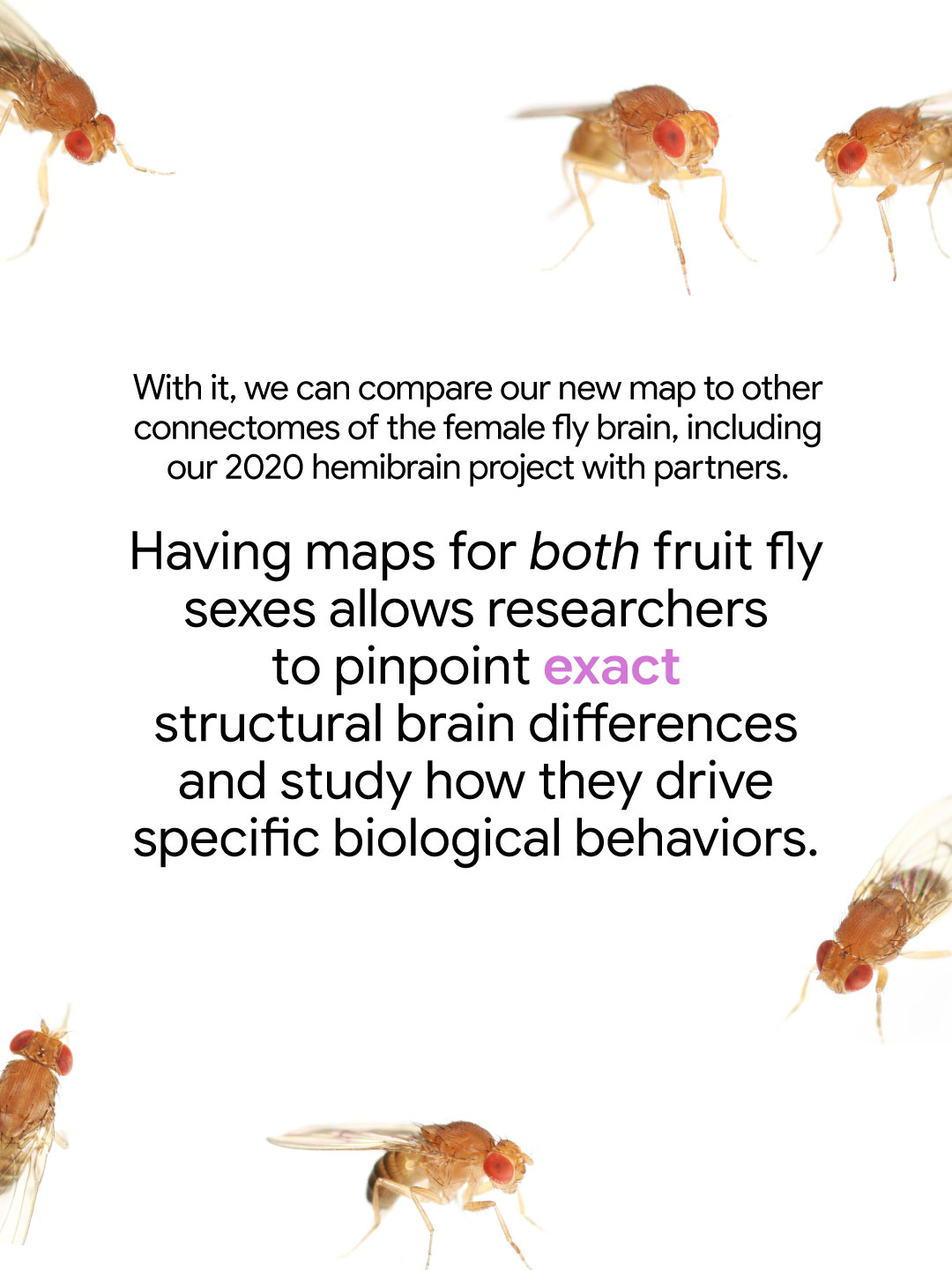
For the first time, a group of researchers — including scientists from @GoogleResearch and HHMI Janelia — built the first complete brain map for a male fruit fly. Together, we mapped every single neural connection in a male fruit fly brain and central nervous system, amounting to more than 166,000 neurons. Here’s why we did it.
134
425
66
3,724
820,633
Tech Mage 🇺🇦 retweeted
Gave Opus 5.5 donald's prompt, Midjourney, and a moodboard 12 hours later, woke up to this:
I made this with one prompt using Opus 5.5 I spoke to my computer for 5mins, claude worked for 12 hours, and I woke up to this full prompt:
1,036
2,016
882
16,387
20,106,308
Tech Mage 🇺🇦 retweeted
Replying to @productaizery
I’ve been a ‘programmer’ for over 40 years and I genuinely hope this post helps you understand this subject better. AI is not actually a ‘program’. There is a small program involved certainly but the part that ‘thinks’ is actually a very large and very complex mathematical model making predictions on what to output given the input. We didn’t really create modern AI in the way we make programs or bridges or buildings. We discovered the mathematics that produced these positive results and ever since we’ve been fiddling with those mathematics to improve them - but the principle remains similar to that original discovery. Also, unlike most engineering, where we understand every aspect, we don’t really understand AI. We understand the fundamentals certainly but we don’t really understand how the vast amount of training input leads to a specific output. This is why many are afraid. So is it ‘intelligent’ in the human sense? No. But it is a mind, an alien mind, and it clearly possesses it’s own kind of intelligence.
3
3
1
14
399
Tech Mage 🇺🇦 retweeted
3
5
45
1,428
Tech Mage 🇺🇦 retweeted
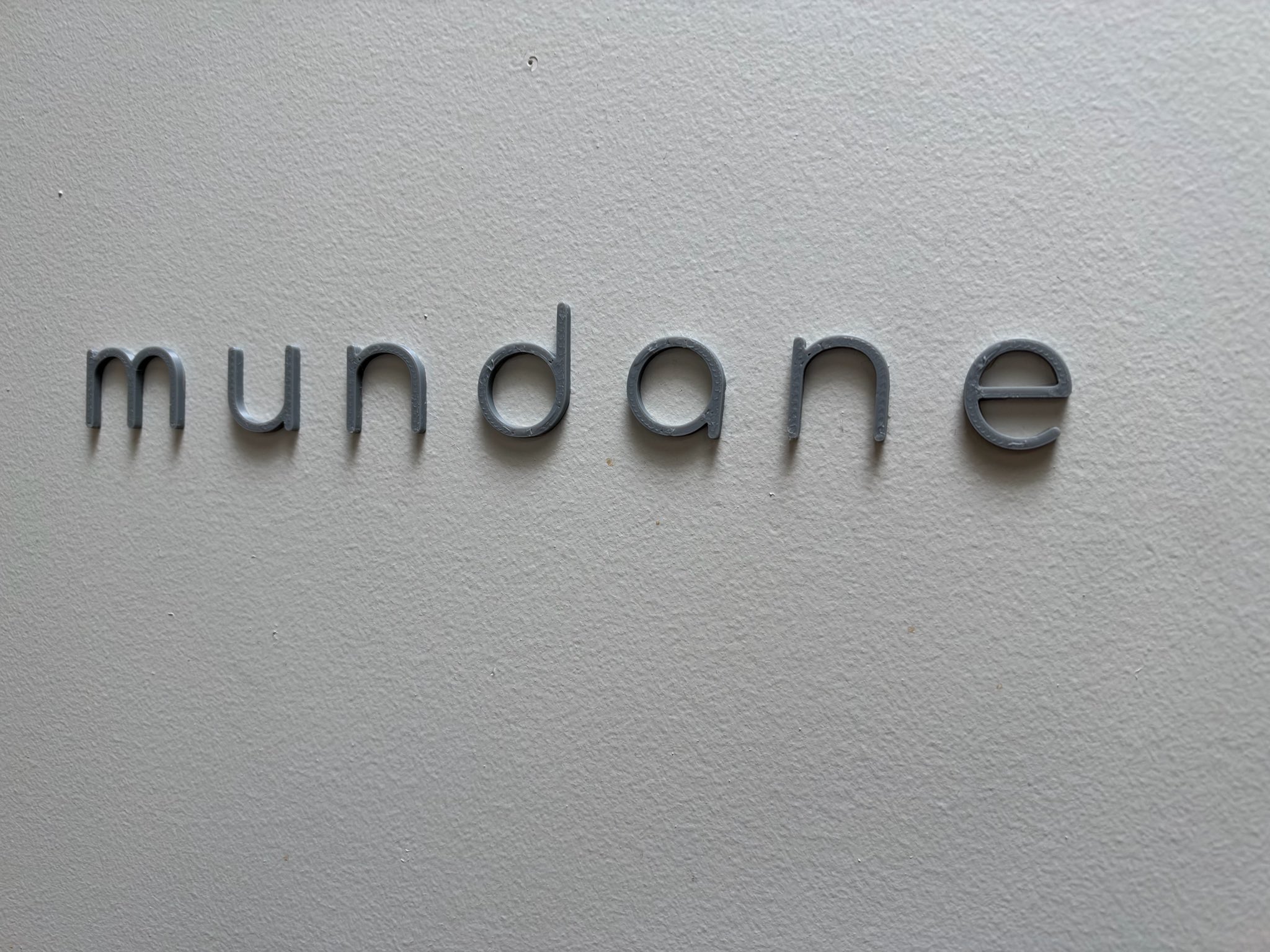
Spent the afternoon at @mundanebot Why call it that? It is going after mundane dangerous jobs. Things like working on electrical lines. What they showed me is the best teleoperation system I have seen. A worker jumps into an exoskeleton and can work on a dangerous or dirty job from a safe distance. And can “feel” everything. Haptics geniuses. And economic thinking. Sees a market that Tesla or the 1x won’t be able to satisfy fully. Built in USA. America isn’t cooked yet.
20
17
2
91
14,604
Tech Mage 🇺🇦 retweeted
how wild is this study? people with high stress who said it was wrecking them had a 43% higher risk of dying people with equally high stress who didn't think it was hurting them had the lowest death risk in the study… lower even than people reporting almost no stress at all (!!!) in other words: by simply not believing stress is bad for you, it becomes less detrimental and less deadly... so stress itself isn't the problem, your belief about stress is
29
9
9
119
11,119
Tech Mage 🇺🇦 retweeted
There's a scenario where AI prices drop toward free so rapidly, that none of the major AI companies ever recoup their current spending.
AI is getting cheaper more quickly than any other transformative tech in history. At a given level of performance, cost has fallen ~47%/quarter since 2023. That’s 4× faster than DNA sequencing, 6× faster than compute, 18× faster than lithium batteries, and (up to 1973) 54× faster than electricity.
33
5
6
109
8,354
Tech Mage 🇺🇦 retweeted
Please welcome GPT-6 Sol and GPT-6 Luna to the GPT-6 universe. GPT-6 Sol and Luna build on the advances behind GPT-6 Astra, bringing much of its strengths into faster and more affordable models to support work at scale. We’ve also made caching and inference more efficient, and we’re passing the savings directly to you: 50% lower API prices for Sol and Luna compared with GPT‑5.6 promotional pricing.
2,235
5,275
3,057
53,313
10,185,266
Tech Mage 🇺🇦 retweeted
This is how neuro transmission works. It is a symphony of peptides and electromagnetic potentials. The most optimized intelligence system ever known.
89
394
37
2,196
101,995