

membrane dynamics | pattern formation | cell size | lab @YaleCellBio RT ≠ endorsements
New Haven, CT
Joined January 2016
- Tweets1.2K
- Following385
- Followers833
- Likes2.5K



Min WU retweeted

🎉 Our paper is out today in @ScienceMagazine!
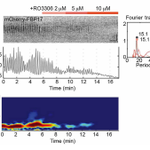
How does the intestine maintain the right balance of cell types? We find that signalling rhythms matter!
So proud of our three shared first authors, Sonja Weterings, @HiromuneEto & @jddeleede!
🔗 science.org/doi/10.1126/scie…
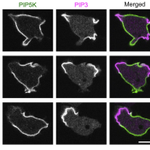
PI3K/RAS network is the most frequently altered signaling pathway in cancer. One might assume PI4P-5-kinase -> PIP2-> PIP3 -> Ras, but this paper shows in the polarity circuit, PIP5K actually inhibits Ras.
not via PTEN.
#nonlinear_biology #lipidtime
nature.com/articles/s41467-0…

Min WU retweeted

To change color, animals often rearrange their optical materials: redistribute pigments, change crystal spacing, or tilt reflective structures. In our new study, just published in Advanced Materials, zebrafish reveal another mechanism: changing the molecular order within those materials.
We studied xantholeucophores, cells in the light stripes of the zebrafish anal fin, originally identified by the @parichylab lab as developing from yellow, xanthophore-like progenitors. During development, these cells become highly efficient visible-light scatterers while retaining strong UV absorption.
What changes inside them?
Their pteridine-containing organelles undergo a transition from relatively disordered assemblies to highly ordered, liquid-crystal-like structures. This molecular reorganization transforms how the cells interact with light.
The gatekeeper is potassium!
We found that as the cells mature, K⁺ levels fall within their organelles and the pteridines become ordered. In vitro, removing K⁺ alone was sufficient to trigger ordering and crystallization. A change in the ionic environment can therefore control the assembly's molecular order and its optical function.
The chemistry held another surprise. These organelles contain a composite of isoxanthopterin and 7-oxo-biopterin, which we identify as a major constituent. This adds 7-oxo-biopterin to the repertoire of small molecules known to participate in ordered, functional biological assemblies.
The result is one cell doing two optical jobs: efficiently scattering visible light and absorbing UV. Molecular ordering makes the fin more conspicuous while preserving the pigments' UV absorption.
Biology doesn't always need to move its optical materials around. Sometimes it just needs to convince the molecules to get their act together.
This work was led by the terrific @SourabhBera4 , together with @ZoharEyal1, Yael Noy, @yuval_barzi, @Siddharth Sahoo, Avi Baram, and Tali Lerer-Goldshtein from our lab. With amazing contributions from our collaborators and friends: Venkata Jayasurya Yallapragada, Srikant Moharana, Ido Hadar, Bar Bader, Andrea Sorrentino, Neta Varsano, Lothar Houben, Uwe Heinig, Iddo Pinkas, Moshe Goldsmith, Tamar Unger, Shira Albeck, Maxim Itkin, Sergey Malitsky, and Ziv Porat. @Weizmann Institute of Science
Check it out:
advanced.onlinelibrary.wiley…

Min WU retweeted

Kenneth Showalter @WestVirginiaU passed away on June 4th. Ken was a leader in the field of nonlinear dynamics, and we remember some of his many accomplishments in this short paper that just appeared in Chaos doi.org/10.1063/5.0350230
Min WU retweeted

this is the bistable motion illusion
ur influencing which of two equally plausible models your visual system adopts.
en.wikipedia.org/wiki/Multis…

A minimal kinase–phosphatase system and its lipid substrates self-organize into dynamic patterns biorxiv.org/content/10.64898…

‘The most straight-forward strategy for evaluating the role of genes was based on the consequences of their removal. Although powerful, the logic behind this approach is always indirect, given that the phenotype is produced by the genes that remain, not the gene that was removed’

Maternal patterning in early Drosophila embryos: how much information can single maternal gradients supply? journals.biologists.com/dev/…

Maternal patterning in early Drosophila embryos: how much information can single maternal gradients supply? journals.biologists.com/dev/…
Min WU retweeted

Ani Michaud, @GoryachevAndrew, von Dassow, @BementLab et al. identify a versatile cortical pattern-forming circuit based on #Rho, F-#actin, Ect2, and RGA-3/4: hubs.la/Q04p9X4Y0
📕 Part of “Collective Behaviors and Self-Organization in Cells”: hubs.la/Q04p9ZLw0
Min WU retweeted
This collection was curated by JCB Editorial Board member Min Wu and Scientific Editor Gabriele Stephan. Blending aspects of mechanobiology, developmental biology, and signaling, we hope this collection will engage a broad readership interested in biophysics and systems biology!
Min WU retweeted
This collection explores emergent phenomena incl. how cellular events are rapidly coordinated by waves of chemical & electrical signals, how tissue patterning is governed at the cellular level & how cellular interfaces guide cellular migration & morphology hubs.la/Q04p9r3T0

Min WU retweeted

Introduced by Bernhard Riemann in the mid-19th century, manifolds are crucial to our understanding of the universe. quantamagazine.org/what-is-a…

Excited to share our latest work: Mitotic Cdc42 waves encode PI(3,4)P2 signaling and Golgi morphological state to control spindle scaling | Science Advances
science.org/doi/10.1126/scia…

Perturbing PI(3,4)P₂ degradation increases spindle microtubule density, and causes spindle overscaling relative to cell size. Thanks to @yujin_bao in the @bewersdorflab for characterizing MT density in monopolar spindle by superresolution imaging. 7/n

